Where Is the Transmission Located in a Car? Guide
A car’s transmission usually sits between the engine and driveshaft in front-wheel-drive cars, under the front floor in rear-wheel-drive cars, and inside the rear transaxle on many EVs; drivetrain layout sets the exact spot. If you misread the layout, you may crawl under the wrong panel, miss leaks, and waste time. This guide maps transmission location by drivetrain and points out the under-car landmarks that help you identify it on your own vehicle.
What the transmission does in a car
Transmission, gearbox, and drivetrain: the terms you need
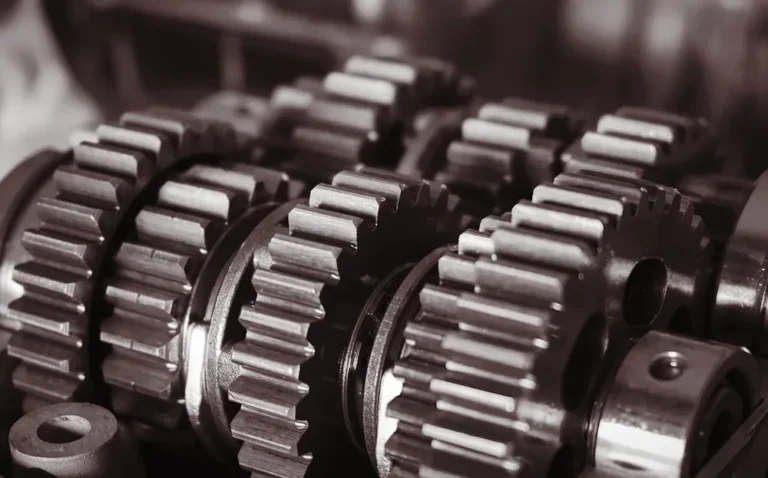
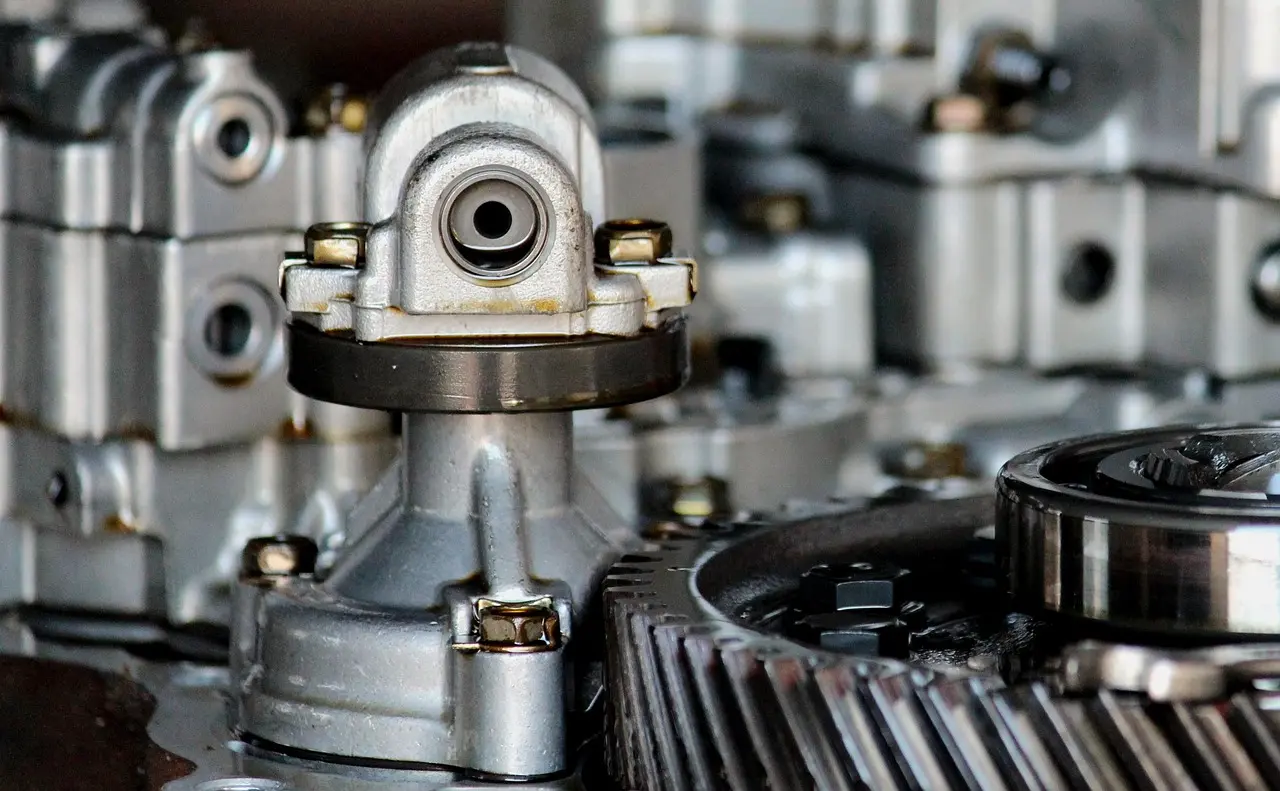
A transmission is a gear set that changes speed, rotation direction, or torque. It is also called a gearbox, and it sits inside the drivetrain, the system that sends power from the engine or motor to the wheels.
In gasoline and diesel cars, engine speed rises and falls with torque demand, so most vehicles need several gear ratios. Most passenger cars with gasoline or diesel engines use 4–10 forward gear ratios, and most passenger cars also have one reverse gear ratio.
Why ICE vehicles need multiple gear ratios
An internal combustion engine works best within a limited speed band. Too low, and the engine may bog. Too high, and it can burn more fuel or run past its useful range. Gear ratios keep the engine near that better band while the wheels turn faster or slower as needed.
Modern automatic transmissions change the effective gear ratio based on load. That keeps the engine close to optimal rotation speed. Automatic transmissions became available in the US market starting in 1939.
Manual and automatic transmissions in plain terms
Manual transmissions require you to pick each gear with the shifter and clutch. They remain common in older cars and in some performance models. Automatic transmissions shift without driver input during normal driving, which is why they appear in many modern passenger cars.
Picture a 4-cylinder sedan climbing a steep ramp. In a taller gear, the engine may labor. In a lower gear, the transmission multiplies torque and the car climbs more easily. That same rule explains transmission placement: the unit must sit where it can connect cleanly to the engine and the rest of the drivetrain.
📊 Automatic transmissions became available in the US market starting in 1939. Source: Transmission (mechanical device).
Where is the transmission located in a car?
The transmission’s location depends on drivetrain architecture. In front-wheel-drive cars, it is often at the front beside or below the engine. In rear-wheel-drive cars, it is typically behind the engine, often under the front floor area. In AWD and 4WD layouts, it connects to a transfer case or center coupling, and the exact mounting point varies by design.
Front of the car versus center tunnel versus rear-mounted layouts
On a front-engine, front-wheel-drive car, the transmission is typically packed near the front axle. On a rear-wheel-drive car, the transmission often ends where the engine ends, then a driveshaft carries power to the rear differential. On some EVs, a transmission or gear reduction unit may sit at the drive axle rather than under a center tunnel.
Why the answer changes with drivetrain architecture
Engine or motor position, axle layout, and the driveshaft path decide where the transmission goes. A transverse engine, common in many FWD cars, places the gearbox sideways across the car. A longitudinal engine, common in many RWD vehicles, places the transmission in line with the crankshaft and sends power rearward.
What you can and cannot see from underneath
From under the vehicle, you may see the transmission case, the oil pan or bell housing area, the driveshaft, or a transfer case. You may not get a full view if splash shields, exhaust routing, or underbody panels cover part of the assembly. That is normal on newer cars.
How do I find the transmission under my car?
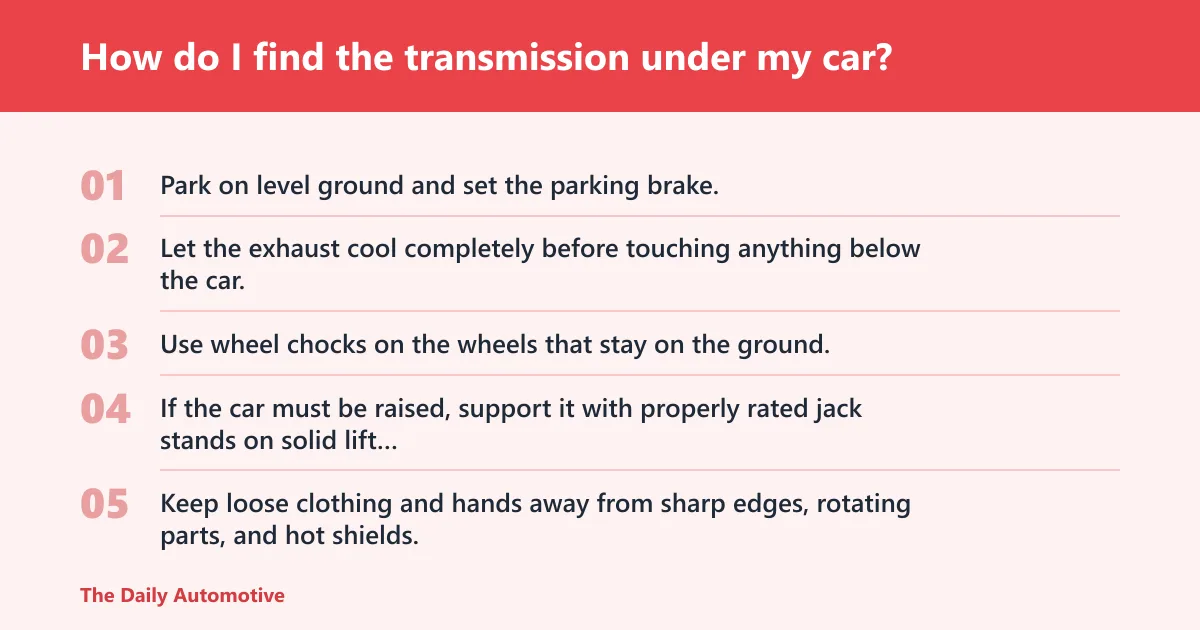
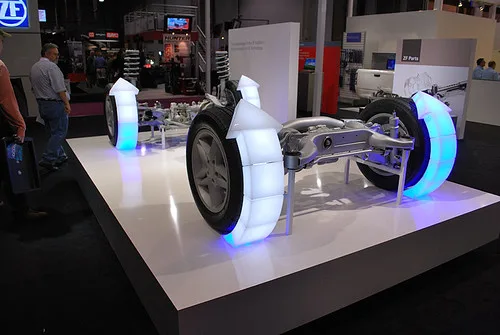
Start at the engine, then trace the parts bolted to it and the shafts that leave it. The transmission is usually the large metal housing directly attached to the engine or motor, with a bell housing at one end and axle, driveshaft, or transfer-case connections at the other. Use a flashlight and stay clear of hot or unsupported components.
Safety steps before you go under the vehicle
- Park on level ground and set the parking brake.
- Let the exhaust cool completely before touching anything below the car.
- Use wheel chocks on the wheels that stay on the ground.
- If the car must be raised, support it with properly rated jack stands on solid lift points.
- Keep loose clothing and hands away from sharp edges, rotating parts, and hot shields.
Start at the engine and trace the connected parts
Look for the engine first. On many rear-wheel-drive cars, the transmission is attached to the back of the engine, and on many front-wheel-drive cars it sits to one side. If you can trace a driveshaft leaving the unit, that is a strong clue that you are looking at the transmission or transfer case area.
Simple visual cues for the transmission case
The transmission housing is usually a cast-metal case with seams, bolts, cooler lines on automatics, or a linkage and clutch housing on manuals. It looks more like a shaped gearbox shell than a smooth exhaust component. Exhaust parts are thin-walled tubes and mufflers; the transmission is a bulky case with mounting points.
A common first-timer mistake is confusing the engine oil pan with the transmission case. The oil pan is usually the lowest pan on the engine. The transmission case sits behind it on RWD cars or beside it on many FWD cars, and it often has a different shape, size, and connection pattern.
Front-wheel-drive layout: where the transmission sits
In many front-wheel-drive cars, the transmission is built into a transaxle package near the front axle. The transmission usually sits beside or below the engine, and the differential is often inside the same housing. That compact design saves space and shortens the power path to the front wheels.
Transaxle packaging near the front axle
A transaxle combines the transmission and axle or differential unit. It is common in front-wheel-drive vehicles, and it is usually mounted transversely. From underneath, you may see a wide aluminum or cast-iron housing near one front wheel area, with half-shafts extending from it to the left and right wheels.
How the differential sits with the transmission in many FWD cars
Many FWD designs place the differential inside the same assembly as the transmission. That means there may not be a separate rearward driveshaft at all. Instead, two front CV axles or half-shafts leave the transaxle and point toward the front wheels.
What the under-car view usually looks like
From underneath, a FWD transaxle often appears as a large housing low at the front of the car, just behind the radiator area and below or beside the engine block. If you see no long driveshaft and instead see axles heading straight to the front hubs, you are likely looking at a transaxle layout.
Rear-wheel-drive and center-tunnel layouts
In a rear-wheel-drive car, the transmission mounts behind the engine and sends power through a driveshaft to the rear differential. The driveshaft usually runs down the center tunnel, so the transmission is often easiest to identify as the front part of that straight driveline path.
Transmission position behind the engine
On many RWD vehicles, the transmission sits directly behind the engine’s bell housing. This placement puts the gearbox under the front floor, roughly in line with the vehicle’s centerline. A manual or automatic transmission may hang lower than the surrounding floorpan, with a tail housing extending rearward.
How the driveshaft points to the rear differential
The driveshaft is the key landmark. It carries power from the transmission to the rear differential, so if you can see a long shaft running rearward from the transmission, the gearbox is at the front end of that shaft. The rear differential then splits power to the rear wheels.
What the tunnel and tail housing tell you
A center tunnel often covers the driveshaft path in RWD cars. The transmission’s tail housing may line up with that tunnel. If the case ends where the shaft begins and the shaft continues straight back, you have likely found a rear-wheel-drive transmission location.
How AWD, 4WD, and EV layouts change the location
All-wheel-drive and four-wheel-drive vehicles add a transfer case or center coupling between the transmission and the axles. That extra hardware changes what you see under the car. Electric vehicles may use a fixed-ratio or two-speed transmission, and the unit can sit at the front axle, rear axle, or in a rear drive unit depending on the layout. (caranddriver.com)
Transfer case and center coupling placement in AWD/4WD
In many AWD and 4WD vehicles, the transmission connects to a transfer case or a center coupling. The transfer case is typically mounted behind the transmission and routes power to the front and rear axles. That means the under-car assembly may include both a gearbox and an extra power-splitting unit.
Front and rear driveshaft clues
If you see both a front driveshaft and a rear driveshaft, you are likely under an AWD or 4WD vehicle. The transfer case usually sits near the middle of the vehicle, close to the transmission. On some layouts, the transmission and transfer case are separate housings; on others, they sit close together in one driveline package.
EV fixed-ratio or two-speed setups and what to look for
Electric vehicles may use fixed-ratio or two-speed transmissions. Because EVs can operate efficiently across wider speed ranges, they do not need the same wide spread of gears that many ICE vehicles use. Some EVs place the drive unit at the front or rear axle, so the “transmission” may look more like a compact reduction gear case than a traditional gearbox.
Say your crossover has an AWD badge and two driveshafts under the floor. The gearbox will not be the same simple unit you would find in a FWD sedan. You would look for the transmission, then the transfer case or center coupling immediately behind it, and then the shafts heading to both axles.
Under-car identification checklist and layout table
Use this checklist when you are underneath the car. First, identify the engine or motor. Next, find the housing attached to it. Then trace the connected parts: axles, driveshaft, transfer case, or differential. The visual cue matters as much as the layout label.
| Drivetrain layout | Where the transmission sits | What connects to it | One visual cue |
|---|---|---|---|
| FWD | Near the front axle, beside or below the engine | Front axles, often a shared differential inside the transaxle | No long rear driveshaft; two half-shafts leave the front housing |
| RWD | Behind the engine, usually under the front floor | Driveshaft to the rear differential | Long driveshaft runs down the center tunnel |
| AWD/4WD | Behind the engine, connected to a transfer case or center coupling | Front and rear driveshafts, plus front and rear axles | More than one shaft leaves the middle of the vehicle |
| EV | At the front axle, rear axle, or in a rear drive unit depending on design | Drive axle, reduction gear, sometimes a two-speed unit | Compact gear case near the motor, often without a traditional engine bell housing |
Quick checks for transaxle, transmission, transfer case, and driveshaft
- If the gearbox and differential share one case, you are likely seeing a transaxle.
- If a long shaft runs from the gearbox to the rear axle, that often suggests a rear-wheel-drive layout.
- If a second case sits behind the transmission and splits power, look for a transfer case.
- If the housing is compact and tied to an electric motor, it may be an EV drive unit rather than a traditional transmission.
Frequently asked questions
Where is the transmission located in a car?
The transmission sits where the drivetrain needs it, and that depends on layout. In many FWD cars it is at the front beside the engine. In RWD cars it sits behind the engine under the front floor. In many EVs, it is built into a drive unit at one axle.
How do I find the transmission under my car?
Start at the engine or motor and trace the parts bolted to it. The transmission is the large housing attached to that power source, with a driveshaft, axles, or transfer case connected to it. Use safe support equipment first, then follow the metal housing and attached shafts.
Is the transmission in the front or back of the engine?
In many rear-wheel-drive cars, the transmission is behind the engine. In many front-wheel-drive cars, it sits beside or below the engine rather than directly behind it. In EVs, the unit may be at the front or rear axle, so there is no single rule.
What does a transmission look like from underneath a car?
It usually looks like a bulky cast-metal housing with bolts, seams, and shaft connections. A manual transmission may have a clutch housing and linkage. An automatic may have a fluid pan or cooler lines. It looks more like a gearbox case than a tube or exhaust component.
Are transmissions always under the vehicle?
No. The transmission is part of the drivetrain, but its visible position depends on packaging. Some units sit low enough to see from underneath, while others are partly hidden by shields, tunnels, or underbody panels. In EVs, the drive unit may sit at an axle rather than low in the center.
Can an EV have a transmission?
Yes. Electric vehicles may use fixed-ratio or two-speed transmissions. The layout is usually simpler than a multi-gear ICE gearbox, but there is still a gear-reduction unit or transmission function between the motor and the wheels. The exact placement varies by EV design.
Products related to this article
Sponsored / affiliate links. As an Amazon Associate I earn from qualifying purchases. I may earn additional commission from eligible campaigns.