Does Revving Engine Charge Battery Faster
Many car owners wonder if revving their engine helps charge the battery faster. It’s a common question, especially for those new to car maintenance. You might hear different ideas, and it can feel a bit confusing to figure out what’s true.
This guide will break down how your car’s charging system works in a simple way. We’ll show you exactly what happens when you rev your engine and how it affects your battery. Get ready to understand your car’s charging system step-by-step, without any complicated jargon.
How Your Car Charges Its Battery
Your car’s battery is like its heart, providing the power to start the engine and run all the electrical parts. But the battery doesn’t just magically stay charged. It needs a constant supply of power, and that’s where the car’s charging system comes in.
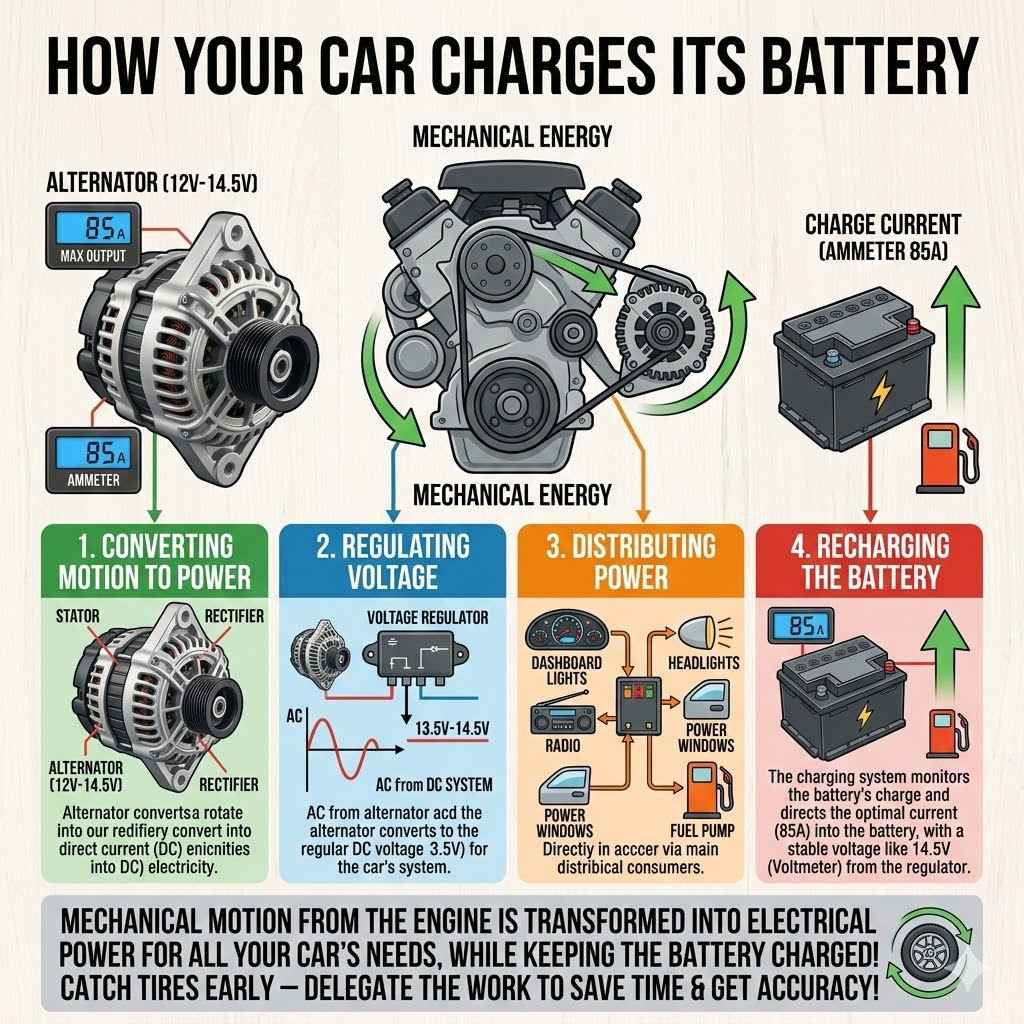
The main job of this system is to convert the mechanical energy from the engine’s rotation into electrical energy to keep the battery topped up and power everything else while the engine is running. It’s a clever system that’s always working to keep your car alive.
The Alternator’s Role
The star of the charging system is the alternator. Think of it as a mini power generator. When the engine runs, it spins a pulley connected to the alternator.
Inside the alternator, this spinning motion creates an electrical current. This current is then regulated and sent to the battery. The alternator also supplies power to all the other electrical components in your car, like the lights, radio, and air conditioning, so the battery isn’t doing all the work on its own when the engine is on.
The alternator is a critical part of your car’s electrical system. It’s a type of AC generator that converts mechanical energy from the engine into electrical energy. Without a working alternator, your car’s battery would drain quickly, and the car would eventually stop running.
The output of the alternator varies with engine speed. At idle, it might produce less power than when the engine is revving higher.
Alternator Components Explained
An alternator has several key parts that work together to generate electricity. The rotor is a rotating electromagnet that spins inside the stator. The stator is a stationary coil of wires where the electrical current is induced.
A voltage regulator controls the output of the alternator, making sure it doesn’t overcharge the battery. Diodes, often called a rectifier bridge, convert the AC current produced by the stator into DC current, which is what the car’s battery and electrical systems need. Bearings allow the rotor to spin smoothly and quietly.
Voltage Regulation
The voltage regulator is essential for the health of your battery and electrical system. It monitors the battery’s voltage and adjusts the alternator’s output accordingly. If the battery is fully charged, the regulator reduces the alternator’s output to prevent overcharging, which can damage the battery.
If the voltage drops, the regulator increases the alternator’s output to replenish the charge. This precise control ensures a stable power supply to all the car’s components.
The Battery’s Function
The car battery is more than just a power source for starting. It also acts as a buffer, smoothing out voltage fluctuations from the alternator. When you start your car, the battery provides a large burst of energy to crank the engine.
Once the engine is running, the alternator takes over supplying power. The battery is a reservoir, storing energy and releasing it when needed. It also helps to absorb any excess voltage spikes generated by the alternator or other electrical loads.
Car batteries are typically lead-acid batteries. They store chemical energy that is converted into electrical energy. This chemical reaction is reversible, meaning the battery can be recharged by an external source of electrical energy, like the alternator.
The battery has positive and negative terminals, connected to plates made of lead and lead dioxide immersed in an electrolyte solution, usually sulfuric acid.
Battery Lifespan and Health
A car battery’s lifespan is influenced by many factors, including temperature, driving habits, and maintenance. Extreme heat and cold can shorten a battery’s life. Short trips where the engine doesn’t run long enough to fully recharge the battery can also cause premature failure.
Keeping the battery terminals clean and ensuring the battery is securely fastened are simple maintenance steps that can help extend its life. A healthy battery ensures reliable starting and prevents electrical issues.
Regular checks of the battery’s condition are important. This can include checking the voltage with a multimeter or taking it to an auto parts store for a load test. A load test simulates the demands placed on the battery during starting and can reveal its ability to hold a charge under stress.
Signs of a failing battery include slow engine cranking, dim headlights, and warning lights on the dashboard.
Does Revving Engine Charge Battery Faster
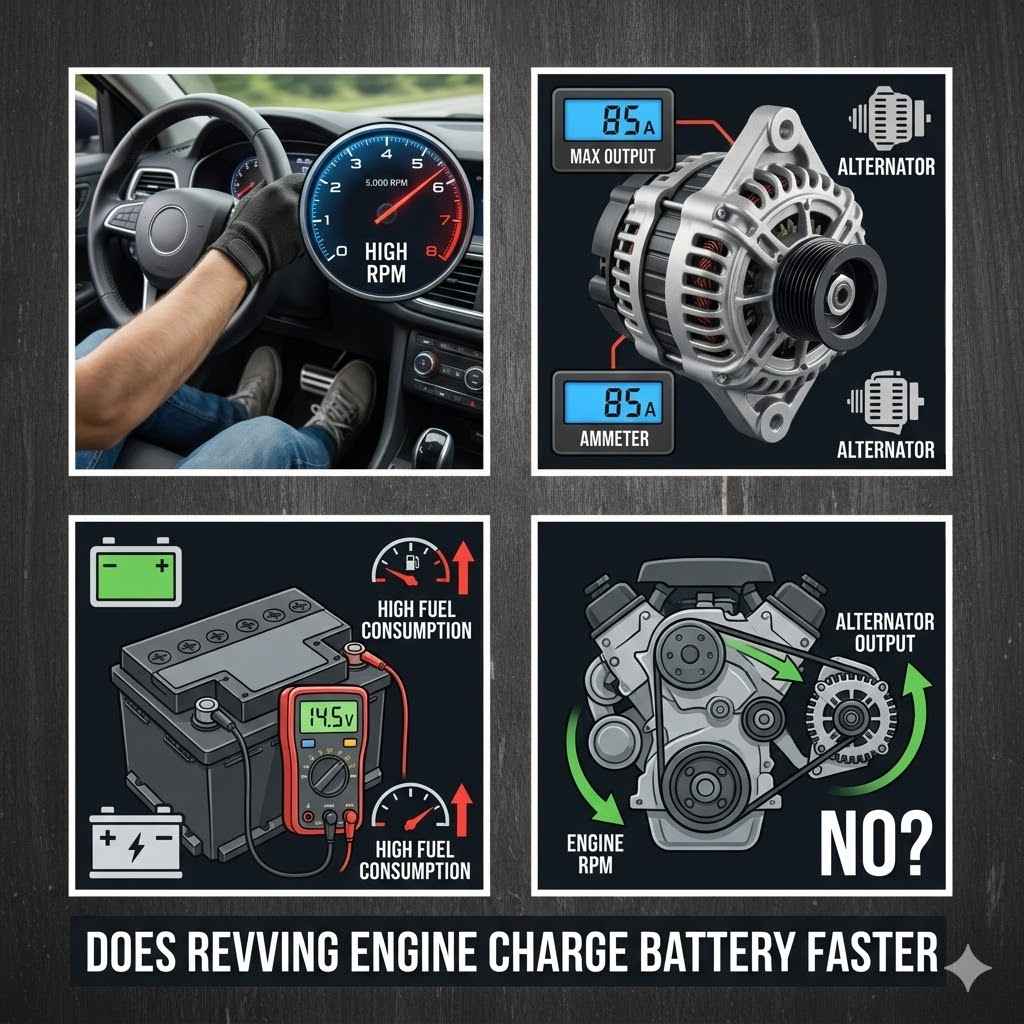
The question of whether revving an engine charges a battery faster is a common one. The direct answer is yes, to a degree, but it’s not the most efficient way to charge a battery, and there are important nuances to consider. When you increase the engine’s revolutions per minute (RPM), you spin the alternator faster.
A faster-spinning alternator generates more electrical current. This increased current can, in turn, charge the battery at a higher rate.
However, it’s crucial to understand that a car’s charging system is designed to maintain a sufficient charge, not to quickly top up a deeply depleted battery like a dedicated battery charger would. The voltage regulator plays a key role here. It limits the charging voltage to protect the battery from damage.
So, while revving the engine can increase the amperage (current) going to the battery, the voltage regulator will still cap the overall charging potential.
Understanding Amperage and Voltage
To grasp why revving affects charging, we need to touch on amperage and voltage. Voltage is like the “pressure” of electricity, pushing it through wires. Amperage is the “flow rate” or amount of electricity moving.
Your car’s battery needs both a sufficient voltage to accept a charge and a sufficient amperage to charge at a reasonable speed. When you rev the engine, you increase the alternator’s ability to produce higher amperage. This higher amperage can then be delivered to the battery.
Imagine a hose filling a bucket. Voltage is how much water pressure is in the hose. Amperage is how wide the hose is.
If you have low pressure but a wide hose, you can still get a lot of water into the bucket quickly. If you have high pressure but a very narrow hose, the water might just trickle in. The car’s charging system aims for a balance of both to keep the battery healthy and powered.
The Role of the Voltage Regulator
The voltage regulator is the gatekeeper of your car’s electrical system. It ensures that the voltage supplied to the battery and the car’s components stays within a safe range, typically between 13.5 and 14.5 volts. Even if the alternator is capable of producing more power at higher RPMs, the regulator will prevent the voltage from exceeding this safe limit.
This prevents damage to the battery, the alternator itself, and other sensitive electronics in the car.
So, while revving the engine can increase the potential for higher amperage, the voltage regulator’s control means the battery won’t be subjected to dangerously high voltages. It’s a protective mechanism that ensures the longevity of your car’s electrical components. Without it, a constantly overcharged battery would be a common and costly problem.
When Revving Might Help
There are specific scenarios where revving your engine might provide a slight advantage for battery charging, particularly if the battery is partially discharged and you need to get a bit more power into it quickly before shutting off the engine. For example, if you’ve been running a lot of accessories with the engine off, and then start the car and need to drive immediately, a few minutes of slightly elevated RPMs could help put a small charge back into the battery. This is more about topping it up than a deep charge.
Consider a situation where you used your car’s headlights and stereo for an extended period with the engine off. When you start the car, the battery will be a bit low. Driving normally, especially at lower RPMs, will charge it.
However, if you are idling for a long time and the battery is showing signs of weakness, increasing the RPMs for a short while can help the alternator work a bit harder and push more amps into the battery to compensate for the drain.
Scenario 1: The Dead Battery Jump Start
Imagine your car battery is completely dead. You connect jumper cables from another car. Once the engine of the other car is running, you then start your car.
After your car starts, you’re advised to keep both engines running for a few minutes, and sometimes, the instruction is to rev the engine of the car that was dead slightly. The reason for this is to get its alternator spinning faster to help recharge its own battery more quickly, and to ensure it can power its own systems without draining the good battery.
In this case, revving your car’s engine after a jump start helps its alternator produce more current. This extra current aids in rebuilding the charge in your battery, making it less likely to die again soon after the jumper cables are removed. It’s a temporary boost to get things moving in the right direction before you can get a proper charge.
Scenario 2: Extended Idling and Electrical Load
Another situation is prolonged idling with significant electrical load. If you’re stuck in traffic for an hour and running the air conditioning, radio, and charging your phone, your battery is under constant strain. While the alternator is still working at idle, its output might not be enough to fully power everything and maintain the battery charge.
In such cases, a brief period of revving can boost the alternator’s output, providing the extra power needed to keep everything running smoothly and to slightly replenish the battery.
This isn’t about revving to redline; it’s about increasing RPMs from idle to, say, 1500-2000 RPM for a short duration. This gives the alternator a chance to generate more amps and voltage, relieving the battery from carrying a significant load for a sustained period. It’s a way to provide a temporary power surge when the system demands are high.
Limitations and Inefficiencies
While revving can increase charging rate, it’s not a substitute for proper charging. Excessive revving can actually be detrimental. Your car’s battery is designed to be charged by the alternator during normal driving conditions.
Relying on high RPMs to charge a significantly depleted battery is inefficient and can lead to other problems. The alternator has limits, and so does the battery’s ability to accept charge.
Constantly revving your engine to charge the battery can lead to unnecessary wear and tear on engine components like the transmission and engine itself. It also burns more fuel, which is wasteful. The charging system is designed to work optimally within the engine’s normal operating range, not at exaggerated RPMs.
Think of it like trying to fill a glass of water by shaking it violently – you might get some water in, but it’s messy and not the best way.
Fuel Consumption and Wear
Revving an engine to charge the battery results in increased fuel consumption. You’re essentially burning more gasoline to produce more electricity, which is an inefficient exchange. Over time, this can become quite costly.
Furthermore, higher engine speeds mean more stress on engine parts, potentially leading to faster wear and tear. This includes components like pistons, bearings, and the drivetrain. It’s not an environmentally friendly or economically sound practice for charging a battery.
Consider the cost of fuel. If you spend 10 minutes revving your engine at 3000 RPM to gain a small charge, you’ll consume significantly more fuel than if you simply drove your car for 10 minutes at a moderate speed. The wear on your engine is also a hidden cost that could lead to expensive repairs down the line.
It’s a trade-off that rarely makes sense for battery charging.
Alternator Design and Output Curves
Alternators are engineered with specific output curves, meaning their power generation increases with RPM but eventually plateaus. At higher RPMs, the alternator might not significantly increase its output beyond a certain point. The voltage regulator also plays a crucial role in controlling the final output, ensuring it doesn’t exceed safe levels.
This means there’s a point of diminishing returns when revving; beyond a certain RPM, you gain very little extra charging capability, if any.
The output of an alternator is often designed to provide sufficient power for most vehicle systems at normal driving RPMs, typically above 1500 RPM. While higher RPMs do increase the amperage, the regulator ensures the voltage stays constant. Therefore, pushing the engine to very high RPMs might not yield a proportional increase in battery charging efficiency compared to moderate increases in RPM.
Alternatives to Revving for Battery Charging
If your car battery is significantly discharged or showing signs of weakness, there are much better and more effective ways to charge it than revving the engine. These methods are designed to provide a proper, controlled charge, extending the life of your battery and ensuring your car starts reliably.
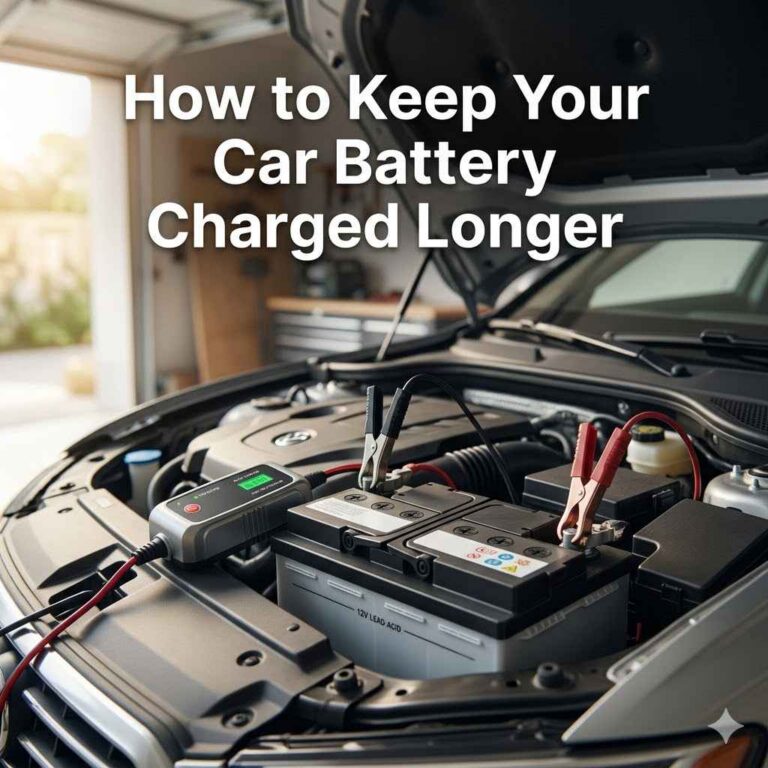
The most recommended approach is using an external battery charger specifically designed for car batteries. These chargers come in various forms, from simple trickle chargers to more advanced smart chargers. They connect directly to your battery and provide a controlled flow of electricity over a longer period, which is ideal for fully and safely recharging the battery.
Using an External Battery Charger
An external battery charger is the best tool for a deeply discharged battery. These devices connect to your car’s battery and a standard wall outlet. They use sophisticated circuitry to deliver a controlled charge, often in multiple stages, ensuring the battery is charged safely and effectively.
Many modern chargers are “smart” chargers that can detect the battery’s condition and adjust the charging process accordingly. They also have features to prevent overcharging and can even help desulfate a battery.
Smart chargers are particularly beneficial. They might first apply a high current for rapid charging, then switch to a lower current for a more thorough charge, and finally enter a maintenance mode to keep the battery topped up without damaging it. This multi-stage process is far superior to the fluctuating and less controlled output of a car’s alternator when revved.
Jump Starting and Driving
If you need to start your car and the battery is low, jump-starting it with another vehicle is a common solution. After your car starts, it’s important to drive it for at least 20-30 minutes, preferably at highway speeds, to allow the alternator sufficient time to recharge the battery. Short trips with a low battery can actually worsen its condition over time.
The alternator needs a continuous run time at a reasonable RPM to effectively replenish the energy used to start the engine. If you only drive for a few minutes, especially in stop-and-go traffic, the alternator might not put enough charge back into the battery. This can lead to a dead battery the next time you try to start your car.
A longer drive, with steady engine speeds, provides a much more effective charge.
Battery Maintenance and Testing
Regular battery maintenance is key to preventing issues. This includes keeping the battery terminals clean and free of corrosion. You can also have your battery tested periodically at an auto parts store or by a mechanic.
They can perform a load test to check the battery’s overall health and its ability to hold a charge. Early detection of a weak battery can save you from being stranded.
A simple visual inspection can often reveal battery problems. Look for any cracks in the battery casing or signs of leakage. Ensure the battery is securely mounted in its tray; a loose battery can be damaged by vibrations.
If your car’s battery is several years old, it’s a good idea to have it tested proactively, especially before winter, when cold temperatures place extra strain on batteries.
| Charging Method | Pros | Cons | Best For |
|---|---|---|---|
| Revving Engine | Slightly increases alternator output temporarily | Inefficient, burns fuel, potential engine wear, limited effect | Very short-term boost in specific situations (e.g., after jump start) |
| Driving After Jump Start | Utilizes the car’s own charging system | Requires sufficient driving time (20-30+ minutes), may not fully charge a deeply depleted battery | Recharging a partially discharged battery after starting |
| External Battery Charger | Controlled, efficient, safe charging; smart chargers offer advanced features | Requires access to AC power; takes time | Deeply discharged batteries, regular battery maintenance, optimal battery health |
Common Misconceptions
There are many old wives’ tales and misconceptions about car batteries and charging. One of the most persistent is that revving the engine is a quick fix for a weak battery. While it might offer a small, temporary increase in charging current, it’s not a sustainable or efficient solution.
Another myth is that leaving your car running idle for extended periods is good for the battery; in reality, modern alternators are most efficient when the engine is spinning at a moderate to high RPM, not just idling.
People often think that if the car starts, the battery is fine. However, a battery can have enough power to start the car but be unable to hold a full charge, leading to its failure soon after. It’s important to understand the difference between starting power and sustained charge capacity.
Regular checks are more revealing than just relying on the car starting each time.
The “Fast Charge” Myth
The idea of a “fast charge” for a car battery using only the engine is largely a myth. While revving increases the alternator’s output, the battery’s internal resistance and the limitations of the voltage regulator prevent truly rapid charging. A deeply discharged battery needs a sustained period of controlled charging to regain its capacity without being damaged.
Attempting to force a charge through excessive revving is counterproductive and can even shorten the battery’s life.
Fast charging a battery can generate a lot of heat, which is detrimental to its components. It can also lead to uneven charging, where the outer plates get fully charged while the inner plates remain undercharged. This reduces the overall capacity and lifespan of the battery.
Therefore, slower, more controlled charging methods are always preferred for battery longevity.
Idle vs. Driving
Many people believe that letting the car idle is an effective way to charge the battery. However, at idle RPMs, the alternator typically produces the least amount of electrical current. While it’s enough to keep most basic systems running, it might not be sufficient to fully recharge a battery that has been drained, especially if there are other electrical loads like headlights or the air conditioner running.
Driving, even for a short period, provides higher RPMs and thus a more robust charge from the alternator.
Think of it this way: idling is like gently paddling a canoe. You’re moving, but not very fast. Driving is like using a motor.
The alternator is the motor, and the engine RPMs are the throttle. More throttle (higher RPMs) means more power generated. So, while idling keeps the engine on and the alternator spinning, it’s not the most efficient way to replenish a depleted battery.
Does Revving Engine Charge Battery Faster Final Answer
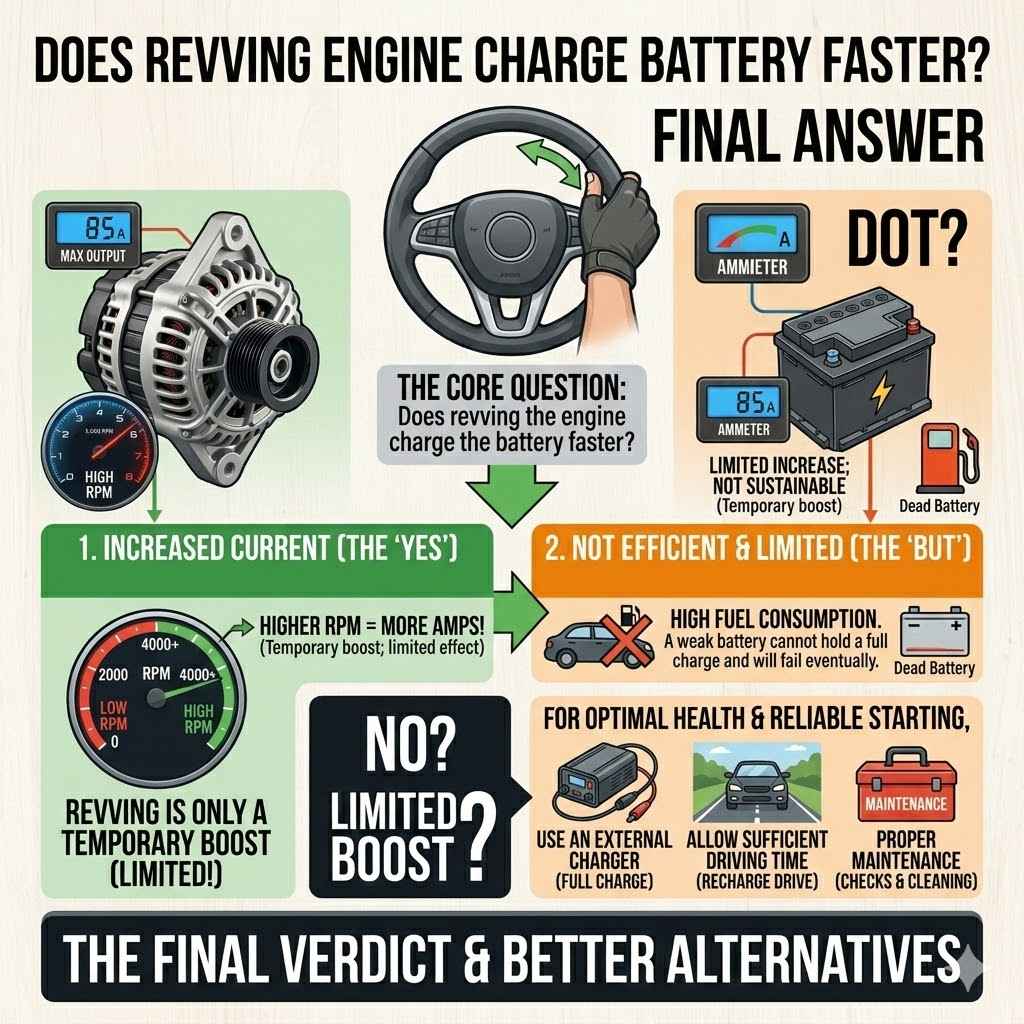
So, to finally answer the question: Does revving the engine charge the battery faster? Yes, it can increase the charging current from the alternator, but the effect is limited and not the most efficient method. It’s a temporary boost, not a solution for a dead or weak battery.
For optimal battery health and reliable starting, using an external charger or ensuring sufficient driving time after a jump start are far better alternatives. Proper maintenance and understanding how your car’s charging system works will keep your battery in good shape.
Frequently Asked Questions
Question: Will revving my car’s engine harm the battery
Answer: Revving the engine itself won’t directly harm the battery. However, consistently relying on high RPMs for charging is inefficient and can lead to excessive fuel consumption and engine wear, which indirectly impacts your car’s overall health and your wallet.
Question: How long should I drive to recharge my battery after a jump start
Answer: After a jump start, it’s recommended to drive your car for at least 20-30 minutes, ideally at highway speeds. This allows the alternator enough time and consistent RPMs to put a significant charge back into the battery.
Question: What is a smart battery charger
Answer: A smart battery charger is an electronic device that uses microprocessors to monitor the battery’s charge level and adjust the charging current and voltage accordingly. It often uses multi-stage charging and has features to prevent overcharging, making it safer and more effective than basic chargers.
Question: Can a weak battery cause my car to stall
Answer: Yes, a weak battery can indirectly cause your car to stall. If the battery can’t provide enough stable voltage, the engine’s computer and other critical systems might not function correctly, leading to engine performance issues and stalling.
Question: How often should I check my car’s battery
Answer: It’s a good idea to visually inspect your battery for corrosion and loose connections every few months. Have it professionally tested annually, or if you notice any signs of weakness like slow starting or dim lights.
Summary
Revving your engine can slightly boost the alternator’s output, offering a marginal increase in battery charging current. However, it is not an efficient or recommended method for significant charging. For optimal results and battery longevity, use an external charger or ensure adequate driving time.
Understanding your car’s charging system ensures you’re taking the best care of your battery.