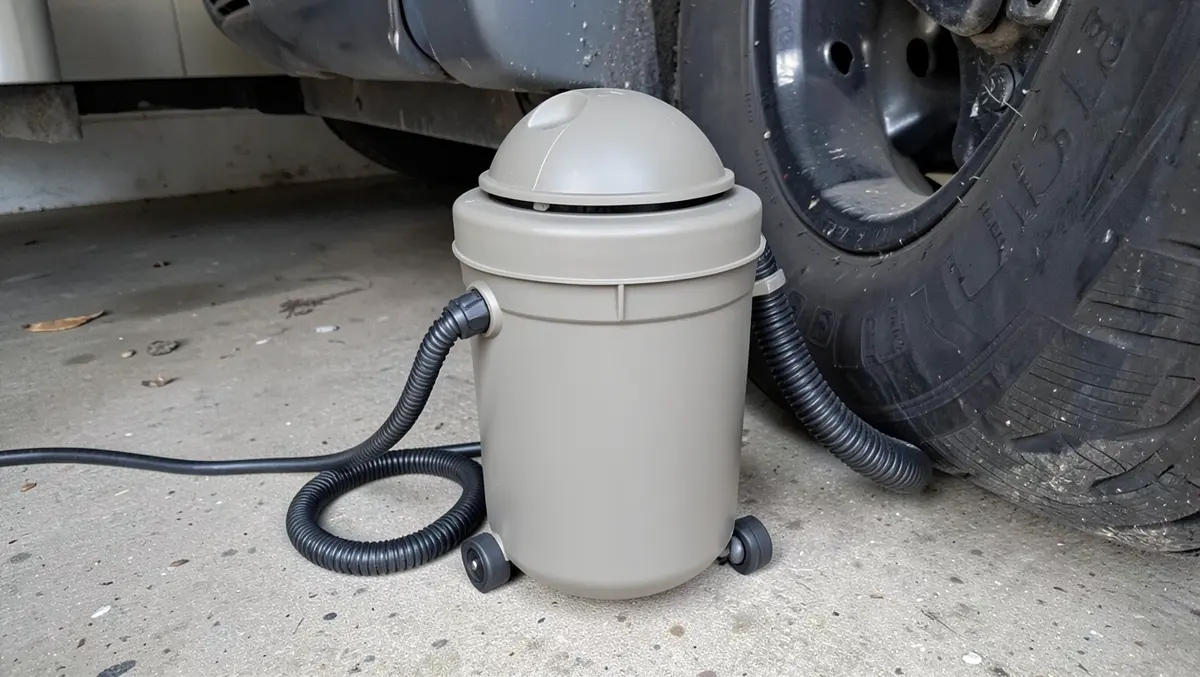
Car Detailing Vacuums: Dry Cordless vs. Wet/Dry Picks
Pick Dry Cordless for weekly crumb-and-dust cleanup, a 12V plug-in for fast car-powered touchups, and Wet/Dry Picks for spills, pet hair, and heavy debris. Choose the wrong one and you leave grit in seams, lose suction on mats, or run out of battery mid-clean. This guide compares the three by real detailing jobs, from apartment parking lots to garage deep cleans.
| Decision factor | Dry Cordless | Wet/Dry Picks | Winner |
|---|---|---|---|
| Best use case | Weekly crumbs, dust, and quick touchups | Sand, grit, liquids, muddy mats, and recovery work | Depends on mess |
| Reach | Lightweight handhelds, usually short reach unless you choose a 12V corded unit | Hose-based access; the Bissell Garage Pro uses a 32-foot hose | Wet/Dry Picks |
| Cleanup effort | Empty a small dust cup or canister | Empty a tank, manage wet pickup setup, and clean or swap the filter | Dry Cordless |
| Wet pickup | Not the right choice unless the listing clearly says wet capability | Built for liquid recovery when set up with the proper filter | Wet/Dry Picks |
| Portability | Best for apartment parking lots and quick in-car use | Best for garages or a fixed wall mount; some models wheel around | Dry Cordless |
| Ownership cost | Battery wear and replacement filters can add up | Filter setup, bags on some models, and accessory kits can add cost | Depends on model |
Why the vacuum type matters for car interiors
The mess picks the tool. Fine dust and fresh crumbs lift easily, so a small cordless vacuum or 12V unit keeps cleanup quick. Packed sand, wet coffee, and muddy mat sludge point you toward a wet/dry machine with a real tank and the right filter setup.
Competitors often flatten that difference into “cordless for small jobs, wet/dry for big jobs.” That skips the jobs that cause trouble: sand pressed into carpet, pet hair wrapped around seat seams, and liquid that needs recovery without soaking the filter.
Why maintenance cleaning favors dry cordless and 12V units
Dry cordless vacuums are a good fit for weekly maintenance, while wet/dry picks are often better for recovery work. They are light, quick to grab, and good for crumbs under child seats, dust on door pockets, and loose debris on the center tunnel. Car-optimized handhelds are commonly listed around 3 to 8 lbs, and that keeps them easy to move around cabin trim.
A 12V plug-in unit is the better road tool when you need power from the vehicle itself. It is portable on the road, but the tradeoff is modest suction versus a garage wet/dry vac.
Why recovery work favors wet/dry shop vacs
Wet/dry picks are the better answer when the job involves recovery, not maintenance. They handle dry debris and liquids, so they are the safer choice for sand, grit, spilled drinks, and shampoo extraction on mats. The Shop-Vac 5 Gal is positioned for heavy wet/dry cleanup, which is the kind of work a handheld should not be asked to carry.
That extra capacity changes the cleaning rhythm. A tank holds more debris, and hose reach keeps the machine outside the cabin, so you are not dragging a small handheld across the seats while the filter chokes on grit.
Where cordless wet/dry hybrids fit between the two
Hybrid cordless wet/dry models make sense when you want one tool for light spills and maintenance, not a full garage replacement. They sit in the middle for apartment owners who need some liquid pickup and do not have room for a wheeled canister or wall-mounted setup.
Use them for small accidents, not saturated carpets. If the listing does not clearly state wet pickup support, treat it as a dry-only machine.
How the comparison breaks down
The main tradeoff is simple: Dry Cordless wins on convenience, while Wet/Dry Picks win on cleanup depth and mess tolerance. The wrong choice usually shows up as poor reach, too little runtime, or a filter that turns a spill into extra work.
Power source and portability
Dry cordless vacuums are easiest to move from trunk to driver footwell to back seat without cords or hose handling. That makes them ideal for apartment dwellers, rideshare drivers, and anyone cleaning in a parking space.
Wet/dry vacs are often corded or garage-based. They are less mobile, but they give you a larger tank and enough reach to keep the machine outside the car while you work inside the cabin.
Runtime, reach, and hose length
Battery runtime is the weak point for cordless units. Fourth Gear lists the Black+Decker CHV1410L at 11 minutes per charge, which is enough for touchups but not for a full interior after a road trip.
Reach works differently on a wet/dry vac. The Bissell Garage Pro uses a 32-foot hose, and that matters in a garage because you can clean seat rails, cup holders, and cargo corners without moving the unit. A car detailing hose kit adds the same precision to a standard shop vac.
Dust cup versus tank capacity
Small cordless vacuums trade capacity for speed. You empty them often, but that is a fair exchange for grabbing crumbs and dust in a minute or two. That is why small cordless vacuums suit short jobs better than full details.
Wet/dry picks are built around larger tanks. The Bissell Garage Pro has a 4-gallon dirty tank, and that extra headroom helps when you are lifting sand, mat debris, or liquid recovery from more than one area of the cabin.
Wet pickup setup and cleanup effort
Wet pickup is where many buyers get tripped up. A wet/dry vacuum needs the right filter setup for liquid work, and using the wrong one can create a mess that is harder to clean than the spill itself.
Dry cordless vacuums are simpler after use. Empty the dust cup, tap the filter if the model allows it, and put it away. Wet/dry machines ask more of you, but they also solve bigger problems.
Which vacuum fits your mess?
Choose by the material you clean most often, not by the most dramatic job you hope to avoid. If your car sees dry debris every week, a cordless or 12V unit is usually enough. If the cabin regularly picks up wet messes, grit, or mud, a wet/dry pick is the better fit.
Say your child drops a small coffee in the back seat and the spill reaches the floor mat edge. A dry cordless vacuum can tidy the dry grounds around it, but the liquid calls for a wet/dry setup with the correct filter and an upholstery tool.
Suppose a rideshare driver finishes a weekend shift with fast-food crumbs, two muddy shoeprints, and a bit of pet hair on the rear bench. The quickest sequence is a 12V or cordless unit for the crumbs, then a wet/dry vac for the mat cleanup and the embedded grit.
Sand and grit in carpet
Wet/dry picks are the better answer for sand and grit because the debris sits deep in carpet pile and tracks into seams. A crevice tool helps at the seat rails, but a larger shop vac with steady airflow is better when the grit keeps reappearing after one pass.
A weak handheld can move the top layer and leave the rest behind. That is one of the clearest failure cases in car detailing vacuum shopping.
Pet hair on seats and cargo areas
Pet hair sits in a middle zone. A cordless handheld can handle light shedding on seats, but heavy hair in cargo carpet usually favors a wet/dry vac with an upholstery tool and a crevice nozzle for the edges.
BLACK+DECKER dustbuster and Pivot Auto style vacuums show up in rankings for quick seat and crevice cleanup because they are lightweight. For a full pet-hair reset, reach matters as much as suction.
Coffee spills and other liquids
Liquids belong with wet/dry picks when the listing clearly supports wet pickup. They are the only safe choice here when the listing clearly supports wet pickup, because a dry cordless vacuum is not made for liquid recovery. That is especially true if the spill has spread into carpet backing or under a floor mat.
The cleanup sequence is different too. Blot first, then vacuum with the right wet setup, then check the filter and tank before storing the machine.
Muddy floor mats and road-trip debris
Muddy mats are another clear win for Wet/Dry Picks. The job involves both loose debris and damp residue, which is exactly where a garage shop vac with a floor tool and crevice tool earns its keep.
Road-trip debris is a mixed case. Snack crumbs and napkins favor Dry Cordless; sand, mud, and tracked-in gravel favor Wet/Dry Picks. Many owners end up wanting both because the cabin rarely collects just one kind of mess.
Car detailing vacuum decision matrix
This matrix maps common cleaning scenarios to the better vacuum type, the attachment you actually need, and the main tradeoff you accept. It is the quickest way to match the machine to the job instead of buying around a spec sheet.
| Scenario | Best vacuum type | Required attachments | Tradeoff you accept |
|---|---|---|---|
| Sand in carpet | Wet/Dry Picks | Crevice tool, floor tool, car detailing hose kit | More setup and more cleanup effort |
| Pet hair on seats | Dry Cordless | Upholstery nozzle, small brush tool | Short runtime on some models |
| Coffee spill | Wet/Dry Picks | Wet-capable nozzle, upholstery tool | Filter setup and tank emptying |
| Muddy floor mats | Wet/Dry Picks | Floor tool, crevice tool | More hose handling and rinse cleanup |
| Weekly crumbs | Dry Cordless | Crevice tool | Small dust cup |
| Road-trip debris | Dry Cordless for light debris; Wet/Dry Picks for sand and grime | Crevice tool, upholstery nozzle | One tool may not cover both conditions well |
What attachments matter most?
Attachments decide whether a vacuum can actually clean a car interior instead of just moving debris around. Seat rails, vents, and cup holders need narrow tools; seats and mats need broader contact; and garage shop vacs benefit from hose kits that turn a large machine into a precise detailing tool.
Crevice tools for seat rails and cup holders
A crevice tool is the first attachment to buy or confirm in the box. It reaches seat rails, cup holder grooves, console seams, and the track area where crumbs collect and disappear.
That narrow shape matters more than raw suction in tight spaces. A wide nozzle cannot replace it.
Upholstery nozzles for seats and mats
An upholstery nozzle works better on seat fabric and floor mats because it gives the surface more contact. It is the right choice for crumbs, surface dust, and loose hair on broad areas.
For heavier sand or tracked-in grit, the upholstery tool helps, but it should be paired with a machine that has enough airflow to pull material from the pile.
Micro hoses for tighter access on shop vacs
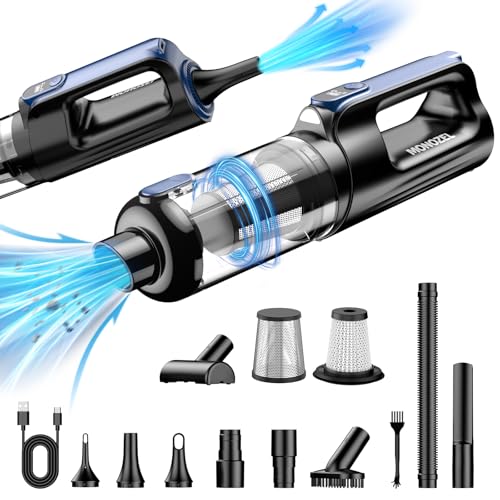
A car detailing hose kit is worth it when a standard shop vac feels too bulky for interior work. Micro hoses and crevice nozzles fit about 1.25-inch and 2.5-inch shop vac ports, which can help reach seat rails and cup holders without dragging a full-size nozzle across trim.
Alles Car Parts also notes that an accessory kit reaches seat rails and vents. That is the kind of precision you want if your garage vac is going to double as a car tool.
When a detailing hose kit is worth it
Buy the hose kit when you already own a shop vac and keep missing the tight spots. It is especially useful for garage owners who want one machine for the floor, the workbench, and the car interior.
It is less useful if your only goal is quick weekly crumbs. In that case, a lightweight handheld is still easier to grab.
How much vacuum do you need?
Most buyers do not need the biggest machine on the shelf. They need enough suction for the debris they see most often, enough reach to stay out of the cabin, and enough capacity to finish the job without constant emptying.
What a cordless handheld can handle
A cordless handheld can handle crumbs, dust, and quick seat touchups. It is the better fit when the car gets frequent light messes and the goal is a fast reset rather than a full detail.
BLACK+DECKER’s CHV1410L is listed at 2.6 lbs and 11 minutes per charge, which is useful as a reference point for the category: light, quick, and limited by runtime.
When a 12V plug-in is the better road tool
A 12V plug-in vacuum makes sense if you clean while traveling or you do not have garage power where the car sits. It is portable on the road and fits maintenance cleaning better than deep recovery work.
If the cabin gets cleaned in parking lots, the corded car outlet matters more than peak suction. That is why a 12V option is a practical middle step for drivers who want a dedicated vehicle tool.
When a garage shop vac is the better buy
Choose a garage shop vac if the car regularly collects grit, liquid, or muddy debris. The Shop-Vac 5 Gal is positioned for heavy wet/dry cleanup, and a wheeled canister with floor, gulper, and crevice tools is better suited to larger cleanup jobs than any handheld.
The Bissell Garage Pro sits in the same work zone with its 32-foot hose and 4-gallon dirty tank. That style suits garage owners who want reach and capacity more than portability.
Choose Dry Cordless if… / Choose Wet/Dry Picks if…
Choose Dry Cordless if you clean crumbs, dust, and light pet hair every week; if you park in apartments or public lots; if you want a fast grab-and-go tool; or if you value low cleanup effort more than deep recovery work.
Choose Wet/Dry Picks if you deal with sand, spilled drinks, muddy mats, or shampoo extraction; if you own a garage and want longer reach; if you need liquid pickup; or if you want one machine that can do recovery work that a handheld should not be asked to do.
Choose a cordless wet/dry hybrid if you want a middle ground for small spills and routine cleanup, but check the listing carefully for actual wet capability. If the mess is mostly dry and recurring, Dry Cordless wins. If the mess is heavy, wet, or gritty, Wet/Dry Picks win.
- Pick the mess you clean most often.
- Check whether you need wet pickup or only dry debris cleanup.
- Match the tool shape to the tightest spot in the cabin.
- Buy the vacuum type that fits your storage space and cleanup routine.


Frequently asked questions
Is a cordless car vacuum better than a wet/dry vac?
A cordless car vacuum is better for quick maintenance, not full recovery work. It wins on convenience, short grab-and-go cleanup, and easy storage. A wet/dry vac is the better choice for sand, liquids, muddy mats, and anything that fills a small dust cup too quickly.
Can a wet/dry vacuum pick up spilled liquids in a car?
Yes, if the vacuum is set up for wet pickup and the model actually supports it. Use the proper filter setup and a nozzle suited to the spill. Dry-only vacuums should not be treated as liquid machines, even for a small coffee spill.
What size wet/dry vacuum is best for car detailing?
A 4 to 6 gallon wet-dry shop vac is the best all-round choice for many buyers. It gives enough capacity for sand, mats, and recovery work without becoming too bulky for garage use. The right answer still depends on how much space you have and whether the vac stays on wheels or on a wall.
Do cordless car vacuums have enough suction for pet hair?
They can handle light pet hair on seats and quick cleanups, especially with an upholstery nozzle. Heavy hair in carpet or cargo areas is tougher and usually favors a wet/dry vac with more airflow and better reach into seams and edges.
What attachments matter most for car interior detailing?
A crevice tool matters most for seat rails, cup holders, and console seams. An upholstery nozzle helps on seats and mats. If you use a shop vac, a detailing hose kit with a micro hose and narrow nozzles is worth it because it improves precision where a full-size hose is too clumsy.
Can I use a garage shop vac for detailing my car?
Yes, and it is often the better choice for deep cleaning. A garage shop vac gives you more capacity and better recovery work, especially with the right detailing hose kit. Check the manufacturer’s listing for your model if you need to confirm wet pickup, hose size, or accessory fit.
Products related to this article
Sponsored / affiliate links. As an Amazon Associate I earn from qualifying purchases. I may earn additional commission from eligible campaigns.