Car Battery Replacement Cost (2026): Flooded vs AGM Prices
A car battery replacement costs about $80 to $180 for a standard flooded battery and $180 to $350 for an AGM battery, according to battery maker Battery Tender, before any installation fee. Which type your car needs matters more than where you buy: a start-stop car that takes AGM can cost $80 to $150 more per battery than a car that takes a basic flooded one. This guide covers prices by battery type, what installation, core charges and battery registration add, and how to avoid paying for a battery you do not need.
How Much Does a Car Battery Replacement Cost?
Best Test-Before-You-Buy Pick
|
TOPDON BT50 12V Battery Tester (100-2000 CCA), $32.99 (price as of 2026-10-12; varies) A battery that is merely discharged does not need a $200 replacement. A tester that reads cranking health tells you which one you have before you pay for a new one.
|
As an Amazon Associate we earn from qualifying purchases.
The honest answer is a range, because the battery itself is most of the bill. Battery Tender puts flooded batteries for passenger cars at $80 to $180 and AGM batteries at $180 to $350, and says the gap between the two is often $80 to $150. Add installation, which can be free, a fee, or a mobile-service premium depending on where you go, and the total moves again.
AAA’s Auto Club Group page says to expect around $200 or more for a standard flooded battery and around $250 or more for a premium AGM, with tax and an environmental fee extra (page read 2026-10-12; undated, so confirm current pricing). That sits above the maker range, a useful reminder that retail and mobile-service prices tend to land toward the top of any quoted range.
Cost Breakdown
Three line items make up the bill. The battery is the big one. Installation is the second: it ranges from free with purchase to a labor charge at a shop, and the Auto Club Group page lists 10% off labor for AAA members, up to $75 of savings. The third is the core charge, a deposit refunded when you return the old battery, covered below.
| Battery type | Typical price range | Typical life | Notes |
|---|---|---|---|
| Flooded lead-acid | $80 to $180 | 3 to 5 years | Cheapest. Serviceable types need electrolyte checks. Wrong choice for most start-stop cars. |
| AGM (absorbent glass mat) | $180 to $350 | 5 to 8 years | Sealed, no fluid top-offs. Needed by many start-stop and high-electronics cars. |
| EFB (enhanced flooded) | Price not sourced this session | Check the label | Accepted by some start-stop systems. Match what your car came with. |
What Affects the Price?
- Battery type: AGM costs more than flooded. Our explainer on AGM car batteries covers what you get for the extra money.
- Group size and power rating: the BCI group size (for example 24F, 35, 48 or 65) sets the physical fit, and cold cranking amps set the power. Your owner’s manual lists what the car needs. Buying a higher rating than required adds cost without a benefit.
- Warranty length: a longer free-replacement period usually shows up as a higher sticker price.
- Registration and labor: cars that need the new battery registered with the computer add a step that not every counter performs.
Current Prices: What AGM Batteries Cost Online Right Now
Most guides repeat the same ranges. To check them against live listings, we pulled the first ten results Amazon returned for AGM batteries in four common group sizes through Amazon’s product data on 2026-10-12. It is a snapshot of one retailer, not a market survey, and prices change daily.
| Group size (AGM) | Lowest listing | Highest listing | What the high end was |
|---|---|---|---|
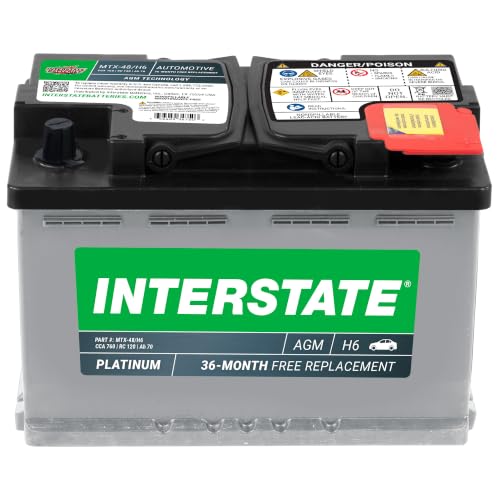
| 35 | $149.99 | $279.95 | A premium brand-name unit (Interstate Group 35 AGM) |
| 24F | $151.99 | $279.95 | A premium brand-name unit (Interstate Group 24F AGM) |
| 48 (H6) | $149.99 | $279.95 | A premium brand-name unit (Interstate Group 48 AGM) |
| 65 | $149.99 | $424.95 | A pure-lead AGM (Interstate MTZ-65), an outlier |
Two things stand out. First, the spread inside a single group size is large, roughly $150 to $280 for the same physical battery size, so brand and warranty explain much of the price. Second, the low end of these listings sits below the bottom of Battery Tender’s $180 to $350 AGM range, which shows how much lower unbranded online prices can run. A lower price is not automatically a better deal: check the warranty terms and whether the seller handles the core return before you buy.
What Does Installation Cost?
Installation is where the same battery can end up costing very different totals. These are the main routes.
| Route | Installation cost | What to know |
|---|---|---|
| Do it yourself | No labor charge | You buy the battery and supply basic tools. You also own the old-battery return and, on newer cars, the registration problem. |
| Parts store or Walmart | Free with purchase at many stores | Advance Auto Parts, O’Reilly and Walmart each describe free installation with purchase on their store-service pages, with exclusions. O’Reilly lists inaccessible batteries and cars that need a battery saver or system reset as not eligible. Confirm before you buy. |
| AAA mobile service | Part of the quoted price | Auto Club Group lists about $200+ flooded and $250+ AGM, tax and environmental fee extra, with members saving at least $22. Some vehicles need extra labor because of where the battery sits. |
| Independent shop or dealer | Labor charge, varies | No labor figure was confirmed this session. Ask for a written quote that separates the battery, labor, core charge and any registration fee. |
If you are weighing roadside service, our AAA roadside assistance review covers what membership includes.
Core Charges: The Fee You Get Back
A core charge is a deposit added to the price of a new battery and refunded when you return the old one. EPA says core charges run about $5 to $20 and that the state decides the dollar amount. EPA also says the U.S. recycles about 99% of lead-acid batteries each year, citing its 2018 materials-management fact sheet. The practical advice is simple: bring the old battery with you, or return it with your receipt, and the deposit comes back. Never throw a car battery in the trash. See EPA’s lead-acid battery collection page for the return rules.
One snag worth knowing: if you buy online, the refund process differs from buying in a store. Ask how the core return is handled before checkout so the deposit is not lost.
Do You Need Battery Registration After Replacement?
Many newer cars track battery age and charge history in a control module. After a swap, that module can keep applying the old battery’s history to the new one, which can lead to overcharging and a shorter battery life. Scan-tool maker OTC states that certain Ford F-Series trucks need a scan tool to reset battery life when an old battery is replaced, and that skipping the reset can cause overcharging, shorten battery life or trigger limp-home mode. OTC also states that changing battery type on BMW and MINI models calls for dealer-level reprogramming.
This is vehicle-specific, so do not guess. Search your owner’s manual index for “battery” and look for a registration, reset or adaptation step, and tell the installer your make, model and year before they start. If the car needs registration and the counter does not offer it, budget for a shop visit. It is the most common way a “cheap” battery swap ends up costing more than the quote.
Is the Battery Really the Problem?
Before you spend $100 or more, confirm the battery is what failed. A battery that is only discharged can often be recharged, while a failing alternator will kill a brand-new battery in short order. Our guide on how to check car battery health walks through the tests, and a battery tester like the one above gives you a reading you can show a salesperson.
If the battery is only drained, charging it properly may be enough. A drained battery that fails again within days points to the alternator or a parasitic drain, and a shop can test the charging system.
Cost Per Year: Why the Cheap Battery Is Not Always Cheaper
Price per battery is only half the picture. Dividing Battery Tender’s price and lifespan figures gives a rough cost per year of ownership (our own arithmetic, not a quoted figure):
| Scenario | Calculation | Approx. cost per year |
|---|---|---|
| Flooded in a car that suits it | $80 over 5 years to $180 over 3 years | $16 to $60 |
| AGM in a car that needs it | $180 over 8 years to $350 over 5 years | $23 to $70 |
| Flooded wrongly fitted to a start-stop car | $80 over 1.5 years to $180 over 1 year | $53 to $180 |
The last row is the one that matters. Battery Tender says a standard flooded battery in a vehicle with start-stop is expected to fail within about 12 to 18 months, so saving $80 to $150 on the wrong battery type can cost more per year than the AGM it replaced. If your car came with AGM or EFB, replace it with the same type. For help choosing, see our guide to car batteries for stop-start vehicles, or read our take on one popular store brand in are Duralast car batteries good.

How to Replace a Car Battery Yourself
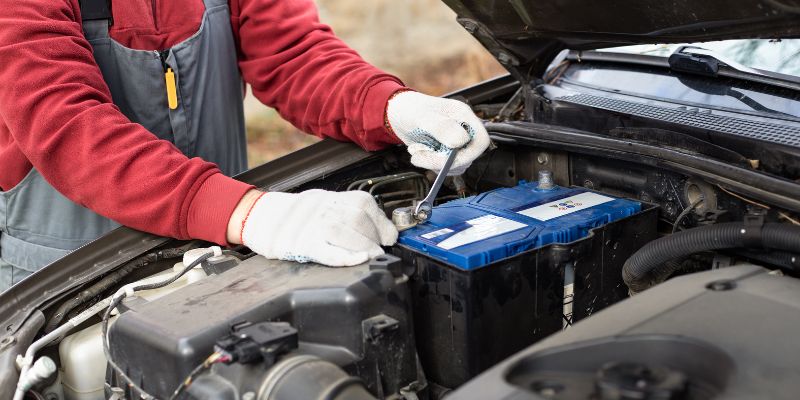
Doing it yourself removes the labor charge, but it is not right for every car. If your battery sits under the seat or a body panel, the car needs registration, or you are not comfortable with the hazards below, pay a professional.
Safety First
- Wear gloves and safety glasses. Car batteries contain corrosive acid.
- Keep sparks, flames and smoking away. Batteries can vent flammable gas.
- Never let a metal tool bridge the positive terminal and any grounded metal.
- Stop and have a professional handle it if the case is cracked, swollen or leaking.
Steps to Replace It
- Turn the car off, set the parking brake and open the hood.
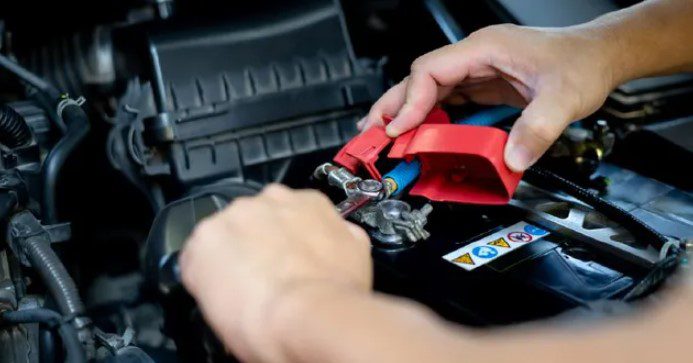
- Loosen and remove the negative (black) cable first, then the positive (red).
- Release the hold-down clamp and lift the old battery out. It is heavy.
- Set the new battery in the tray with the terminals oriented the same way, and secure the hold-down.
- Connect the positive cable first, then the negative, and tighten both snugly without overtightening.
- Start the car, then return the old battery to get your core charge back.
If the terminals are corroded, clean them before connecting the new battery; our guide on why car batteries corrode explains the causes. A weak connection can mimic a bad battery.
Related Costs: EVs and Hybrids
One point of confusion: every gas-powered car and every EV still has a small 12-volt battery like the ones above, used to run accessories and wake up the electronics. That is separate from an electric vehicle’s much larger traction pack, and replacing the pack is a different order of magnitude; see how much Tesla car batteries cost. For the broader view, our post on whether car batteries are expensive covers why they cost what they do.
Conclusion
Expect roughly $80 to $180 for a flooded battery and $180 to $350 for AGM per Battery Tender, plus installation, a refundable core charge and, on some cars, a registration fee. Test the battery first, match the type your car came with, ask what installation and registration are included, and bring the old battery back for your core refund.
Frequently Asked Questions
How much does a car battery cost?
Per battery maker Battery Tender, a standard flooded battery for a passenger car costs about $80 to $180 and an AGM battery about $180 to $350. Retail, mobile-service and online prices vary, so check current prices for your group size before you buy.
How much does it cost to replace a car battery?
Add installation to the battery price. Installation is free with purchase at many parts stores, with exclusions, and extra at shops or through mobile service. AAA’s Auto Club Group page lists about $200 or more for flooded and $250 or more for AGM, tax and environmental fee extra.
Is a core charge refundable?
Yes. EPA says a core charge is a deposit refunded when you return the old battery, typically $5 to $20 with the amount set by the state. Return the old battery with your receipt, and ask how refunds work if you bought online.
Do auto parts stores install batteries for free?
Many do with purchase, but not for every car. O’Reilly says vehicles with an inaccessible battery or one that needs a battery saver or system reset may not be eligible. Ask the store whether your car qualifies before you buy.
Do I need to register a new car battery?
Some newer cars need it. Scan-tool maker OTC says certain Ford F-Series trucks need a scan-tool reset after a battery change and that BMW and MINI battery type changes need dealer-level reprogramming. Check your owner’s manual for your exact model.
How long does a car battery last?
Per Battery Tender, flooded batteries typically last 3 to 5 years and AGM batteries 5 to 8 years with proper maintenance. A flooded battery in a start-stop car is expected to fail in 12 to 18 months.
Products related to this article
Sponsored / affiliate links. As an Amazon Associate I earn from qualifying purchases. I may earn additional commission from eligible campaigns.