Does United Explorer Card Cover Rental Car Insurance? (Visa, Not Mastercard)
The United Explorer Card, a Chase-issued Visa (not a Mastercard), provides primary rental car collision and theft coverage up to $60,000 worldwide for rentals of 31 days or less. You must decline the rental company’s own CDW and charge the entire rental to this card to activate it. This guide covers what’s actually covered, the vehicle types excluded, and the exact steps to file a claim if something goes wrong.
Understanding Your Card’s Built-In Protection
The United Explorer Card provides an “Auto Rental Collision Damage Waiver.” This benefit reimburses you for theft or collision damage to the rental vehicle, up to $60,000, and is available worldwide.
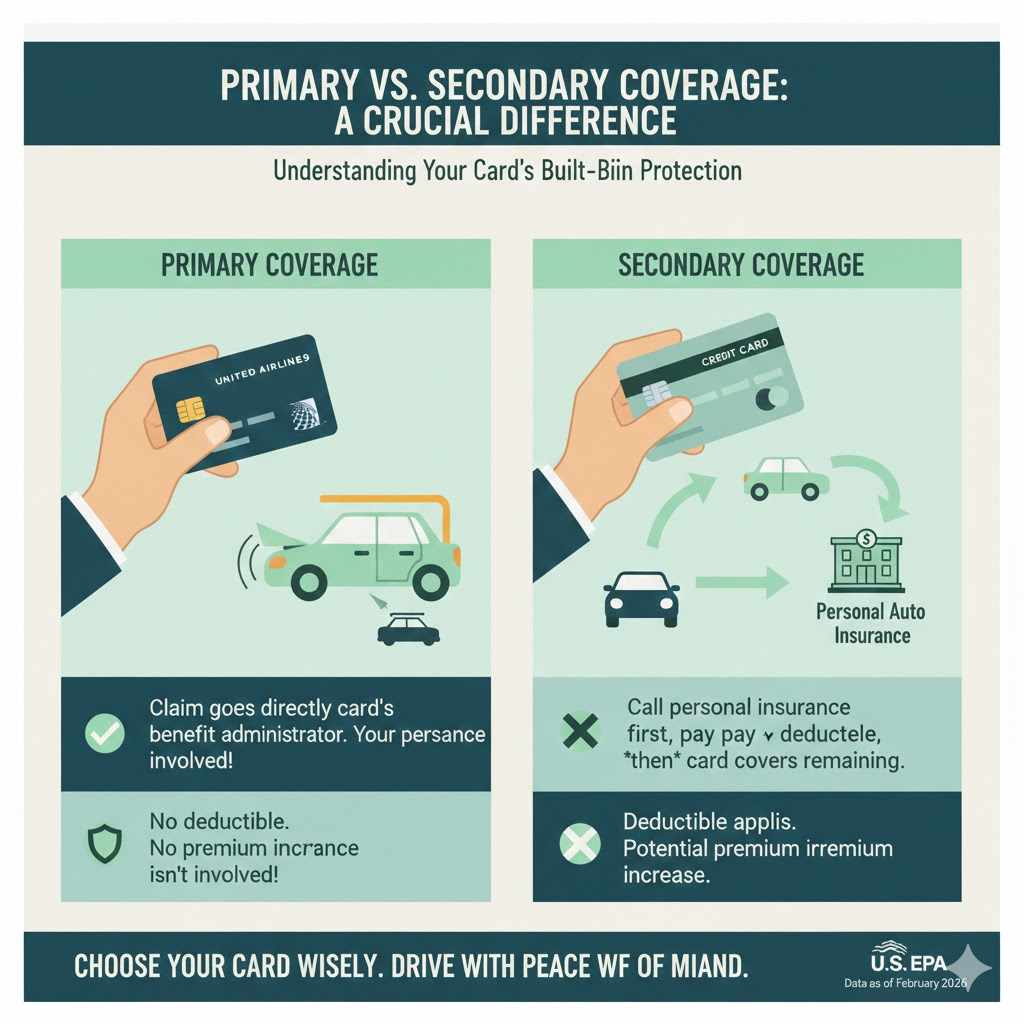
Primary vs. Secondary Coverage: A Crucial Difference
A “primary” benefit is your first line of defense — if the rental car is damaged or stolen, you file a claim directly with the card’s benefit administrator, without involving your personal auto insurer at all. That means no deductible from your own policy and no risk of your premiums rising. A “secondary” benefit only pays out after your personal insurance has already paid its share. The United Explorer Card’s rental coverage is primary both inside and outside the US (New York residents are the one exception — see the FAQ below).
Is the United Explorer Card a Visa or a Mastercard?
It’s a Visa Signature card, issued by Chase — not a Mastercard. This mix-up is common because several other rental-insurance questions online are about Mastercard-branded cards, which carry a different set of benefit terms. If your card is actually a Mastercard, see our separate guides on Mastercard rental car coverage and Mastercard’s rental insurance terms instead — the rules below apply specifically to the United Explorer Visa.
What Does the United Explorer Card Rental Insurance Cover?
The coverage is comprehensive for typical rental situations, reimbursing up to $60,000 in damages per claim. Here’s a breakdown of what’s included:
| Covered Events | Description |
|---|---|
| Collision Damage | Physical damage to the rental car, from a parking-lot dent to a full accident. |
| Theft | Reimburses the vehicle’s value if the rental car is stolen. |
| Loss of Use Charges | Covers the rental company’s substantiated charges for lost rental income while the car is repaired. |
| Administrative Fees | Covers the rental agency’s reasonable administrative fees tied to processing the claim. |
| Towing Charges | Reasonable towing to the nearest qualified repair facility, when due to a covered theft or collision. |
Note that vandalism-specific damage isn’t listed as its own category in Chase’s official Guide to Benefits — it’s covered only to the extent it qualifies as “damage” from a covered event, so don’t assume every scenario is automatically included.
What Is NOT Covered? Important Exclusions to Know
Knowing the exclusions is just as important as knowing the benefits. Per Chase’s official Guide to Benefits, here’s what the United Explorer Card’s rental insurance does not cover:
- Liability Insurance: The card doesn’t cover damage to other vehicles, property, or injuries to other people. You can learn more about liability requirements from the Insurance Information Institute. Most drivers have liability coverage through their personal auto policy; if you don’t own a car, ask the rental company about supplemental liability insurance (SLI).
- Exotic and high-value vehicles: Any vehicle with a manufacturer’s suggested retail price over $125,000, or exotic brands including Aston Martin, Bentley, Bugatti, Ferrari, Koenigsegg, Lamborghini, Lotus, Maybach, McLaren, Pagani, and Rolls Royce.
- Antique cars: Vehicles over 20 years old, or that haven’t been manufactured for 10 years or more.
- Cargo vans, trucks other than pick-ups, motorcycles, mopeds, limousines, vehicles rented with a driver, and RVs. Regular pick-up trucks themselves are covered — but damage to the interior bed of a pick-up is excluded unless it results from a covered collision or theft.
- Large passenger vans: vans seating more than 12 people, including the driver — not 9, as often misreported.
- Long rentals: the benefit only applies to rental periods of 31 consecutive days or less.
- Personal injury and personal belongings: your own medical expenses fall under health insurance; stolen belongings fall under homeowner’s or renter’s insurance.
- Car-sharing rentals: vehicles rented through peer-to-peer services like Turo are not covered by this benefit.
Coverage is available worldwide, but some countries or rental agencies may require a letter of coverage before they’ll accept it — check with the rental agency before you travel, and call 1-800-350-2919 if you need Chase to provide one.
How to Activate Your United Explorer Card Rental Car Insurance
Using this benefit only takes two steps. Miss either one and the coverage won’t apply.
Decline the Rental Company’s CDW/LDW
At the counter, the agent will offer their Collision Damage Waiver (CDW) or Loss Damage Waiver (LDW). Decline it. Accepting their waiver, even for a single day of a multi-day rental, cancels your card’s primary coverage for the entire rental.
Pay for the Entire Rental with Your United Explorer Card
Charge the full rental transaction to your United Explorer Card — you can also use redeemable Rewards, but splitting payment with another card or paying any portion with cash will void the benefit. The primary driver’s name on the rental agreement must match the cardholder’s name.
Card Insurance vs. Rental Counter Insurance: A Cost Comparison
A rental company’s CDW typically runs $15–$30 per day. Here’s how the two options stack up over a one-week rental:
| Feature | United Explorer Card Benefit | Rental Company CDW/LDW |
|---|---|---|
| Cost | $0 (included with your card) | $15–$30/day ($105–$210/week) |
| Coverage Type | Primary — doesn’t involve your personal insurance | Waiver from the rental company |
| Coverage Cap | Up to $60,000 | Typically the full vehicle value |
Relying on the card benefit instead of the counter waiver can easily save over $200 on a single week-long rental, which alone can offset the card’s annual fee over a few trips a year.
What to Do If You Have an Accident in a Rental Car
If you’re in an accident or the car is stolen while using this coverage, follow these steps and pay close attention to the deadlines:
- Ensure everyone’s safety and call for medical help if needed.
- File a police report — get one regardless of how minor the incident seems.
- Document everything: photograph the damage, and collect contact and insurance details from any other drivers and witnesses.
- Notify the rental company and complete their accident report form.
- Report the claim within 100 days: call 1-800-350-2919 or visit chasecardbenefits.com as soon as reasonably possible — and no later than 100 days from the date of the incident.
- Submit documentation within 365 days: the benefit administrator will tell you exactly what’s needed, but you’ll generally need the accident report, the rental agreement, repair estimate, photos, and your card statement showing the rental was charged to this card.
Best Rental Car Claim-Documentation Pick
70mai A810 Lite 4K Dash Cam
A packable dash cam you can move between rentals, so you have timestamped video proof of the car’s condition and any incident — exactly the kind of documentation Chase asks for when you file a claim.
- Best for: frequent renters who want automatic video evidence
- Why we picked it: 4K front + rear recording covers pre-existing damage and accidents alike
- Main drawback: needs to be mounted/unmounted each rental
Compare more claim-documentation options
 Option 1 TOURSUIT Document Holder
|
 Option 2 REDTIGER 4K Dash Cam
|
 Option 3 Miracase Phone Holder
|
As an Amazon Associate we earn from qualifying purchases.
Frequently Asked Questions
Is the United Explorer Card a Visa or Mastercard?
It’s a Visa Signature card issued by Chase, not a Mastercard. If you’re asking about a Mastercard’s rental coverage instead, its terms are different from what’s described here.
Do I need to buy any insurance from the rental company at all?
You still need liability insurance. The United Explorer Card covers damage to your rental car, not damage you cause to other people or their property. Your personal auto policy usually covers this; if you don’t own a car, consider the rental company’s supplemental liability insurance (SLI).
Does the insurance cover international rentals?
Yes, coverage is available worldwide and is primary both inside and outside the US. Some countries or rental agencies may require a letter of coverage before accepting it — check with the rental agency before your trip, and call Chase at 1-800-350-2919 if a letter is needed.
What types of vehicles are not covered?
Exotic or luxury vehicles over $125,000 MSRP (including brands like Ferrari, Lamborghini, and Rolls Royce), antique cars over 20 years old, cargo vans, non-pick-up trucks, motorcycles, RVs, limousines, and passenger vans seating more than 12 people are excluded. Regular pick-up trucks, sedans, SUVs, and minivans within that size are covered.
Does it cover rentals from services like Turo or U-Haul?
No. This benefit applies to vehicles rented from a commercial rental agency. It does not cover peer-to-peer car-sharing services like Turo or Zipcar, nor moving trucks like U-Haul or Penske.
Do I have to be flying on United Airlines to use this benefit?
No. You can use the rental car insurance benefit regardless of which airline you fly, or even if you aren’t flying at all — as long as you decline the counter CDW and charge the full rental to your United Explorer Card.
Does it cover other drivers?
Yes, any additional driver listed on the rental agreement is covered by the card’s benefit as long as the entire rental is charged to the cardholder’s United Explorer Card.
Conclusion: Drive with Confidence
The United Explorer Card — a Visa, not a Mastercard — backs up to $60,000 in primary rental car coverage as long as you decline the counter waiver and pay for the entire rental with the card. Know the exclusions (exotic cars, antiques, oversized vans, rentals over 31 days) before you rely on it, and keep the claim deadlines — 100 days to report, 365 days to submit paperwork — in mind if something goes wrong.
Products related to this article
Sponsored / affiliate links. As an Amazon Associate I earn from qualifying purchases. I may earn additional commission from eligible campaigns.