Who Is Responsible for a Rental Car in an Accident?
The driver is legally responsible for a rental car accident, not the rental company — but who actually pays for the damage depends on your insurance, your credit card, and the specific rental agreement you signed.
A 2005 federal law called the Graves Amendment shields rental companies from being sued just because they own the car. That leaves the at-fault driver (or their insurance) on the hook for damages, and it leaves you sorting out three separate potential sources of coverage: your personal auto policy, any rental protection you bought at the counter, and your credit card’s rental benefits. Below is what determines who pays, what a rental company can still charge you for, and the exact steps to take if you’re ever in this situation.
Who Is Legally Responsible in a Rental Car Accident?
The driver who caused the accident is responsible — the same as it would be in your own car. Renting doesn’t transfer legal fault to the rental company. What changes is who ends up paying the bill, and that depends on layers of coverage stacked on top of each other:
- Your own auto insurance policy, if it extends to rental cars (most liability and collision coverage does, but check your declarations page)
- Any Loss Damage Waiver (LDW) or Collision Damage Waiver (CDW) you bought from the rental counter
- Your credit card’s rental car benefit, if the card was used to pay for the rental
- Out of pocket, if none of the above apply
Why the Rental Company Almost Never Pays (The Graves Amendment)
Before 2005, some states held rental companies vicariously liable for accidents simply because they owned the vehicle, regardless of who was driving. That changed with the Graves Amendment (49 U.S.C. § 30106), a federal law that preempts those state vicarious-liability rules. Under it, a rental company generally cannot be sued just for owning the car you crashed.
There are two exceptions worth knowing. The Graves Amendment does not protect a rental company if the crash was caused by its own negligence — for example, renting out a car with known brake problems or failing to properly maintain it. It also doesn’t shield the company from state financial-responsibility or minimum-insurance requirements that some states, like New York, still enforce separately. Outside of those narrow exceptions, the driver’s own insurance (personal or purchased at the counter) is what actually pays.
Your Insurance Options, Compared
Three separate coverage sources can apply to a rental car accident, and they rarely all cover the exact same things:
| Coverage Source | What It Typically Covers | What It Usually Doesn’t |
|---|---|---|
| Personal auto policy | Liability to others; collision/comprehensive damage to the rental (if you carry those coverages on your own car) | Loss-of-use and diminished-value fees the rental company bills separately |
| Rental counter LDW/CDW | Damage or theft of the rental vehicle itself, often with a $0 deductible | Injury to you or passengers, damage to other vehicles/property (that’s Supplemental Liability Protection, a separate add-on) |
| Credit card rental benefit | Damage/theft of the rental, subject to card-specific dollar and rental-length limits | Liability to third parties, medical costs — and only applies if you paid for the rental with that card and declined the rental company’s own CDW |
No single source above is a complete safety net on its own, which is why reading the fine print on all three before you drive off the lot matters more than it seems.
Credit Card Rental Coverage: Primary vs. Secondary
This is the detail most renters get wrong, and it varies by card — there is no single rule that applies to every Visa, Mastercard, or American Express product. Secondary coverage (the more common type on mainstream cards) only pays after your personal auto insurer has processed the claim; you still have to file with your own insurer first, and the accident can still show up on your driving record even though the card eventually reimburses the leftover cost. Primary coverage lets you skip your personal insurer entirely — you file directly with the card issuer’s benefits administrator, and your own policy is never touched.
Most standard travel-rewards cards default to secondary coverage. A smaller number of premium cards (several Chase Sapphire and Capital One Venture X products, at the time of writing) offer primary coverage instead. Card benefits also commonly cap the rental term (often around 15–31 days) and the vehicle’s value, and require that you decline the rental company’s own CDW/LDW to activate the benefit at all. Call the number on the back of your specific card and ask directly — don’t assume based on what a friend’s card offers.
Costs the Rental Company Can Still Bill You For
Even with full CDW/LDW coverage, most rental agreements let the company bill you for costs that neither your auto insurance nor a typical credit card benefit reimburses:
- Loss of use — the estimated rental income the company lost while the damaged car was in the shop, usually billed per day.
- Diminished value — a charge reflecting the car’s lower resale value after being repaired, even for cosmetic damage.
- Administrative/claims-processing fees — a flat fee for the paperwork involved in filing the damage claim.
These charges are the most common surprise in rental car accidents — renters assume “covered” means every possible cost is covered, then get a separate bill weeks later for loss of use or diminished value. Whether your specific card benefit or auto policy reimburses these varies, so ask about them specifically before you rely on either.
Steps to Take After a Rental Car Accident
- Check for injuries and move to a safe spot if the car is drivable; turn on hazard lights.
- Call the police so an official accident report is filed, even for minor damage — most insurers and rental companies require one.
- Exchange names, phone numbers, and insurance details with the other driver, and get contact info for any witnesses.
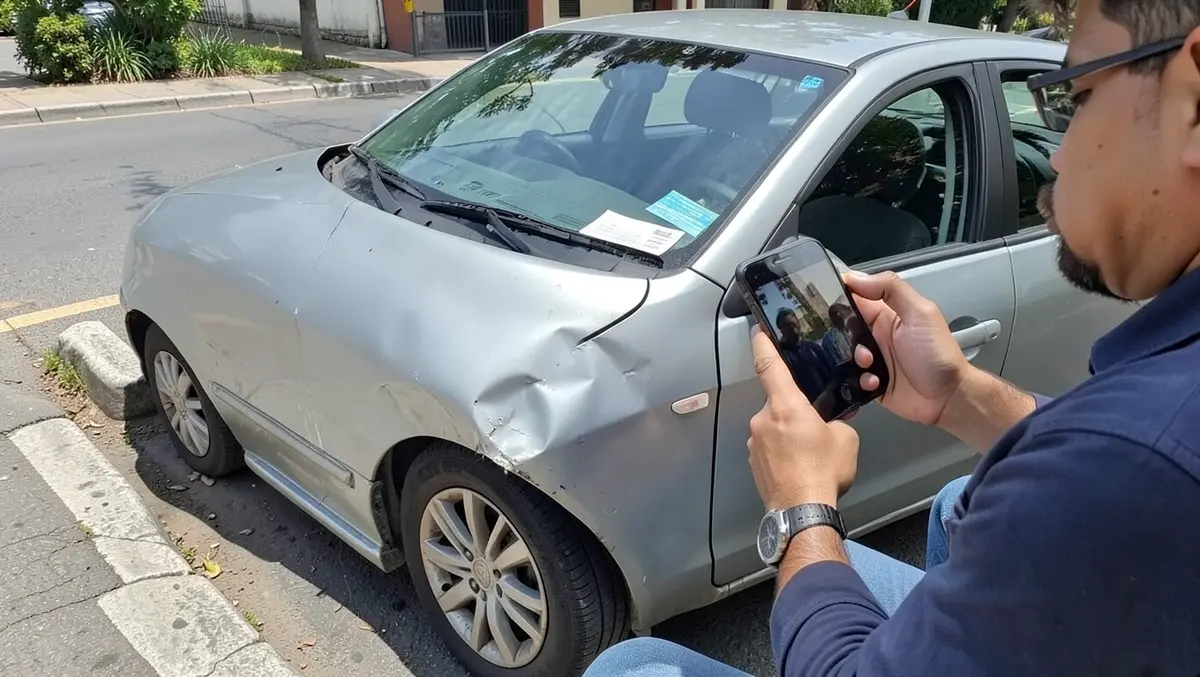
- Photograph all vehicle damage, the accident scene, license plates, and road conditions.
- Call the rental company’s roadside/accident line (it’s printed on your rental agreement) before you do anything else with the vehicle.
- Notify your personal auto insurer and, if you paid with a card that offers rental coverage, the card issuer’s benefits line, even if you aren’t sure yet which one will end up paying.
- Keep copies of the police report, photos, and every document the rental company gives you — you’ll need them if a loss-of-use or diminished-value bill shows up later.
Frequently Asked Questions
Is the rental company ever liable for a rental car accident?
Rarely. Under the Graves Amendment, a rental company generally can’t be held liable just because it owns the vehicle. It can still be liable for its own negligence, such as renting out a car it knew had a mechanical defect.
Whose insurance pays for a rental car accident?
Usually your personal auto insurance first, if it extends to rental cars, followed by any Loss Damage Waiver you bought or credit card rental benefit you activated. Which pays first depends on whether that specific card offers primary or secondary coverage.
Does my credit card cover rental car accidents automatically?
Only if you paid for the entire rental with that card and, in most cases, declined the rental company’s own damage waiver. Coverage limits, rental-length caps, and primary-vs-secondary status vary by card issuer, so confirm the specifics with your card before relying on it.
Can a rental company charge me after my insurance already paid?
Yes. Loss-of-use fees, diminished-value charges, and administrative fees are commonly billed separately from the repair cost itself, and standard auto insurance or credit card damage coverage often doesn’t reimburse them.
Do I have to pay for a rental car after an accident?
If you have a Loss Damage Waiver, adequate personal auto coverage, or an activated credit card benefit, one of those typically covers the repair cost. Without any of the three, you’re personally responsible for the damage, and possibly for loss-of-use and administrative fees on top of it.
What is the Graves Amendment?
It’s a 2005 federal law (49 U.S.C. § 30106) that stops rental and leasing companies from being held vicariously liable for a renter’s accident purely because they own the vehicle, unless the company was itself negligent.
The Bottom Line
The driver is responsible for a rental car accident, and the rental company is almost never on the hook thanks to the Graves Amendment. What actually determines who pays is a combination of your personal auto policy, any waiver you bought at the counter, and your credit card’s rental benefit — and none of those three automatically covers loss-of-use or diminished-value fees the rental company can bill separately. Confirm your specific coverage before you drive off the lot, not after.
Products related to this article
Sponsored / affiliate links. As an Amazon Associate I earn from qualifying purchases. I may earn additional commission from eligible campaigns.