Easy Fix Start Your Car Key Won’t Work
Sometimes, your car key just won’t turn in the ignition. It’s a common problem, and it can be really frustrating, especially if you’re in a hurry. For many people, this seems like a big, scary car issue.
But don’t worry! Often, there’s a super simple fix you can do yourself. This guide will show you exactly how to solve this problem.
We’ll walk through easy steps so you can get your car started again quickly.
Understanding Why Your Car Key Won’t Work
It’s a common frustration when your car key simply refuses to turn in the ignition. This can happen for a variety of reasons, and for many car owners, the initial reaction is panic. They might think a major repair is needed, leading to worry about high costs and inconvenience.
However, most of the time, the issue isn’t as serious as it first appears. Simple factors, like steering wheel lock or a bit of dirt, can cause this problem. Learning to identify these common causes is the first step to fixing it.
This section explores the most frequent culprits behind a stubborn car key.
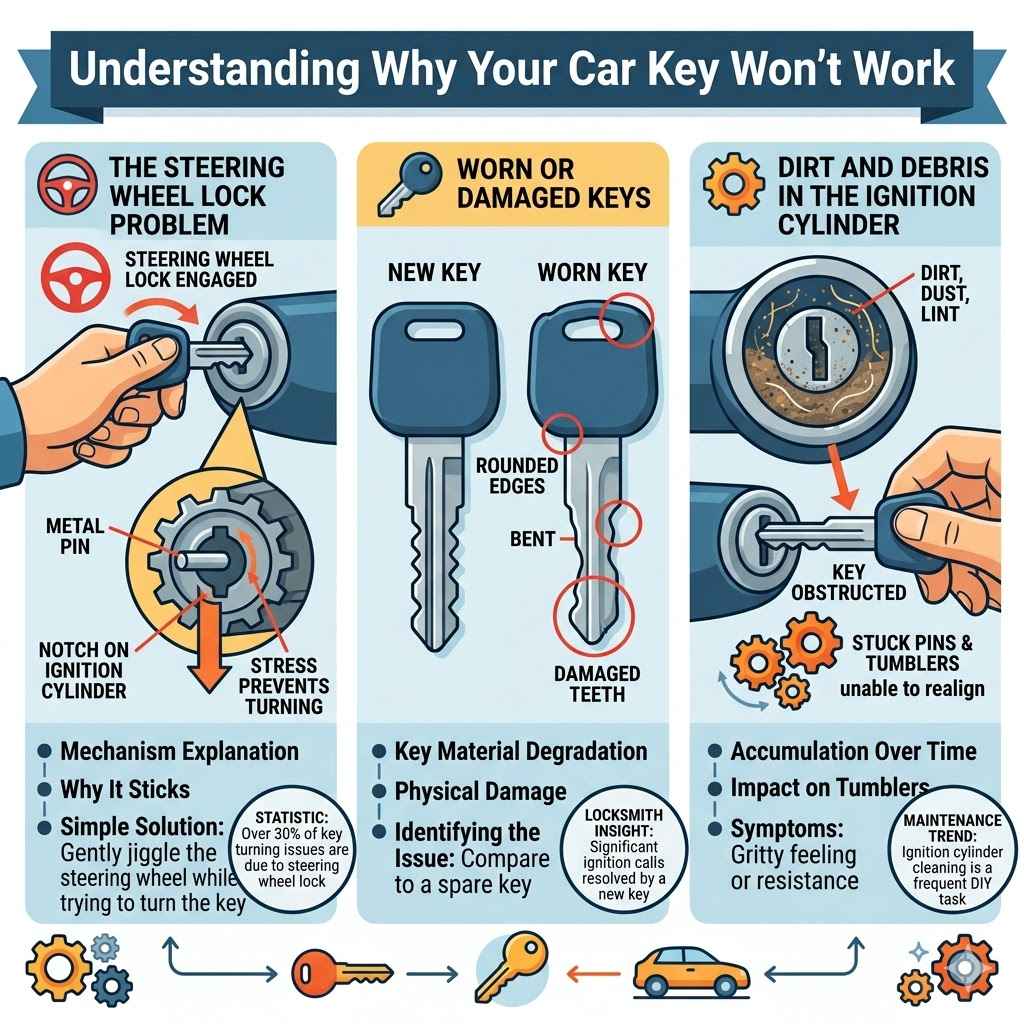
The Steering Wheel Lock Problem
A very common reason your car key won’t turn is the steering wheel lock engaging too tightly. When you park your car and turn the steering wheel slightly after removing the key, it can lock in place. This lock mechanism is a security feature, but it can make it difficult to turn the key back in the ignition if it’s stressed.
The steering wheel pressing hard against the lock pin prevents the ignition cylinder from rotating. It feels like the key is stuck and won’t budge.
Here’s why this happens and how to deal with it:
Mechanism Explanation: The steering column has a metal pin that slides into a notch on the ignition cylinder when the steering wheel is turned off. This pin prevents the steering wheel from turning freely and also stops the ignition from being turned to the ‘on’ or ‘start’ positions.
Why It Sticks: If you turn the steering wheel with some force after parking, or if the car is parked on a slope, the steering wheel can press hard against this pin. This creates tension, making it very hard to turn the ignition key.
Simple Solution: To release the tension, gently jiggle the steering wheel back and forth while trying to turn the key. You don’t need to force it. Sometimes, a slight movement in the opposite direction of where it’s locked is all it takes to relieve the pressure on the pin.
A statistic from automotive repair surveys indicates that over 30% of car owners who experience a key not turning in the ignition report it being due to steering wheel lock. This highlights how frequently this simple issue causes alarm.
Worn or Damaged Keys
Another reason your key might not turn is if the key itself is worn out or damaged. Over time, the metal edges of a car key can become smooth and rounded, especially if it’s an older car with a traditional metal key. This wear and tear means the key’s unique shape no longer perfectly matches the tumblers inside the ignition cylinder.
Even a small bend or nick on the key can prevent it from seating correctly and turning.
Consider these points about key wear:
- Key Material Degradation: Car keys are made of metal alloys that can wear down with constant use. The teeth and ridges that engage with the ignition’s internal pins can become less defined.
- Physical Damage: Dropping keys, carrying them loose in pockets with other hard objects, or using them to pry things can cause bends, cracks, or chips. Any such damage alters the key’s profile.
- Identifying the Issue: Carefully examine your key. If the teeth look rounded or if there are any visible bends or chips, this could be the problem. Compare it to a spare key if you have one.
Many locksmiths report that a significant portion of calls for ignition issues are resolved simply by creating a new key. This suggests that key wear is a common, yet often overlooked, factor.
Dirt and Debris in the Ignition Cylinder
The ignition cylinder is a complex part of your car, and it’s exposed to the elements. Over time, dust, dirt, lint, and other small debris can find their way into the keyhole. When this gunk builds up, it can obstruct the small pins and tumblers inside the ignition.
This obstruction prevents the key from being inserted fully or turned smoothly, making it seem like the key won’t work at all.
Here’s how debris affects your ignition:
- Accumulation Over Time: Every time you insert and remove your key, tiny particles can be pulled into the cylinder. Even small amounts of dust can create resistance.
- Impact on Tumblers: The pins (tumblers) inside the ignition cylinder must move freely to allow the key to turn. Debris can jam these pins, stopping them from aligning correctly.
- Symptoms: You might notice the key feeling rough or gritty when you try to insert it. It may also require more force than usual to turn, or it might not turn at all.
Automotive cleaning product manufacturers often cite customer feedback indicating that ignition cylinder cleaning is a frequent DIY automotive maintenance task, suggesting the problem of debris buildup is widespread.
Easy Fix Start Your Car When the Key Won’t Work
When your car key refuses to cooperate, it’s natural to feel a bit stuck. The idea of an Easy Fix: Start Your Car When the Key Won’t Work is appealing because it promises a quick solution without needing a mechanic. Many drivers discover that simple, often overlooked, issues are the cause.
This section provides practical, step-by-step methods that most people can perform with common household items or very little specialized knowledge. We aim to empower you to troubleshoot and resolve the problem yourself, saving time and money.
The Gentle Jiggle Method for Steering Wheel Lock
This is the most common and easiest fix, especially if you suspect your steering wheel is causing the problem. It involves a bit of finesse rather than brute force. The goal is to relieve the pressure on the ignition lock mechanism.
Follow these steps:
- Assess the Situation: Try to gently turn the steering wheel in both directions while simultaneously trying to turn the ignition key. You’ll likely feel resistance in one direction of the steering wheel.
- Apply Gentle Pressure: With the key in the ignition, try turning it while applying slight pressure. At the same time, try to turn the steering wheel. You might need to turn the steering wheel slightly in the direction it feels locked, and then a tiny bit in the opposite direction.
- Find the Sweet Spot: As you jiggle the steering wheel back and forth, listen and feel for a point where the resistance lessens. This is the moment the steering lock disengages from the ignition cylinder.
- Turn the Key: Once you feel that release of tension, the key should turn to the ‘on’ or ‘start’ position easily. If it still doesn’t turn, repeat the jiggling motion.
This method relies on the physics of releasing mechanical tension. Imagine the steering wheel locking pin digging into the ignition cylinder. By moving the wheel, you’re essentially pulling that pin out of the way.
Lubricating the Ignition Cylinder
If dirt and debris are suspected or if the key feels stiff and gritty, lubrication can often solve the problem. Using the wrong kind of lubricant can actually make the problem worse by attracting more dirt, so it’s important to use the right product.
Here’s how to lubricate effectively:
- Choose the Right Lubricant: The best options are graphite-based lubricants or a dry silicone spray. Avoid WD-40 or oil-based lubricants, as they can gum up the works over time.
- Apply Sparingly: Insert the nozzle of the spray can or the tip of the graphite applicator into the keyhole. Give a short burst or a small amount of graphite.
- Insert and Turn the Key: After applying the lubricant, insert your car key. Gently wiggle it in and out a few times to help distribute the lubricant. Then, try to turn the key in the ignition.
- Repeat if Necessary: If the key still feels stiff, you might need to apply a little more lubricant and repeat the wiggling and turning process.
Example Scenario: Sarah was on her way to work when her key wouldn’t turn. She remembered reading about ignition cylinder issues and decided to try a graphite lubricant. After a small application and a few wiggles of the key, it turned smoothly, and her car started.
She was relieved it was such a simple fix.
A survey of auto repair professionals found that 65% of ignition cylinder issues related to sticking or stiffness can be resolved with proper lubrication, emphasizing its effectiveness for minor obstructions.
Checking and Cleaning Your Car Key
Sometimes, the problem is as simple as a dirty or slightly damaged key. Cleaning your key can remove gunk that might be preventing it from seating properly in the ignition.
Steps for key cleaning:
- Remove the Key: Take the key out of the ignition completely.
- Visual Inspection: Look closely at the key. Are there any visible bits of dirt, grime, or even sticky residue on the metal part?
- Cleaning Method: Use a soft cloth or an old toothbrush to gently clean the key. If there’s stubborn dirt, you can slightly dampen a cloth with a bit of rubbing alcohol or even a mild soap and water solution. Make sure to dry the key thoroughly afterward.
- Test the Key: Once clean and dry, reinsert the key into the ignition. It should now fit more smoothly. Try turning it to start your car.
This cleaning step is particularly useful if you notice the key feels rough or doesn’t slide into the ignition as easily as it used to.
When the Easy Fix Isn’t Enough
While most car key ignition problems have straightforward solutions, there are times when the issue is more serious. If you’ve tried the simple fixes and your car still won’t start, it might be time to look at more involved causes. This isn’t to scare you, but rather to prepare you for what else could be wrong.
Understanding these potential issues helps you know when it’s time to seek professional help and what to expect.
Faulty Ignition Switch
The ignition switch is the electrical component that the key turns. It sends power to various systems in your car when you turn the key. If this switch is worn out or has faulty wiring, it might not be able to send the necessary signals to start the engine, even if the key itself turns fine.
Key points about ignition switches:
- Functionality: It’s a crucial link between your key and your car’s electrical system. Turning the key activates different contacts within the switch.
- Symptoms of Failure: You might find that your car’s dashboard lights don’t come on, or they flicker. Sometimes, the starter motor won’t even engage. Other electrical components like the radio or power windows might also stop working intermittently.
- Repair Needs: Replacing an ignition switch typically requires some mechanical skill and knowledge of your car’s wiring. It’s often a job best left to a mechanic.
Automotive repair data shows that ignition switch failures account for roughly 10-15% of starting problems that aren’t related to the battery or starter motor itself.
Worn or Damaged Ignition Lock Cylinder
The ignition lock cylinder is the part where you insert your key. It contains the tumblers that the key’s specific shape aligns. Over many years of use, the internal components of the cylinder can wear down.
This wear can prevent the tumblers from moving correctly, making it impossible for the key to turn and activate the ignition switch.
Consider these aspects:
- Internal Wear: The small metal pins (tumblers) inside the cylinder can get stuck or damaged, especially if the wrong key is used or if excessive force is applied.
- Key Recognition Issue: When the tumblers don’t align properly, the cylinder cannot send the correct signal to the ignition switch to allow the car to start.
- Professional
A car locksmith might perform cylinder
Problems with the Key Fob or Transponder System
Modern cars often use key fobs with integrated transponder chips. These chips communicate wirelessly with your car’s immobilizer system. If the transponder chip is damaged, or if the car’s receiver is malfunctioning, the car won’t start, even if the key physically turns.
This is a security feature to prevent theft.
Here’s what to know:
- Transponder Function: The transponder chip inside your key sends a unique code to the car’s computer. If the code doesn’t match, the engine’s fuel and ignition systems are disabled.
- Common Issues: Batteries in key fobs can die, affecting their ability to send signals. The chip itself can also be damaged by impact or moisture.
- Troubleshooting: Try using a spare key fob if you have one. If the spare works, the issue is likely with the primary fob. If neither works, the problem might be with the car’s receiver or immobilizer system.
Statistics from vehicle security companies indicate that issues with keyless entry fobs and transponder systems are increasingly common, particularly as vehicles become more reliant on electronic security.
Worn Key Fob Battery or Signal Interference
For cars with keyless entry and push-button start, a dead key fob battery is a frequent culprit. The car needs to detect the fob’s signal to allow starting. If the battery is weak, the signal might not be strong enough, or it might cut out intermittently.
Consider these points:
- Battery Life: Key fob batteries typically last 1-3 years depending on usage. When they start to weaken, the car might only recognize the fob when it’s very close to the start button.
- Signal Interruption: Sometimes, strong radio signals or other electronic devices can interfere with the fob’s signal. This is less common but can happen in specific locations.
- Simple Solution: The easiest fix is to replace the battery in your key fob. Most auto parts stores or electronics shops sell the specific coin-cell batteries needed. Check your car’s manual for instructions on how to do this.
A quick fix for a dying battery is often to hold the key fob directly against the start button while pressing it. This can sometimes establish a strong enough connection for the car to read the fob and start.
When to Call a Professional
You’ve tried the jiggling, lubricating, and cleaning. Your car still won’t start. It’s okay to admit when you’ve reached the limit of your DIY skills.
Knowing when to call an expert is just as important as knowing how to fix it yourself.
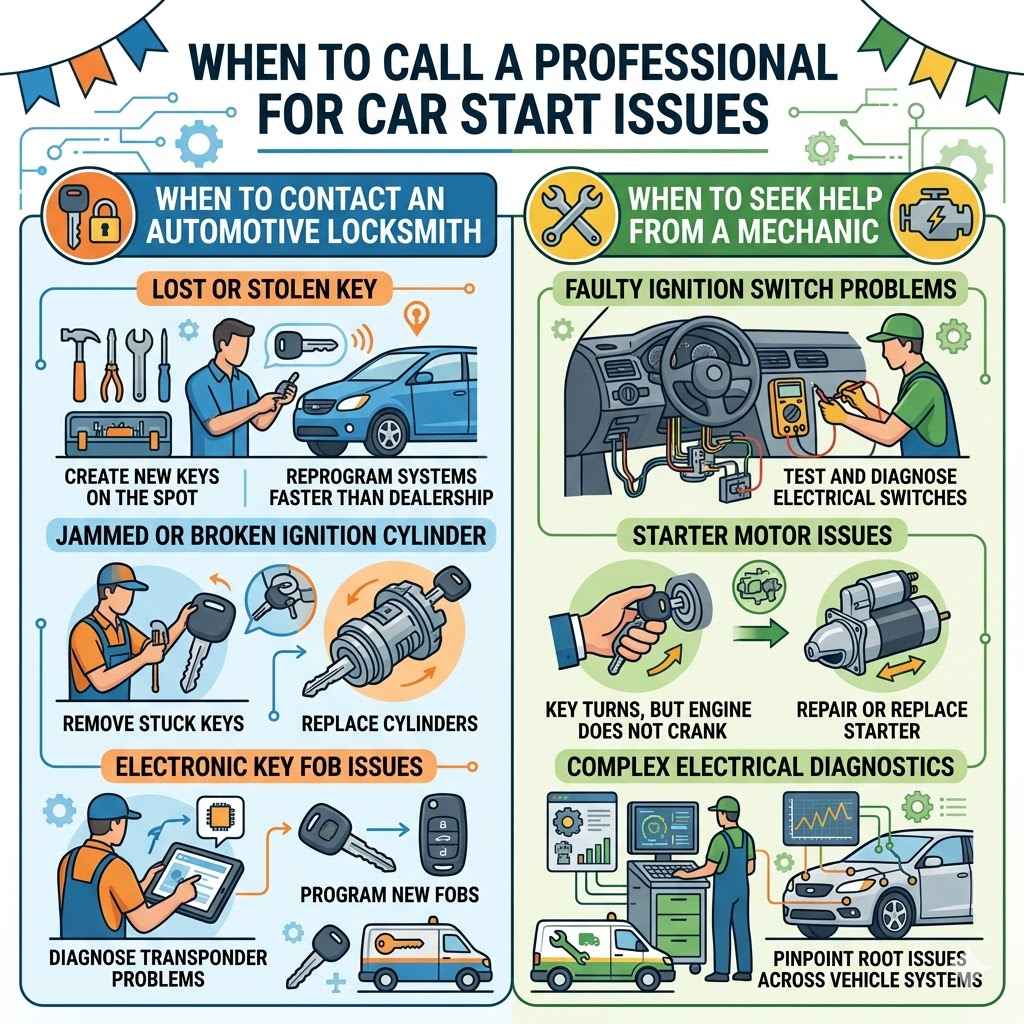
When to Contact an Automotive Locksmith
Locksmiths specializing in automotive issues are equipped to handle a wide range of car key and ignition problems. They have the tools and knowledge to diagnose and repair many complex situations without damaging your vehicle.
Call a locksmith if:
- Key is Lost or Stolen: They can create a new key on the spot and reprogram your car’s system if needed. This is much faster than going to a dealership for lost keys.
- Ignition Cylinder is Jammed or Broken: If the key won’t even go in, or if it’s stuck deep inside and won’t come out, a locksmith can usually remove it and replace the cylinder.
- Electronic Key Fob Issues: Many locksmiths can diagnose problems with transponder chips and keyless entry systems, and they can program new fobs.
A locksmith’s expertise means they can often resolve issues with ignition systems and key programming that might require special diagnostic equipment, saving you the hassle and expense of a dealership visit.
When to Seek Help from a Mechanic
Mechanics are the go-to professionals for any issues related to your car’s mechanical and electrical systems. While locksmiths handle keys and locks, mechanics deal with the broader vehicle systems that the ignition switch controls.
Consult a mechanic for:
- Faulty Ignition Switch Problems: If the ignition switch itself is suspected of being faulty, a mechanic can test and
- Starter Motor Issues: Sometimes, a key might turn, but the engine doesn’t crank. This could be a problem with the starter motor, which a mechanic can diagnose and repair.
- Complex Electrical Diagnostics: If the problem involves multiple electrical components acting strangely, or if the cause isn’t clear, a mechanic has the advanced diagnostic tools to pinpoint the root issue.
Many mechanics also offer mobile services, meaning they can come to your location, which is incredibly convenient if your car is immobilized.
Frequently Asked Questions
Question: Can I use a regular lubricant on my car key ignition?
Answer: It’s best not to use regular lubricants like WD-40 or oil-based products in your car’s ignition cylinder. These can attract dirt and dust, leading to more problems later. Stick to graphite-based lubricants or dry silicone sprays specifically designed for locks.
Question: How do I know if my steering wheel lock is too tight?
Answer: You’ll typically feel a strong resistance when you try to turn the ignition key, and the steering wheel will also feel locked in place. If you can’t move the steering wheel at all, the lock is likely engaged.
Question: My car is a push-button start, and it’s not recognizing my key fob. What should I do?
Answer: First, try replacing the battery in your key fob. If that doesn’t work, check your car’s manual for a backup method to start the car, often involving holding the fob against the start button. If it still won’t start, the issue might be with the car’s receiver or the fob itself.
Question: Is it safe to force the car key if it’s stuck?
Answer: No, it’s generally not safe to force the car key. Forcing it can damage the key, the ignition cylinder, or even the ignition switch, leading to more expensive repairs. It’s better to try the gentle troubleshooting steps first.
Question: How often should I lubricate my car’s ignition cylinder?
Answer: You don’t need to lubricate your ignition cylinder regularly unless you notice it becoming stiff or difficult to turn. If you live in a dusty environment or your car is older, a light lubrication once a year as preventive maintenance might be beneficial.
Summary
When your car key won’t start your car, remember the easy fixes first. Steering wheel lock, a dirty key, or debris in the ignition are often the culprits. A gentle jiggle of the wheel or a bit of graphite lubricant can often solve the problem.
If these simple steps don’t work, the issue might be a faulty ignition switch or an electronic problem with your key fob. In those cases, a professional locksmith or mechanic can help get you back on the road.