How to Fix Car Roof Upholstery: Sagging Headliner and Roof Lining
A sagging car roof upholstery (headliner or roof lining) gets fixed one of three ways: twist pins for a stopgap, a headliner-rated spray adhesive while the foam under the fabric is still firm, or a full re-cover once that foam has turned to dust. Before any of them, know what sits above the fabric: curtain airbags, wiring and sunroof drains. This guide shows which fix fits, and where DIY should stop.
What Is Car Roof Upholstery and Why Does It Fail?
Car roof upholstery, or the headliner, is the fabric-covered board lining the interior roof of your vehicle. The fabric is bonded to a thin layer of foam, and the foam is bonded to a molded board. That foam layer is the part that fails: the glue dries out with age, the foam-backed fabric separates, and cabin heat speeds both up, according to Jalopnik’s July 2026 repair guide. Once the foam turns powdery it can no longer hold the fabric, even if the glue on the board is still fine.
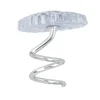 |
Best Temporary Headliner Sag Fix Pick Amazing Drapery Hardware Car Headliner Pins, Set of 12 If the foam under the fabric is still firm and only a patch has let go, clear twist pins hold the fabric up with no solvent, no spray and no trim removal. Press them into the middle of the roof panel, away from the side rails where the curtain airbags sit.
|
As an Amazon Associate we earn from qualifying purchases. Price and availability change; check the listing.
Water is the other common cause. A GM service bulletin on certain Buick, Chevrolet, GMC and Saturn SUVs (10-08-67-001C, May 2015) traces wet headliners to sunroof glass seals that no longer hold their shape and to sunroof drains plugged with dirt, and it notes the sunroof seal is not designed to be completely water tight, so minor drips into the drain system are expected. The practical point applies to any car with a sunroof: a headliner re-done over an active leak will fail again, so find the water first.
Assessing the Damage: What’s Wrong with Your Headliner?
The single most useful test costs nothing. Press the sagging area gently with your thumb. If the foam feels firm and the fabric has just let go in one place, a small repair can hold for a while. If the foam crumbles, flakes or feels like powder, none of the glue-and-pin fixes will last, and Jalopnik says outright that they do not work on crumbling foam. That is the corrected myth behind most failed repairs: people add more adhesive, but new glue only bonds to dust.
- Small sag or loose edge, foam firm: pins or adhesive are reasonable.
- Large or spreading sag, foam crumbling: the board needs stripping and re-covering, or a shop.
- Stain, water ring or musty smell: look for a leak first (sunroof drains, window and roof seals).
- Sag that touches your view or hangs near the pillars: the fabric is past a patch repair, and the pillar edges are where the airbags are, so stop and read the safety section below.
Which Fix Fits? Pins vs Adhesive vs Re-cover
This table puts the three real options side by side. Where no source gives a lifespan, we say so.
| Method | How long it lasts | Main risk | DIY or pro |
|---|---|---|---|
| Twist pins | Temporary, per Jalopnik. No lifespan figure is published. | Pins can fall out; putting them near the side rails puts metal in the airbag area | DIY, keep pins in the middle of the roof panel only |
| Spray headliner adhesive (foam still firm) | Temporary: Jalopnik says DIY fixes might buy “a year or two” and fail on crumbling foam | Extremely flammable aerosol, solvent fumes, overspray and bleed-through (3M SDS) | DIY outdoors or in a well-ventilated space, only on a firm foam backing |
| Remove board, strip foam, re-cover with new foam-backed fabric | No sourced figure. New fabric is the same foam-backed build, so heat still ages it. | Trim, airbag, wiring and sunroof drain work at the roof edges; board can crack when flexed | DIY only if you can follow your maker’s service steps; otherwise an upholstery shop |
| Shop re-cover or replacement headliner | No sourced figure; ask the shop what warranty it gives on the work | Cost; quotes vary by vehicle, so get them in writing | Pro |
Safety First: Airbags, Wiring and Sunroof Drains Above the Headliner
Most modern roofs are not just fabric over metal. Read this before you pull a single clip.
Curtain and roof-rail airbags
- They live at the roof edges. A GM recall procedure for certain Cadillac CT4 and CT5 models (N212342780) reaches the roof rail airbag by pulling the trim out and lowering the headliner at the rear door opening. The airbag is right behind the edge of the fabric board.
- Do not attach things there. Kia’s owner’s manual says not to attach objects around the area where the air bag inflates, listing the door, side glass, front and rear pillars and the roof side rail. Treat pins, clips and hooks the same way. Jalopnik also advises keeping pins away from side curtain airbag areas.
- Sharp tools can damage the bag. A Saab service procedure for headliner removal says to disable the SIR system first and warns that sharp tools may puncture the curtain airbag. It also says a damaged curtain airbag or tether must be replaced, not repaired.
- Some makers say this is not a DIY job. Honda’s 2014 bulletin 14-081 (2015 Crosstour curtain airbag recall) tells technicians to remove the headliner per the service manual and states its procedures should not be attempted by do-it-yourselfers.
None of the sources we read says it is safe to apply adhesive over an airbag deployment seam, and none says it is not. We could not find a primary source either way, so treat the curtain-airbag edges as off limits for glue, and follow your own owner’s manual and service information for where those areas are on your car.
Battery, wiring and the overhead console
Overhead consoles, dome lights and sunroof switches are wired through the roof. Unplug connectors properly and do not tug harnesses; our guide to removing electrical connectors on cars covers the release types. Honda’s bulletin notes that the roof wire harness is taped to the back of the headliner and says to peel back only enough tape to free it, because the tape is reused. Several makers also tell technicians to disconnect the negative battery cable and wait before touching airbag parts: a Lexus NX300h service procedure says to wait at least 90 seconds, and your car’s wait may differ, so use your own service information, not that number.
Solvent adhesive: flammable and not for a closed garage
The 3M safety data sheet for 3M Headliner Adhesive 38808 (issue date 03/07/22) is a useful reality check on any spray headliner glue. It classes the can as a Category 1 flammable aerosol, signal word Danger, and says it is extremely flammable. It lists a flash point of -40 F and says to keep it away from heat, sparks and open flames. It also says to use it only outdoors or in a well-ventilated area, and not to use it in a confined area with minimal air exchange. It also lists eye and respiratory irritation, drowsiness or dizziness, and a reproductive toxicity warning (may damage fertility or the unborn child).
Two practical points follow. First, do not spray inside the car with the doors shut and do not work near a running engine, a pilot-light heater or a shop heater. Second, the sheet says not to expose the can to temperatures over 50 C (122 F) and to protect it from sunlight, which rules out leaving it on a hot dashboard or in a hot trunk. Another maker’s can may differ, so read the label and safety data sheet of the product you actually buy.
Sunroof drains
If your car has a sunroof, test the drains before re-covering anything. The GM bulletin above says leaks that reach the instrument panel fuse box can contribute to electrical problems. A wet, stained or musty headliner means fix the leak first.
Tools and Materials You’ll Need
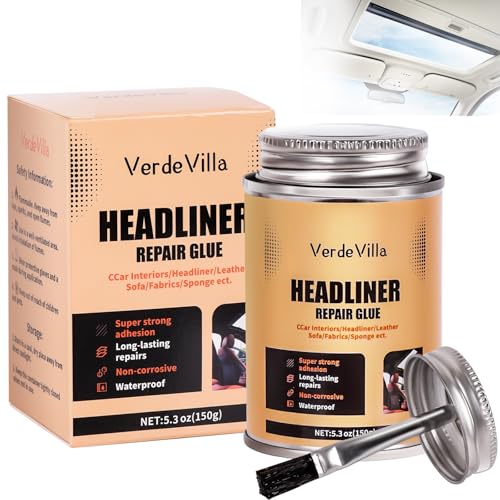
Pins need nothing else. For glue or a re-cover, gather a headliner-specific spray adhesive whose safety data sheet you have read, foam-backed headliner fabric, a plastic trim tool, a small roller, masking for glass and seats, nitrile gloves, eye protection and a respirator for organic vapors. For specific adhesive cans, see our spray adhesive for car ceiling fabric picks.
Quick Fixes for Minor Headliner Issues
These two methods suit a small patch in the middle of the roof where the foam still passes the thumb test.
Step 1: Pins for a stopgap
Push the pin through the fabric into the foam and twist it in until it grips. Keep pins in the middle of the panel and out of the roof edges and pillar areas where the curtain airbags sit. This holds fabric up; it does not re-glue anything.
Step 2: Re-glue a firm patch with headliner adhesive
- Work outdoors or in a very well-ventilated space, with ignition sources away and the car’s engine off.
- Vacuum loose debris and gently pull the sagging fabric down.
- Spray the adhesive on both the fabric back and the foam, following the product’s own open-time instructions, until it turns tacky.
- Press the fabric down from the center outward with a roller or card, and let it cure for a few hours with the climate control off, as Jalopnik suggests.
The same trick can bleed through or discolor light fabric if you overspray, so test a hidden spot first. For the heat-gun and fabric-prep angle on small sags, see how to fix fabric on a car ceiling.
Replacing the Entire Headliner: A Full Makeover
When the foam is crumbling or the sag covers most of the panel, the board has to come out and be stripped. Only start if your car’s service information shows how to lower the headliner without disturbing airbags.
Step 1: Prepare the car and remove the headliner
Write down your radio and climate presets, then disconnect the negative battery cable and wait the time your manual specifies. Remove the sun visors, grab handles, dome light and pillar trim with a plastic trim tool, then unplug the roof wiring connectors. Lower the board and lay it flat. It is usually thin, brittle composite, so do not flex it.
Step 2: Strip the old fabric and foam
Peel off the old fabric and scrape off the crumbled foam with a plastic scraper or a soft brush, wearing a dust mask and eye protection because degraded foam makes fine dust. Wipe off leftover adhesive residue. If the residue is stubborn, see our guide on removing adhesive from car surfaces.
Step 3: Attach new foam-backed fabric
Cut new headliner fabric a few inches larger than the board. Work in sections from the center outward: fold the fabric back, spray both surfaces as the product directs, let it get tacky, then smooth the fabric down without stretching it. Wrap the edges and trim bulky corner folds so the board sits flat.
Step 4: Reinstall
Let the adhesive cure per the label before handling. Slide the board back in, refit the roof wiring and trim, then reconnect the battery. Check the dome light and sunroof switch work.
When to Call a Professional
Hand the job to an upholstery shop when any of these is true:
- Your car has curtain or roof-rail airbags and you cannot follow its service steps for lowering the headliner
- The headliner is wet or stained, or you cannot find where the water is coming from
- Mold has soaked into the foam, or the board is cracked or warped
- The car has a panoramic roof or several headliner sections
- The airbag warning light comes on after any roof or pillar work
Ask for a written quote and what the shop will do about the airbag-edge areas. We have not quoted shop prices because we have no sourced figure; they vary by vehicle and fabric.
Cleaning and Maintaining Your Headliner
Dust the headliner with a soft brush or a vacuum brush attachment, and avoid soaking the fabric, because moisture weakens the bond. Our guide to cleaning a car roof lining covers stain removal without re-wetting the foam. For the rest of the cabin, see our DIY car interior detailing order of operations.
Common Mistakes to Avoid
- Pinning or gluing near the roof edges: that is where the curtain airbags are.
- Gluing crumbling foam: the glue bonds to dust and the sag returns.
- Re-covering over a leak: a wet headliner means a failed seal or blocked drain.
FAQs
Can I fix a headliner without removing it?
Yes, for a small patch where the foam is still firm: use twist pins in the middle of the roof or a headliner-rated spray adhesive on both the fabric and foam. If the foam crumbles, the board has to come out or go to a shop, because glue and pins will not hold on powder.
Will spray adhesive fix a sagging headliner for good?
Usually not. Jalopnik’s repair guide says DIY fixes might buy a year or two and do not work if the foam backing is crumbling, which you can check by pressing the headliner with your thumb.
Is it safe to use pins or glue near roof airbags?
Keep both away from the roof edges and pillars. Kia’s manual says not to attach objects around the area where the air bag inflates, including the roof side rail, and Jalopnik advises keeping pins in the middle of the ceiling. No source we read approves glue over airbag seams, so check your own manual.
Is headliner spray adhesive dangerous?
It can be. The 3M safety data sheet for Headliner Adhesive 38808 calls it an extremely flammable aerosol, says to use it outdoors or in a well-ventilated area, and lists a reproductive toxicity warning. Wear gloves and eye protection, keep ignition sources away and read the label of the product you buy.
How much does it cost to fix a car headliner?
A set of 12 twist pins was listed at $6.03 when we checked. Adhesive, fabric and shop prices vary by vehicle and product, and we found no sourced shop price, so get a written quote before you commit to a re-cover.
Products related to this article
Sponsored / affiliate links. As an Amazon Associate I earn from qualifying purchases. I may earn additional commission from eligible campaigns.