Top-Rated Car Steering Locks: Best Picks for Security
Top-rated steering locks work best when matched to risk: pick a bright bar for quick theft discouragement, a hardened lock for better break-in resistance, or a combo lock for both. Pick badly, and you can end up with a device that looks secure but slows nothing down, or one that does not fit your wheel. This guide ranks steering locks by visual, mechanical, and combined deterrence, then covers fitment, usability, and buying tradeoffs.
Best steering lock picks
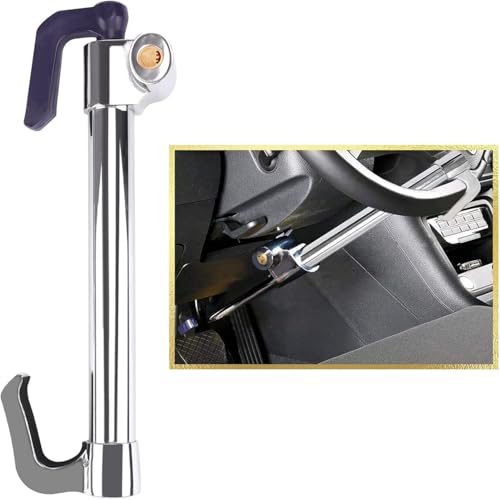
The Tevlaphee Universal Steering-Wheel Brake Lock ranks first because it combines a large, hard-to-cut design with a brake-pedal anchor, which raises the work needed to remove it compared with a wheel-only bar.
Quick picks
| Pick | Best for | Deterrence type | Why it stands out |
|---|---|---|---|
| Tevlaphee Universal Steering-Wheel Brake Lock | High-theft areas | Combined | Locks the wheel against the brake pedal; Car and Driver named it best overall and says it is difficult to cut or break. |
| Kaycentop Seatbelt Wheel Lock | Commuters who want fast daily use | Light mechanical | Anchors into the seatbelt and is easiest to install, but the cable style cuts more easily. |
| Cartman Vehicle Steering-Wheel Lock | Classic visual deterrence | Visual plus mechanical | Classic bar format, strong yellow presence, and enough resistance to put up a fight against bolt cutters. |
| The Club 3000 | Parking lots and curb parking | Visual | Car and Driver named it best visual deterrent, and the familiar shape is easy for thieves to spot. |
Tevlaphee universal steering-Wheel brake lock
The Tevlaphee is the best overall pick for theft deterrence because it adds a second anchor point: the brake pedal. That makes steering movement harder and adds more steps for a thief than a simple wheel bar.
The Daily Automotive page lists it as heavy-duty and adjustable, and it comes with three keys. Car and Driver says it is difficult to cut or break. The tradeoff is size. It is a larger lock, so daily handling takes more room.
Kaycentop seatbelt wheel lock
The Kaycentop is the easiest-to-install choice because the flexible cable loops through the steering wheel and anchors into the seatbelt. Car and Driver names it easiest to install, and it is readily stowable, with multiple colors available.
Its weakness is clear: Car and Driver says the cables cut easily. That makes it a convenience-first option, not the best choice for long street parking or high-theft areas.
Cartman vehicle steering-Wheel lock
The Cartman is the classic bar-style pick and a strong visual deterrent. The Daily Automotive page says it fits cars, trucks, vans, and SUVs, which makes it easier to recommend when you need broad vehicle coverage.
Car and Driver names it best classic lock, and it can put up a fight against bolt cutters. That said, it still depends on good fitment and visible placement to do its best work.
The Club 3000
The Club 3000 is the familiar yellow bar many thieves recognize at a glance. Car and Driver named it best visual deterrent, which is the whole point here: make the vehicle look like too much trouble to touch.
That visible threat matters most in open parking where a thief wants a quick target. It does not rely on hidden complexity. It relies on speed being the thief’s enemy.
📊 Car and Driver named The Club 3000 best visual deterrent. Source: Best Steering-Wheel Locks for 2026, Tested.
Steering lock comparison table
Use this table to match the lock to the threat. Higher scores mean more of that trait, not a universal ranking of total security.
| Lock | Visual deterrence | Cut resistance | Install speed | Portability | Fitment risk |
|---|---|---|---|---|---|
| Tevlaphee Universal Steering-Wheel Brake Lock | 4/5 | 5/5 | 3/5 | 2/5 | 3/5 |
| Kaycentop Seatbelt Wheel Lock | 2/5 | 2/5 | 5/5 | 5/5 | 3/5 |
| Cartman Vehicle Steering-Wheel Lock | 5/5 | 4/5 | 3/5 | 3/5 | 2/5 |
| The Club 3000 | 5/5 | 3/5 | 3/5 | 3/5 | 2/5 |
- Commuters: Kaycentop if you want fast daily use and easy storage.
- Street parkers: The Club 3000 or Cartman if you want a strong visual warning.
- High-theft-area owners: Tevlaphee if you want the most mechanical resistance in this group.
Which steering lock fits your vehicle?
Fitment depends on more than the badge on the box. You need the right steering wheel diameter, enough cabin clearance to place the bar, and enough footwell access if the design reaches toward the pedals.
Cars, trucks, vans, and SUVs
Many steering-wheel locks work across cars, trucks, vans, and SUVs, but broad compatibility does not mean universal fit. The Daily Automotive page lists the Cartman as fitting all four vehicle types, while adjustable models help cover a wider steering wheel range.
That range matters because larger wheels and thicker rims can change where the lock sits. Small wheels can also be a problem if the bar is too long to seat firmly.
Steering wheel diameter and adjustable length
Measure the wheel before buying. A lock should sit tightly enough that it cannot be rotated into a looser position, but not so tight that it cannot be installed without forcing the mechanism.
Adjustable length helps, especially when a single household has more than one vehicle. It also reduces the chance of buying a lock that fits one car and pinches on another.
Cabin clearance and pedal access
Brake locks need more cabin access because they reach toward the pedal area. That extra contact point is part of the security, but it can be awkward in compact cabins or tight footwells.
Wheel-only bars usually need less pedal space and are quicker to position. A low seat setting or a busy floor mat can make installation slower than the marketing suggests.
Which lock stops thieves best?
The most effective steering lock is the one that makes the thief hesitate long enough to move on. Visual deterrence works first. Mechanical resistance matters when a thief decides to keep trying.
Visual deterrence versus mechanical resistance
Bright yellow and high-visibility bars are designed to make thieves think twice. That matters most in public lots, curb parking, and any area where a thief wants a fast entry and exit.
Mechanical resistance matters when someone is willing to spend more time. That is where the Tevlaphee’s brake-pedal anchor and harder-to-cut build move it ahead of lighter cable designs.
Picture a car parked under streetlights overnight. A bright bar may push a thief toward the next vehicle. Now picture the same car in a rougher area with more time and less risk of being seen. A more secure brake lock is the better bet.
Where brake locks beat wheel-only locks
Brake locks beat wheel-only locks when the goal is layered resistance. The wheel cannot simply be turned free if the lock also ties the steering wheel to the pedal area.
That extra anchor point also changes the removal process. It can slow down a thief who expects a fast cut-and-go target.
How the top picks compare
These four choices split into three deterrence styles: combined protection, quick convenience, and classic visual warning. Pick the style that matches your parking risk, not the one with the loudest marketing.
The Club 3000: choose
Choose this if your main goal is to look like a bad target. It is the most recognizable visual cue in this group, which can matter as much as the metal when the thief is deciding fast.
How hard are they to install?
Installation speed usually trades against security. Fast designs are easier to live with, but they often give up some resistance or visual presence. Slower designs can buy better deterrence.
Footwell access and seat position
Some locks require you to lean into the footwell and work around the pedals. That is less annoying in a roomy sedan and more annoying in a compact cabin with the seat pushed forward.
A common first-timer mistake is buying a brake-style lock for a tight cabin, then finding the pedal access cramped enough that daily use becomes a chore. That does not make the lock bad. It makes the fit wrong.
Stowage and daily carry
Compact models are easier to store under a seat, in a trunk pocket, or in a cargo area. The Kaycentop is the clearest example here because it packs down more readily than a large bar or brake lock.
Large locks can still be worth it, but storage matters if you plan to remove the device every day. A lock that is secure but annoying will often be used less consistently.
Convenience versus deterrence
Suppose you leave a sedan in a garage at home but street park at work twice a week. A lighter, fast-install lock may be enough for the commute. If the car sits overnight on the street, a stronger visual and mechanical design earns its keep.
How to choose the right lock
Start with parking risk. Then match the lock to the car. Then think about storage, keys, and wear. That order keeps you from buying a device that looks strong but fits poorly or becomes too annoying to use.

- Use the parking environment first. Open street parking and public lots call for bright visual deterrence or a combo lock.
- Match the vehicle. Check steering wheel diameter, wheel thickness, and cabin clearance before you assume a universal fit.
- Choose the right access point. If pedal access is tight, a wheel-only bar may fit better than a brake lock.
- Think about daily handling. If you remove the lock every day, compact storage matters more than a little extra steel.
- Check the ownership details. Replacement keys, lock wear, and coating durability matter over time, especially if the lock rides in a wet trunk.
- Add another layer. Pair the steering lock with an alarm, an OBD blocker, or a wheel boot if theft risk is high.
Steering locks work best as one layer, not the whole plan. An alarm adds noise. An OBD blocker makes electronic theft harder. A wheel boot adds time and physical hassle. Together, those barriers push a thief toward an easier target.
For most drivers, the best strategy is simple: use a visible bar in lower-risk settings, move to a brake-style lock if the vehicle is exposed more often, and add a second layer when the neighborhood or parking lot makes theft more likely.
Frequently asked questions
What is the best steering wheel lock for car theft prevention?
The best overall choice in this group is the Tevlaphee Universal Steering-Wheel Brake Lock. Car and Driver named it best overall, and its brake-pedal anchor adds more resistance than a wheel-only bar. It is the strongest fit when theft risk is higher and daily convenience matters less.
Do steering wheel locks actually stop thieves?
They can stop opportunistic theft by making the car look harder and slower to steal. They do not make a vehicle theft-proof. Their real value is delay and deterrence, especially when the lock is bright, visible, and paired with another anti-theft layer.
Which steering wheel lock is easiest to install?
The Kaycentop Seatbelt Wheel Lock is the easiest to install. Car and Driver names it easiest to install, and its flexible cable design is quick to loop into place. That speed is useful for daily use, but the cable is also easier to cut.
What is the most secure steering wheel lock?
Among the listed options, the Tevlaphee Universal Steering-Wheel Brake Lock is the most secure choice. It combines steering-wheel restraint with a brake-pedal anchor, and Car and Driver says it is difficult to cut or break. That makes it a stronger anti-theft hurdle than a basic cable model.
Can a steering wheel lock fit SUVs and trucks?
Yes, many can, but you still need to check length and clearance. The Daily Automotive page says the Cartman fits cars, trucks, vans, and SUVs. Adjustable designs help, but large steering wheels and tight cabins can still change how well a lock sits.
Are cable-style steering wheel locks easy to cut?
Yes. Cable-style locks are usually easier to defeat than harder bar designs. Car and Driver says the Kaycentop cables cut easily, which is why this style is better for convenience than for long street parking or high-theft areas.
Products related to this article
Sponsored / affiliate links. As an Amazon Associate I earn from qualifying purchases. I may earn additional commission from eligible campaigns.