Freon for Cars: What It Is and Why Your AC Needs It
Freon for cars is the common name for the refrigerant that circulates through your vehicle’s air conditioning system to produce cold air. Without it, your car’s AC would simply blow warm, humid air from the outside. This post covers what car freon actually is, how it works inside your AC system, the different types available today, and why maintaining the right refrigerant level is crucial for your vehicle’s comfort and component longevity.
Simply put, freon for cars is a specialized chemical refrigerant that absorbs heat from your car’s cabin and releases it outside. It is the lifeblood of your AC system. If the freon level drops too low, the AC cannot cool effectively, and the compressor may suffer damage over time.
Key Takeaways
- Freon for cars is a refrigerant, not a brand: the term “Freon” is a DuPont trademark that became generic for all AC refrigerants.
- Modern cars use R-134a or R-1234yf, not the old R-12 (which was banned due to ozone damage).
- Low refrigerant levels cause warm air, hissing sounds, and compressor clutch cycling.
- DIY recharge kits exist but carry risks of overcharging and system contamination.
- Using the wrong freon type can damage seals, compressor, and the entire AC loop.
What Is Freon for Cars?
Freon for cars is a colorless, odorless gas or liquid that cycles through the AC system to transfer heat. Technically, “Freon” is a brand name owned by Chemours (a DuPont spin-off) for a family of chlorofluorocarbon (CFC) and hydrofluorocarbon (HFC) refrigerants. Over time, people started calling all car refrigerants “freon,” much like how “Kleenex” is used for all tissues.
In the automotive world, the refrigerant is the working fluid that makes cooling possible. It changes from liquid to gas and back again inside a closed loop, absorbing heat from the cabin air and releasing it outside the vehicle. Without the right type and amount of refrigerant, the AC system cannot function.
What Refrigerant Does Your Car Use?
The refrigerant in your car depends on the model year. Here is a quick breakdown:
| Refrigerant | Common In | Environmental Impact |
|---|---|---|
| R-12 (old Freon) | Cars before 1994 | High ODP, banned under Montreal Protocol |
| R-134a | 1995 to 2020 models | Zero ODP, moderate GWP |
| R-1234yf | 2021+ models | Very low GWP, required by EPA |
The shift from R-12 to R-134a happened in the 1990s due to the ozone crisis. The shift to R-1234yf is happening now to reduce global warming potential. Check your owner’s manual or the sticker under the hood to know which one your car needs.
How Does Car AC Freon Work?
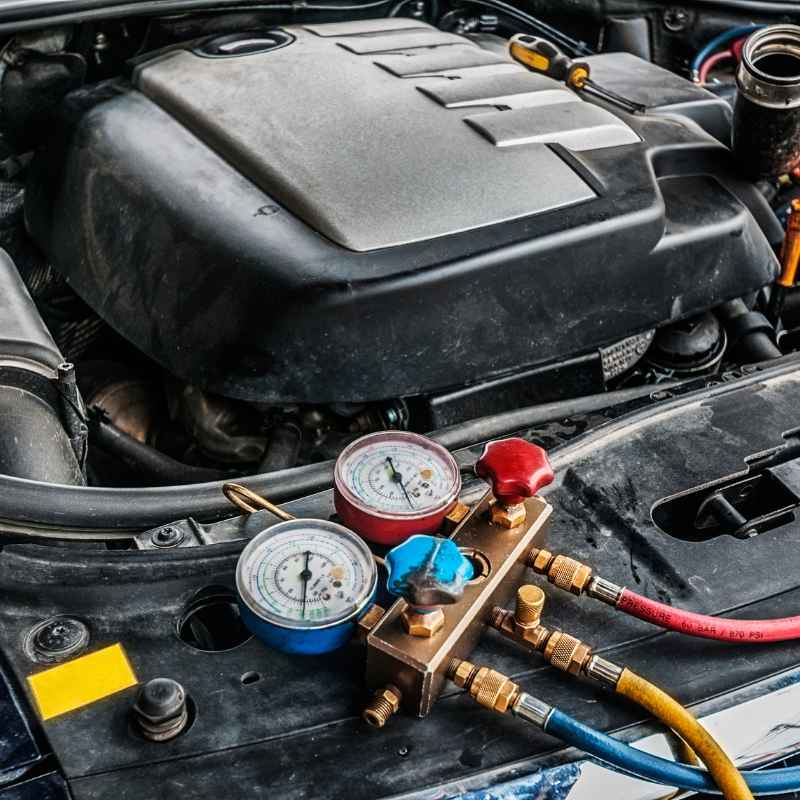
The refrigerant follows a closed loop through four main components: compressor, condenser, expansion valve (or orifice tube), and evaporator. The heart of the system is the compressor, which pressurizes the freon gas, raising its temperature. The hot, high-pressure gas then flows to the condenser (mounted in front of the radiator), where it cools down and turns into a liquid.
Next, the liquid refrigerant passes through the expansion valve, which drops its pressure sharply. This pressure drop causes the freon to turn into a cold, low-pressure mist inside the evaporator. The evaporator sits inside the dashboard, and a blower fan pushes cabin air across it.
The cold freon mist absorbs the heat from that air, leaving you with cold air coming out of the vents. The refrigerant then returns to the compressor as a low-pressure gas, and the cycle repeats.
Key Components in the Refrigerant Loop
- Compressor: The pump that pressurizes and circulates the refrigerant.
- Condenser: A radiator-like unit that releases heat from the refrigerant.
- Receiver-Drier / Accumulator: Removes moisture and debris from the system.
- Expansion Valve / Orifice Tube: Drops refrigerant pressure to create cold mist.
- Evaporator: The cold coil inside the dash that cools the air.
- Hoses and Seals: Keep the loop closed; leaks are the main cause of freon loss.
Tip: The refrigeration cycle is why a car AC system does not “consume” freon — it reuses the same charge over and over. If you are low, you have a leak.
What Are the Different Types of Car AC Refrigerant?
You cannot just put any refrigerant into your car. Using the wrong type can destroy seals, contaminate the oil, and ruin the compressor. Here are the three main types you need to know about.
R-12 (Dichlorodifluoromethane)
R-12 was the original freon for cars from the 1930s through the early 1990s. It worked extremely well and was non-toxic, non-flammable, and chemically stable. However, scientists discovered in the 1970s that R-12 released chlorine into the stratosphere, which destroyed the ozone layer.
The Montreal Protocol of 1987 phased it out. Today, R-12 is no longer manufactured, and you must use a retrofit kit to convert old systems to R-134a.
R-134a (Tetrafluoroethane)
R-134a replaced R-12 and was the standard in cars from 1995 until around 2020. It has zero ozone depletion potential but does have a global warming potential (GWP) of 1430 — meaning it traps 1430 times more heat than CO₂ over 100 years. R-134a is still widely available and is the refrigerant that most DIY recharge kits target.
It is non-flammable and safe for home use if handled properly.
R-1234yf (Tetrafluoropropene)
Starting with 2021 model years, the EPA mandated that new vehicles use R-1234yf. This new refrigerant has a GWP of just 4, which is a 99.7% reduction compared to R-134a. It is mildly flammable (classified as A2L), which means service techs need special certification and equipment.
R-1234yf is significantly more expensive than R-134a — a small can costs $50 to $80 compared to $15 for R-134a.
| Property | R-12 | R-134a | R-1234yf |
|---|---|---|---|
| Ozone Depletion Potential | 1.0 (very high) | 0 | 0 |
| Global Warming Potential | 10,900 | 1,430 | 4 |
| Flammability | Non-flammable | Non-flammable | Mildly flammable (A2L) |
| Approx. Cost per Pound | $100+ (rare) | $5–$10 | $40–$80 |
Each refrigerant type also requires a different type of PAG or POE oil. Mixing oils can cause sludge, poor lubrication, and compressor failure. Always confirm compatibility before adding anything.
Why Does Your Car’s AC Need Freon?
Your car’s AC system is a sealed loop that needs a precise amount of refrigerant to operate. The refrigerant is not a consumable like engine oil — it does not burn up or get used. If the system is properly sealed, you never need to “top off” the freon.
If the level drops, you have a leak somewhere.
Without enough refrigerant, the entire cooling cycle breaks down. The compressor may still run, but it cannot build enough pressure to create the temperature drop at the evaporator. You end up with air that feels slightly cool but not cold.
Over time, running the system low on freon can cause the compressor to overheat and fail because the refrigerant also carries the lubricating oil.
What Happens When Freon Gets Too Low?
- Warm air from vents: The evaporator cannot get cold enough to chill the incoming air.
- Compressor short-cycling: The low-pressure safety switch turns the compressor on and off rapidly.
- Hissing or bubbling sounds: Air or moisture enters the system through small leaks.
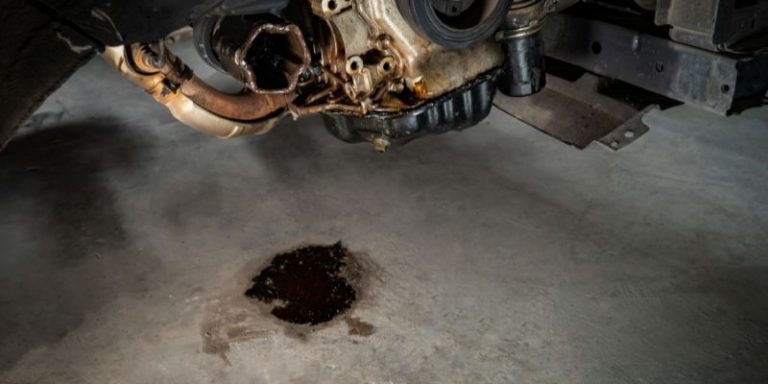
- Visible oil or dye at connections: Refrigerant oil leaks leave greasy residue on hoses and fittings.
- Frozen evaporator (paradoxically): In some cases, very low freon can cause ice to form on the evaporator coils due to improper pressure.
Important: According to the U.S. Department of Energy, a car AC system that is 20% low on refrigerant can reduce cooling efficiency by 30% and increase fuel consumption due to the compressor working harder.
What Are the Signs of Low Freon in a Car?
You do not need to be a mechanic to spot a freon shortage. Most symptoms are noticeable from the driver’s seat. The most obvious sign is that the air coming out of the vents is not cold, even when you set the temperature to the lowest setting and recirculate the cabin air.
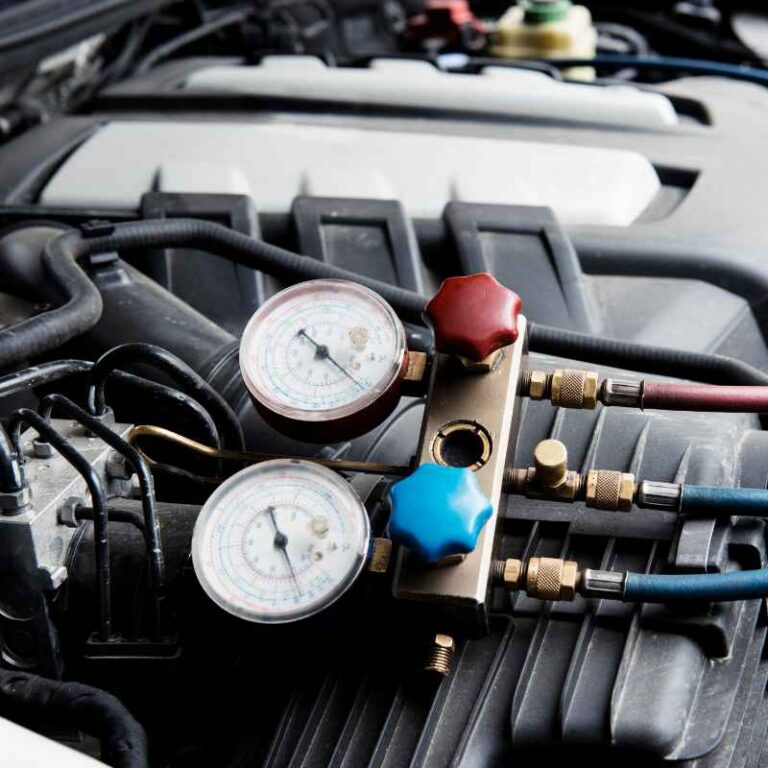
Another common clue is the compressor clutch. When you turn on the AC, you should hear a click and see the center of the compressor pulley engage. If the clutch clicks on and off repeatedly (every 5-10 seconds), the low-pressure switch is detecting insufficient refrigerant and cycling the compressor to protect it.
This rapid cycling is a sure sign of low freon.
Checklist of Low Freon Symptoms
- Vents blow lukewarm or room-temperature air when AC is set to max cool.
- Compressor clutch cycles on and off more than 3 times per minute.
- You see greasy residue or dye stains around AC hose connections and fittings.
- There is a sweet chemical smell from the vents (refrigerant has a faint ethereal odor).
- The AC air flow is weak (though this could also be a blower or filter issue).
- The AC only cools when the car is moving, not at idle.
If you notice any of these signs, have the system checked by a professional. Many auto parts stores offer free AC pressure checks. Do not just keep adding freon without finding the leak source — that wastes money and harms the environment.
How Much Does It Cost to Recharge Car AC Freon?
The cost to refill freon for cars varies widely depending on the refrigerant type, the severity of the leak, and where you get the service done. A simple recharge at a shop typically costs between $150 and $400. That price includes diagnosing the leak, evacuating the old refrigerant, and adding the exact amount specified by the manufacturer.
DIY recharge kits from auto parts stores are much cheaper, usually $30 to $60 for a can with a gauge hose. However, these kits usually contain R-134a with sealant additives, which can clog the expansion valve and cause long-term damage. According to a 2022 survey by the Mobile Air Conditioning Society (MACS), 72% of professional technicians reported that DIY recharge kits often lead to more expensive repairs within 12 months.
| Service Type | Cost Range | What’s Included |
|---|---|---|
| DIY Can (R-134a) | $30–$60 | One can + hose/gauge. May contain sealant. |
| Professional Recharge (R-134a) | $150–$250 | Evacuation, leak check, exact charge. |
| Professional Recharge (R-1234yf) | $250–$400 | Uses special equipment; refrigerant cost is higher. |
| Full AC Repair (compressor + lines + recharge) | $800–$1,500 | Major leak fixing, part replacement, full recharge. |
If your car uses R-1234yf, expect higher costs at every stage. The refrigerant itself is scarce and expensive, and the service machines are specialized. Always ask the shop what type of refrigerant your car uses before agreeing to any work.
Can You Recharge Car AC Freon Yourself?
Yes, you can recharge your car’s AC yourself if it uses R-134a and you have a basic DIY kit. However, several important factors need your attention before you attempt it. The first is legality — the EPA requires anyone handling refrigerant to be certified under Section 608 of the Clean Air Act.
In practice, small cans of R-134a are sold to anyone, but knowingly venting refrigerant into the atmosphere is illegal and carries a fine of up to $44,539 per day.
The second factor is safety. R-134a can cause frostbite if it contacts skin or eyes. It also displaces oxygen in enclosed spaces.
Always work in a well-ventilated area and wear safety glasses and gloves. For R-1234yf, DIY is not recommended because it requires specialized, certified equipment to handle the mild flammability risk.
Steps for a Safe DIY Recharge
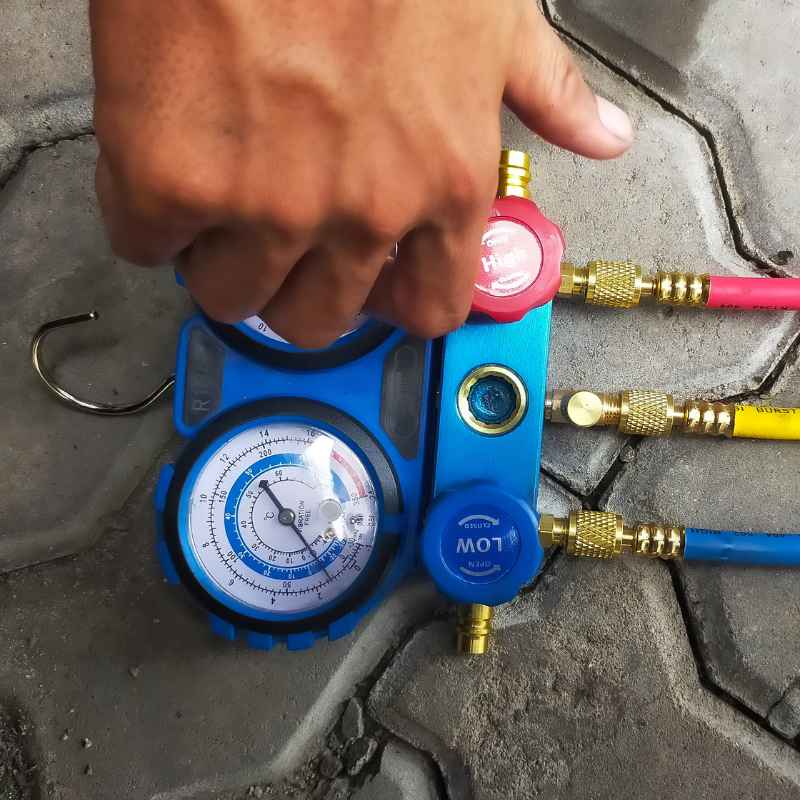
- Locate the low-pressure service port (usually on the larger AC line near the firewall).
- Start the engine and turn the AC to max cold with recirculation on.
- Attach the recharge hose to the low-pressure port (only one connector fits).
- Check the gauge reading — if it is above 25 psi, the system may not need recharge.
- If below 25 psi, slowly add refrigerant while holding the can upright.
- Stop when the gauge reads between 40–50 psi on the low side.
- Close the valve, disconnect, and replace the port cap.
Warning: Do not use a can that contains stop-leak additives. According to the Automotive Refrigerant Product Stewardship Initiative, sealants can clog the expansion valve and ruin the compressor. If the leak is small enough to be sealed by a chemical, it is small enough to be fixed properly with a new O-ring.
What Happens If You Use the Wrong Freon Type?
Mixing refrigerant types is a serious mistake. Each refrigerant has a specific pressure-temperature curve, and the system is designed to match that curve exactly. If you put R-134a into an R-12 system, the pressures will be wrong, and the compressor will not get proper lubrication.
The same applies if you put R-1234yf into an R-134a system — the fittings are different, so it is physically difficult, but possible with adapters, which is dangerous.
Using the wrong freon can cause rapid seal degradation. The seals in an AC system are made from specific rubber compounds (like HNBR or polyacrylate) that only work with certain refrigerants and oils. R-134a uses PAG oil, while R-12 used mineral oil.
If PAG oil gets into an R-12 system, it can attack the old-style seals and cause catastrophic leaks. Similarly, R-1234yf requires a specific PAG oil (ND-12 or similar) that is different from R-134a PAG oils.
Potential Consequences of Wrong Refrigerant
- Compressor failure: Wrong oil viscosity leads to poor lubrication and seizure.
- Clogged expansion valve: Incompatible oils can form sludge and block the orifice.
- Blown seals: Chemical incompatibility causes rubber seals to swell or shrink.
- Excessive high pressure: Wrong refrigerant can cause condenser or hose rupture.
- No cooling at all: The system may trip pressure switches and shut down completely.
Tip: If you are retrofitting an old R-12 car to R-134a, you need a full conversion kit: new O-rings, new accumulator/drier, and often a different expansion valve. Do not just screw an adapter on the port and hope for the best.
Frequently Asked Questions
How often does car AC freon need to be replaced?
Car AC refrigerant does not need routine replacement. In a sealed system, the freon lasts indefinitely. If you need a recharge, you have a leak.
Most modern systems lose about 10-15% of their charge over 5-7 years due to natural permeation through hoses, but that is usually not enough to affect cooling performance.
Can I use R-134a in a car that came with R-1234yf?
No. R-1234yf systems use different fittings, different seals, and different oil. The EPA prohibits putting R-134a into an R-1234yf system.
If you try, the fittings will not match, and even if you force an adapter, the compressor will fail quickly. R-1234yf systems are designed for low-GWP refrigerant only.
Is car AC freon harmful to the environment?
Yes, especially older types. R-12 is a powerful ozone-depleting substance. R-134a has a high global warming potential (1,430 times CO₂).
R-1234yf is much better with a GWP of just 4, but it is still a synthetic chemical. Never vent freon to the atmosphere — always recover it with proper equipment.
How do I know if my car’s AC just needs freon or has a bigger problem?
If the AC blows warm air but the compressor clutch engages and the air flow is normal, low freon is the most likely cause. If the compressor does not engage at all, the problem could be electrical (relay, fuse, sensor) or a failed compressor. If the air flow is weak, check the cabin air filter first.
A professional AC diagnosis includes pressure readings, leak detection, and vent temperature measurement.
Can I drive my car with no freon in the AC?
Yes, you can drive the car, but you should not run the AC system. If the refrigerant is very low, the compressor may still run intermittently, which can cause it to overheat and fail due to lack of lubrication. If you know the freon is empty, keep the AC button off until the system is repaired.
Driving with the AC off has no impact on the engine or other systems.
Final Thoughts
Freon for cars is the essential refrigerant that allows your AC to deliver cold air on hot days. Understanding what type your car uses, how the system works, and what signs indicate low refrigerant can save you from expensive repairs and uncomfortable drives. While DIY recharge is possible for R-134a systems, professional service is safer and more thorough.
If your AC is not cooling, do not ignore it — a $200 professional recharge today can prevent a $1,500 compressor replacement tomorrow.
Sponsored / affiliate links. As an Amazon Associate I earn from qualifying purchases. I may earn additional commission from eligible campaigns.
Products related to this article