What Does the Blue Light Mean on a Car? Dashboard & Underglow
A blue light on your car almost always means one of two things: the high-beam headlights are on, or — on select models — the engine hasn’t warmed up yet. Confuse the two, or ignore one that won’t turn off, and you either blind oncoming drivers or push a cold engine too hard before it’s ready. This guide covers the dashboard blue light, the blue coolant icon, and why blue underglow lighting is restricted in nearly every US state.
Insert your Affiliate Disclosure reusable block here.
Quick Answer
On most cars, a blue dashboard light means your high-beam headlights are switched on — it’s a “system is working” indicator, not a warning. A smaller number of models (Nissan, Honda, and GM among them) also use a blue thermometer icon to show the coolant hasn’t reached operating temperature yet. Blue exterior underglow lighting, by contrast, is restricted or banned in nearly every state because it can be mistaken for an emergency vehicle.
What Does a Blue Light Mean on a Car Dashboard?
The blue high-beam indicator is a notification light — a small headlight icon with horizontal lines stacked beside it — that turns on whenever your high-beam headlights are active. It doesn’t signal a problem. Under the international ISO 2575 standard that most automakers follow, blue and green icons mean a feature is simply switched on and working as intended, unlike amber (caution) or red (stop and check) lights.
High beams throw light much farther down the road than low beams, which helps on dark, unlit roads but can blind drivers coming the other way or the car directly ahead of you. Switch back to low beams as soon as another vehicle’s headlights or taillights come into view — most states legally require it within 500 feet of an oncoming car.
📊 Glare from oncoming headlights is a contributing factor in only about 1 to 2 out of every 1,000 nighttime crashes — a far smaller share than older estimates suggested, even though it remains one of the most common driver complaints. Source: Insurance Institute for Highway Safety (IIHS)
Blue Coolant Temperature Light: Why Some Cars Use It Instead of Red
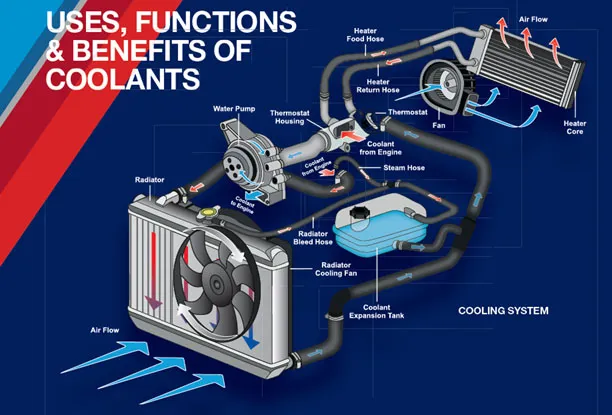
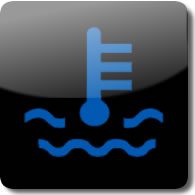
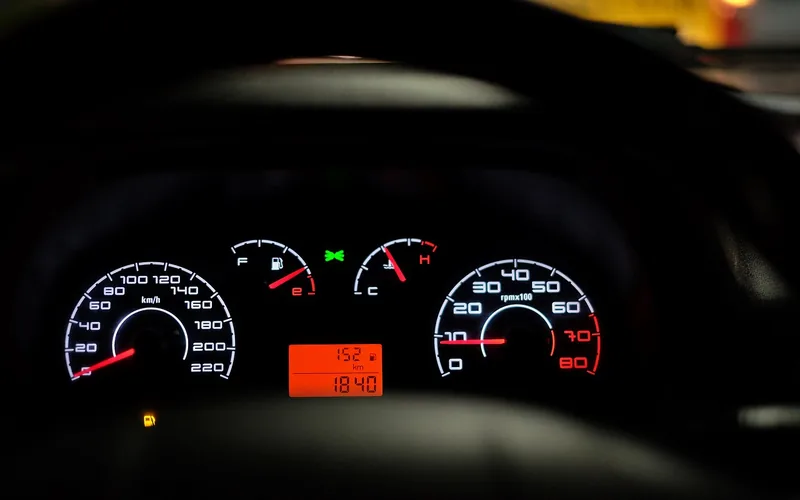
A blue coolant temperature light — usually a small thermometer icon — means the opposite of what most drivers assume. It doesn’t warn that the engine is overheating; it shows the engine hasn’t reached normal operating temperature yet, most often right after a cold start. It’s common on Nissan, Honda, and GM models, among others.
It’s safe to drive with the blue light on, but avoid hard acceleration or high RPMs until it clears — cold engine oil doesn’t lubricate as well, and pushing the engine too hard before it warms up adds unnecessary wear. In normal weather, the light typically turns off within a few minutes of driving; in freezing temperatures, it can take longer. If it stays on well past that, or comes back on repeatedly, have the coolant level and thermostat checked — a stuck-open thermostat or low coolant are the most common causes. If you’re also trying to identify a different icon on your dashboard, see our guide to what the fuel gauge arrow symbol means.
Best Dashboard Light Diagnostic Pick
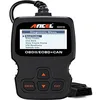
ANCEL AD310 OBD2 Scanner
Plugs into the OBD2 port under the dash and reads stored fault codes when a light stays on longer than it should or a sensor is behind the problem.
- Best for: checking whether a stuck indicator is tied to a stored engine or sensor fault code
- Why we picked it: simple plug-and-read design that matches the DIY troubleshooting steps in this guide
- Main drawback: won’t read manufacturer-specific ABS or airbag codes on most vehicles
Compare more dashboard light tools
 Option 1 EPAuto Coolant Funnel Kit
|
 Option 2 AUTOONE High Beam LED Bulbs
|
 Option 3 Zerex Dex-Cool Antifreeze
|
As an Amazon Associate we earn from qualifying purchases.
Is a Blue Light on the Outside of a Car Legal?
If the “blue light” you’re asking about is aftermarket underglow or accent lighting rather than a dashboard icon, the short answer is no — blue exterior lighting is restricted or banned outright in nearly every US state. Blue (along with red) is reserved for police cars, ambulances, and fire trucks, so states treat any civilian vehicle showing blue light as a potential source of confusion on the road.
States like Massachusetts, Illinois, and Washington enforce this strictly and can issue a fine for it. Even states considered more permissive on underglow in general, such as Arkansas, Idaho, and Montana, still draw the line at red, blue, green, or flashing lights. California allows underglow but explicitly excludes blue from anywhere on the vehicle. In short: whatever color you choose for underglow, blue is almost always off the table.
📊 An underglow lighting violation is typically treated as a civil infraction rather than a criminal offense, but it’s still a citable, fineable violation in most states — check your specific state and local laws before installing it. Source: FindLaw
Why Are Some Dashboard Lights Blue, Green, Yellow, or Red?
Automakers don’t pick indicator colors at random — most follow the ISO 2575 standard, which groups dashboard icons into three tiers: green or blue for “this feature is on and working,” yellow or amber for “something needs attention soon,” and red for “stop and check immediately.” A blue high-beam or coolant icon falls into that first, lowest-urgency tier, which is exactly why it isn’t something to panic over.
“Green or blue dashboard lights are notification lights, telling you that a feature of your car is active and don’t signal a fault or problem — rather, they are an indication that these parts of your car are functioning exactly how you want them to function.”
Not every brand applies the standard exactly the same way — Ford, Toyota, and other manufacturers vary slightly in which icons they show in blue versus green. If you’ve run into a different colored light and want to check another symbol, our guide to the green light on a GMC Terrain covers a similar low-urgency indicator on that model.
What to Do if the Blue Light Won’t Turn Off
Most blue lights clear on their own — the high-beam icon when you dim the lights, the coolant icon within a few minutes of driving. If one stays on longer than expected, work through these steps:
- Identify which icon it is: Check your owner’s manual to confirm whether it’s the headlight-and-lines high-beam symbol or the thermometer coolant symbol — the fix is different for each.
- For a stuck high-beam icon: Toggle the headlight stalk between low and high beam. If the icon stays lit with the beams switched off, the multifunction switch or a relay may be stuck and needs a mechanic’s look.
- For a coolant icon that won’t clear: Let the engine cool down completely, then check the coolant reservoir level against the “full” and “low” marks. Top off if it’s low, using the coolant type listed in your owner’s manual.
- Check for a bad bulb: A flickering indicator light (rather than one that’s simply stuck on) can point to a failing bulb behind the icon itself, not the system it represents.
- Scan for stored fault codes: If the light stays on or blinks in an unusual pattern after these checks, plug in an OBD2 scanner or have a mechanic pull codes — a failed temperature sensor is a common, inexpensive fix once it’s identified.
Frequently Asked Questions
What does the blue light on my car dashboard mean?
On most vehicles, it means your high-beam headlights are switched on. On a smaller number of models, a blue thermometer-shaped icon instead means the engine coolant hasn’t reached normal operating temperature yet. Check your owner’s manual if you’re not sure which one your car uses.
Can I drive with the blue coolant light on?
Yes, it’s generally safe to drive with the blue coolant light on — it just means the engine is still warming up. Avoid hard acceleration or high RPMs until it turns off, which usually takes a few minutes of normal driving. If it stays on much longer than that, have the coolant level checked.
What is the blue indicator in a car?
The blue indicator in a car is most commonly the high-beam headlight symbol, which lights up whenever the high beams are active to remind you to switch back to low beams around other traffic.
Is it legal to have blue lights on the outside of my car?
No, not in almost any state. Blue exterior lighting, including underglow, is reserved for emergency vehicles like police cars and ambulances, so most states ban or heavily restrict civilian vehicles from using it — even states that otherwise allow underglow in other colors.
Why are some dashboard lights blue, green, yellow, or red?
Most automakers follow the ISO 2575 standard, which uses blue or green for “a feature is on and working normally,” yellow or amber for “needs attention soon,” and red for “stop and check now.” That’s why a blue light isn’t something to worry about the way a red warning light is.
What if the blue light stays on and won’t turn off?
First confirm which icon it is, then check the matching cause: a stuck high-beam switch or relay for the headlight icon, or a low coolant level and possible thermostat issue for the coolant icon. If neither resolves it, an OBD2 scan or a mechanic’s inspection can identify a failed sensor.
Conclusion
A blue light on your car is rarely something to worry about — it’s almost always the high-beam indicator, or on some models, a reminder that the engine is still warming up. The one blue light worth avoiding altogether is aftermarket underglow, since it’s restricted in nearly every state. When in doubt about a specific icon, your owner’s manual is the fastest way to confirm exactly what it means on your model. For other dashboard symbols, see our guide to what the TC light means on a car.
Products related to this article
Sponsored / affiliate links. As an Amazon Associate I earn from qualifying purchases. I may earn additional commission from eligible campaigns.