Car Glass Repair and Replacement: Windshield, Mirror and Touchscreen Options
“Glass for my car” usually means one of three separate problems: a chipped or cracked windshield, a broken side mirror lens, or a cracked touchscreen on the dashboard. Each one has a different fix, a different price range, and a different level of DIY risk, so the right answer depends on which piece of glass you’re actually dealing with.
Below is a breakdown of all three, starting with the one that affects the most drivers: windshield damage. If you already know which type of glass you need, jump straight to that section.
Windshield Chip and Crack Repair: DIY Kit or Professional Service?
Not every windshield chip needs a full replacement. As a rule of thumb, a chip smaller than about a quarter (roughly one inch across) can usually be repaired, as long as it isn’t sitting directly in the driver’s line of sight and doesn’t reach the edge of the glass. Cracks are a bit more restrictive: most auto glass shops will repair a crack under about 3 to 6 inches long, but anything wider than a hairline (about 1/8 inch) usually can’t be filled cleanly with resin and will need a replacement instead.
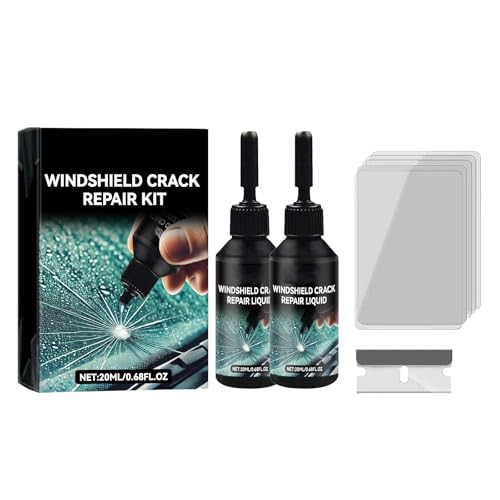
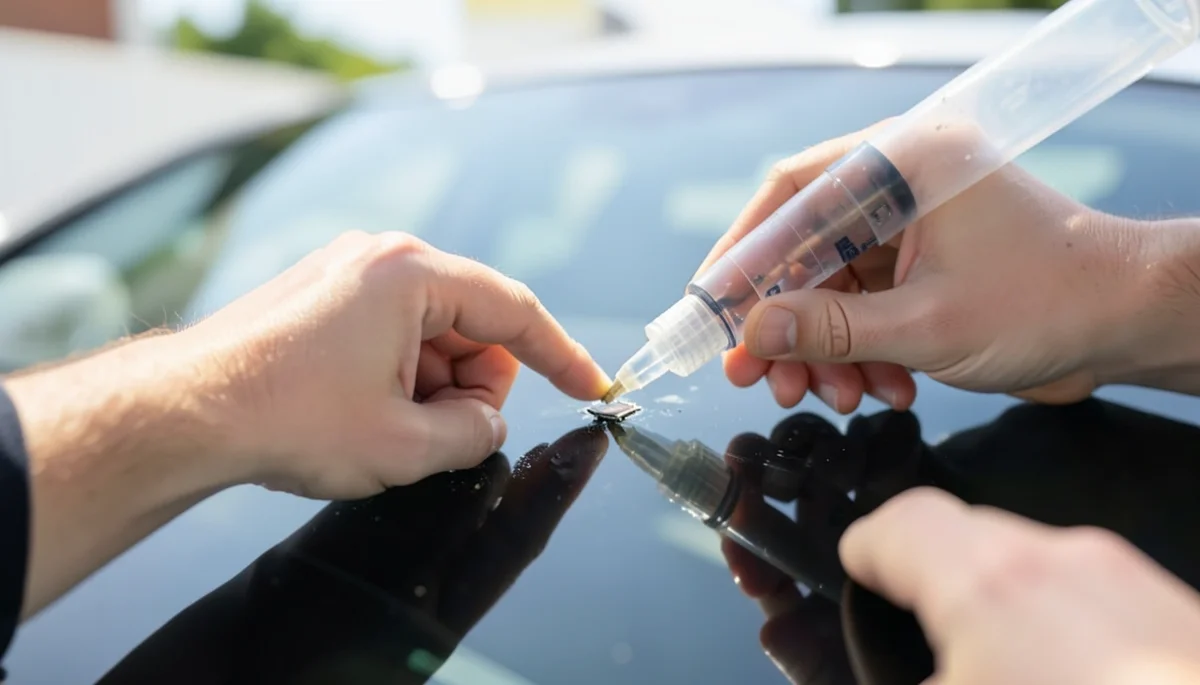
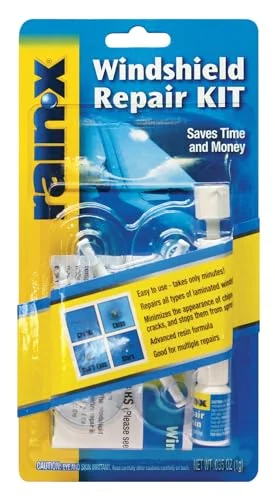
For damage inside those limits, a DIY resin kit is a legitimate option. A kit like the Rain-X windshield repair kit works by injecting clear resin directly into the chip under pressure, then curing it with a UV-blocking strip so it bonds to the surrounding glass. It won’t make the chip invisible, but it stops it from spreading and restores most of the glass’s structural strength.
BEST FOR SMALL CHIPS & SHORT CRACKS
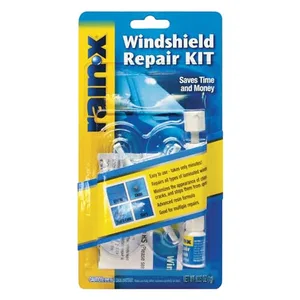 |
Rain-X Windshield Repair Kit – $12.67 A resin-and-curing-strip kit built for exactly the chip and short-crack sizes described above.
|
Does a New Windshield Need Recalibration?
If your car has lane-departure warning, automatic emergency braking, or adaptive cruise control, there’s a good chance the camera for those systems is mounted right on the windshield. Replacing that glass — even by a millimeter of tilt — can throw the camera’s aim off, and a miscalibrated ADAS camera often doesn’t trigger any warning light. For a full windshield replacement on a car like this, budget for a static or dynamic ADAS recalibration afterward; most auto glass shops that handle windshield replacement offer it, and some insurers won’t cover a later ADAS malfunction claim if the recalibration step was skipped. This isn’t a concern for a small DIY chip repair, since the glass itself is never removed.
Will Insurance Cover the Repair?
Most comprehensive auto insurance policies (not liability-only) cover windshield damage, and many insurers waive the deductible for a repair (as opposed to a full replacement) since it’s cheaper for them than paying out a claim later. Florida, Kentucky, and South Carolina are the only states that legally require insurers to offer zero-deductible windshield coverage; everywhere else it depends on your specific policy and insurer, so it’s worth a quick call before you buy a DIY kit or book a shop appointment. If you’d rather sort out the warranty and insurance question first, see our guide on whether a car warranty covers windshield damage.
Replacing a Broken or Cracked Side Mirror Glass
A cracked or missing side mirror lens is a different repair entirely from windshield glass, and usually a much cheaper one. In most cases, you don’t need to replace the whole mirror housing or motor assembly — just the glass lens that sits inside it, which typically clips or glues onto a mounting plate.
If your car’s exact mirror glass isn’t easy to find, a universal cut-to-fit lens like the K Source Universal Replacement Cut-to-Fit Glass Panel (formerly sold under the Fit System name) is a practical workaround. It ships as an oversized 7-by-10-inch sheet that you trim down with household scissors or a glass cutter to match your mirror’s mounting plate, then attach with the included adhesive tape. It’s not a factory-exact match, so the color tint or curvature can differ slightly from your original mirror, but it costs a fraction of an OEM part and takes about ten minutes to install once it’s trimmed to size. You can see the current price and availability on Amazon.
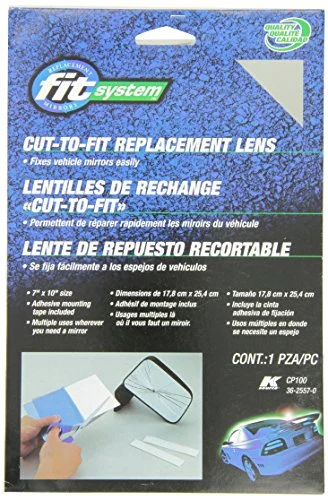
If precision matters more than saving money — for example, if the mirror is heated, has a turn-signal indicator built in, or is on a vehicle where the color-matched glass is easy to find by year, make, and model — an exact OEM-fit replacement lens is usually the better call over a trim-to-fit universal one.
Fixing a Cracked Touchscreen or Infotainment Digitizer Glass
The third kind of “car glass” people search for isn’t exterior glass at all — it’s the touchscreen on the dashboard. A cracked or unresponsive infotainment screen usually means the digitizer, the thin touch-sensitive glass layer bonded over the display, has been damaged or has come loose from the screen underneath it. That’s a separate part from the LCD panel itself, and on most factory infotainment units it can be replaced on its own without buying an entirely new head unit.
These parts are model-specific, not universal — a digitizer sized and shaped for one vehicle’s factory screen almost never fits another. As one example, the Ymiko 7-inch touch screen digitizer is built specifically for the 2014-2016 Mazda 3’s infotainment display and matches that model’s exact mounting points and connector. If you drive a different car, you’ll need to search for the digitizer listed for your specific year, make, and model instead of assuming a generic part will work.
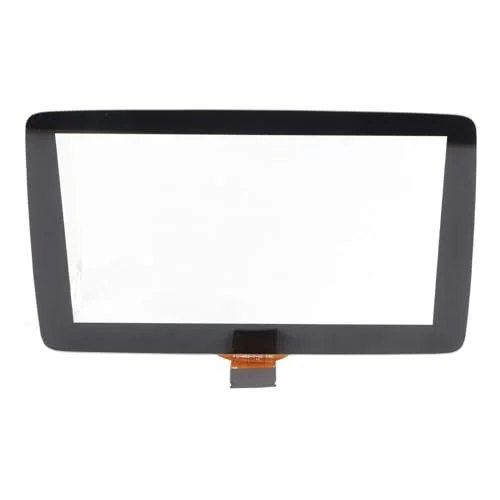
Installation is more delicate than either of the other two repairs on this page: it usually means pulling the dash trim, disconnecting a ribbon cable, and carefully separating an adhesive bond without cracking the LCD panel underneath. If you’re comfortable with electronics teardown work it’s a doable weekend project; if not, a shop that specializes in infotainment repair can usually do it faster and with less risk of damaging the display underneath. You can check current pricing and compatibility for the Mazda 3 part on Amazon.
Which Type of Car Glass Do You Actually Have a Problem With?
| What You’re Seeing | Likely Glass Type | Typical Fix |
|---|---|---|
| Small pit or star-shaped mark on the windshield | Windshield chip | DIY resin kit, or free/low-cost shop repair |
| A line spreading across the windshield | Windshield crack | Resin repair if short and hairline; replacement if longer or wide |
| Mirror reflects a distorted or cracked image | Side mirror lens | Universal cut-to-fit or OEM-specific replacement glass |
| Dashboard screen has visible cracks or stops registering taps | Infotainment digitizer | Model-specific digitizer replacement |
Frequently Asked Questions
How do I know if a windshield chip is repairable or needs full replacement?
A chip smaller than about a quarter, away from the driver’s direct line of sight and not touching the edge of the glass, is usually repairable with a resin kit. Cracks longer than roughly 6 inches, wider than about 1/8 inch, or reaching the windshield’s edge generally require a full windshield replacement instead.
Does insurance cover windshield chip repair or replacement?
If you carry comprehensive coverage, most insurers will cover windshield damage, and many waive the deductible for a repair specifically. Florida, Kentucky, and South Carolina legally require zero-deductible windshield coverage; in other states it depends on your insurer and policy, so it’s worth calling before you pay out of pocket.
Do I need ADAS recalibration after a windshield replacement?
If your car has a windshield-mounted camera for lane-departure warning, automatic emergency braking, or adaptive cruise control, yes — most manufacturers require recalibration any time that windshield is removed and reinstalled, since even a slight shift in the glass can throw the camera’s aim off without triggering a warning light.
Can I replace a side mirror glass myself?
Yes, in most cases the mirror lens simply clips or glues onto a mounting plate inside the housing, so you don’t need to replace the entire mirror. A universal cut-to-fit glass panel works for many vehicles if you’re willing to trim it to size; an exact OEM-fit lens is a better choice if your mirror is heated or has a built-in turn-signal indicator.
What is a digitizer glass, and can I install one myself?
A digitizer is the thin touch-sensitive glass layer bonded over your car’s infotainment display; when it cracks or stops registering taps, it can often be replaced without buying a whole new head unit. Installation is more delicate than a windshield or mirror repair, since it involves pulling dash trim and disconnecting a ribbon cable, so it suits confident DIYers more than a first-time repair.
How much does DIY car glass repair typically cost compared to a shop?
A DIY windshield chip repair kit generally costs $10 to $15, versus $60 to $150 or more at a shop (though many shops repair chips for free if you carry comprehensive insurance). A universal mirror glass panel runs about $10, versus $20 to $50-plus for an OEM-specific lens. Model-specific digitizer glass typically runs $15 to $40, well under the cost of a full replacement infotainment unit.
The Bottom Line
“Car glass” covers three genuinely different repairs: a windshield chip or crack, a side mirror lens, and a touchscreen digitizer. A small windshield chip is the easiest and cheapest to handle yourself with a resin kit, mirror glass usually just needs a trimmed-to-fit or OEM-matched panel, and a cracked infotainment screen is the most involved of the three but still a fraction of the cost of a full head-unit replacement. Match the fix to the glass you actually have, and check your insurance policy before paying out of pocket for anything windshield-related.
For everyday glass upkeep once any repairs are done, see our picks for affordable car glass cleaners.
Products related to this article
Sponsored / affiliate links. As an Amazon Associate I earn from qualifying purchases. I may earn additional commission from eligible campaigns.