Hail Protection for Car: Tested & Reviewed (3 Picks)
For hail protection, pick an inflatable or multi-layer cover for golf-ball hail, a padded half-cover for quick deployment, or a custom-fit full cover if you park outside for long stretches. Pick the wrong one, and a single storm can leave dents, cracked glass, and a repair bill that dwarfs the cover’s price. This guide ranks three picks by hail size, parking setup, fit, deployment speed, and cost.
Hail cover picks compared

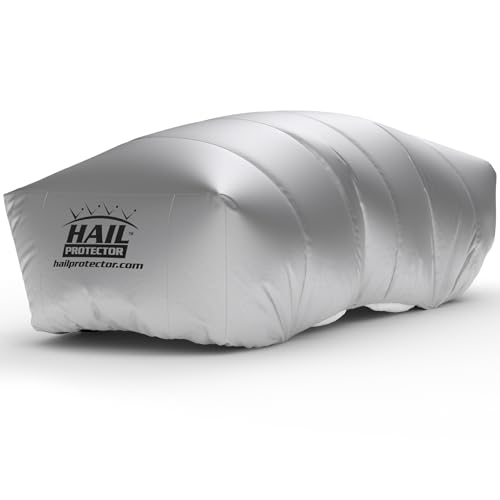
The trade-off is simple: faster deployment usually means less coverage. Thicker padding and a tighter fit usually mean more bulk. For hail-rated covers, hail size rating, foam thickness, and retention matter more than layer count alone. Standard fabric covers do not provide meaningful hail protection, so skip them for storm duty.
| Pick | Best fit | Hail size risk | Vehicle fit | Setup time | Storage burden |
|---|---|---|---|---|---|
| Kayme Hail Protection Car Cover | Quick-deploy padded cover for daily outdoor parking | Small-to-moderate hail; one cited test used 15mm impacts | Sedan and SUV sizing with exact length matching | Moderate | Medium to high |
| Leader Accessories Platinum Guard | Budget padded cover when you want hail coverage without top-tier pricing | Light to moderate hail; verify foam thickness before buying | Size-chart dependent; partial-fit risk rises on accessories | Moderate to slow | Medium to high |
| Inflatable hail cover system | Emergency use for larger-hail scenarios | Higher hail risk, where added air gap makes sense | Usually vehicle-specific or size-specific | Slowest | Highest |
Where each pick fits best
Apartment parking favors the quickest padded cover you can deploy without fighting a crowded lot. Driveway users can tolerate more bulk and usually have time for straps, hems, and better alignment. Emergency-only storage points toward the thickest option you can actually keep in the vehicle or garage.
Kayme fits the “grab it fast” lane. The cited claim of a genuine 5mm EVA foam layer makes it the most straightforward of the padded options here when speed matters and hail risk is not the largest on the map.
Leader Accessories Platinum Guard fits the budget lane. It is the safer call when price matters, but you still need to check padding thickness, vehicle length, and retention details before assuming it will outclass a standard cover.
Inflatable systems fit the “bigger hail, bigger hassle” lane. They bring more complexity, more storage burden, and power requirements that padded covers do not have. That trade-off makes sense only when the hail risk justifies it.
What each pick does well, and where it falls short
Kayme does well when you need a padded cover that can be deployed without turning the trunk into a storage closet. Its limit is the same one most padded covers face: if the fit is loose or the storm is severe, the margin shrinks quickly.
Leader Accessories can make sense as a lower-cost entry point, but the buyer still has to verify the foam spec, not the layer count alone. A 5-layer or 7-layer label tells you little if the impact layer is thin.
Inflatable systems are the strongest option on the list for larger hail scenarios, but they are also the least convenient. Higher cost, power dependence, and bulk make them poor choices for quick daily use.
What hail size can a car cover stop?
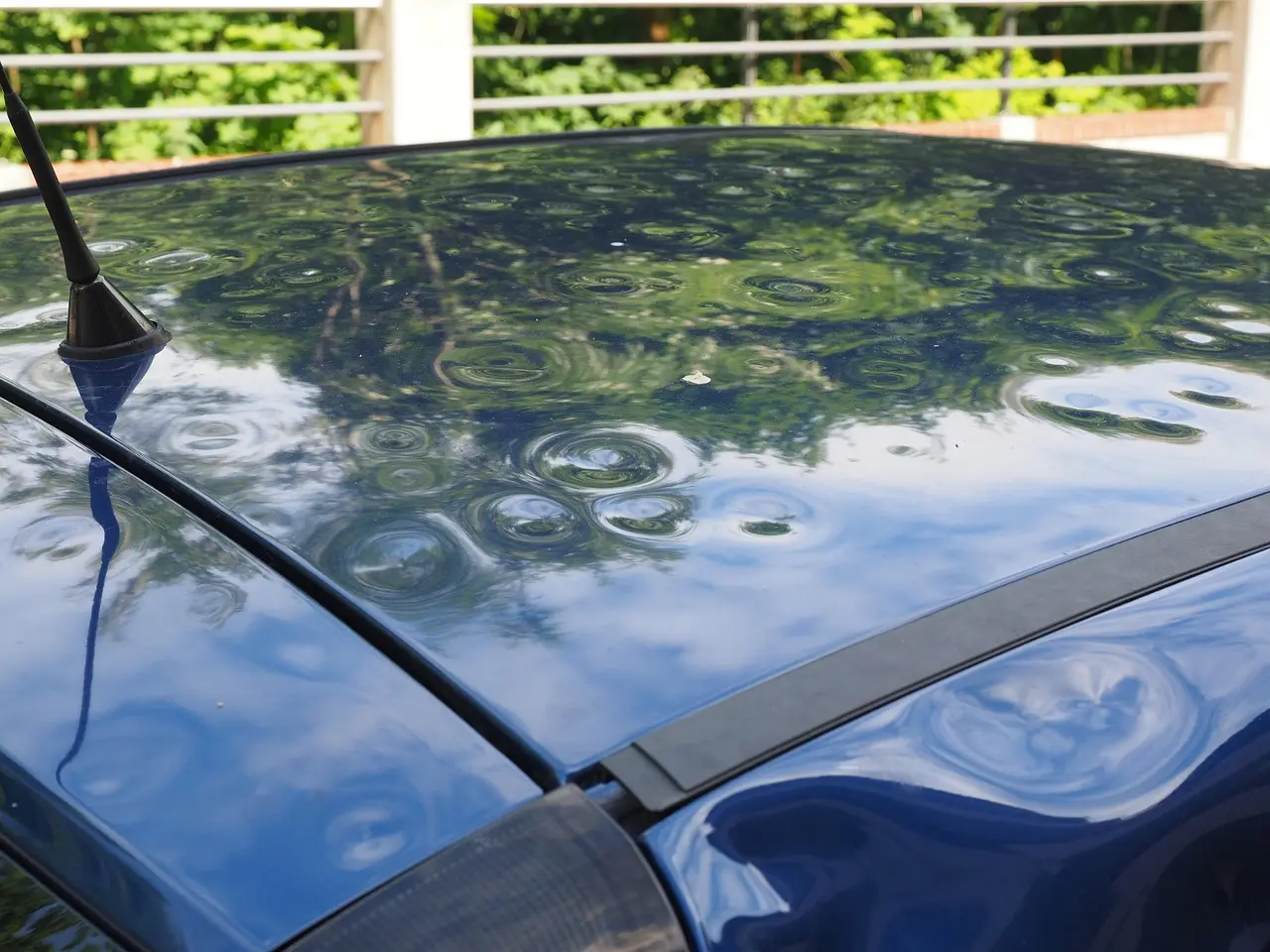
A hail cover should be judged by hail diameter in millimeters, not by marketing words like “heavy-duty.” In the cited material, some covers rate protection at 19.3mm hail, while one tested cover allegedly withstood simulated 15mm hail impacts at 70 km/h. That gap matters.
How to read hail-size ratings in millimeters
Millimeters are the cleanest comparison point because they map directly to stone size. Fifteen millimeters is a very different target from 19.3mm, and a cover that handles one should not be treated as automatically ready for the other. Ask what hail size the cover is actually rated for.
The test protocol matters too. The cited testing used 15mm and 25mm steel balls, plus wind exposure up to 50 mph. That kind of detail is more useful than a vague claim that a cover “passed hail testing.”
Why foam thickness matters more than layer count
EVA foam padding is the impact-absorbing material that makes a padded hail cover different from a rain shell. Competitor claims commonly fall in the roughly 3 mm to 5 mm range, and the cited article reports that EVA foam below about 4 mm provides little protection against marble-sized hail. That is the number to watch.
Layer count is secondary. A 5-layer or 7-layer construction can still underperform if the foam is thin or if the impact layer is not placed where the roof and windows need it most. XPE foam, or cross-linked polyethylene foam, shows up in multi-layer designs as a shock-absorbing roof and window layer, but it still needs real thickness to matter.
What a 15 mm claim means versus a 19.3 mm claim
A 15mm claim points to smaller hail and quicker deployment use cases. A 19.3mm claim moves into a tougher category, but it still does not guarantee performance in wind, odd angles, or mixed hail-and-debris storms. Ratings help. They do not erase fit risk.
Suppose your parking is open on two sides and the forecast calls for larger stones. A padded cover rated around 15mm may be the wrong line to draw, especially if the car has roof rails and mirror shapes that create gaps.
Which hail cover do you actually need?
Use hail size risk, parking setup, and deployment speed to choose the cover first, then the price. If the car lives outside and storms can arrive with little warning, quick deployment matters. If the car sits in a driveway with time to spare, thicker padding and tighter fit become more useful.
| Hail size risk | Parking setup | Vehicle type | Expected setup time | Storage burden | Minimum foam thickness |
|---|---|---|---|---|---|
| Small hail, under 15mm | Apartment or curbside parking | Sedan | Fast | Moderate | 3mm to 4mm EVA foam |
| Small to moderate hail, around 15mm | Driveway or reserved spot | Sedan or midsize SUV | Moderate | Medium to high | 5mm EVA foam |
| Larger hail, around 19.3mm or higher | Long-term outside parking | SUV or larger vehicle | Slow | Highest | Thicker padded system or inflatable cover |
Scoring rule for the three picks
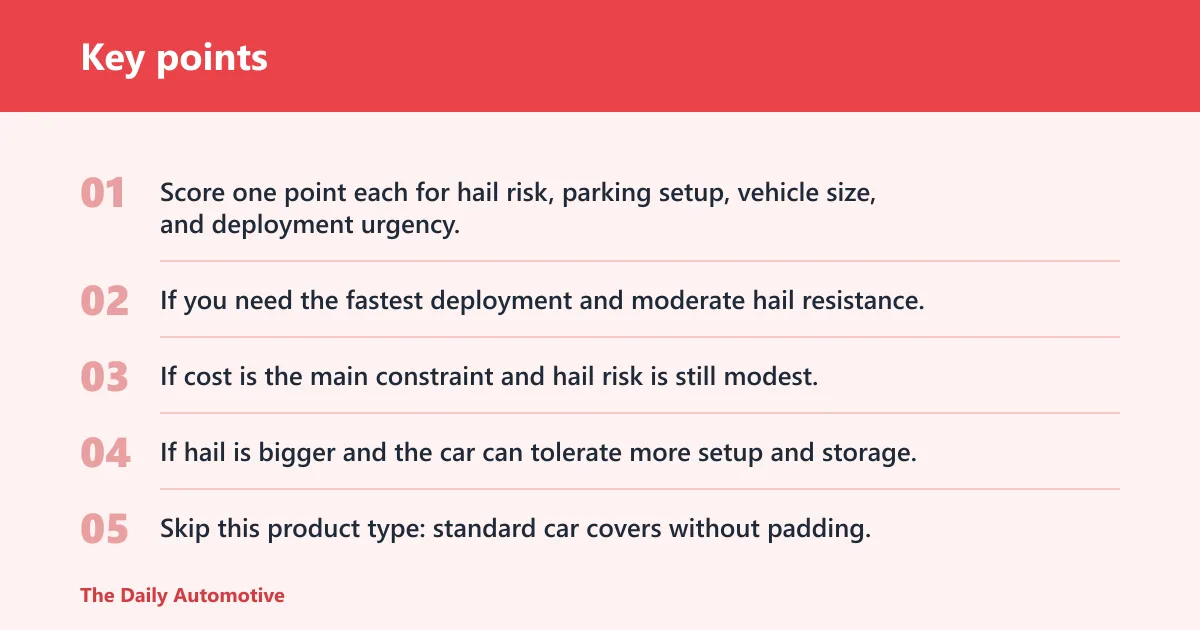
Use a simple rule. Score one point each for hail risk, parking setup, vehicle size, and deployment urgency. If you need the fastest deployment and moderate hail resistance, choose Kayme Hail Protection Car Cover. If cost is the main constraint and hail risk is still modest, choose Leader Accessories Platinum Guard. If hail is bigger and the car can tolerate more setup and storage, choose an inflatable hail cover system.
Skip this product type: standard car covers without padding. The cited material says standard fabric covers provide zero meaningful hail protection, and that warning should be taken literally.
Cost trade-off that matters
Cover price is only part of the equation. The cited price range runs from $25.72 to $199.99, but a cheaper cover that fails once can cost more than the price gap if it lets hail hit the roof, hood, or glass. Add in deductible exposure and seasonal storage inconvenience before calling any option “cheap.”
Do padded hail covers really work?
Yes, padded hail covers can work, but only within the hail-size range they are built for and only when the fit is tight enough to stay in place. EVA foam padding is the key material, and the protection level depends more on its thickness and placement than on a glossy product title or a high layer count.
What EVA foam padding does
EVA foam spreads impact force across a wider area before it reaches the paint or glass. That is why a 5 mm EVA layer is generally more meaningful than a thin decorative shell. The cited material also warns that below 4mm, EVA foam offers negligible protection against marble-sized hail.
Where XPE foam fits
XPE foam appears in multi-layer covers as a shock-absorbing layer for the roof and windows. It can improve impact management, but it should be treated as part of the system, not as proof by itself. Foam type, thickness, and where it sits in the construction all matter.
Why a padded hail cover is not a rain cover
A padded hail cover is bulkier and heavier than a standard dust or rain cover because it is built to absorb impact. A rain shell can keep dust off. It cannot be counted on to stop hail. That is the wrong tool for the job.
A common first-timer mistake is buying a cover because it says “7-layer” and assuming that means hail-ready. If the foam is thin, the cover can still fail on the roof first, where the strikes land hardest.
How do you keep a hail cover from blowing off?
Retention starts with underbody straps, elastic front and rear hems, and enough tension to keep the cover seated. They help in wind, but they do not rescue a poor fit. On open streets and exposed driveways, fit quality matters as much as the strap count.
What retention features matter
Underbody straps keep the cover anchored below the car. Elastic hems help seal the front and rear edges. More strap points can improve storm retention, but only if the cover still matches the vehicle’s shape and length.
Where fit failures happen
Partial fit is one of the most common failure cases. Antennas, roof rails, spoilers, and mirror shapes can create lift points or gaps. A cover that is “close enough” in the catalog can still shift in a wind gust and leave the most exposed panel underprotected.
Why wind changes the risk
Wind does not have to tear a cover off completely to cause trouble. It only needs to lift one edge or loosen one strap. Once that happens, the roof and upper panels can take the brunt of the storm. The cited wind test reached 50 mph, but that does not make every real-world parking setup equal.
Padded versus inflatable hail covers
Padded covers are the easier daily choice. Inflatable systems make more sense when hail is larger, the car is parked outside for longer periods, and the owner can accept higher cost plus a power requirement. They are not a universal upgrade.
When inflatable systems make sense
Choose an inflatable system when hail risk is higher than what a padded cover is realistically rated to handle, and when storage space and deployment time are less important than maximum impact buffering. That is the right trade only for some owners.
What you give up for the extra protection
You give up convenience. Inflatable covers are bulkier, costlier, and more demanding to store. Padded covers are already bulky compared with standard covers, and inflatables add another layer of complexity on top of that.
Which one wins on value?
For small-to-moderate hail and quick deployment, a padded cover is usually the better value. For larger hail scenarios where the downside of failure is much higher, the inflatable option can justify its cost. The key is matching the cover to the storm, not to the shopping cart.
How to fit a hail cover to your sedan or SUV
Fit starts with exact length and model-specific size charts. Sedan and SUV sizing are not interchangeable, and an approximate fit can be a weak fit under wind or hail. A cover should match the car’s length, height, mirror shape, and roof hardware as closely as the maker allows.
What changes for sedans versus SUVs
Sedans usually need less material and can be easier to seat tightly. SUVs need larger dedicated sizing because height and roof area change how the cover settles. The wrong size often creates slack where hail and wind can work the cover loose.
How accessories affect coverage
Antennas, roof rails, spoilers, and oversized mirrors can all interfere with fit. A size chart that only lists body length is not enough if the car has roof hardware that changes the cover’s seating points. Exact fit is not optional here.
Simple fitting checklist
- Measure the vehicle length and match it to the size chart.
- Check for antennas, roof rails, spoilers, and mirror clearance.
- Confirm the retention system includes underbody straps or elastic hems.
- Make sure the foam thickness matches the hail-size risk you are trying to cover.
- Choose a storage method you can live with for the entire season.
Say your sedan parks in an apartment lot and the forecast calls for 15mm hail with little warning. A padded cover that deploys quickly is the practical choice. Suppose the same car lives in a driveway and the storm risk climbs toward 19.3mm. The better fit is usually a heavier padded system or an inflatable option.
Choose Kayme hail protection car cover if…
Choose Kayme if you want a padded cover with a cited 5mm EVA foam layer, need faster deployment than a bulkier system allows, and expect small-to-moderate hail rather than the largest stones. It also makes sense if you want a straightforward daily-use option for a sedan or SUV with a clear size chart.
Choose Leader Accessories platinum guard if…
Choose Leader Accessories if budget matters most, your hail risk is still in the light-to-moderate range, and you are willing to verify fit, foam thickness, and retention before the first storm. It is the more cost-conscious padded route, not the strongest one.
Choose an inflatable hail cover system if…
Choose an inflatable system if larger hail is the real concern, the car stays outside for long stretches, and you can tolerate higher cost, more storage burden, and a power requirement. It is the better answer when padded covers may be too light for the risk.
Frequently asked questions
What is the best hail protection for a car?
The best hail protection depends on storm size and how fast you can deploy the cover. For small-to-moderate hail, a padded cover with real EVA foam is usually the practical choice. For larger hail, an inflatable system makes more sense. Standard fabric covers should be skipped.
Do hail car covers really work in a storm?
They can work, but only within their rated hail size and only with a good fit. A cover with 5mm EVA foam and proper retention can help against smaller hail. Thin, non-padded covers do not count. Wind, spoilers, and partial fit can still cause failure.
How thick should a hail car cover be?
Thickness matters more than layer count. Competitor claims commonly mention 3mm to 5mm EVA foam, and below 4mm the cited material says protection against marble-sized hail is negligible. If the hail risk is higher, look for thicker padded construction or move to an inflatable system.
Will a hail cover fit my sedan or SUV?
It should if the size chart matches the car’s exact length and body shape. Sedans and SUVs need different sizing, and accessories like roof rails, antennas, mirrors, and spoilers can affect coverage. A close-enough fit can still leave gaps where wind can lift the cover.
Are padded hail covers better than inflatable ones?
Not always. Padded covers are better for quick deployment, lower cost, and everyday use. Inflatable covers are better when hail risk is higher and you can accept more bulk, more storage burden, and a power requirement. The right choice depends on the storm, not the label.
How do I keep a hail car cover from blowing off?
Use underbody straps, elastic hems, and the correct vehicle size. Those features help in wind, but they cannot fix a poor fit. A cover that is too loose around mirrors, roof rails, or spoilers can shift in gusts and lose protection right when it is needed.
Products related to this article
Sponsored / affiliate links. As an Amazon Associate I earn from qualifying purchases. I may earn additional commission from eligible campaigns.
 Car Cover Hail Protection Padded Compatible with Toyota MR2 Roadster, Hail Protector Car Cover Protection, Snowproof Waterproof Windproof Sun Uv Protection Hail Blanket FY13Car Cover Hail Protection Padded Compatible with opel Astra TwinTop, Hail Protector Car Cover Protection, Snowproof Waterproof Windproof Sun Uv Protection Hail Blanket FY13