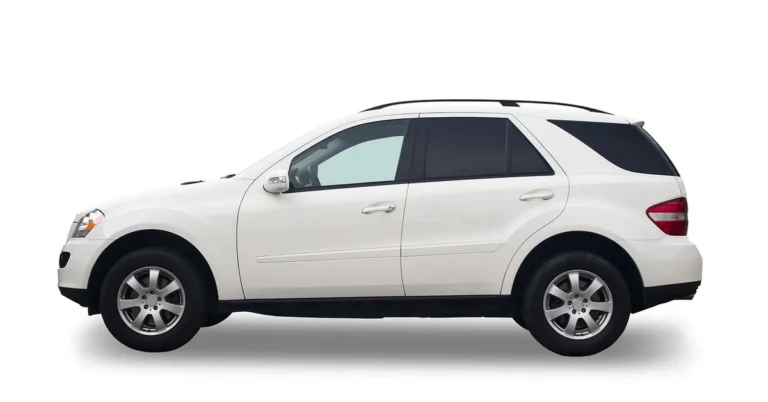
Honda Passport Towing Capacity: The Real-World Numbers, Trim Limits, and Setup Guide
You’ve got a 4,800-pound camper in the driveway and a Honda Passport in the garage. The brochure says 5,000 pounds, so you’re good to go, right? Not so fast. The sticker number is only part of the story, and the part that gets most people into trouble is the stuff the brochure leaves out: payload, tongue weight, and how heat builds up in the drivetrain on a long climb.
This guide walks through the actual Honda Passport towing capacity across model years and trims, then shows you the math that determines your real-world ceiling. You’ll also get a practical setup checklist and the specific trailer types that fit comfortably within the limits. No fluff, just the numbers and the reasoning behind them.

TULALUX
TULALUX 2" Receiver Trailer Hitch Compatible with…
- Custom Fit for Passport – Designed specifically for Honda Passport SUVs, providing a clean and secure bolt-on installation.
- Reliable Towing Strength – Supports up to 5,000 lbs towing capacity with 750 lbs tongue weight, perfect for trailers, bike racks,…
- Weight Distribution Ready – Compatible with weight distribution systems, increasing towing capability to 6,000 lbs GTW for enhance…
If you’re starting from scratch, you’ll need a hitch. The TULALUX 2-inch receiver hitch is built specifically for the Passport 2026–2026, bolts on without welding, and carries a 5,000-lb rating with a 750-lb tongue weight. It’s a solid aftermarket option that avoids the dealer markup.
2026 Honda Passport Towing Capacity
The 2026 model carries the same 5,000-pound maximum towing capacity as the current generation. That applies when the vehicle is equipped with the factory tow package, which includes the transmission cooler and the wiring harness for a trailer brake controller. Without that package, Honda still rates the Passport for 3,500 pounds.
The 3.5-liter V-6 makes 285 horsepower and 262 lb-ft of torque. It’s a proven engine, but it’s not a diesel truck. The 5,000-pound figure is achievable on flat ground with a properly loaded trailer and a driver who understands how to manage momentum. Mountain passes and sustained grades will test both the engine and the transmission cooling system.
Honda Passport Towing Capacity Chart by Year
The Passport has two distinct generations, and they’re completely different vehicles. The first one was a rebadged Isuzu Rodeo built in the 1990s. The current model is a Honda-designed SUV that shares its platform with the Pilot.
| Model Year | Engine | Max Towing Capacity | Notes |
|---|---|---|---|
| 1994–1997 | 3.2L V6 | 4,500 lbs | Rear-wheel drive base; 4WD models rated lower |
| 1998–2026 | 3.2L V6 | 5,000 lbs | Requires manual transmission; automatics rated 4,500 lbs |
| 2026–2026 | 3.5L V6 | 5,000 lbs | Requires factory tow package; AWD and FWD same rating |
| 2026–2026 | 3.5L V6 | 5,000 lbs | TrailSport trim same rating; Elite adds standard tow package |
The 1990s models are rare on the road today, but if you own one, know that the automatic transmission was the weak link. The 5,000-lb rating only applied to the manual. The current generation is far more consistent, but the tow package requirement remains a common point of confusion.
Towing Capacity by Trim Level: EX-L vs. TrailSport vs. Elite
Here’s where most online guides drop the ball. They give you one number and move on. The trim level matters because it determines whether you get the tow package as standard equipment or as an option.
- EX-L: Tow package is optional. Without it, you’re limited to 3,500 lbs. With it, you get the full 5,000 lbs. The dealer can install it, but it’s cheaper to find one already equipped.
- TrailSport: Same 5,000-lb rating with the tow package. The TrailSport adds all-terrain tires and a slightly raised suspension, but neither changes the towing math. The tires actually increase rolling resistance, so real-world fuel economy while towing will be a bit worse.
- Elite: The tow package comes standard. This is the trim to pick if you plan to tow regularly and don’t want to hunt for a properly equipped used model.
The tongue weight rating is 500 pounds with a standard hitch and 750 pounds if you use a weight-distributing hitch. That last part matters more than most people realize, and we’ll get into why in the payload section.
Payload and Tongue Weight: The Real-World Math
The GVWR (gross vehicle weight rating) on a Passport is around 5,950 pounds. The curb weight is roughly 4,200 pounds depending on trim. That leaves about 1,750 pounds of payload capacity. Sounds like plenty until you start adding things up.
Here’s a realistic scenario. You and your partner weigh 350 pounds combined. The kids and the dog add another 150. That’s 500 pounds of people. A full tank of gas is about 120 pounds. Cargo in the back—coolers, chairs, camping gear—easily hits 300 pounds. You’re now at 920 pounds of payload before you’ve hooked up a trailer.
Now add the tongue weight. A properly loaded 4,000-pound trailer puts 10-15% of its weight on the hitch, so 400 to 600 pounds. Add that to your 920 and you’re at 1,320 to 1,520 pounds. You’re still under the 1,750-pound payload limit, but you’re getting close. And if you’re hauling a 5,000-pound trailer with a 750-pound tongue weight, you’ve blown past the payload rating with a full car.
How to Calculate Your Actual Towing Limit
Skip the brochure. Here’s the real formula:
- Find the GVWR on the driver’s door jamb sticker.
- Weigh your Passport loaded with passengers and cargo at a public scale (most truck stops charge around $15).
- Subtract the loaded weight from the GVWR. That’s your remaining payload.
- Divide that number by 0.15 (the high end of tongue weight percentage). The result is the heaviest trailer you can safely tow without exceeding payload.
Example: Your loaded Passport weighs 4,900 pounds. GVWR is 5,950. That leaves 1,050 pounds of payload. Divide by 0.15 and you get a 7,000-pound trailer limit—but the hitch and transmission cap you at 5,000. In this case, the vehicle limits are the constraint. But if your loaded weight is 5,400 pounds, the math changes. You’re left with 550 pounds of payload. Divide by 0.15 and you’re down to a 3,667-pound trailer. That’s the real-world ceiling, and it’s well below the sticker.
The Tow Package: What’s Included and What’s Not
The factory tow package on the current Passport includes a Class III hitch receiver, a 7-pin wiring harness, and the transmission oil cooler. That cooler is the most important piece of the puzzle, and it’s the one thing you can’t easily add after purchase.
Transmission Cooler: Why It’s Non-Negotiable
The 9-speed automatic transmission in the Passport runs hot under load. Without the auxiliary cooler, the transmission fluid temperature climbs during sustained towing, especially on grades or in stop-and-go traffic. Heat is what kills automatic transmissions. Fluid breaks down, friction increases, and eventually the clutch packs slip.
Honda’s decision to make the cooler part of the tow package isn’t marketing. It’s engineering. If you’re buying a used Passport and the seller says it has the tow package, verify the cooler is actually present. Look for the small heat exchanger mounted in front of the radiator. It’s roughly the size of a paperback book. If it’s not there, the 5,000-pound rating doesn’t apply, regardless of what the hitch looks like.
Towing Safety and Setup Tips
Towing isn’t just about the rated capacity. It’s about how the rig behaves at speed, in crosswinds, and during emergency maneuvers. A few setup decisions make a bigger difference than the difference between trims.
Trailer Brake Controllers and Sway Control
Any trailer over 1,500 pounds should have its own brakes. The Passport’s braking system is good, but it’s not designed to stop an additional 4,000 pounds on its own. You’ll need a brake controller installed in the cabin. The factory harness includes the connection, but the controller itself is separate.
Proportional controllers are worth the extra money. They apply braking force based on how hard you’re pressing the pedal, which feels natural and reduces the risk of the trailer brakes locking up. Time-delay controllers are cheaper but require manual adjustment and feel jerky in stop-and-go traffic.
Trailer sway is a different problem. It happens when the trailer starts oscillating side to side, often triggered by a passing semi or a gust of wind. The Passport’s stability assist can detect sway and apply selective braking to the individual wheels to damp it out. But that system has limits. If the trailer is loaded with too much weight behind the axle, no electronic nanny will save you. Load the trailer with 60% of the weight forward of the axle.
Weight-Distributing Hitches: When You Need One
A weight-distributing hitch uses spring bars to transfer some of the tongue weight from the rear axle to the front axle and the trailer axles. This levels the ride and improves steering and braking stability.
Honda allows a 750-pound tongue weight with a weight-distributing hitch, up from 500 pounds with a standard ball mount. If your trailer’s tongue weight is between 500 and 750 pounds, you need the weight-distributing setup. If it’s under 500, a standard hitch is fine.
The TULALUX hitch mentioned earlier is weight-distribution ready, so you can add the spring bars without swapping the receiver. That’s a nice feature if you’re planning to tow near the upper end of the range.
Best Trailer Types for the Honda Passport
The 5,000-pound limit opens up a lot of options, but not all trailers are created equal. Here’s what works well and what to avoid.
- Pop-up campers (1,500–3,000 lbs): Perfect match. Low profile means less wind resistance, and the weight is manageable even with a full car.
- Aluminum utility trailers (1,000–2,500 lbs loaded): Great for hauling ATVs, motorcycles, or landscaping equipment. The light weight leaves plenty of margin for passengers and cargo.
- Small boats (2,000–4,000 lbs on trailer): A 16-18 foot aluminum fishing boat or a small center console fits within the limit. Pay attention to the total weight including fuel, gear, and the trailer itself.
- Small travel trailers (3,500–4,500 lbs dry): Tread carefully. The dry weight is rarely the real weight. Add water, propane, batteries, and your gear, and you’ll be at the limit before you leave the driveway.
Aim for a trailer that’s 80% of the max rating or less. That gives you a buffer for hills, heat, and the inevitable extra gear you didn’t plan for.
Pre-Trip Towing Checklist
Fifteen minutes before you leave can save you from a roadside disaster. Run through this list every time.
- Check tire pressures on the Passport and the trailer. Cold pressures per the door sticker and the trailer’s tire sidewall.
- Verify the hitch pin and clip are secured. A loose pin is the most common cause of a trailer detaching.
- Confirm the safety chains are crossed under the coupler and attached to the vehicle.
- Plug in the 7-pin connector and test all lights: turn signals, brake lights, and running lights.
- Set the brake controller gain. Do a low-speed test where you apply the brakes firmly and confirm the trailer brakes engage without locking up.
- Adjust your mirrors. You need to see the trailer wheels, not just the trailer body.
- Check the trailer’s wheel lug nuts. They can loosen after the first few miles of a trip. Re-torque after 50 miles.
Honda Passport vs. Rivals
The Passport sits in a competitive segment, and towing capacity is a major battleground. Here’s how it stacks up.
| Vehicle | Max Towing | Payload | Notes |
|---|---|---|---|
| Honda Passport | 5,000 lbs | ~1,750 lbs | Requires tow package; strong payload for the class |
| Honda Pilot | 5,000 lbs | ~1,700 lbs | Same platform, but longer wheelbase for stability |
| Toyota 4Runner | 5,000 lbs | ~1,600 lbs | Body-on-frame, but thirsty V6 and dated tech |
| Ford Explorer | 5,600 lbs | ~1,500 lbs | Higher rating with the 2.3L EcoBoost, but less payload |
The Passport’s edge is payload. It can carry more people and gear while towing than most rivals, which is exactly what matters for the real-world math we did earlier. The 4Runner is more capable off-road, but the Passport tows with more confidence on the highway thanks to its independent rear suspension. If you’re comparing the Passport to the Kia Telluride, the Telluride has a higher tow rating on paper, but the Passport’s transmission cooler and payload margins make it the safer bet for frequent towing.
Frequently Asked Questions
Can a Honda Passport tow 5,000 pounds?
Yes, but only if it has the factory tow package with the transmission cooler. Without that package, the rating drops to 3,500 pounds. Even with the package, you need to verify your payload capacity can handle the tongue weight of a 5,000-pound trailer. In most cases, a 5,000-pound trailer will put you at or over the payload limit if the car is full of people and gear.
What is the tongue weight limit on a Honda Passport?
500 pounds with a standard ball mount, and 750 pounds if you use a weight-distributing hitch. A 5,000-pound trailer with a 15% tongue weight puts 750 pounds on the hitch, so you’ll need the weight-distributing setup to stay within the rating.
Does the Honda Passport need a trailer brake controller?
Legally, it depends on your state’s requirements for trailer weight. Practically, yes. Any trailer over 1,500 pounds should have its own brakes, and the controller is the only way to activate them properly. The factory tow package includes the wiring harness, but the controller unit is sold separately.
Is the Honda Passport good for towing a travel trailer?
It’s acceptable for small travel trailers under 3,500 pounds. A 4,500-pound trailer is at the edge of the limit, and you’ll feel it on hills and in crosswinds. The short wheelbase makes the Passport more susceptible to trailer sway than a longer vehicle like the Pilot or a truck. If you’re planning to tow a travel trailer regularly, consider the Pilot for its longer wheelbase and better stability.
Can you add a hitch to a Honda Passport without the tow package?
You can add a hitch like the TULALUX receiver, and it will bolt right on. But you won’t have the transmission cooler or the factory wiring harness. That means you’re limited to 3,500 pounds, and you’ll need to install an aftermarket wiring kit for trailer lights and brakes. The cooler is the critical piece, and it’s not a simple add-on. You’re better off finding a Passport with the factory tow package.
Final Verdict: How Much Can You Really Tow?
The honest answer is usually less than 5,000 pounds. The sticker number assumes a single driver, no cargo, and a perfectly balanced trailer. Real life involves passengers, gear, and a cooler full of drinks. Once you do the payload math, most Passport owners will find their comfortable towing ceiling sits between 3,500 and 4,200 pounds.
That’s still plenty for a pop-up camper, a small boat, or a utility trailer. The Passport handles those loads with confidence, and the V6 has enough torque to maintain highway speeds on moderate grades. Just respect the limits, keep an eye on transmission temperatures on long climbs, and never assume the brochure is the final word.
Here are the takeaways worth remembering:
- The 5,000-lb rating requires the factory tow package with the transmission cooler. Without it, you’re at 3,500 lbs.
- Trim level matters: the Elite has the tow package standard; the EX-L and TrailSport need it as an option.
- Payload math is the real constraint. Weigh your loaded Passport and subtract from the GVWR to find your true trailer limit.
- Tongue weight is capped at 500 lbs with a standard hitch and 750 lbs with a weight-distributing setup.
- Plan for trailers at 80% of the max rating or less to leave a safety margin for hills and heat.
- Always use a trailer brake controller for trailers over 1,500 lbs, and verify the gain setting before each trip.
- The TULALUX aftermarket hitch is a solid option if you need to add a receiver, but it doesn’t include the transmission cooler.
Products related to this article
Sponsored / affiliate links. As an Amazon Associate I earn from qualifying purchases. I may earn additional commission from eligible campaigns.