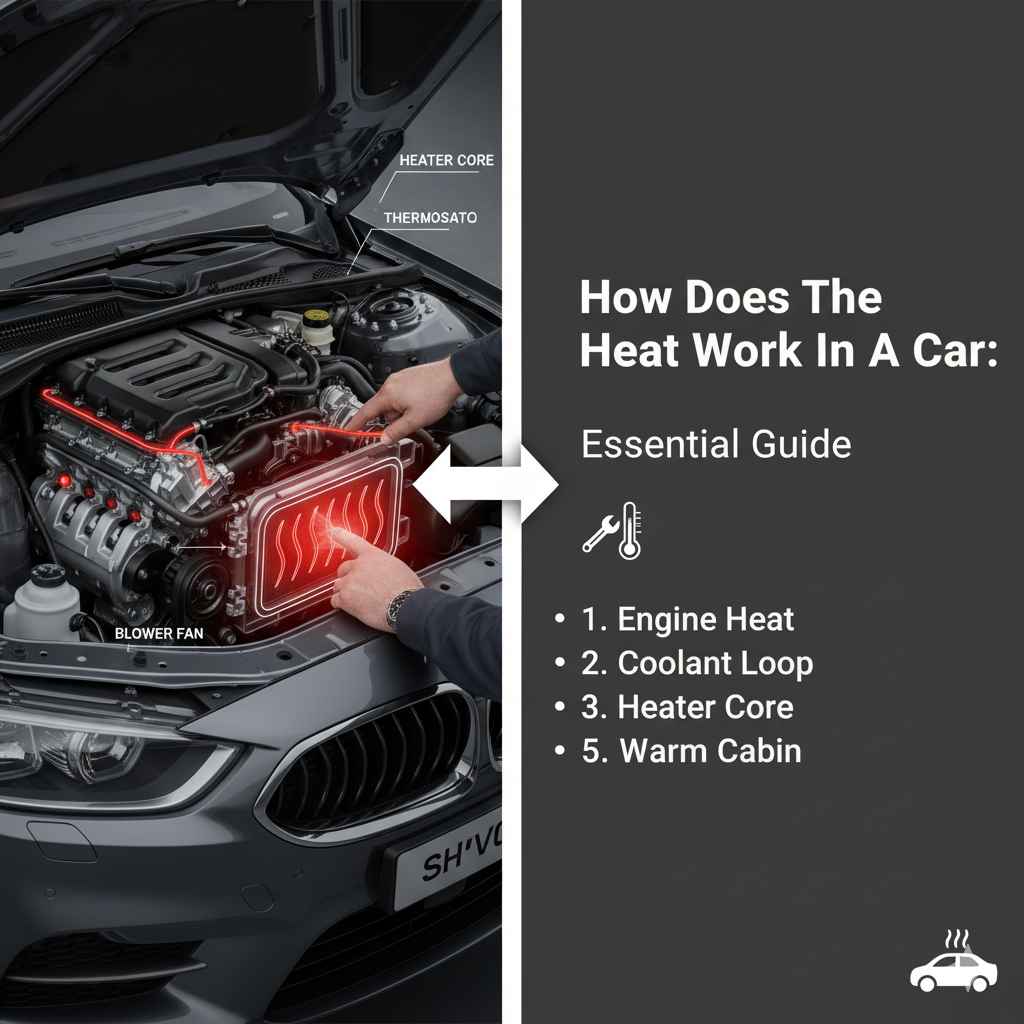
How Does The Heat Work In A Car: Essential Guide
Your car’s heater uses the engine’s waste heat to warm your car’s interior. It’s a clever system that repurposes heat you’d otherwise lose, keeping you comfortable in cold weather. Understanding this process is key to diagnosing issues and ensuring cozy drives.
Ever been stuck in a chilly car, desperately trying to figure out why the heat isn’t working? It’s a common frustration, especially when the temperature drops. But don’t worry! Most of us can understand the basics of how our car’s heater functions, and knowing this can save you a lot of confusion and potentially money. I’m here to break down this car mystery in simple terms, just like explaining it to a friend. We’ll explore how your car transforms engine warmth into cozy cabin air, step by step. By the end of this guide, you’ll have a clear picture of this essential system and be better equipped to handle common heating problems.
Understanding Your Car’s Heating System: The Basics
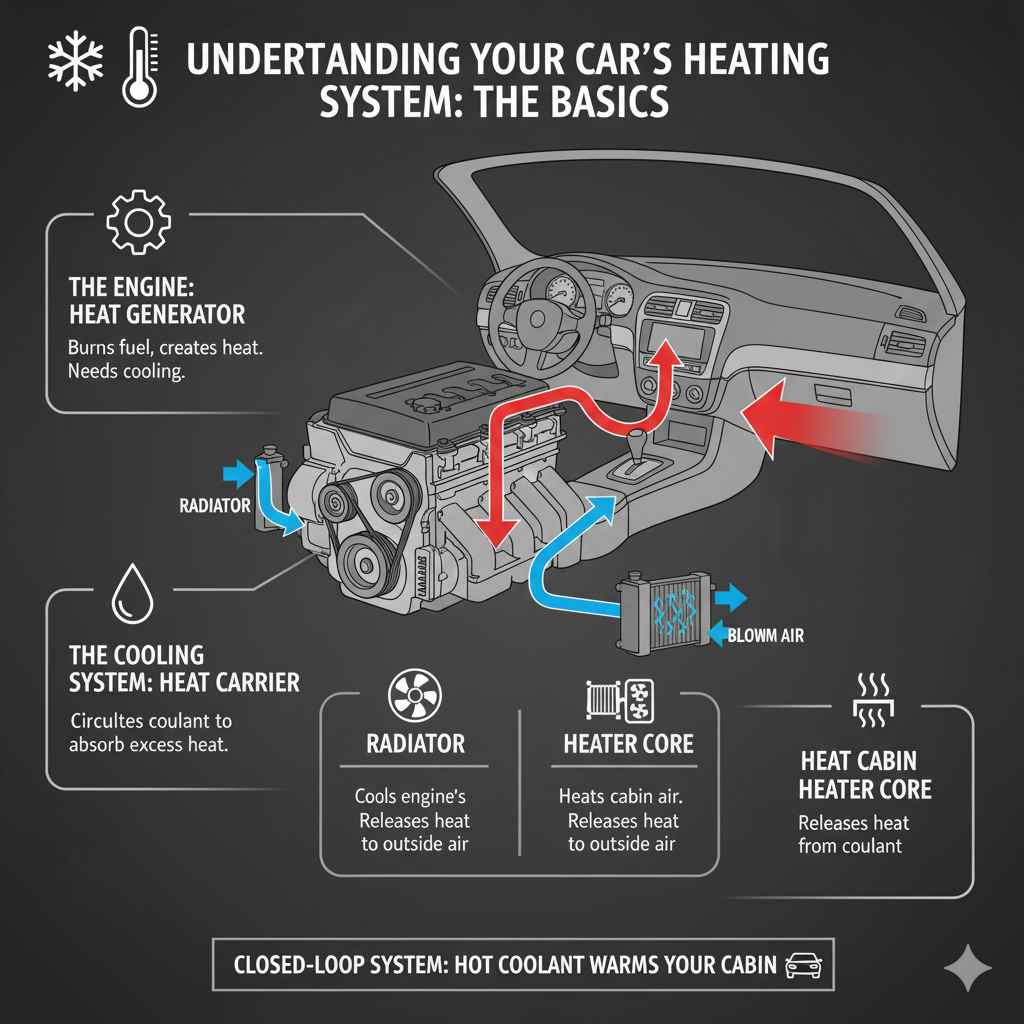
Think of your car’s heating system as a brilliant recycling process. Your engine works hard, and as it does, it generates a lot of heat. Instead of letting all that warmth escape into the atmosphere, your car cleverly diverts some of it to warm up the cabin for you. It’s a closed-loop system where hot coolant plays the starring role.
The Engine: A Powerful Heat Generator
When your engine burns fuel, it creates a tremendous amount of heat. This heat is vital for the engine to operate efficiently. However, if this heat isn’t managed, it could quickly overheat and damage the engine. That’s where the cooling system comes in.
The Cooling System: The Heat Carrier
Your car’s cooling system circulates a mixture of antifreeze and water, commonly called coolant. This coolant flows through channels in the engine block and cylinder head, absorbing the excess heat. It’s like a lifeblood that keeps the engine at a happy operating temperature.
Radiator vs. Heater Core: Two Sides of the Cooling Coin
You’re probably familiar with the radiator, usually located at the front of your car. Its job is to cool the hot coolant by exposing it to outside air as you drive. The heater core, on the other hand, is like a mini-radiator tucked away inside your car’s dashboard.) Its purpose is the opposite of the main radiator: to transfer heat into the cabin.
So, while both use coolant, their ultimate jobs are different:
- Radiator: Cools the engine’s coolant by releasing heat to the outside air.
- Heater Core: Heats the cabin air by releasing heat from the coolant into the car’s interior.
How the Heat Actually Works: Step-by-Step
Now, let’s dive into the journey of that heat from your engine to your toes. It’s a surprisingly straightforward process once you break it down.
Step 1: Hot Coolant Circulation
As mentioned, your engine produces heat. The coolant absorbs this heat. Once the engine reaches its optimal operating temperature, the coolant becomes very hot. This hot coolant is then pumped through rubber hoses towards the back of your car’s dashboard, where the heater core is located.
Step 2: Entering the Heater Core
The heater core looks a bit like a small radiator with many thin fins and tubes running through it. It’s made of metal to efficiently transfer heat. The hot coolant from the engine flows through these tiny tubes inside the heater core.
Step 3: The Blower Fan’s Role
This is where the magic of warm air happens. Your car has a blower fan, often called a cabin fan or HVAC fan. When you turn on your car’s heat and select a fan speed, this blower fan starts to push air.
This air is drawn from either outside your car or from the cabin (depending on your settings) and is forced to flow through the fins of the heater core. Imagine a gentle breeze being pushed through a warm radiator – that breeze picks up the heat.
Step 4: Warm Air Delivery
As the air passes over the hot tubes and fins of the heater core, it gets warmed up significantly. This warmed air is then directed through a series of ducts and vents within your dashboard and emerges as warm air blowing out of the vents you control. You can often adjust how much air blows by changing the fan speed, and where it goes by adjusting the vent direction controls.
Step 5: Coolant Returns to the Engine
After the coolant has passed through the heater core and given up some of its heat, it’s no longer as hot. This slightly cooler coolant then flows out of the heater core and returns through another set of hoses back to the engine to absorb more heat. This cycle repeats continuously, maintaining a comfortable temperature inside your car as long as the engine is running and the heat is on.
Key Components of Your Car’s Heating System
To get a better grasp of how it all works, it’s helpful to know the main players involved in your car’s heating system.
- Engine Coolant: A mixture of antifreeze and water that circulates through the engine and heating system to transfer heat. It’s vital for both engine operation and cabin comfort.
- Water Pump: Circulates the coolant throughout the engine and the heating system. If the water pump fails, coolant won’t flow, and you’ll have no heat (and potentially an overheating engine).
- Thermostat: A valve that controls coolant flow. When the engine is cold, it stays closed to help the engine warm up faster. Once the engine is hot, it opens to allow coolant to circulate to the radiator and heater core.
- Heater Core: A small radiator-like unit located inside your dashboard. Hot engine coolant flows through it, and the blower fan pushes air across it to heat the cabin.
- Hoses: Rubber or silicone tubes that carry the coolant between the engine, radiator, and heater core.
- Blower Motor/Fan: An electric fan that pulls air from outside or inside the car and pushes it through the heater core and out the vents.
- Control Panel: The knobs or buttons on your dashboard that allow you to select temperature, fan speed, and air direction. These controls often adjust blend doors inside the HVAC system to mix hot air with cold air or to direct air where you want it most.
Temperature Control: How You Dial In Your Comfort
You might be wondering how you go from feeling freezing to comfortably warm, or why you can sometimes get just lukewarm air. This is where the control panel and a few other parts come into play.
Blend Doors: The Mix Masters
Inside your car’s dashboard, behind the controls you use, are special flaps called “blend doors.” These doors control how much hot air from the heater core is mixed with cooler air before it reaches your vents.
When you turn the temperature dial or buttons towards warmer settings, these blend doors move to allow more air to pass over the hot heater core and less air to bypass it. When you select a cooler setting (even if the heat is technically “on”), the doors are positioned to mix more cool air with the heated air, or sometimes to completely bypass the heater core. This lets you fine-tune the temperature.
Recirculation vs. Fresh Air
Your climate control system also has a mode to recirculate air within the cabin or bring in fresh air from outside. Recirculation can help the cabin heat up faster because you’re warming air that’s already inside your car. Fresh air mode brings in outside air, which can be useful for defogging windows but might slow down cabin heating on a very cold day.
Common Heating Problems and What They Mean
Even the best systems can develop issues. Knowing what might be wrong can save you a trip to the mechanic and help you understand their diagnosis.
No Heat at All
This is the most common and frustrating problem. If your car blows cold air even when the engine is fully warmed up and you’ve set the heat to maximum, here are the usual suspects:
- Low Coolant Level: If there isn’t enough coolant, it can’t circulate properly to the heater core. This is often due to a leak somewhere in the system.
- Bad Thermostat: If the thermostat gets stuck in the open position, it allows coolant to circulate to the radiator constantly, even when the engine is cold. This prevents the engine and the coolant destined for the heater core from reaching a high enough temperature.
- Faulty Water Pump: If the water pump isn’t circulating coolant effectively, the heater core won’t get hot fluid.
- Blocked Heater Core: Over time, sediment or rust can build up inside the heater core, restricting coolant flow.
- Air in the Cooling System: Air pockets can prevent proper coolant flow to the heater core.
- Blend Door Actuator Failure: The electronic motor that moves the blend door might have failed, leaving the door stuck in a position that doesn’t allow enough hot air into the cabin.
Not Enough Heat or Weak Airflow
If you get some heat, but it’s not as warm or strong as it used to be, it could mean:
- Partially Blocked Heater Core: Not completely blocked, but restricted enough to reduce heat transfer.
- Weak Blower Motor: The fan might not be running at full speed, so less air is being pushed through the heater core.
- Low Coolant Level: Similar to no heat, but a slight shortfall can result in reduced performance.
- Air Leak in Hoses: A small leak could reduce the pressure and flow of coolant to the heater core.
Strange Smells
A sweet smell often indicates a coolant leak, possibly from a cracked heater core or a leaky hose. A burning smell could point to a system malfunction or something plastic melting near a hot component.
Noises from the Vents
Grinding, whistling, or rattling noises might indicate a problem with the blower motor, a piece of debris in the air intake, or a failing blend door actuator.
Why Is My Car Heater Warm Only When I Accelerate?
This is a classic sign of insufficient coolant flow, often related to the water pump or a partially blocked heater core. When you accelerate, the engine spins faster, which can temporarily increase the speed of the water pump and push enough coolant through the heater core to make it feel warm. However, as soon as you slow down or stop, the flow reduces again, and the heat drops off.
Another possibility is an airlock in the cooling system. Air pockets can obstruct coolant from reaching the heater core effectively. This is why bleeding the cooling system (removing air) is often a solution.
Can I Fix My Car’s Heater Myself?
For some issues, definitely! Simple checks like ensuring your coolant is at the correct level and topping it up (if you know how to do so safely and with the correct type of coolant) can solve problems related to low coolant. Checking for obvious leaks around hoses is also a DIY task. If your car’s manual explains how to bleed the cooling system, you might be able to tackle airlock issues.
However, replacing components like the heater core, water pump, or thermostat typically requires more advanced mechanical skills, specialized tools, and often involves draining and refilling the cooling system. These can be messy jobs. If you’re comfortable with car repairs and have the right tools, you might tackle them. For most people, these more complex repairs are best left to a qualified mechanic. Always prioritize safety when working on your car. Never open a hot radiator cap or coolant reservoir.
Table: Common Heating System Symptoms and Potential Causes
Here’s a quick reference to link symptoms with possible problems:
| Symptom | Potential Cause(s) |
|---|---|
| No heat at all (cold air blowing) | Low coolant, faulty thermostat, bad water pump, blocked heater core, air in system, failed blend door actuator |
| Weak heat or lukewarm air | Low coolant, partially blocked heater core, weak blower motor, air in system |
| Heat only when accelerating | Low coolant flow (water pump issue, blocked heater core), airlock in cooling system |
| Sweet smell inside car | Coolant leak (heater core, hose, gasket) |
| Burning smell | Electrical issue, melting plastic, oil leak onto hot components |
| Noises from vents | Blower motor issue, debris in air intake, failing blend door actuator |
Importance of Coolant: More Than Just Antifreeze
It’s crucial to understand that engine coolant is not just water. Modern vehicles use a specific blend of antifreeze and distilled water. This mixture does several important things:
- Prevents Freezing: Antifreeze lowers the freezing point of the water, preventing it from turning to ice and damaging engine components in cold weather.
- Raises Boiling Point: It also raises the boiling point of the water, helping to prevent the engine (and the coolant flowing to your heater core) from boiling over in hot weather or under heavy load.
- Corrosion Protection: Coolant contains inhibitors that protect the metal components of the cooling system, including your engine block, radiator, water pump, and heater core, from rust and corrosion.
Using the wrong type of coolant or a mixture that is too diluted or too concentrated can lead to reduced heating performance, engine damage, or premature wear of cooling system components. Always refer to your car’s owner’s manual for the specific type of coolant recommended. For more information on coolant types and maintenance, consult resources from the Environmental Protection Agency (EPA) on vehicle cooling systems.
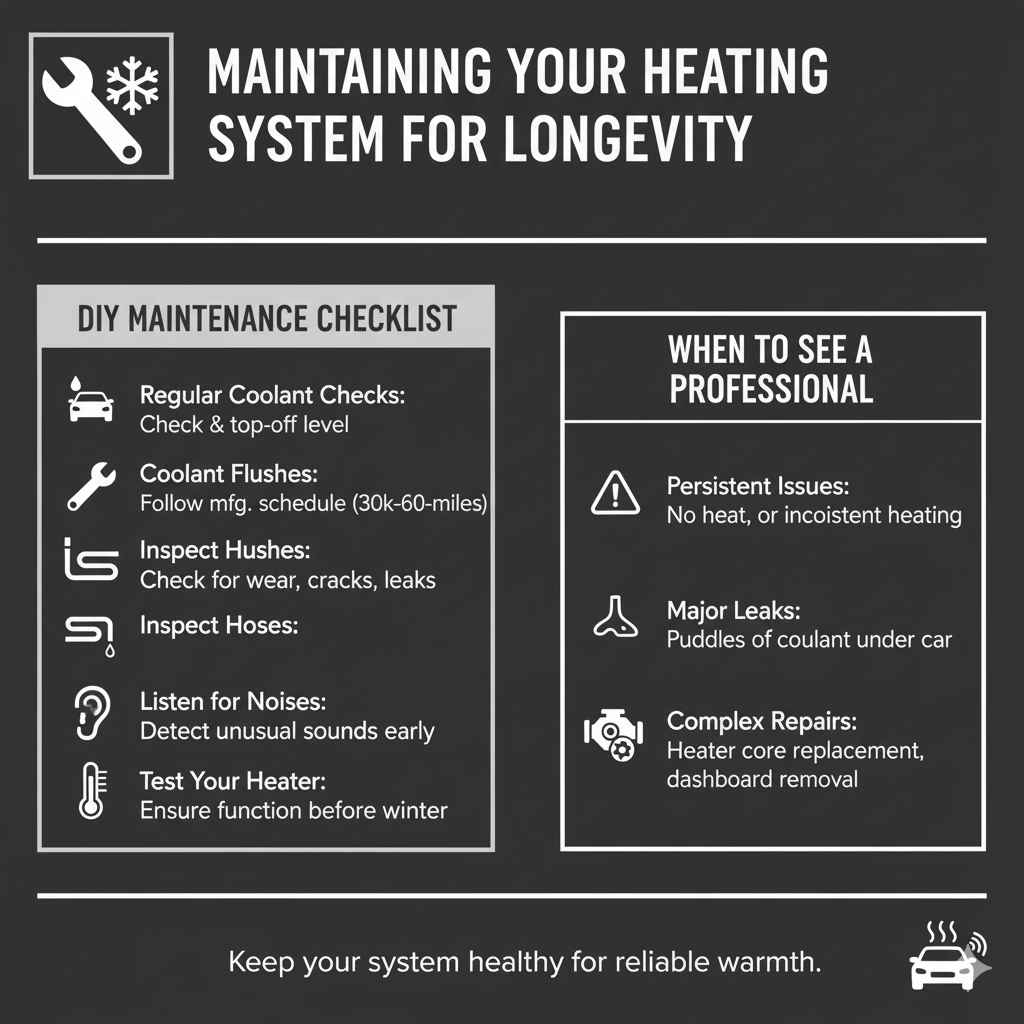
Maintaining Your Heating System for Longevity
Preventative maintenance is key to ensuring your heater works reliably when you need it most. Here’s what you can do:
- Regular Coolant Checks: Periodically check your coolant level when the engine is cool. Top it off if necessary with the correct type of coolant.
- Coolant Flushes: Follow your car manufacturer’s recommended schedule for coolant flushes and replacements. This removes old, degraded coolant and any accumulated sediment, preventing blockages. A typical schedule might be every 30,000 to 60,000 miles, but check your manual.
- Inspect Hoses: Look for any signs of wear, cracking, swelling, or leaks on the heater hoses. Replace them if they look suspect.
- Listen for Noises: Pay attention to any new sounds coming from under the hood or from your dashboard. Unusual noises can be early warnings of problems.
- Test Your Heater Periodically: Even on a warm day, it’s not a bad idea to briefly turn on your heater, especially before winter, to ensure it’s functioning correctly.
Frequently Asked Questions (FAQ)
Q1: How often should I check my car’s coolant level?
You should check your coolant level at least once a month, and also before long road trips. Make sure the engine is cool when you check the level in the overflow reservoir or radiator.
Q2: What happens if my car’s heater stops working in the middle of winter?
If your heater stops working in the cold, it’s more than just an inconvenience. It means your engine isn’t properly circulating hot coolant. While you can try to get home slowly and carefully, continuously monitor your engine temperature gauge to avoid overheating. You should seek professional help as soon as possible.
Q3: Can a dirty air filter affect my car’s heater?
Yes, a clogged cabin air filter (which filters the air entering your car’s interior) can restrict airflow, making your heater seem weaker or less efficient, even if the heater core is working perfectly. Replacing the cabin air filter is a common maintenance task that can improve airflow and air quality.
Q4: Will my car’s heater work if the air conditioning is off?
Absolutely! The heating system and the air conditioning system are separate, though they share components like the blower fan and ductwork within the climate control unit. Turning off the A/C simply means the compressor isn’t running, and the system will focus on heating if you’ve selected a warm temperature setting.
Q5: How much does it typically cost to fix a car heater?
The cost can vary widely depending on the problem. A simple fix like topping up coolant or replacing a cabin air filter might cost very little. Replacing a thermostat could be $100-$300. However, replacing a heater core is a labor-intensive job and can cost anywhere from $500 to over $1500, depending on the car model.