How Heated Car Seat Pads Work Out of the Car: Pro Guide
Many people wonder about using heated car seat pads away from their vehicles. It’s a common question, especially for beginners who might find the idea a bit tricky. Don’t worry though!
This guide makes it super simple. We’ll break down exactly how these cozy pads work, step by step, so you can enjoy warmth wherever you go. Get ready to learn how to use your heated car seat pad for comfort beyond the driver’s seat.
Understanding Heated Car Seat Pads
Heated car seat pads offer a delightful way to stay warm, especially during chilly months. They are designed with comfort and convenience in mind, providing a localized heat source that can significantly improve your experience in a cold environment. While their primary use is in vehicles, their functionality can be extended with a little know-how.
This section breaks down the basic components and principles that make these pads work, setting the stage for exploring their use beyond the car.
The Core Technology Inside Your Pad
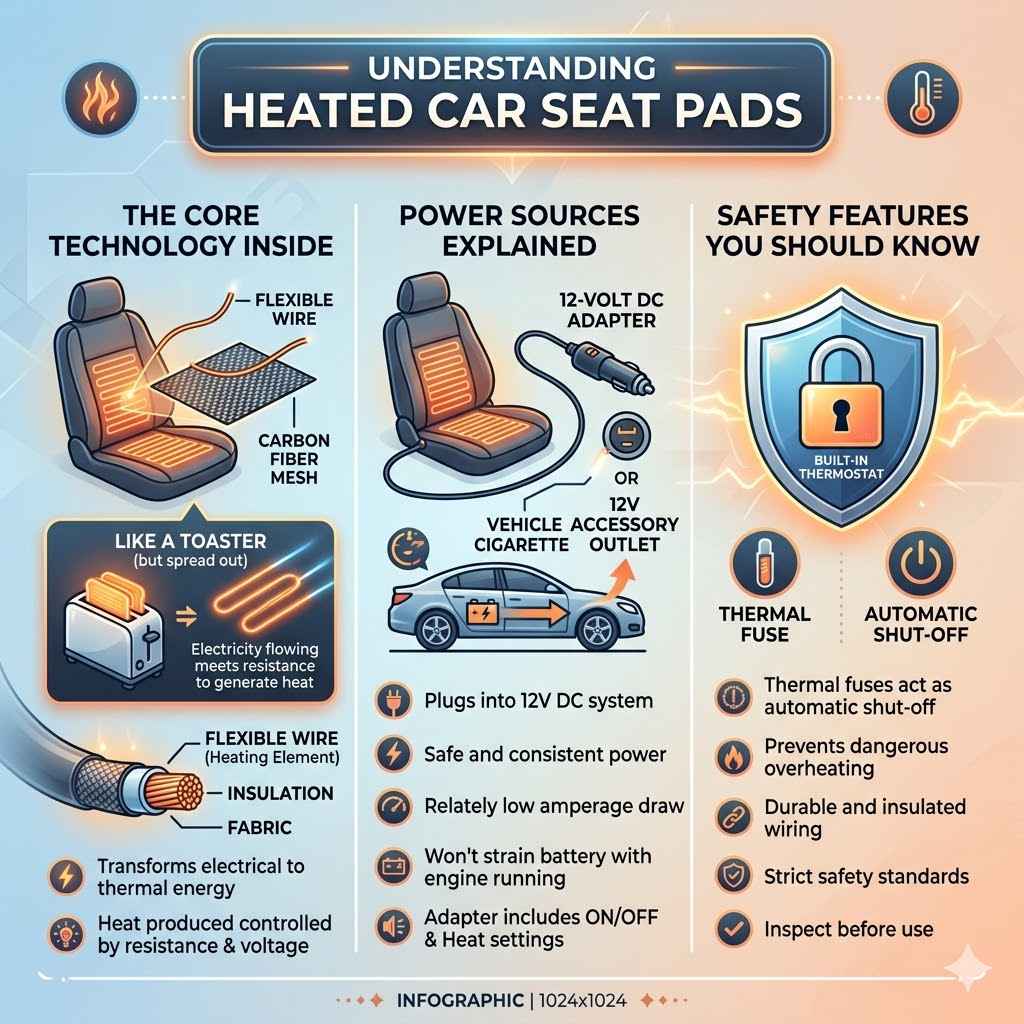
At the heart of every heated car seat pad lies a heating element. This element is typically a thin, flexible wire or a carbon fiber mesh embedded within the fabric of the pad. When electricity flows through this element, it encounters resistance.
This resistance causes the electrical energy to transform into thermal energy, generating heat. The amount of heat produced is controlled by the resistance of the element and the voltage supplied to it.
Think of it like a toaster. The glowing wires in a toaster are also heating elements that use resistance to get hot. The wires in your seat pad are much more delicate and spread out to distribute heat evenly across the surface of the pad.
They are carefully insulated to prevent any risk of electric shock and to ensure that the heat is directed upwards, towards you.
Power Sources Explained
Heated car seat pads are designed to draw power from a car’s electrical system. This is usually done via a 12-volt DC (direct current) adapter that plugs into the vehicle’s cigarette lighter or a 12V accessory outlet. This 12V system provides a safe and consistent power supply for the heating element.
The adapter often includes a control switch, allowing you to turn the pad on or off and sometimes select different heat settings.
The amperage draw of a typical heated car seat pad is relatively low, meaning it won’t put a significant strain on your car’s battery, especially when the engine is running. The vehicle’s alternator recharges the battery, so continuous use while driving is generally not an issue. Understanding this power connection is key to using the pad correctly within its intended environment.
Safety Features You Should Know
Safety is paramount with any electrical heating device. Heated car seat pads incorporate several safety features to prevent overheating and electrical hazards. Most pads have built-in thermostats or thermal fuses.
These act as automatic shut-off mechanisms. If the pad reaches a certain temperature, the thermostat or fuse will cut off the power supply, preventing the pad from getting dangerously hot.
The wiring is also designed to be durable and insulated. This protects against wear and tear that could expose live wires. Reputable manufacturers adhere to strict safety standards to ensure their products are safe for consumer use.
Always inspect your pad for any signs of damage before plugging it in, and never use a damaged pad.
How Heated Car Seat Pads Work Out of the Car: Pro Guide
The question of how heated car seat pads work out of the car is where things get interesting for many users. While designed for vehicles, their heating element and power requirements offer possibilities for off-road comfort. The core challenge lies in replicating the necessary power supply and ensuring safe operation.
This section provides the essential knowledge needed to successfully use your heated car seat pad in other settings.
Adapting Power Sources for Non-Car Use
The most significant hurdle in using a heated car seat pad outside of a car is replicating its 12-volt DC power source. Car outlets provide a steady 12V supply, typically with ample amperage. To achieve this elsewhere, you’ll need an adapter that can convert a different power source to meet the pad’s needs.
The simplest solution is a portable power bank or a battery pack specifically designed to output 12V DC.
These portable power solutions come in various capacities, measured in milliampere-hours (mAh) or watt-hours (Wh). The higher the capacity, the longer you can run your heated pad. It’s crucial to match the output voltage (12V DC) and ensure the power bank can supply enough amperage for the pad.
Overlooking this can lead to the pad not heating effectively or even damaging the power source.
Choosing the Right Portable Power
When selecting a portable power source, pay close attention to its specifications. Look for a 12V DC output port and check the maximum continuous amperage it can provide. Your heated car seat pad will have a power rating, often in watts.
You can calculate the required amperage by dividing watts by voltage (Amps = Watts / Volts). For instance, a 60-watt pad running on 12 volts requires at least 5 amps.
Some power banks are designed for camping or emergency use and are perfect for this application. They might include multiple output options, including 12V DC, USB ports, and AC outlets. A dedicated 12V output is generally more efficient for your seat pad than using an inverter to convert DC to AC and then back to DC.
Always ensure the portable power source has safety features like over-discharge protection and short-circuit protection.
Example: A user wants to use their heated seat pad on a camping trip. Their pad is rated at 72 watts. They find a portable power station with a 12V DC output capable of delivering 10 amps.
This is sufficient as 72 watts / 12 volts = 6 amps needed. The power station can run the pad for several hours based on its battery capacity.
Connecting Your Pad Safely
Connecting your heated seat pad to an alternative power source requires careful attention to avoid damage to the pad or the power source. Most car seat pads use a standard cigarette lighter plug. You’ll need a compatible 12V DC output on your portable power solution.
This might be a dedicated 12V barrel connector or a cigarette lighter socket integrated into the power station.
Ensure the connection is secure. A loose connection can cause intermittent heating or prevent the pad from working altogether. If your portable power source has a specific cable to connect to its 12V output, use that.
If it has a cigarette lighter socket, you can simply plug your pad’s adapter directly into it. Always double-check that the power source is switched off before making any connections.
Maximizing Heat and Comfort
Once connected, you can enjoy the warmth of your heated car seat pad in various settings. For instance, you can use it on camping chairs, patio furniture, or even a regular office chair if you’re experiencing cold drafts. The key to maximizing comfort is to ensure good contact between your body and the pad.
Any gaps can allow heat to escape.
Placing the pad on a surface that retains heat well can also improve its effectiveness. Materials like foam or thick fabric help insulate the bottom of the pad, directing more heat upwards. Consider layering if the ambient temperature is very low.
A light blanket over the pad can help trap warmth, making the experience even cozier.
Sample Scenario 1:
- Purchase a portable power station with a 12V DC output and sufficient amperage.
- Ensure the power station is fully charged before leaving home.
- Plug the heated car seat pad’s adapter into the power station’s 12V port.
- Turn on the power station and the seat pad’s control.
- Enjoy the warmth on your favorite outdoor chair.
Sample Scenario 2:
- Use a rechargeable 12V battery pack designed for outdoor equipment.
- Connect the seat pad’s plug to the battery pack’s 12V output.
- Turn on the battery pack and adjust the seat pad’s heat setting.
- Place the pad on a comfortable surface for immediate warmth.
- Monitor the battery level to know when to recharge.
Pro Tips for Using Heated Seat Pads Off-Road
To truly master the use of heated car seat pads beyond their intended automotive environment, a few pro tips can make a big difference. These go beyond simple connection and delve into optimizing performance, longevity, and versatility. By adopting these strategies, you can transform your heated seat pad into a portable comfort device for a multitude of situations.
Insulation Strategies
Effective insulation is crucial for retaining heat and making your heated seat pad as efficient as possible. When using the pad on surfaces like outdoor chairs or benches, consider adding a layer of insulating material beneath it. This could be a piece of closed-cell foam, a thick blanket, or even a dedicated seat cushion.
This layer prevents heat from dissipating into the colder surface below.
Similarly, if you are using the pad in a cooler, open environment, a light cover over the top of the pad can trap radiated heat. This is not about sealing it in completely, which could lead to overheating, but rather about creating a microclimate that keeps the warmth close to you. Think of it like a lightweight throw blanket that holds in your body heat on a chilly evening.
Understanding Battery Management
When relying on portable power, effective battery management is key to uninterrupted comfort. Always start with a fully charged power source. Know the capacity of your battery and estimate how long it can power your seat pad based on its wattage.
Many portable power stations will display remaining battery life or estimated run time, which is very helpful.
Avoid draining the battery completely, as this can reduce its lifespan. If you anticipate a long period of use, consider bringing a backup battery or a way to recharge your primary source, such as a solar panel if you are in an area with sufficient sunlight. Some power sources also have power-saving modes that can extend their runtime.
Maintenance for Longevity
Just like any electronic device, your heated car seat pad will last longer with proper maintenance. After each use, ensure the pad is completely dry before storing it. Avoid sharp folds or creases, as these can damage the internal heating elements.
Store it in a cool, dry place, ideally in its original packaging or a protective bag.
Regularly inspect the power cord and plug for any signs of fraying or damage. If you notice any issues, do not use the pad and consider contacting the manufacturer for repair or
Example of Insulation Use
A camper uses their heated seat pad on a metal camping chair in the early morning. Without insulation, the pad struggles to get warm due to the cold metal. They then place a dense foam pad between the metal chair and the heated seat pad.
This small change significantly improves the pad’s ability to heat up and keep them comfortable for much longer.
Versatile Applications
The ability to use heated car seat pads outside the car opens up a world of comfort possibilities. Beyond camping, consider using them for:
- Outdoor sporting events: Stay warm while watching a game from the bleachers.
- Fishing or hunting trips: Extend your comfort in a blind or on a boat.
- Home office use: Add extra warmth to an office chair, especially in drafty rooms.
- Travel: Provide extra comfort on long bus or train journeys where seat heating is not available.
Each of these applications benefits from the portable nature of the pad and a suitable off-car power source. The ease with which they can be transported and set up makes them an excellent choice for anyone seeking personal warmth in various settings.
Statistics on Portable Power Solutions
| Device Type | Typical Capacity (Wh) | Average Runtime for 72W Load (Hours) |
|---|---|---|
| Small Power Bank | 30-50 | 0.4 – 0.7 |
| Mid-Size Power Station | 150-300 | 2.1 – 4.2 |
| Large Power Station | 500+ | 7+ |
These figures highlight the importance of matching your power source capacity to your expected usage. A small power bank might only offer a short burst of heat, whereas a larger power station can provide warmth for an entire day.
Troubleshooting Common Issues
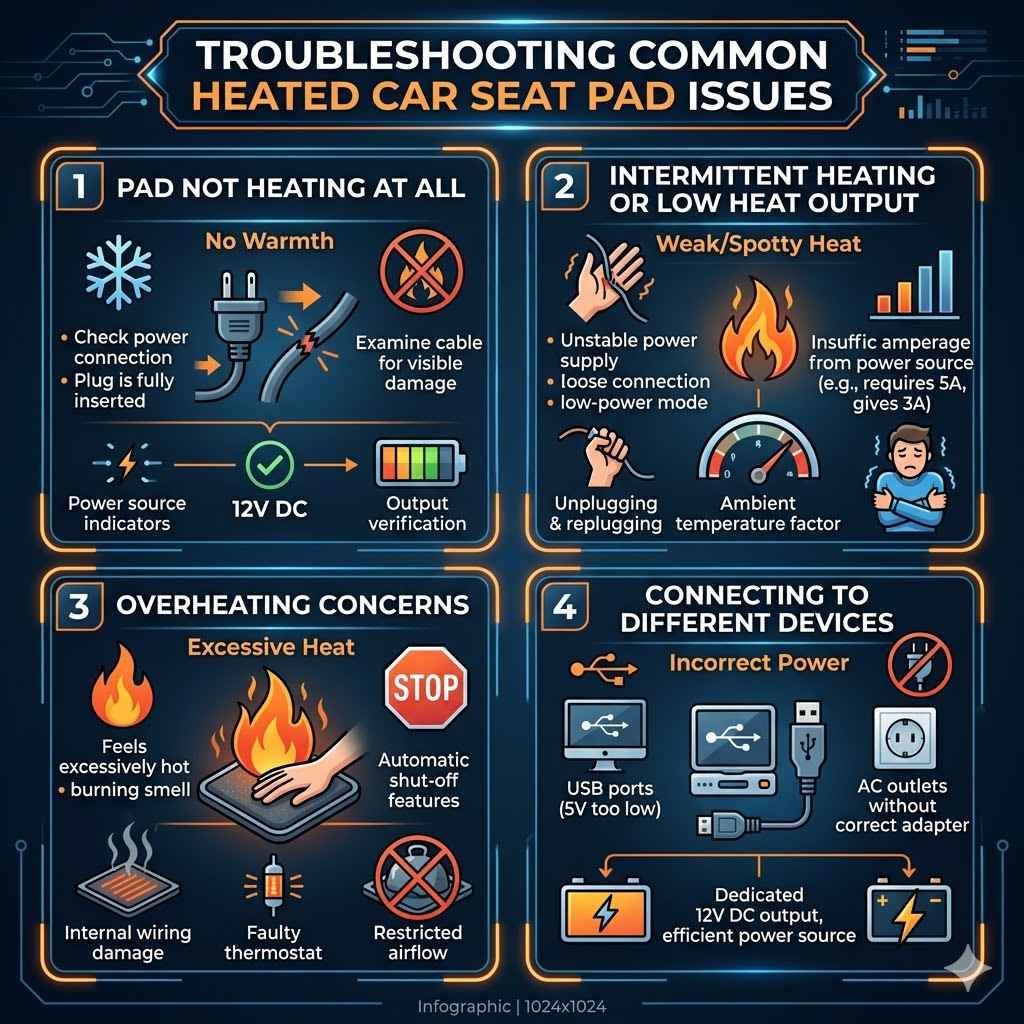
Even with the best planning, you might encounter occasional issues when using your heated car seat pad outside its intended environment. Addressing these problems quickly and effectively ensures you can get back to enjoying your warmth. This section covers some of the most common challenges and how to resolve them.
Pad Not Heating at All
If your heated seat pad isn’t producing any warmth, the first step is to check your power connection. Ensure the plug is fully inserted into the power source and that the power source itself is turned on and has sufficient charge. Examine the cable for any visible damage.
Next, verify that your power source is outputting the correct voltage (12V DC) and amperage. Many portable power devices have indicator lights or displays that can confirm their operational status and output. If your power source is functioning correctly, the issue might be with the pad itself.
In such cases, if the pad is new, contact the manufacturer. If it’s older, the internal heating element might have failed.
Intermittent Heating or Low Heat Output
This issue often points to an unstable power supply or a pad that isn’t receiving enough power. If using a portable power station, check that the connection is secure. Sometimes, the power device might go into a low-power mode if it doesn’t detect a consistent load.
Try unplugging and replugging the pad.
Another common cause is insufficient amperage from the power source. If your pad requires 5 amps but your power source can only reliably provide 3 amps, you’ll likely experience weak or intermittent heating. Always ensure your power source meets or exceeds the pad’s amperage requirements.
Also, consider the ambient temperature; in extremely cold conditions, the pad might seem to produce less heat, though it’s still functioning.
Overheating Concerns
While rare with modern pads due to built-in safety features, overheating can happen. If the pad feels excessively hot or you detect a burning smell, turn it off immediately and disconnect it from the power source. Never use a pad that exhibits signs of overheating.
Overheating can sometimes be caused by damage to the internal wiring or a faulty thermostat. If the pad is damaged, it’s best to replace it. If it seems undamaged but still overheats, it might be a manufacturing defect.
Ensure you are not placing anything heavy on top of the pad that could restrict airflow or put undue pressure on the heating elements.
Connecting to Different Devices
Sometimes, users try to connect their heated seat pad to devices not intended for 12V DC output, such as standard USB ports or AC wall outlets without the correct adapter. USB ports typically output 5V, which is far too low for a 12V seat pad. Using an AC adapter (like a laptop charger) without a specific 12V DC output adapter will not work and could damage the pad.
Always use a dedicated 12V DC output from your power source. If your power source only has AC outlets, you would need a 12V DC power supply that plugs into the AC outlet, effectively creating a 12V source. However, it’s generally more efficient and safer to use a power source with a direct 12V DC output if possible.
Frequently Asked Questions
Question: Can I use my heated car seat pad with a solar charger?
Answer: Yes, you can use a heated car seat pad with a solar charger, but indirectly. Most solar chargers produce electricity that needs to be stored in a battery (like a portable power station or power bank) before it can be used to power a 12V device. You’ll connect the solar panel to the battery, and then the battery to your seat pad.
Question: How long will a typical portable power station last powering a heated seat pad?
Answer: This depends heavily on the capacity of the power station and the wattage of the seat pad. A mid-size power station (around 200Wh) could power a 60W seat pad for about 2.5 to 3 hours. Always check the power station’s specifications for estimated runtimes.
Question: Is it safe to use a heated seat pad on a sofa at home?
Answer: Yes, it can be safe if you use a proper 12V power source and ensure good ventilation. Avoid placing it on very plush or insulating surfaces that could trap too much heat. Always follow the manufacturer’s guidelines and check for overheating.
Question: Can I use a heated seat pad in a tent?
Answer: Yes, this is a popular use case. You’ll need a portable 12V power source, like a power bank or power station, to run the pad inside your tent for added warmth.
Question: What happens if I use a power source with too much amperage for my heated seat pad?
Answer: Generally, devices are designed to only draw the amperage they need. So, if your power source can supply more amperage than required, it shouldn’t cause harm. The pad will simply draw what it needs.
The main concern is ensuring it can supply enough amperage.
Conclusion
Using heated car seat pads outside your car is achievable with the right portable power solutions. Focus on matching voltage and amperage needs, ensuring secure connections, and employing smart insulation strategies. Your pad can provide cozy warmth for camping, events, or even home use.
With these tips, you’re ready to enjoy comfort wherever you go.