What Makes Car Air Conditioning Cold? The Science Explained
Car air conditioning does not create cold air out of nothing. It works by dropping the pressure on a refrigerant until it boils at a very low temperature, then using that boiling process to pull heat straight out of the cabin air. R-134a, the refrigerant used in most cars built before 2021, boils at around -15°F once the expansion valve releases its pressure. Newer vehicles use R-1234yf, which behaves the same way but breaks down much faster in the atmosphere if it leaks.
That single principle (a liquid absorbing heat as it flashes into a gas) is why every part of the AC system exists. The compressor, condenser, evaporator, and expansion valve just keep repeating that pressure-drop cycle so the evaporator core stays cold enough to chill the air blowing through your vents for as long as the AC is running.
The Science: Why Refrigerant Gets So Cold
BEST FOR A LOW-REFRIGERANT WARM-AIR FIX
 |
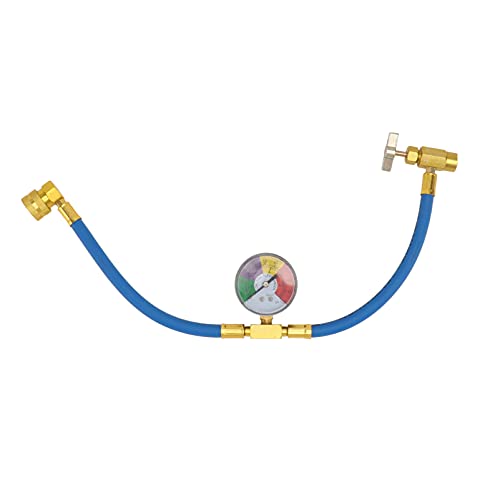
ZeroR R-134a AC Recharge Kit (3 Cans) – $49.99 If low refrigerant is why the AC has gone warm, this kit includes the gas and the gauge hose needed to recharge most R-134a systems yourself.
|
Refrigerant is not the same thing as coolant, and it does not get cold on its own. It is a chemical that boils at a much lower temperature than water, and its boiling point drops even further the moment pressure is released. Inside the AC system, refrigerant is forced through a tiny opening at the expansion valve, and that sudden pressure drop lets it flash-boil into a low-pressure gas right as it enters the evaporator. Boiling absorbs energy, known as the latent heat of vaporization, and that energy is pulled directly from whatever is around the refrigerant at that moment: the evaporator coil and the cabin air blowing across it.
That is the entire secret behind cold car AC. The system is not manufacturing cold air; it is constantly removing heat through a controlled boil-and-condense cycle, then dumping that heat outside through the condenser at the front of the car.
How Does Car Air Conditioning Work?
The AC system moves refrigerant through five main stages in a continuous loop, changing its pressure and physical state at each stop:
- The Refrigerant: the fluid, R-134a or R-1234yf depending on the vehicle’s age, that absorbs and releases heat as it changes between liquid and gas.
- The Compressor: a belt-driven pump that squeezes low-pressure refrigerant gas into a hot, high-pressure gas.
- The Condenser: a small radiator mounted in front of the main radiator that cools that hot gas back into a liquid.
- The Evaporator: the coil behind the dashboard where the refrigerant boils back into a gas and absorbs heat from the cabin air.
- The Expansion Valve (or orifice tube, depending on the system): the restrictor that drops the refrigerant’s pressure right before it enters the evaporator, which triggers the boil.
Whenever the AC is switched on, refrigerant cycles through these five stages dozens of times a minute, pulling heat out of the cabin and dumping it outside through the condenser. Our guide on how car AC works covers the full operating cycle in more detail if you want the deeper walkthrough.
The Role of Refrigerant in Cooling
Refrigerant is the only part of the system that actually changes temperature on its own. It starts as a low-pressure gas inside the evaporator, where it absorbs heat from the warm cabin air blowing across the coil and turns into a warm gas. The compressor then squeezes that gas into a hot, high-pressure gas.
From there, the condenser (mounted in front of the radiator) cools that hot gas with outside airflow until it condenses back into a high-pressure liquid. The expansion valve drops the liquid’s pressure as it enters the evaporator, and the refrigerant flash-boils back into a cold, low-pressure gas to start the cycle over again. This loop repeats continuously as long as the compressor is engaged, which is why the vents keep blowing cold air instead of just producing a single cold blast.
Key Components of the AC System
Here is what each of the five main parts actually does, and what tends to go wrong with it.
Compressor
The compressor is the pump that drives the whole system. It is belt-driven off the engine and engages through an electromagnetic clutch whenever the AC is switched on, squeezing low-pressure refrigerant gas into a hot, high-pressure gas. If the compressor or its clutch fails, refrigerant stops cycling entirely and the vents blow warm air no matter how well everything else is working.
Condenser
The condenser sits directly in front of the main radiator and looks like a smaller version of it. It uses airflow from the grille, plus an electric fan at low vehicle speeds, to cool the hot, high-pressure refrigerant gas back into a liquid. A condenser clogged with road debris, bugs, or leaves cannot shed heat efficiently, which is one of the more common reasons AC performance drops in slow, stop-and-go traffic.
Evaporator
The evaporator is mounted behind the dashboard, out of sight. This is where the refrigerant, its pressure just dropped by the expansion valve, boils back into a cold gas and pulls heat out of the cabin air that a blower fan pushes across it. A clogged or moldy evaporator restricts that airflow and often causes a musty smell along with weaker cooling.
Expansion Valve
The expansion valve (some vehicles use a fixed orifice tube instead) is a small restrictor that meters exactly how much high-pressure liquid refrigerant is allowed into the evaporator. That sudden drop in pressure is what triggers the flash-boil that makes the evaporator cold. A stuck or worn valve either starves the evaporator of refrigerant or floods it, and either failure mode shows up as warm or inconsistent air.
Receiver-Drier or Accumulator
The receiver-drier (used with expansion-valve systems) or accumulator (used with orifice-tube systems) filters the refrigerant and removes moisture that would otherwise corrode the system or freeze inside the expansion valve. Most manufacturers recommend replacing this part any time the system is opened for a major repair, since the desiccant inside loses its moisture-absorbing capacity once it has been exposed to air.
Here is a quick reference for the main AC components:
| Component | What It Does | Location |
|---|---|---|
| Compressor | Pumps and compresses refrigerant | Under the hood, belt-driven |
| Condenser | Cools hot refrigerant gas into a liquid | Front of the car, near the radiator |
| Evaporator | Absorbs heat, cools cabin air | Behind the dashboard |
| Expansion Valve | Drops pressure, controls refrigerant flow | Just before the evaporator |
| Receiver-Drier / Accumulator | Removes moisture from refrigerant | In the AC lines |
For a fully labeled diagram of every part in the system, see our car A/C system diagram guide.
Why Does My AC Sometimes Blow Warm Air?
A handful of failures account for almost every warm-air complaint:
- Low Refrigerant: A slow leak, or years of gradual permeation through hose walls, lowers the refrigerant charge below what the system needs to cycle properly. A professional recharge, after the leak itself is found and sealed, typically runs $100 to $200.
- Clogged Condenser: Dirt, bugs, and road debris block airflow through the condenser fins, so the hot refrigerant cannot fully condense. A gentle rinse with a garden hose, never a pressure washer aimed directly at the fins, restores most of the lost cooling.
- Faulty Compressor or Clutch: If the compressor itself or its electromagnetic clutch fails, refrigerant stops moving through the system entirely. Clutch replacement generally costs $200 to $400; a full compressor replacement runs higher.
- Clogged or Damaged Evaporator: Dust, mold, or a cracked coil reduce the airflow and surface area available to absorb heat, which shows up as weak, musty, or lukewarm air.
- Electrical Faults: A blown AC fuse, a bad pressure switch, or a failed blower motor resistor can shut the compressor off or stop the blower fan even though every mechanical part is fine.
A shop can usually pinpoint which of these it is with a set of manifold gauges in under an hour.

If the AC only turns cold intermittently instead of staying warm all the time, that points to a different, more specific problem covered in our guide to a car AC that blows cold then warm. If the system has stopped producing any cold air at all, our dedicated AC troubleshooting guide walks through every remaining cause.
How to Keep Your AC Blowing Cold
A few habits go a long way toward avoiding the failures above:
- Run It Year-Round: Turning the AC on for a few minutes every couple of weeks, even in winter, keeps the internal seals lubricated and helps prevent slow refrigerant leaks.
- Rinse the Condenser: A gentle garden-hose rinse once or twice a year clears bugs and road grime before they choke off airflow.
- Replace the Cabin Air Filter: A clogged cabin filter restricts airflow through the evaporator and blower. See our guide on how often to change a cabin air filter for the exact mileage interval for your driving conditions.
- Get the System Checked Periodically: A shop visit every 1 to 2 years can catch a slow refrigerant leak long before it causes a compressor failure.
- Park in the Shade When Possible: A cooler cabin to start with means less work for the compressor and a faster cool-down once the AC is on.
For more advanced tricks to squeeze extra cold air out of a system that is already working correctly, see our guide on how to make your car AC colder.
Signs Your AC Needs Attention
Catching a problem early is almost always cheaper than waiting for a full system failure. Watch for:
- Weak Airflow: Often a clogged cabin filter or a partially blocked evaporator.
- Warm Air: Points to low refrigerant, a failed compressor, or a stuck expansion valve.
- Grinding or Clicking Noises: Usually a failing compressor or a worn clutch bearing, and it is worth having checked before it seizes.
- Musty Odors: Almost always mold growing on a damp evaporator core; an AC-safe evaporator cleaner or a professional cleaning usually clears it.
- Frequent Cycling: A compressor that clicks on and off far more often than usual can point to low refrigerant or a failing pressure switch. Our guide on why a car AC turns on and off covers this specific symptom in depth.
How Much Does AC Maintenance Cost?
Typical repair and maintenance costs, based on national averages, run roughly as follows:
- Refrigerant Recharge: $100 to $200 for a professional recharge that includes a leak check.
- Compressor Clutch or Compressor Replacement: $200 to $400 for a clutch alone, or $500 to $1,200 for a full compressor.
- Condenser Cleaning: Free if done at home with a garden hose; $50 to $100 at a shop.
- Evaporator Cleaning or Replacement: $50 to $150 to clean; $600 to $1,200 if the coil itself needs replacing.
- Full System Overhaul: $1,000 to $2,500 for major failures involving multiple components.
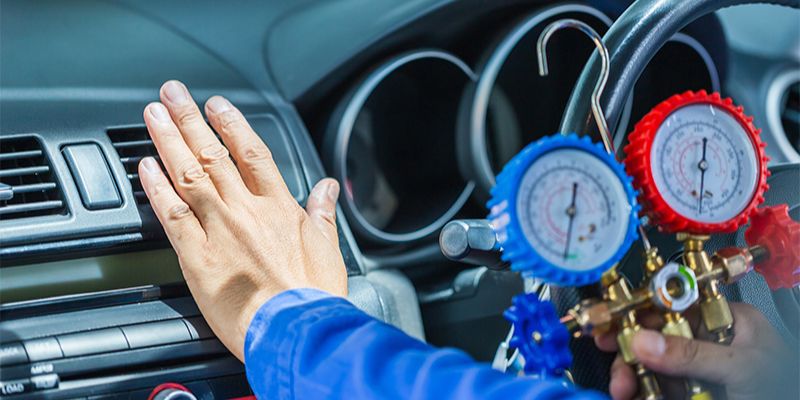
If a recharge is all your system needs, our dedicated breakdown of car AC recharge costs covers pricing by refrigerant type in more depth.
AC Maintenance Tips by Climate
Climate changes what actually wears out on an AC system first:
- Hot, Dry Climates (Arizona, Nevada, Texas): Run the AC consistently to prevent rubber seals from drying out and cracking, and have the refrigerant charge checked yearly.
- Humid Climates (Florida, Louisiana, the Gulf Coast): Watch for evaporator mold and musty odors; an AC-safe cleaner every six months helps prevent buildup.
- Cold Climates (the Upper Midwest, the Northeast): Run the AC briefly even in winter so the compressor seals stay lubricated.
- Mixed Climates (California, Colorado): Clean the condenser and replace the cabin filter on a normal seasonal schedule, since dust and pollen loads vary widely through the year.
How to Save Money on AC Repairs
- Handle the DIY-Friendly Tasks Yourself: Rinsing the condenser and swapping the cabin air filter take a few minutes and no special tools.
- Get More Than One Quote: Labor rates for compressor or condenser replacement vary significantly between shops, so a second opinion on any repair over a few hundred dollars is usually worth the phone call.
- Ask About AC-Specific Service Specials: Many shops run seasonal discounts on recharge and inspection services heading into summer.
- Do Not Skip the Small Stuff: A $20 cabin filter or a $10 fuse is far cheaper than the compressor damage that can follow ignoring an early warning sign.
Common Myths About Car AC
- Myth: The AC Runs Directly on Gasoline: The compressor is powered mechanically by the engine (or electrically in some hybrids and EVs), which adds a small load and can reduce fuel economy by roughly 1 to 2 mpg, but the AC itself does not consume fuel the way the engine does. Our full answer on whether AC runs on gas breaks this down further.
- Myth: You Should Never Run the AC in Winter: Running it briefly every few weeks keeps the compressor seals lubricated and helps prevent a leak that turns into a bigger problem the following summer.
- Myth: Refrigerant Never Needs to Be Topped Off: Refrigerant is a sealed-system fluid, but it can slowly permeate through rubber hoses over years or escape through a small leak, so a system that is several years old with weaker cooling often just needs a recharge.
- Myth: Every AC Problem Means an Expensive Repair: A blown fuse, a dirty cabin filter, or a loose electrical connector can all cause warm air, and each one is typically a $10 to $30 fix.
The Future of Car Air Conditioning
Automakers have been phasing out R-134a in favor of R-1234yf, a refrigerant with a far lower global warming potential if it leaks, and nearly every new vehicle sold in the US since the early 2020s now uses it. Electric vehicles also handle cooling differently: many rely on a shared heat pump system for both heating and cooling the cabin, and some higher-end EVs use zoned or seat-level cooling to reduce the load on the main compressor and preserve driving range.
Conclusion
Car AC gets cold through a repeating pressure-drop cycle, not by generating cold air directly: the compressor, condenser, evaporator, and expansion valve work together to force refrigerant to boil and absorb heat at a controlled point in the system. Understanding that cycle makes it much easier to recognize what a warm-air complaint, a musty smell, or a strange noise is actually pointing to, and to know which fixes are simple DIY jobs versus which ones need a shop with a full set of gauges. Learning how long a car AC system is expected to last before major parts wear out is a good next step for planning ahead.
Frequently Asked Questions
What makes the air conditioning in a car cold?
Refrigerant is forced through the expansion valve, which drops its pressure and lets it boil at a very low temperature inside the evaporator. That boiling process absorbs heat from the cabin air, and the compressor, condenser, and expansion valve keep repeating the cycle so the air stays cold.
Why is my car’s AC not blowing cold air?
The most common causes are low refrigerant, a clogged condenser, a failed compressor or clutch, or a dirty evaporator. A shop can usually diagnose which one it is with a set of manifold gauges in under an hour.
How often should I service my car’s AC?
Most manufacturers recommend a full inspection every 1 to 2 years, along with a cabin air filter replacement every 12,000 to 15,000 miles and a seasonal condenser rinse.
Can I fix my car’s AC myself?
Simple tasks like rinsing the condenser or replacing the cabin filter are DIY-friendly. Refrigerant recharges and compressor repairs require specialized tools and are best left to a shop to avoid damaging the system or venting refrigerant improperly.
How much does it cost to fix a car’s AC?
A refrigerant recharge runs about $100 to $200, a compressor clutch replacement is typically $200 to $400, and a full compressor or system overhaul can run $500 to $2,500 depending on what failed.
Does running the AC use more gas?
Yes, slightly. The compressor puts a mechanical load on the engine, which typically reduces fuel economy by about 1 to 2 mpg while the AC is running.
Why does my car’s AC smell bad?
A musty smell almost always means mold has grown on a damp evaporator core. An AC-safe evaporator cleaner or a professional cleaning service, usually $50 to $150, resolves it.
How can I keep my car’s AC cold?
Run it regularly year-round, rinse the condenser once or twice a year, replace the cabin air filter on schedule, and have the system inspected every 1 to 2 years.
Products related to this article
Sponsored / affiliate links. As an Amazon Associate I earn from qualifying purchases. I may earn additional commission from eligible campaigns.