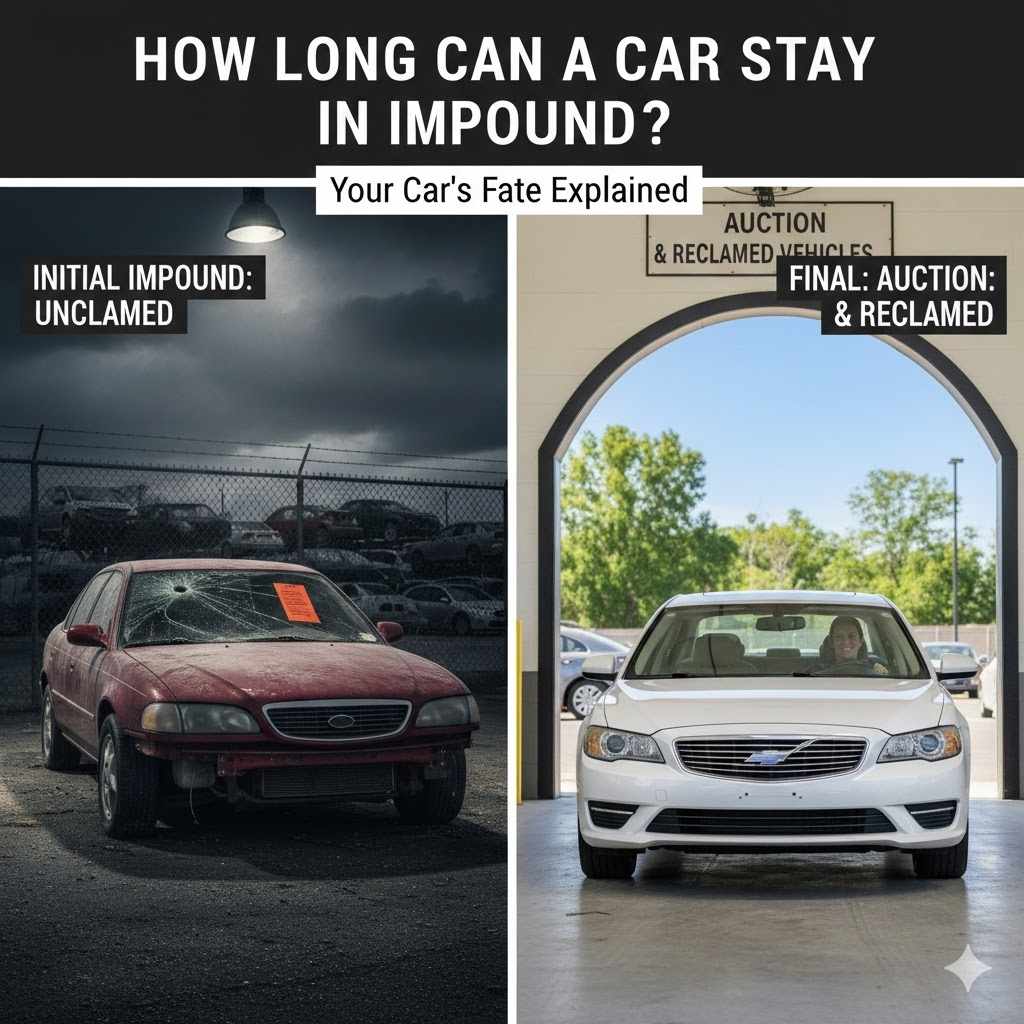
How Long Can a Car Stay in Impound? Your Car’s Fate Explained
Getting your car impounded can feel stressful, especially if you’re new to the whole situation. Finding out How Long Can a Car Sit in Impound? is often a beginner’s biggest worry. This guide makes things easy. We’ll break down everything you need to know step-by-step. Let’s get right to it and help you find out what happens to your vehicle!
The Basics of Impoundment
When a car gets taken away by the authorities, it goes to an impound lot. This is a place where towed vehicles are kept. Knowing the rules about how these places work is important. It helps you understand your rights and what to do next. Different reasons can cause a car to be impounded, like parking violations, being involved in a crash, or even being used in a crime. Each reason has its own set of rules. The process can seem complicated, but breaking it down makes it easier to handle. This sets the stage for everything else we’ll discuss.
Reasons for Impoundment
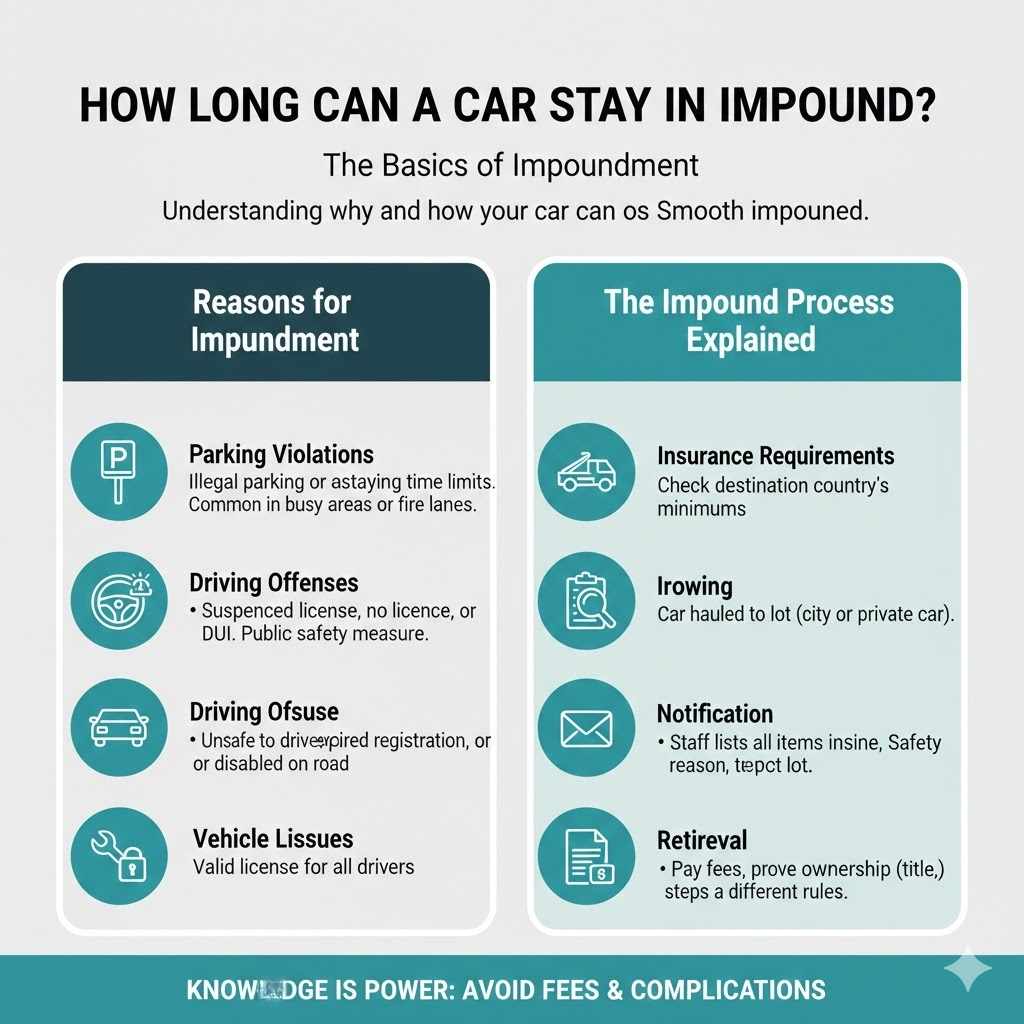
A car can get impounded for a lot of reasons. Parking violations are a very common one. For example, parking in a no-parking zone or overstaying a time limit can lead to a tow. Then there’s the situation of a car being involved in a crash. If the vehicle is disabled or needs investigation, it might be taken away. Using a vehicle for illegal activities also causes impoundment, such as if it’s connected to a crime. You might also find your car impounded if the driver has a suspended license or if the car lacks proper registration or insurance. It’s important to understand the specific reason because it affects how long the car will stay impounded and how you get it back.
Parking Violations: This is probably the most common. Parking illegally or past the allowed time will often result in a tow.
If you get a ticket for parking in a spot you shouldn’t have, the car might be towed. This can happen quickly, especially in busy areas. They might be waiting for your vehicle to be in the wrong place, such as in a fire lane. Knowing the local parking rules is key to avoiding this.
Driving Offenses: If you’re caught driving without a license or with a suspended one, your car can be impounded immediately.
Driving while your license is taken away is a big no-no. It can lead to the vehicle being taken. It’s not just the driving offense itself; it’s also a safety issue. The impoundment is used to ensure public safety by keeping unlicensed drivers off the road. This also happens if someone is caught driving under the influence of alcohol or drugs.
Vehicle Issues: Sometimes, a car is impounded because of problems with the vehicle itself, like being unsafe to drive or having expired registration.
If a car is broken down on the road, it can be impounded to get it out of the way. If the car has major issues that make it unsafe to drive, police can also impound it. This keeps unsafe vehicles from endangering others on the road. Likewise, failure to keep up with registration means you could find your car impounded.
The Impound Process Explained
The impound process starts when the police or towing company takes your vehicle. After the tow, the car goes to a specific impound lot, often operated by the city or a private company. Next, they take an inventory of everything inside the vehicle. The owner will be notified, either by mail or sometimes by phone. This notification tells you where the car is and what you need to do to get it back. There are usually fees to pay, and you will need to prove that you own the car. Understanding each step helps you get through the impound process smoothly.
Towing: The first step is the tow itself. A tow truck will haul your car to an impound lot.
When the police or a towing company removes your car, they will take it to a special area. Sometimes, the impound lot is city-run. Other times, it might be a place that a private company owns and runs. This step is usually quick, and you’ll likely learn about it later.
Inventory: The impound lot staff will list everything inside your car. This is called an inventory.
After the car arrives at the lot, workers will check it inside and out. They write down everything that is in the car, like personal items. This list is a safety measure to protect both you and the lot from any issues later on. It keeps everyone honest about what was there at the time it was towed.
Notification: You’ll usually get a notice by mail or phone, letting you know your car is at the impound.
The authorities will inform you that your car is in the impound. This can be a letter or a phone call. The notice tells you where your car is, why it was taken, and what steps you need to take to get it back. The notice also gives you important details about deadlines and fees.
How Long Can a Car Sit in Impound? Time Limits and Laws
The length of time a car can stay in impound depends on local laws and the reason for the impoundment. There are usually deadlines to follow to get your car back. It’s important to know these time limits, as you may face problems if you ignore them. Not claiming your car within the given time could mean more fees, or even losing your car. This section looks at the different timeframes and the laws related to them, so you can act quickly.
State and Local Regulations
State and local laws set the rules for how long a car can stay in impound. These laws vary by location. They cover everything from the initial holding period to what happens if the car isn’t claimed. Some states have specific time limits, while others let local governments make the rules. It’s always best to check the laws where your car was impounded. These rules can affect the fees you pay and how long you have to take action.
Specific Time Limits: Some states have specific laws that clearly say how long a car can be held.
In certain states, laws state the maximum time a car can be held at the impound lot. These can range from a few days to several months, depending on the reason for the impound. The exact days or weeks are listed in the state’s rules about vehicle storage.
Local Ordinances: Often, cities and counties have their own rules. This means the time your car sits there depends on where it was impounded.
Local government can set the rules for impounds within their area. They might follow the state laws or have rules that are a little different. These local laws help the city manage how impound lots function and protect the owners.
Notification Requirements: The law will also state how the impound lot must tell you your car is there.
The impound lot is required to let you know about your car. The rules say how and when you must be notified. If they do not follow these rules, it might change how long the car can stay there, or even reduce fees.
Factors Affecting Impound Time
A few things can affect how long your car stays in impound. The most important thing is the reason it was taken. If it was part of a crime, it may sit longer while police investigate. Also, whether you claim the car quickly affects how long it stays in the lot. Finally, the fees and costs involved influence your ability to get the vehicle back. Knowing these factors helps you plan your actions and keep the car for as long as needed.
Reason for Impoundment: The reason your car was towed plays a big role in how long it will stay in the lot.
The reason the car was impounded is a big factor in how long it sits in impound. If it was for a minor parking violation, it may be a short time. If it was part of a larger legal case, it could take much longer. For example, cars connected to crimes can be held until the investigation is complete.
Owner Action: How quickly you act to get your car back affects how long it stays impounded.
If you take steps quickly to get your car back, it might not be there for long. The impound lot will want you to get your car as soon as possible. The more you delay, the longer it will sit and the more costs you may pay.
Fees and Costs: The fees you must pay can affect how long the car stays in the impound.
The cost to get your car back often includes towing fees, storage fees, and maybe even penalties. The longer the car stays, the more you have to pay. Many owners try to get the car back fast to reduce these costs. If you cannot pay the fees, the car could be sold at auction.
Getting Your Car Back
Getting your car back from the impound lot involves a specific set of steps. This includes proving that you own the vehicle and paying any fees that are due. It is important to know the right paperwork and what to do, to avoid any problems. This also includes knowing how the fees are calculated and other costs, so that you are prepared. The following sections will guide you through this process to make it as smooth as possible.
Required Documentation and Proof of Ownership
The impound lot wants to make sure that the vehicle is returned to its legal owner. You will need to show proof that you actually own the car. That is the first step. You will have to show them the car’s title, registration, and sometimes, your driver’s license or other forms of identification. Not having these documents could stop you from getting your car back. It is important to gather them before you go to the impound lot. Being prepared helps speed up the process.
Vehicle Title: The title is the main proof you own the car.
The title is the most important document to show you own the car. It says you are the legal owner. Without the title, it will be very hard to get your car back. If you have lost the title, you will need to apply for a replacement.
Vehicle Registration: You must show current registration to prove it’s legal for the car to be on the road.
Along with the title, you’ll need the registration. The registration shows that your car is properly registered with the state. This helps confirm the title information. Always have your registration handy when driving your car, and when you are trying to get it back.
Driver’s License or ID: You will need to prove your identity.
The impound lot will require your driver’s license or other government-issued ID. This is to make sure you are who you say you are. Make sure your ID is current. Without ID, they cannot be sure they’re giving your car back to the right person.
Payment of Fees and Associated Costs
To get your car back, you will have to pay several fees. These costs might include towing fees, daily storage fees, and any fines or penalties. The exact amount depends on where you live and the reason your car was impounded. It is important to know how these fees are calculated and what your payment options are, so that there are no surprises. Being prepared helps you avoid delays and reduces stress during this process.
Towing Fees: You will need to pay for the tow to get the car to the impound lot.
The towing fee covers the cost of getting your car from where it was to the impound lot. These fees may depend on the distance the car was towed. They can also include any extra work that had to be done to tow the vehicle.
Storage Fees: The impound lot will charge a daily storage fee.
Each day your car is at the impound lot, you will be charged a storage fee. These fees add up quickly. This is why it is best to get the car back as soon as you can. The storage fees go up the longer the car is there.
Additional Fines and Penalties: Depending on the reason for the impound, you might also have to pay fines or penalties.
In addition to towing and storage fees, there may be other costs. For example, if you were ticketed for a parking violation, you will have to pay the fine. If there were other issues, such as driving without a license, the fines may be higher.
What Happens If You Don’t Claim Your Car?
Not claiming your car in the timeframe set by law can have serious results. The impound lot will send you a notice, letting you know the car has to be picked up. If the car is not claimed, it can be sold at an auction. This can also lead to more problems with the authorities, depending on why the car was impounded. Avoiding these problems means getting your car back on time, or taking steps to challenge the impoundment if you think it was a mistake.
Vehicle Abandonment and Auctions
If you do not claim your car, it is often considered abandoned. This means the impound lot can take steps to get rid of it. First, they will notify you again, often by mail, but also maybe through a posted notice. Then, the car will be sold at an auction. This may happen to help the impound lot recover their costs for towing and storage. Abandoning your car can also damage your credit or lead to further problems.
-
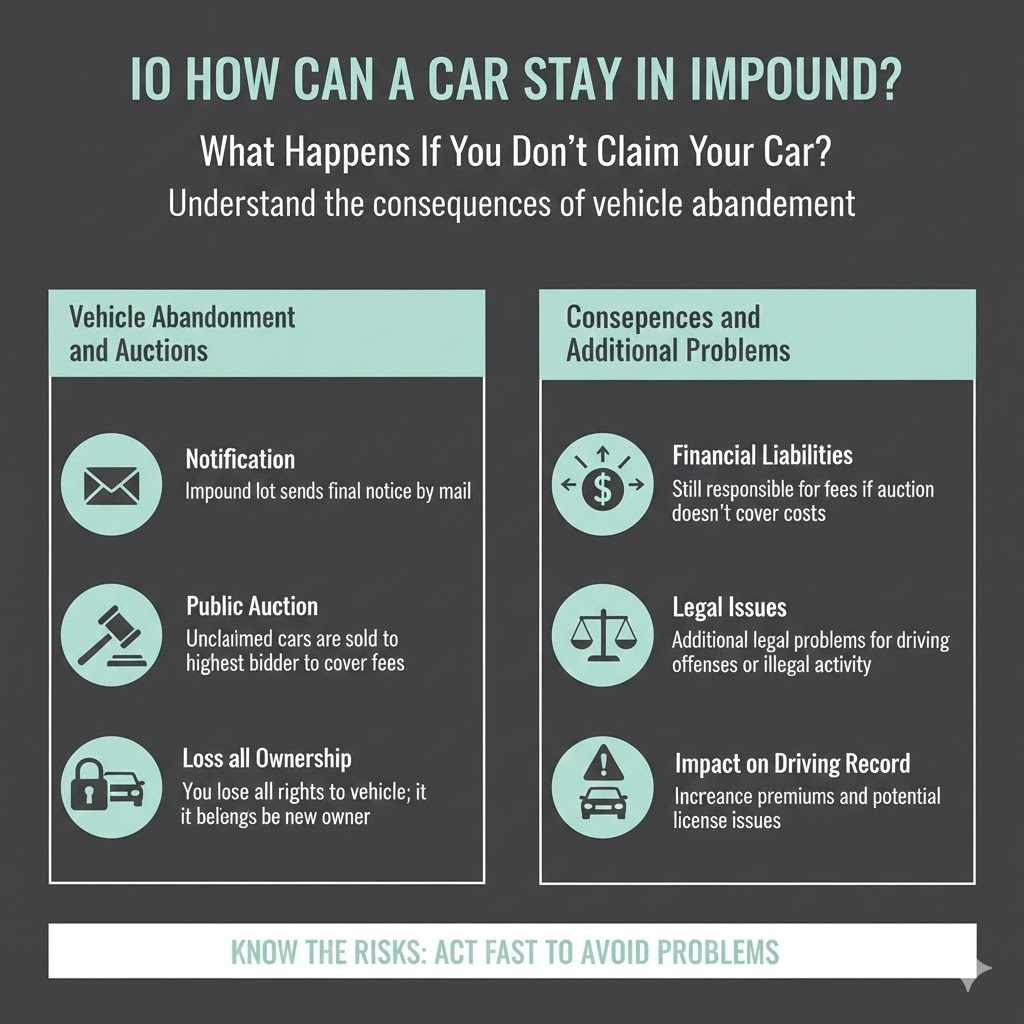
- Notification: The impound lot will try to contact you again before taking further action.
After the time limit, the impound lot will send another notice. The rules about this second notice may differ based on local laws. This notice will explain how the process works and what to do next. It lets you know that time is running out.
Public Auction: Unclaimed cars will often be sold at a public auction.
If you don’t respond, the car will be sold to the highest bidder. The money from the sale usually goes to the impound lot to cover fees. Anything left over might go to you, but it’s unlikely if the fees are high.
Loss of Ownership: You will lose ownership of the car if it is sold at auction.
Once your car is sold at auction, you no longer own it. You cannot get it back. All of your rights to the car are now transferred to the person who buys it at auction. This can be a big loss, especially if the car had sentimental value or was important to your daily routine.
Consequences and Additional Problems
Failing to claim your car in time can lead to a few issues. You will lose the car, and you might still owe money for the towing and storage. Additionally, if the impoundment was due to a driving offense or any illegal activity, you could face further legal consequences. Knowing the risks means you can act quickly to get the car back and avoid these negative results. It’s important to understand the full consequences.
Financial Liabilities: You could still be responsible for the fees, even if the car is sold.
If the money from the auction does not cover the impound lot’s costs, you might still have to pay the remaining balance. This could cause problems with your credit. In extreme cases, the impound lot might take legal action to get the money back. So, not claiming the car can result in continuing debt.
Legal Issues: If the car was impounded due to a driving offense, more problems could occur.
If the reason for the impound involved a traffic violation or criminal activity, you could also face additional legal issues. This could range from fines and penalties to a court summons, depending on what happened. Not claiming the car won’t make the problems go away. It could make them worse.
Impact on Driving Record: The reason for the impound may have an effect on your driving record.
If you were driving without a license or if there were other issues that led to the impound, this might impact your driving record. This can result in increased insurance premiums. It could also lead to more problems with the authorities. This includes the possible suspension or revocation of your license.
Frequently Asked Questions
Question: How can I find out where my car is impounded?
Answer: If your car has been impounded, the authorities should notify you, typically by mail or phone, providing the location of the impound lot. You can also contact the police or the towing company directly for information.
Question: What if I can’t afford the impound fees?
Answer: If you can’t pay the fees, discuss payment plans with the impound lot. You could also explore options like a hardship waiver, depending on your local regulations. However, not claiming the car can lead to it being sold, leaving you with no vehicle.
Question: How long do I have to retrieve my car from the impound lot?
Answer: The time you have to get your car back varies based on local and state laws. There are typically set deadlines. You should get this information when you are notified about the impoundment. Usually, it’s between a few days to a few weeks, but it may be longer in specific circumstances.
Question: What documents do I need to get my car back?
Answer: Generally, you’ll need your vehicle’s title, current registration, and a valid driver’s license or government-issued photo ID. You will also need to bring proof of insurance. It’s always best to have all the paperwork to avoid any delays.
Question: Can I dispute the impoundment?
Answer: Yes, you have the right to challenge the impoundment if you believe it was done incorrectly. You will have to go through the proper procedures, which involve contacting the impound lot and possibly the local police department or court system. Gather any evidence that supports your case, like photographs, tickets, or records.
Final Thoughts
Understanding How Long Can a Car Sit in Impound? helps you deal with the process. The timeframe depends on several things, like local rules and why your car was taken. Be sure to find out these laws and understand the reasons for the impoundment. Getting your car back quickly involves gathering necessary documents and taking care of fees. If the car is not claimed, it can be sold at an auction. Failing to act quickly might lead to added expenses and legal problems. Being proactive saves you money and trouble. Always find out the rules in your area, and take steps to recover your car right away. This way, you can avoid stress and get back on the road!