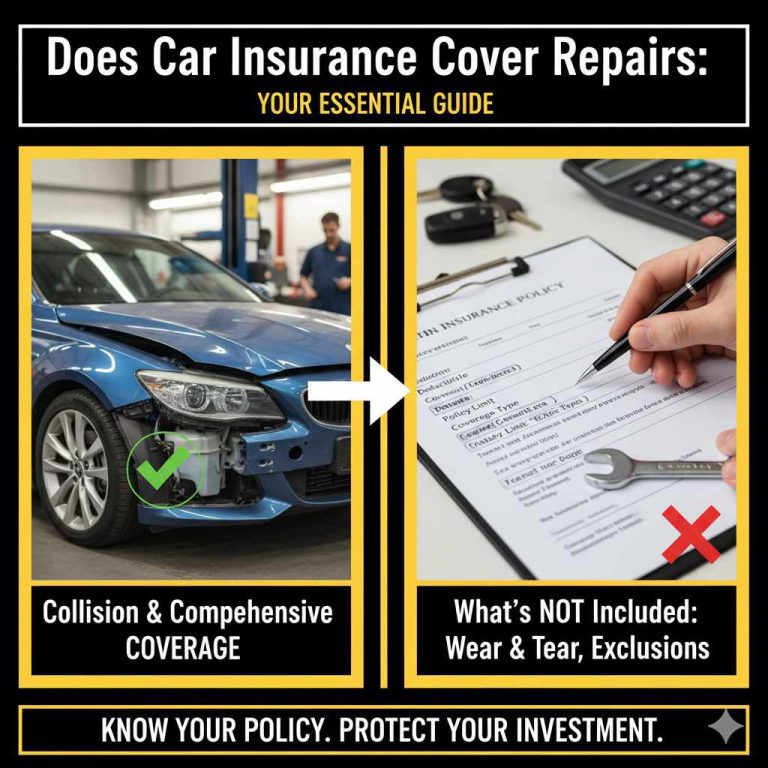
What Is a Car Insurance Premium? Meaning Explained
A car insurance premium is the amount you pay to keep coverage active, usually monthly, every six months, or annually. It is the insurer’s charge for taking on risk before any deductible applies. Miss the difference between premium, deductible, and limits, and you can misread a quote and pay more for coverage you do not actually need. Here’s how premiums work, how they differ from deductibles and limits, and how to read a quote line by line to see what is driving the price.
What a car insurance premium means

A premium is the bill for keeping your policy in force. It is separate from the amount you pay after a covered claim and separate from the maximum the insurer will pay on that claim. In UK and US usage, people may also use “premium” to mean the full policy charge, or a specific coverage charge within that policy.
How often you pay it
Many insurers bill in three common ways: monthly, every six months, or once a year. The billing schedule changes cash flow, but it does not change the basic idea: the premium is the price of active coverage for the policy term.
A six-month term is common because it gives insurers a regular point to re-rate the policy. An annual policy does the same thing over a longer period. Monthly billing spreads the cost out, but the insurer may add installment fees or remove a paid-in-full discount.
Why premium is not your deductible
The deductible is the amount you typically pay out of pocket on collision and comprehensive claims. The premium is the cost of keeping the policy active. They move in opposite directions often enough that people mix them up, but they do different jobs.
Say your quote shows a low premium and a very high deductible. That can look cheap until you need to file a claim. The quote is still real, but the risk is shifted toward you.
Premium vs deductible vs limits
Your premium is what you pay to keep the policy running. Your deductible is what you pay first on a covered claim. Your coverage limits are the most the insurer will pay for that claim. If one of those three is weak, a low premium may not mean a good deal.
What the insurer will pay
Coverage limits cap the insurer’s payout. Higher limits usually increase the premium because the insurer is promising to absorb more loss. Lower limits usually reduce the premium, but they can leave you exposed if a serious claim runs past the cap.
Why lower deductibles usually raise the premium
A lower deductible means the insurer pays sooner and pays more often. That usually pushes the premium up. A higher deductible shifts more of each covered loss to you, which often brings the premium down, but only if you can comfortably cover the deductible on short notice.
How insurers set the price
Insurers do not set premiums at random. They use underwriting and rating, which is the pricing process that weighs driver, vehicle, and location risk factors, then adds policy choices, fees, discounts, and any surcharges. The same driver can be quoted differently because the car, postcode, and cover all change the expected cost.
Driver, vehicle, and location factors
Driving history matters. Tickets and at-fault accidents can raise the price. A claim-free record or no-claims bonus can lower it. Age also matters: Uswitch says drivers under 25 are statistically more likely to be involved in accidents, and the rate after age 65 often rises again.
Vehicle pricing is separate from driver pricing. The car’s risk rating, repair costs, safety, and security all feed into the premium. Location matters too. Crime, theft, traffic, and claims density can make one postcode much pricier than another for the same person.
Why the same driver can be quoted differently
Picture two identical drivers with the same record. One insures a hatchback in a low-theft area, while the other insures a larger car parked in a busy postcode with more claims. The second quote can be higher even though the driver is the same, because the vehicle and location shift the expected loss.
What changes your premium most
The biggest price moves usually come from three places: your driving record, the vehicle’s risk profile, and where the car is kept or driven. Mileage can matter too, because more time on the road usually means more exposure to loss. Those factors affect the rate before discounts and fees are applied.
Driving record and claim history
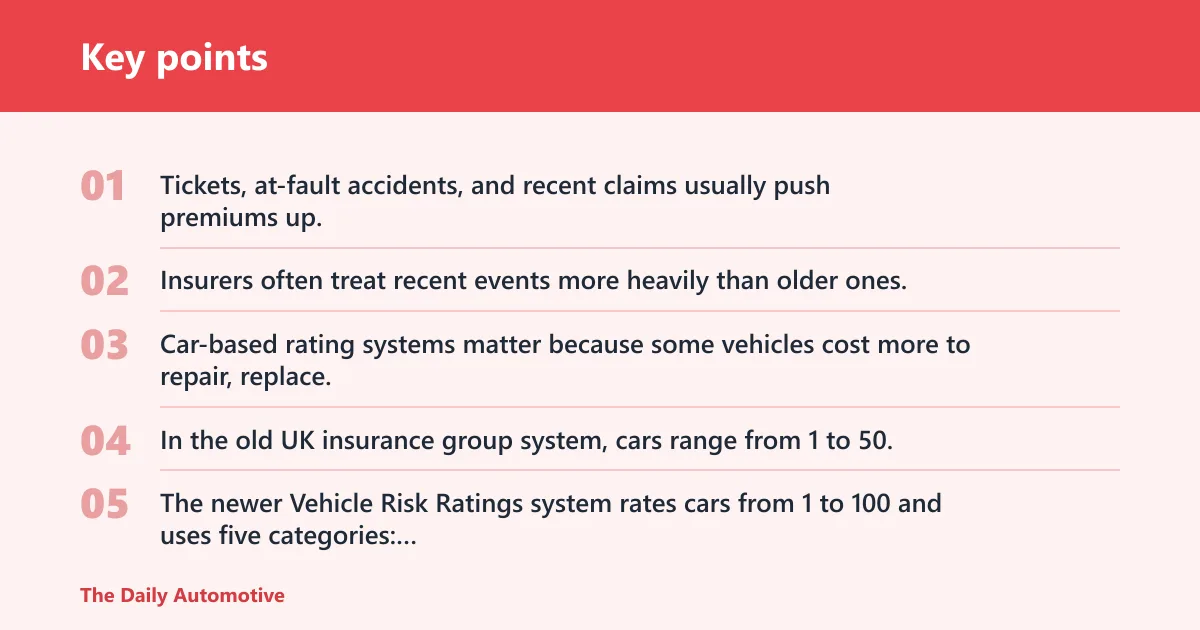
Tickets, at-fault accidents, and recent claims usually push premiums up. A clean history usually helps. Insurers often treat recent events more heavily than older ones, so a new violation can matter more than one that happened years ago.
Vehicle risk rating and repair costs
Car-based rating systems matter because some vehicles cost more to repair, replace, or secure. In the old UK insurance group system, cars range from 1 to 50. The newer Vehicle Risk Ratings system rates cars from 1 to 100 and uses five categories: performance, damageability, repairability, safety, and security.
The ABI works with Thatcham to compile UK car classifications. Thatcham uses 23 commonly damaged parts for pricing and performs low-speed crash tests, chiefly a 15km/h impact. That is one reason a similar-looking car can fall into a very different price band.
Postcode, theft, traffic, and mileage
Location changes the odds. A car parked on a street with higher theft rates or heavier claims density can cost more to insure than the same car kept elsewhere. More annual mileage can also raise the premium because more miles usually mean more exposure to accidents and weather damage.
Premium quote audit table
Use this table to split a quote into the parts that usually move the price. The numbers below are an illustrative example, not a published offer. Your actual quote may use different labels, but the structure is often similar.
| Quote component | Example amount | What it means | What to change now | What only changes at renewal |
|---|---|---|---|---|
| Base rate | $780 | Starting price before adjustments for driver, car, and place | Compare quotes from other insurers | Insurer pricing updates after the term ends |
| Driver factor | +$140 | Tickets, at-fault accidents, age band, and claim history | Update mileage and listed drivers if wrong | Most record-based pricing changes after new incidents age into the file |
| Vehicle factor | +$90 | Model, repair cost, security, and insurance group | Choose a different car if buying or swapping vehicles | Vehicle changes usually reprice at the next term start |
| Location factor | +$110 | Postcode, theft risk, traffic, and claims density | Correct garaging address if it is wrong | A move usually changes pricing at renewal or when the policy is updated |
| Coverage choices | +$210 | Liability, collision, comprehensive, and any extra cover selected | Drop cover you no longer need, if allowed | Limit changes often take effect at endorsement or renewal, depending on the insurer |
| Deductible | -$120 | Higher deductible usually lowers the premium | Raise it only if you can pay the claim excess easily | Deductible changes are often possible midterm, but the new rate may not start until processed |
| Discounts | -$160 | No-claims bonus, bundled policies, paid-in-full discount, or telematics discount | Ask which discounts you already qualify for | Some discounts are rechecked at renewal |
| Surcharges | +$75 | Fees for payment plans, SR-22-like filings where relevant, or higher-risk use | Switch payment timing if the insurer allows it | Some surcharges end only when the underlying risk changes |
| Fees | +$48 | Installment or policy fees | Pay in full if the discount beats the fee | Fee schedules are often reset at renewal |
| Total premium | $1,273 | The price to keep the policy active for the term | Change the pieces you control now | Reprice the whole policy when the term ends |
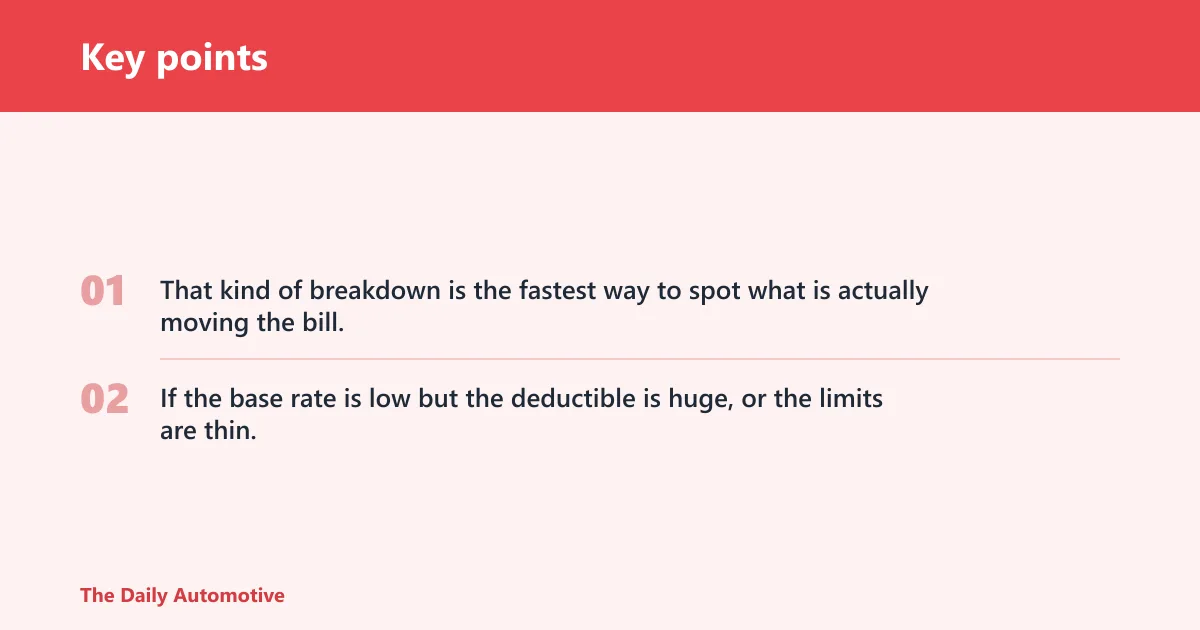
That kind of breakdown is the fastest way to spot what is actually moving the bill. If the base rate is low but the deductible is huge, or the limits are thin, the quote may not be a bargain at all.
How payment timing affects cost
Payment timing changes how the bill feels, not just when you send it. Monthly billing spreads the cost out, while six-month or annual billing can reduce fee drag or qualify for a paid-in-full discount. Progressive says premiums are usually paid monthly, every six months, or annually.
Monthly versus annual payments
Monthly billing helps cash flow because you do not need to pay the whole term at once. Annual billing can be cheaper overall if the insurer offers a paid-in-full discount or charges fewer installment fees. The lowest monthly amount is not always the lowest total cost.
Installment fees and paid-in-full discounts
Some insurers add fees when you pay in installments. Others discount the policy if you pay the full term upfront. If the fee is larger than the discount, monthly billing costs more even when the quoted premium itself looks unchanged.
A common first-timer mistake is comparing only the monthly amount. A quote that looks lower by $10 a month can still cost more over the term if it carries a larger installment fee or if the paid-in-full discount disappears.
Why your premium changes at renewal
Premiums can change at renewal because the insurer re-rates the policy. New claims, tickets, vehicle changes, and coverage changes all feed into the next term price. Market pricing can change too, so a renewal quote may differ even if your driving habits have not.
What gets re-rated
A new claim or ticket can move the driver factor. A different car can move the vehicle factor. A move can change the location factor. Higher limits can raise the premium, while a higher deductible often lowers it. Those changes usually show up most clearly at renewal, though some can be processed midterm.
Why renewal quotes can jump
Insurers also update their own pricing models. That means two identical policies can renew at different prices if the carrier changes its rate tables. Uswitch reports the average UK car insurance premium is around £516, and the average comprehensive annual premium is £527, which shows how much averages can vary by market and coverage type.
Vehicle classification changes at a glance
UK vehicle pricing is a good example of how car design affects cost. The old group system runs from 1 to 50. The newer Vehicle Risk Ratings system runs from 1 to 100 and uses performance, damageability, repairability, safety, and security. Those ratings help explain why one model may carry a much higher premium than another.
Frequently asked questions
What is a premium on car insurance?
The premium is the amount you pay to keep your car insurance active for the policy term. It is separate from your deductible and separate from the claim limit. You may pay it monthly, every six months, or annually, depending on the insurer and payment plan.
What is a car insurance policy premium?
A car insurance policy premium is the total charge for the policy’s active coverage over the term. It includes the insurer’s base rate plus any adjustments for your driver profile, car, location, selected cover, fees, and discounts. It is not the same as the amount you pay after a claim.
What is an auto insurance premium?
An auto insurance premium is the price of keeping auto coverage in force. The term is used the same way as car insurance premium in most consumer contexts. In some markets, people also use premium to mean a specific coverage charge, so it helps to read the declarations page carefully.
How is a car insurance premium different from a deductible?
The premium is what you pay to keep the policy active. The deductible is what you pay out of pocket on certain claims, usually collision and comprehensive. A higher deductible often lowers the premium because you are taking on more of the loss yourself.
Why does my car insurance premium change?
Your premium can change when your driving record changes, when you move, when you change vehicles, or when you adjust cover limits and deductibles. It can also change at renewal because the insurer re-prices the risk and may update fees, discounts, and market rates.
How often do you pay a car insurance premium?
Most insurers let you pay monthly, every six months, or annually. The frequency affects cash flow and may affect total cost if there are installment fees or a paid-in-full discount. The underlying premium is the policy price; the billing schedule is just how you pay it.
Why is my car insurance premium so high?
A high premium usually means one or more pricing factors point to greater risk or greater expected cost. Common reasons include tickets, at-fault accidents, a higher-risk vehicle, a costly postcode, higher limits, a lower deductible, or a weak discount profile. The quote audit table helps you isolate which piece is doing the damage.
Products related to this article
Sponsored / affiliate links. As an Amazon Associate I earn from qualifying purchases. I may earn additional commission from eligible campaigns.
 Car A/C Repair Kit, 270PCS Rubber O-Ring Seal Kit + 40PCS Car Air Conditioner Valve Core Kit for R12 R134a A/C with Remover & Install Tool+10pcs R134a AC Valve Caps, Fix Refrigeration System
 Half Car Cover SUV,Top Cover with Red Reflective Strip, Hail Protector Car Cover with Cotton Liner, Sunroof & Windshield Cover for Ice and Snow, All Weather Car Body Cover for Sun, Rain, Dust