How Long Should a Car Battery Last
Thinking about your car battery can feel a little confusing, especially if you’re new to cars. You might wonder, How Long Should a Car Battery Last? It’s a common question because batteries don’t last forever, and knowing the average lifespan helps you prepare. Don’t worry; we’ll break it all down simply.
We’ll look at what affects battery life and how you can help yours last as long as possible. Get ready for clear answers and easy tips!
Average Car Battery Lifespan
Most car batteries do not last a lifetime. They are consumable parts that degrade over time and with use. The average lifespan of a car battery is a key piece of information for any vehicle owner.
Knowing this average helps set realistic expectations and plan for replacement. Several factors contribute to how long a battery will serve your vehicle. This section will explore the typical range and what influences it.
Factors Affecting Battery Longevity
Several things can make a car battery last longer or shorter than average. These include how you drive, the climate you live in, and the quality of the battery itself. Even how often you use your car plays a big role.
Let’s explore these influences in more detail so you can get a better picture.
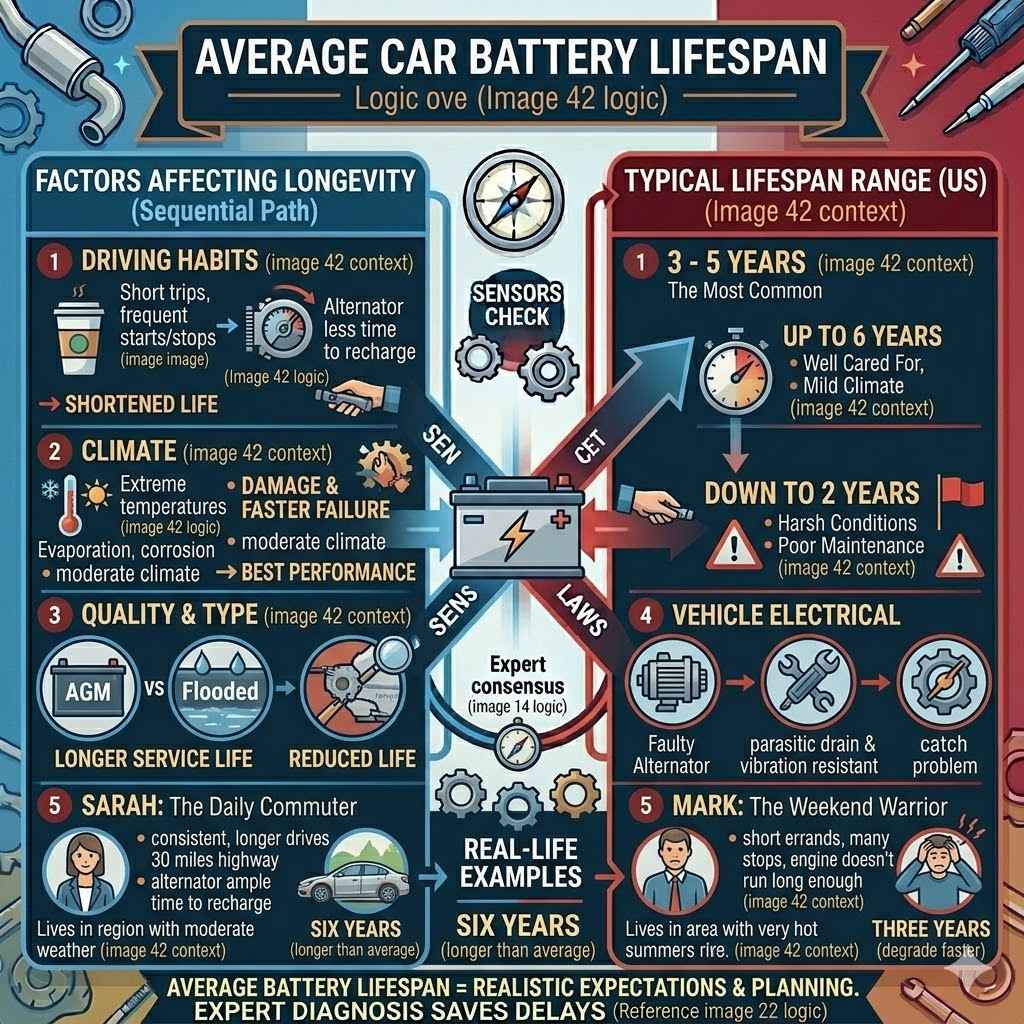
Driving Habits: Short trips where the engine doesn’t run long enough to fully recharge the battery can shorten its life. Frequent starts and stops also put more strain on the battery. This is because the alternator has less time to replenish the charge lost during starting.
Think of it like constantly draining and only partially refilling a cup – eventually, it will wear out faster.
Climate: Extreme temperatures, both hot and cold, can damage a car battery. Heat can cause the battery fluid to evaporate and accelerate corrosion. Cold weather can thicken the battery fluid, making it harder for the battery to crank the engine, and it can also cause the battery to lose its charge more quickly.
Batteries generally perform best in moderate climates.
Battery Quality and Type: Not all car batteries are made the same. Higher-quality batteries, often with better construction and materials, tend to last longer. The type of battery also matters.
For example, absorbed glass mat (AGM) batteries are generally more durable and resistant to vibration than traditional flooded lead-acid batteries, often leading to a longer service life.
Vehicle Electrical System: A car’s electrical system needs to be in good working order. If there are any issues, like a faulty alternator that doesn’t charge the battery properly, or a parasitic drain that slowly drains the battery even when the car is off, it will significantly reduce the battery’s lifespan. Regular maintenance helps catch these problems early.
Typical Battery Lifespan Range
In the United States, most car batteries last between three to five years. Some might stretch a bit longer, perhaps up to six years, especially if they are well cared for and live in a mild climate. However, others can fail sooner, sometimes within two years, if subjected to harsh conditions or poor maintenance.
It’s important to remember this is just an average. Your specific battery could perform differently.
Real-Life Example: The Daily Commuter
Sarah drives 30 miles each way to work every day. Her commute involves mostly highway driving, allowing the alternator ample time to recharge her battery. She lives in a region with moderate weather.
Her car battery lasted for six years. This is longer than average because her consistent, longer drives and favorable climate allowed the battery to stay well-charged and avoid extreme temperature stress.
Real-Life Example: The Weekend Warrior
Mark uses his car only for short errands around town on weekends. He often makes many stops, and the engine doesn’t run long enough to fully recharge the battery after each start. He lives in an area with very hot summers.
His car battery only lasted for three years. The frequent short trips and extreme heat took a toll on the battery, causing it to degrade faster than normal.
Signs Your Car Battery Needs Replacing
Knowing when your car battery is nearing the end of its life is very helpful. It can save you from being stranded. There are several common signs to look out for.
These indicators are your car’s way of telling you it’s time for a new battery. Paying attention to these signs can prevent unexpected breakdowns and help you plan for a replacement before it becomes an emergency.
Common Warning Signs
When a car battery starts to fail, it usually gives some noticeable signals. These are not always sudden. Often, you can observe gradual changes in your car’s performance.
Recognizing these signs allows for timely
Slow Engine Crank: This is one of the most common signs. When you turn the key or push the start button, the engine turns over slower than usual. It sounds like the engine is struggling to get going.
This happens because the battery doesn’t have enough power to spin the starter motor as fast as it needs to. It’s like trying to start a difficult puzzle; it takes more effort and time.
Dim Headlights or Interior Lights: If your headlights seem dimmer than normal, especially when the engine is off or at idle, it can indicate a weak battery. The interior lights might also flicker or appear less bright. This is because the electrical system is not receiving a consistent and strong enough power supply from the battery.
The lights are directly showing you the reduced voltage.
Clicking Noise When Turning the Key: When you try to start your car and hear a rapid clicking sound instead of the engine cranking, it usually means the battery is too weak to power the starter motor. The clicking is often the starter solenoid engaging but not having enough power to turn the engine. It’s a very specific sound that often signals a low battery charge.
Battery Warning Light: Many cars have a warning light on the dashboard that looks like a battery. If this light comes on while you are driving, it could mean there is a problem with the charging system or the battery itself. This light is a direct alert from your car’s computer system that something is not right with the battery’s performance or charge level.
Corrosion on Battery Terminals: While not a direct sign of a failing battery, excessive corrosion on the battery terminals can impede the flow of electricity. If you see white or blue powdery buildup around the battery posts, it can indicate leaking battery acid and potentially a battery that is nearing the end of its life. This buildup needs to be cleaned regularly, but it can also be a symptom of a battery under stress.
Testing Your Car Battery
You don’t have to wait for these signs to appear. You can also get your battery tested. Many auto parts stores offer free battery testing services.
They use a special device that measures the battery’s voltage and cranking power. This can tell you if your battery is still strong or if it’s on its way out. Regular testing is a proactive way to avoid unexpected issues.
Sample Scenario: The Unexpected Stop
One morning, John turned the key in his car and heard a weak, struggling crank, followed by a clicking sound. His headlights also seemed dimmer than usual. He knew his car battery was about four years old.
He had been noticing the clicking for a few days but ignored it. This time, his car wouldn’t start at all. If he had paid attention to the earlier signs or had his battery tested, he could have replaced it before it left him stranded.
How to Maximize Your Car Battery’s Lifespan
Just like any component in your car, a battery needs some care. Taking simple steps can help your car battery last longer. These actions are not difficult and can save you money and hassle in the long run.
They focus on reducing stress on the battery and ensuring it’s always in good condition to perform its job.
Regular Maintenance and Care
Proper care is key to extending the life of your car battery. It’s about making sure the battery is clean, well-connected, and properly charged. These practices are straightforward and can make a noticeable difference in how long your battery serves you reliably.
Keep Battery Terminals Clean: Clean the battery terminals regularly to remove any corrosion. You can use a wire brush and a mixture of baking soda and water. Corrosion can block the flow of electricity, so keeping them clean ensures a good connection.
A clean connection means the battery can receive a full charge and deliver power effectively.
Ensure Proper Tightness of Terminals: Make sure the battery cables are securely attached to the terminals. Loose connections can cause intermittent power loss and make the charging system work harder. A good, snug fit is essential for reliable electrical flow.
This prevents electrical resistance that can heat up connections and reduce efficiency.
Avoid Deep Discharges: Try not to let your battery drain completely. For example, don’t leave lights or accessories on with the engine off for extended periods. Deep discharges are hard on the battery and can shorten its lifespan.
Modern batteries are designed for frequent starts and moderate accessory use, but complete draining is always harmful.
Protect from Extreme Temperatures: If possible, park your car in a garage or shaded area during very hot or very cold weather. This helps protect the battery from extreme temperature fluctuations that can damage its internal components and reduce its capacity and lifespan. If parking in extreme cold, ensure your battery is fully charged before the cold snap hits.
Regularly Check Battery Water Levels (if applicable): For non-sealed batteries, check the water levels periodically. If the water level is low, add distilled water to cover the plates. This is important because the electrolyte solution is what enables the chemical reactions for power storage.
Evaporation can reduce this solution over time, especially in warmer climates.
Driving Habits That Help
How you drive your car directly impacts your battery. Certain driving patterns are better for battery health. Making small adjustments to your routine can positively affect its longevity.
Take Longer Drives Occasionally: If you mostly make short trips, try to take your car out for a longer drive (at least 20-30 minutes) once a month. This allows the alternator to fully recharge the battery. Longer drives prevent the battery from constantly being in a partially discharged state, which is detrimental to its health.
It helps balance out the energy used during starting.
Minimize Accessory Use When Engine Is Off: Avoid using power-hungry accessories like the radio, lights, or charging devices for long periods when the engine is not running. This prevents unnecessary draining of the battery. Even small drains add up, and repeated draining before a recharge can weaken the battery over time.
Think of it as conserving your battery’s energy.
Address Electrical Issues Promptly: If you notice any flickering lights, strange sounds, or power issues, get them checked immediately. A faulty alternator or a parasitic drain can rapidly kill a battery. These problems often make the battery work overtime or drain it faster than it can be recharged.
Prompt repairs prevent secondary damage to the battery.
Sample Scenario: Proactive Care
Maria drives to work daily, a commute of about 15 miles. She makes sure to take the scenic route home once a week, adding an extra 20 minutes of driving. She also periodically cleans her battery terminals with a baking soda paste.
Her battery is now five years old and still performs strongly. Her consistent longer drives and simple maintenance have significantly extended its life compared to someone who only takes very short trips.
Understanding Battery Types and Replacement
There are different kinds of car batteries available, and choosing the right one is important for both performance and longevity. When it’s time to replace your battery, understanding your options will help you make an informed decision. The type of battery you choose can influence how long it lasts and how well it performs in different conditions.
Common Car Battery Types
Most vehicles today use one of a few main types of lead-acid batteries. Each type has its own characteristics and ideal applications. Knowing the differences can help you pick the best fit for your car and driving needs.
Flooded Lead-Acid Batteries: These are the most common and generally the most affordable type of car battery. They contain lead plates submerged in an electrolyte solution of sulfuric acid and water. They are reliable for standard automotive needs.
They are often called “conventional” batteries. You might need to check and top up the water levels periodically in some models.
Enhanced Flooded Batteries (EFB): EFB batteries are designed for vehicles with basic start-stop technology or higher electrical demands. They offer better performance and a longer lifespan than standard flooded batteries. They are more tolerant of the deeper discharges associated with frequent engine starts in start-stop systems.
They are a good intermediate option.
Absorbed Glass Mat (AGM) Batteries: AGM batteries are a premium option. The electrolyte is absorbed into fiberglass mats sandwiched between the plates. This design makes them more vibration-resistant, spill-proof, and capable of handling deep discharges and rapid recharging.
They are ideal for vehicles with advanced start-stop systems, higher power needs, and those that experience rough terrain. They are generally more expensive.
When Is It Time for a New Battery?
A general rule of thumb is to consider replacing your car battery every three to five years. Even if your current battery seems to be working fine, it might be losing its capacity. A battery that’s three years old might still start your car reliably, but it might not have the same cranking power it did when new.
This is especially true in extreme weather conditions.
It is wise to test your battery annually, particularly after it reaches three years of age. This proactive approach allows you to catch any potential problems early. A battery test provides objective data on its condition, helping you decide whether to
Battery Replacement Cost Factors
The cost of a new car battery can vary. It typically ranges from $100 to $250 or more. This depends on the type of battery (AGM batteries are usually more expensive), the brand, and where you buy it.
Some stores offer installation as part of the price, while others charge extra. Labor costs for installation can add another $20 to $50.
Sample Scenario: Choosing the Right Replacement
David’s car, a 2018 model with start-stop technology, needed a new battery. The original was an AGM battery. He could have opted for a standard flooded battery to save money, but his mechanic advised against it.
The start-stop system requires the robust performance of an AGM battery to function correctly and to ensure the battery lasts. David chose a reputable brand of AGM battery, costing him around $200, plus $30 for installation. This ensured his car’s features would work reliably.
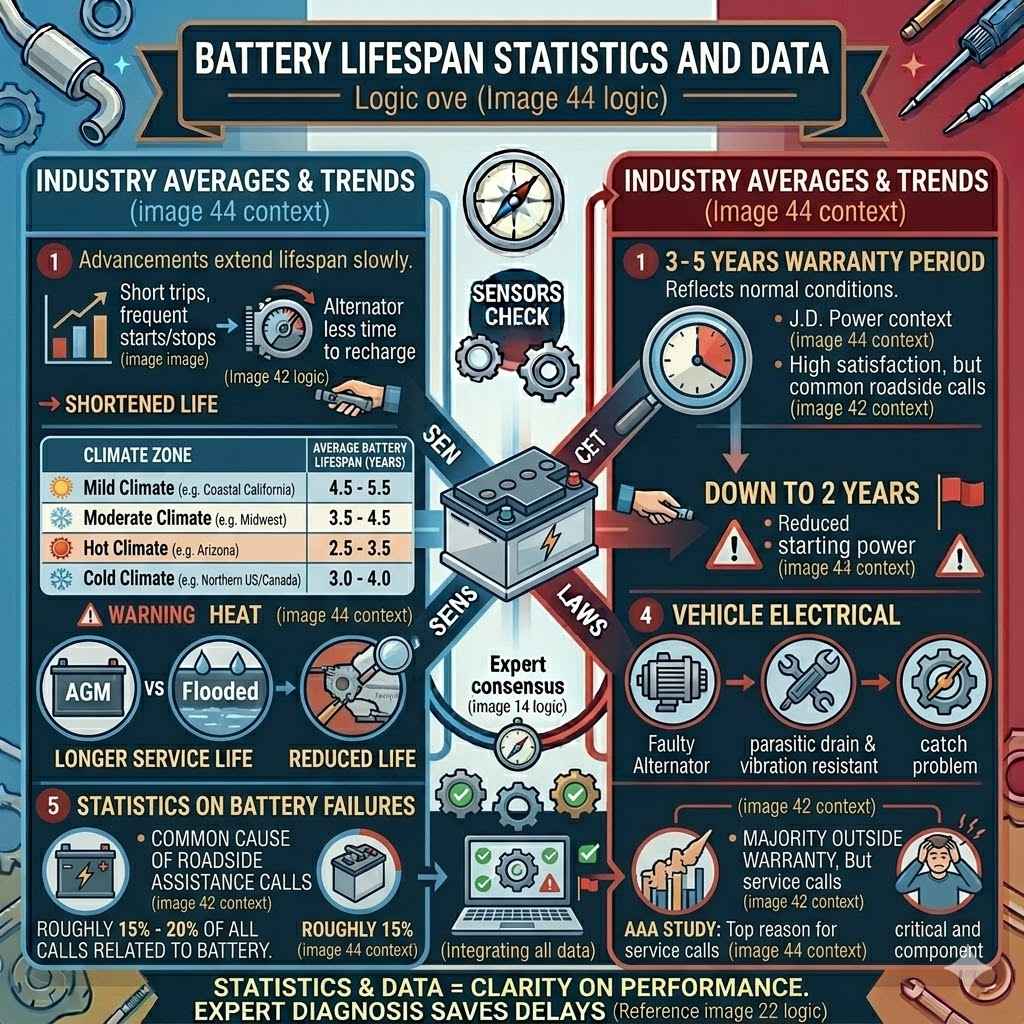
Battery Lifespan Statistics and Data
Looking at some data can give a clearer picture of how car batteries perform over time. Statistics help us understand the probabilities and averages we can expect. These numbers come from industry reports and consumer surveys, providing insights into real-world battery performance.
Industry Averages and Trends
The automotive industry collects a lot of data on component lifespans. For car batteries, the average lifespan has remained relatively consistent over the years, though advancements in battery technology are slowly extending it. Most manufacturers provide a warranty of 3 to 5 years on their car batteries.
This warranty period often reflects the expected lifespan under normal operating conditions.
According to J.D. Power, a consumer insights firm, customer satisfaction with vehicle battery performance is generally high, but battery-related issues remain a common cause of roadside assistance calls. The data suggests that while many batteries last longer, a significant percentage fail prematurely, often due to factors like climate and driving habits.
This highlights the importance of maintenance and awareness.
Table: Average Battery Lifespan by Climate Zone
| Climate Zone | Average Battery Lifespan (Years) |
|---|---|
| Mild Climate (e.g. Coastal California) | 4.5 – 5.5 |
| Moderate Climate (e.g. Midwest) | 3.5 – 4.5 |
| Hot Climate (e.g. Arizona) | 2.5 – 3.5 |
| Cold Climate (e.g. Northern US/Canada) | 3.0 – 4.0 |
As you can see from the table, extreme temperatures, especially heat, significantly shorten a battery’s lifespan. The constant high heat in hot climates accelerates the chemical degradation within the battery. Cold weather also poses challenges, but its impact is often more about reduced starting power than direct damage to the battery’s core components, assuming the battery remains charged.
Statistics on Battery Failures
Reports from automotive service providers indicate that battery failure is one of the top reasons for vehicle breakdowns. Roughly 15% to 20% of all roadside assistance calls are related to battery issues. Many of these failures occur outside of warranty periods, but a notable portion also happens prematurely.
Understanding these numbers can motivate owners to be more proactive with battery care and testing.
A study by AAA found that battery issues account for a significant percentage of service calls. While this number can fluctuate year to year, it consistently ranks among the top reasons vehicles need assistance. This emphasizes that even with modern vehicle technology, batteries remain a critical and sometimes vulnerable component.
Frequently Asked Questions
Question: How long does a car battery typically last?
Answer: On average, a car battery lasts between three and five years. However, this can vary depending on climate, driving habits, and battery maintenance.
Question: What are the first signs a car battery is going bad?
Answer: Common signs include a slow engine crank when starting, dim headlights, a clicking noise when turning the key, or a battery warning light on the dashboard.
Question: Can I extend the life of my car battery?
Answer: Yes, you can extend its life by keeping the terminals clean, ensuring a good connection, avoiding deep discharges, and protecting it from extreme temperatures. Taking longer drives occasionally also helps.
Question: What is the difference between an AGM and a standard car battery?
Answer: AGM batteries use fiberglass mats to absorb the electrolyte, making them more vibration-resistant, spill-proof, and better at handling deep discharges and frequent starts. Standard batteries have the plates submerged in liquid electrolyte.
Question: How often should I have my car battery tested?
Answer: It’s recommended to have your car battery tested annually, especially after it reaches three years of age, to check its condition and predict potential failures.
Summary
Your car battery typically lasts three to five years. Factors like climate, driving style, and maintenance play a big role. Watch for signs like slow cranking or dim lights.
Keep terminals clean and take longer drives occasionally to help your battery last longer. Testing your battery annually is a smart move.