Extreme Weather Car Warm Up: The Proven, Essential Rule
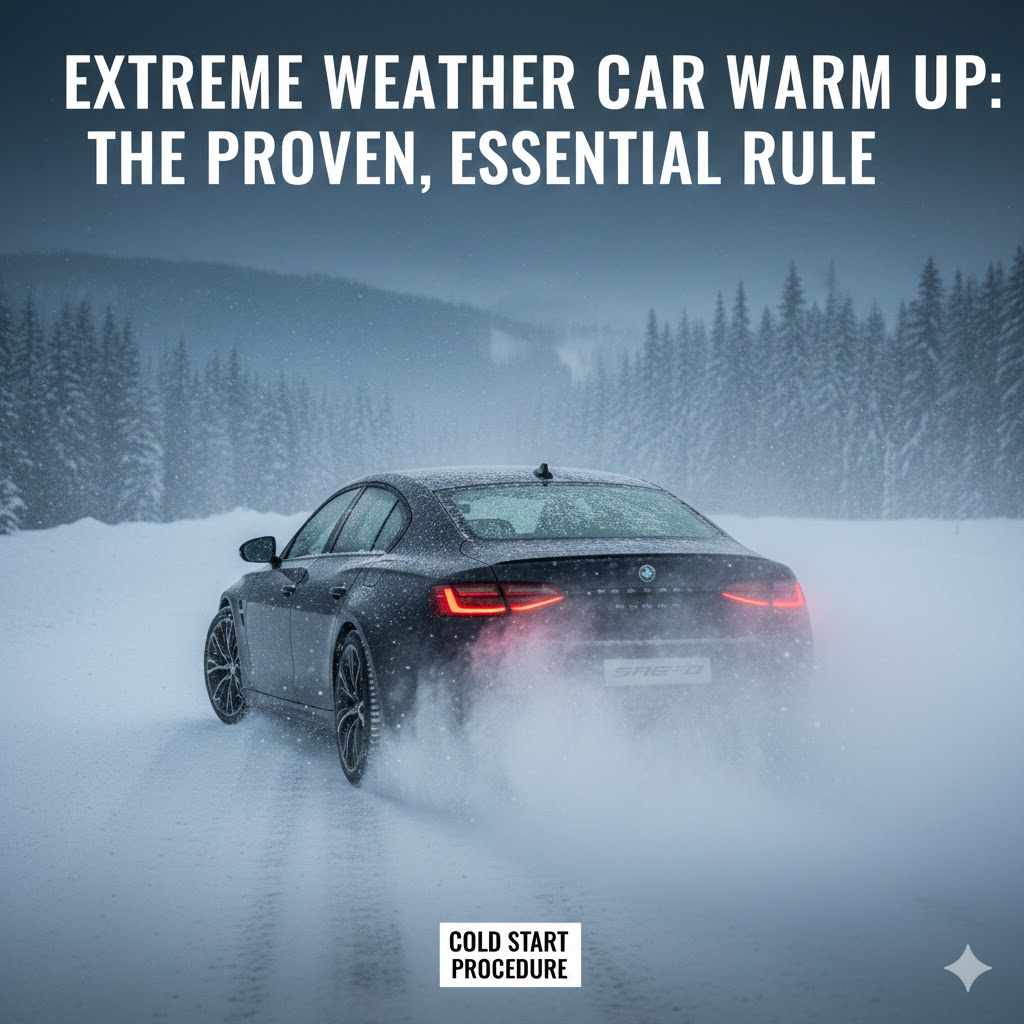
In extreme weather, you only need to let your car warm up for 30 to 60 seconds before driving. Modern engines warm up faster and more efficiently while you drive gently for the first 5-10 minutes. This simple rule saves fuel, protects your engine, and is better for the environment.
It’s a freezing morning. The frost on your windshield looks like a work of art, but you just need to get to work. You start your car and wonder, “How long should I let this run before I drive?” You’ve probably heard all sorts of advice—from a few seconds to a full ten minutes. It’s a common question that leaves many drivers feeling confused and uncertain.
Don’t worry, I’m here to clear things up. My name is Md Meraj, and I love making car care simple for everyone. The truth is, the old rules don’t apply to today’s cars. We’re going to walk through the proven, essential rule for warming up your car in any weather, cold or hot. I’ll show you exactly what to do, why it works, and how it helps you save money and keep your car running smoothly for years. Let’s get started!
Why the Old “Warm-Up” Rule Is a Myth for Modern Cars
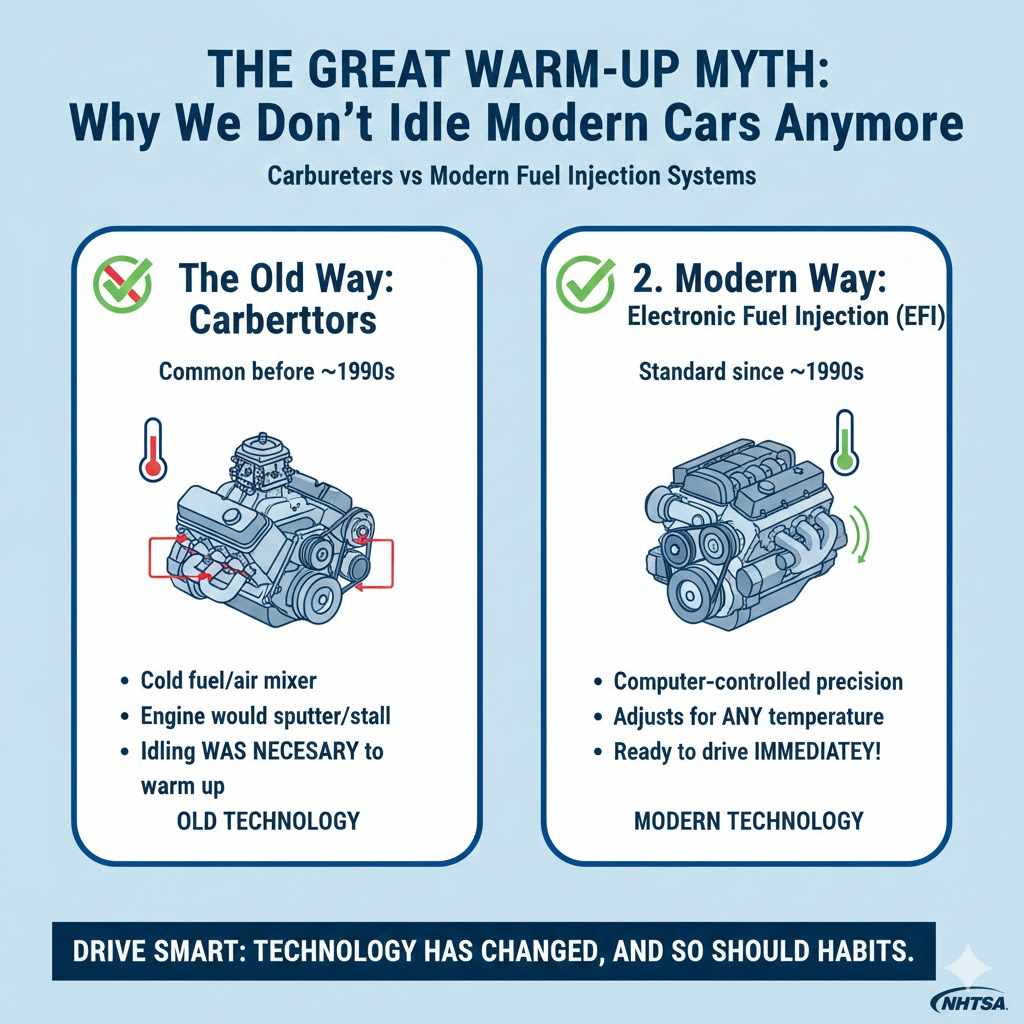
You might have heard from a parent or grandparent that you need to let your car idle for 5, 10, or even 15 minutes in the cold. This was excellent advice… for cars built decades ago. Those vehicles used a device called a carburetor to mix air and fuel. When the engine was cold, the carburetor couldn’t create the right mix, and the car could stall if you drove off too soon. Letting it idle gave it time to warm up and work properly.
However, cars built since the 1990s use electronic fuel injection systems. This is a smart system that uses sensors to automatically adjust the air-fuel mixture. It works perfectly whether the engine is hot or cold. This technology makes the long warm-up obsolete. In fact, letting a modern car idle for too long can actually do more harm than good.
What Happens When You Idle Too Long?
- Incomplete Fuel Combustion: When your car is idling, the engine isn’t running at its ideal temperature. This can cause the fuel to not burn completely. This unburned fuel can strip away the essential lubricating oil from the engine’s cylinder walls, leading to increased wear and tear on critical components like pistons and cylinders.
- Carbon Buildup: Idling creates carbon deposits on your spark plugs and inside the engine. Over time, this buildup can make your spark plugs less effective, hurting your car’s performance and fuel economy.
- Wasted Fuel: Your car gets zero miles per gallon when it’s sitting still. According to the U.S. Department of Energy, idling can use up to a half gallon of fuel per hour, depending on your engine size. That’s money straight out of your exhaust pipe!
The New, Proven Rule: Drive Gently to Warm Up
So, if long idling is out, what’s the right way to do it? The answer is simple and effective: drive your car.
The fastest and best way to warm up a modern engine is to drive it gently. When you drive, you put a light load on the engine, which helps it heat up to its proper operating temperature much more quickly and evenly than it would just sitting in your driveway. Not only does the engine warm up, but so do all the other important parts of your car that need to be ready for action.
Here’s what gets warmed up when you drive:
- The Transmission: Your transmission has its own fluid that needs to warm up to flow smoothly and lubricate the gears properly. This fluid won’t warm up much while the car is in park.
- The Tires: Cold tires are stiffer and have less grip. Driving warms them up, making them more flexible and safer on the road.
- The Suspension and Steering: The fluids in your steering and suspension systems also thicken in the cold. Gentle driving helps them warm up and perform as they should.
The key word here is “gently.” This doesn’t mean you should start your car and immediately race down the street. For the first 5 to 15 minutes, avoid hard acceleration, high engine speeds (RPMs), and heavy loads. Think of it as a light jog before a run—you’re getting everything ready for peak performance.
How Long to Warm Up Your Car: A Simple Guide for Any Weather
The amount of time you need to wait before driving depends on the temperature outside. But remember, we’re talking about seconds or a couple of minutes at most, not the long waits of the past. Here is a simple breakdown to follow.
A Quick Reference Table for Warm-Up Times
| Weather Condition | Recommended Idling Time | Gentle Driving Time | Md’s Pro Tip |
|---|---|---|---|
|
Mild Weather (Above 32°F / 0°C) |
30 seconds | 3-5 minutes | This is just enough time to buckle your seatbelt, check your mirrors, and choose your favorite playlist. |
|
Cold Weather (0°F to 32°F / -18°C to 0°C) |
30-60 seconds | 5-10 minutes | The goal is to get the oil circulating to protect your engine components before you start moving. |
|
Extreme Cold (Below 0°F / -18°C) |
1-2 minutes | 10-15 minutes | In deep freezes, a little extra time ensures the oil isn’t as thick as molasses. Keep RPMs extra low. |
|
Extreme Heat (Above 90°F / 32°C) |
0-30 seconds | 1-2 minutes | The engine doesn’t need a warm-up, but you might want to run the A/C for a moment to cool the cabin. |
Step-by-Step Guide to a Perfect Cold Weather Start
Feeling confident? Great! Let’s turn this knowledge into a simple routine you can use every cold morning. Following these steps will protect your engine, save you fuel, and get you on your way safely.
- Start Your Engine: Turn the key or press the button. The moment it starts, your car’s electronic fuel injection system is already doing its job, providing the right fuel mix.
- Wait Just 30 to 60 Seconds: This is the most important part. You don’t need more time than this. This brief period is all it takes for the oil pump to circulate oil throughout the engine, providing critical lubrication to all the moving parts before they are put under load.
-
Use Your Wait Time Wisely: Don’t just sit and stare at the clock. Use these 30-60 seconds to:
- Buckle your seatbelt.
- Adjust your mirrors and seat.
- Turn on your defroster to start clearing your windows.
- Turn on your seat heaters for extra comfort.
- Set up your navigation or music.
- Begin Driving Gently: Once your short wait is over, put the car in gear and start driving. For the first 5-10 minutes (or a bit longer in extreme cold), be gentle. Keep your engine speed low—a good rule of thumb is to stay below 2,500 RPMs. Avoid flooring the gas pedal or making jackrabbit starts.
- Watch Your Temperature Gauge: Most cars have a temperature gauge on the dashboard. As you drive, you’ll see the needle slowly move from “Cold” toward the middle of the range. This is a great visual confirmation that your car is warming up properly.
- Drive Normally When Warm: Once the temperature needle reaches its normal operating position (usually in the middle of the gauge), your car is fully warmed up. You can now drive as you normally would. Your engine, transmission, and all other systems are at their ideal temperature for efficiency and performance.
What About Extreme Heat? The “Cool Down” Approach
Warming up a car isn’t just a cold-weather concern. While your engine doesn’t need to be “warmed up” in blistering heat, your comfort and your car’s A/C system do need a smart approach.
When your car has been sitting in the sun, the inside temperature can soar to dangerous levels. The engine is fine, but sitting in a sweltering cabin is miserable and unsafe. The goal here is not to warm the engine but to cool the interior as quickly as possible.
Step-by-Step Guide for an Extreme Heat Start
- Ventilate Before You Start: Before you even get in, open a couple of windows on opposite sides of the car. This allows the super-heated air trapped inside to escape, a process known as ventilation. It can drop the cabin temperature significantly in just a minute.
- Start the Car and Turn on the A/C: Once you’re inside, start the engine. Immediately turn your A/C system on to the highest fan speed and the coldest setting. If you have a “recirculation” button (often an icon of a car with a U-turning arrow inside), turn it off for the first minute. This will pull fresh, cooler outside air into the car instead of recycling the hot air already inside.
- Drive Off Right Away: Just like in the cold, your car’s systems work better when moving. The A/C compressor, which is driven by the engine, works more efficiently when the engine is running above idle speed. Driving away immediately will help your A/C start blowing cold air much faster.
- Switch to Recirculation: After about a minute of driving, once the A/C is blowing cool air, you can close your windows and switch the A/C to recirculation mode. This will now cool the already-chilled air inside the cabin, making the system work less hard and cooling the car down even faster.
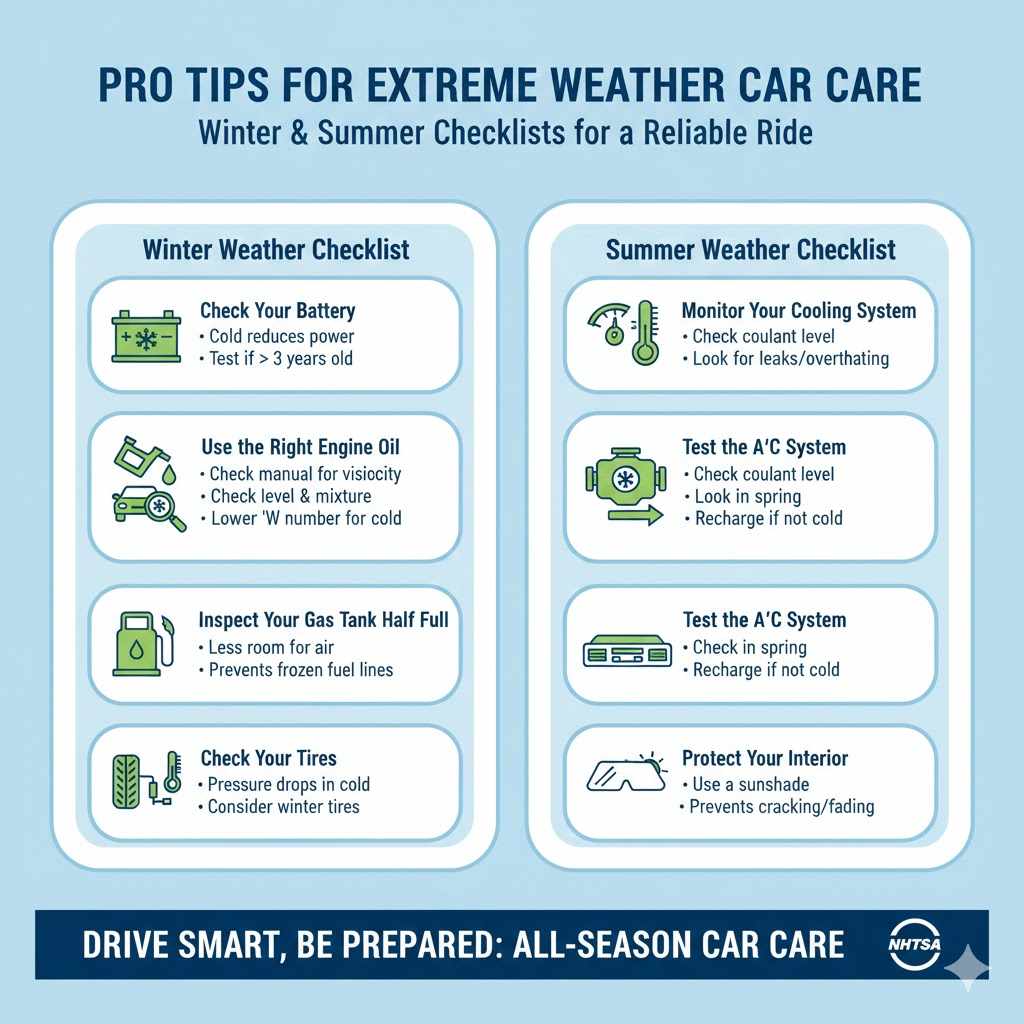
Pro Tips for Extreme Weather Car Care
Properly warming up your vehicle is just one piece of the puzzle. To keep your car reliable in extreme temperatures, a little preparation goes a long way. Here are some of my top tips for both winter and summer.
Winter Weather Checklist
- Check Your Battery: Cold weather is a battery’s worst enemy. It reduces a battery’s power, and at the same time, a cold engine requires more power to start. Before winter hits, have your battery tested at an auto parts store (it’s often a free service). If it’s weak, replace it before it leaves you stranded.
- Use the Right Engine Oil: Oil gets thicker in the cold, making it harder to circulate. Check your owner’s manual for the recommended oil viscosity for cold climates. A multi-grade oil like 5W-30 is designed to flow better at low temperatures than a 10W-30 oil.
- Inspect Your Antifreeze: The coolant (antifreeze) in your radiator is crucial for preventing your engine from freezing. Make sure the level is correct and that the mixture of antifreeze and water is appropriate for the lowest temperatures you expect in your area (usually a 50/50 mix).
- Keep Your Gas Tank Half Full: A fuller gas tank leaves less room for air. This is important because moisture in the air can condense inside a near-empty tank and freeze in your fuel lines, preventing your car from starting.
- Check Your Tires: Tire pressure drops by about 1 PSI for every 10°F drop in temperature. Keep your tires properly inflated for safety and fuel economy. For areas with heavy snow and ice, consider investing in a set of dedicated winter tires for superior grip.
Summer Weather Checklist
- Monitor Your Cooling System: In extreme heat, your engine’s cooling system works overtime. Regularly check your coolant level (when the engine is cool!) and look for any leaks in the hoses. An overheating engine can cause severe and expensive damage.
- Test the A/C System: Don’t wait for the first 95-degree day to find out your A/C isn’t working. Test it in the spring. If it’s not blowing cold, it might just need a refrigerant recharge, which is a relatively simple fix.
- Protect Your Interior: The sun’s UV rays can crack your dashboard and fade your upholstery. Use a sunshade when parked to protect your interior and keep the cabin temperature down.
- Don’t Forget the Battery: While we often associate battery problems with winter, high heat can be just as damaging. Heat causes battery fluid to evaporate, which can damage the internal structure of the battery.
Frequently Asked Questions (FAQ)
Is it bad to drive my car right after starting it in the cold?
No, it’s actually the best thing you can do for a modern car! Just remember to drive gently for the first 5-10 minutes. The only thing you need is about 30 seconds of idling to let the oil start circulating. Driving warms up the entire vehicle—engine, transmission, and tires—much faster and more efficiently than idling.
Does revving the engine warm it up faster?
Absolutely not! This is a harmful myth. Revving a cold engine puts major stress on its internal components before they are properly lubricated. The oil is thick and cold, so it can’t protect the engine parts adequately at high RPMs. This can cause significant wear and tear. The best way is always slow and gentle driving.
Why does my car’s heater take so long to work?
Your car’s heater works like a small radiator that uses hot coolant from the engine to warm the air blown into your cabin. The heater can’t produce warm air until the engine itself has warmed up and heated the coolant. This is another reason why driving is better than idling—the engine warms up faster while driving, so you’ll get warm air from your heater sooner.
Is using a remote start bad for my car?
A remote start isn’t inherently bad, but how you use it matters. Using it to idle the car for 10-15 minutes is wasteful and causes the same engine wear we’ve discussed. However, using it to start the car 1-2 minutes before you leave is perfectly fine. It’s just enough time to get the oil flowing and start warming or cooling the cabin for your comfort.
Do electric cars (EVs) need to warm up?
Electric vehicles are different. They don’t have an internal combustion engine, oil, or coolant in the same way. However, their batteries are sensitive to temperature. In extreme cold, an EV’s battery will have a reduced range. Many EVs have a “preconditioning” feature that you can activate while the car is still plugged in. This uses power from the wall—not your battery—to warm the battery and the cabin to an optimal temperature, helping you preserve your driving range.
How do I know when my car is fully warmed up?
The easiest way is to watch the temperature gauge on your dashboard. When the needle settles into the middle of the normal range and stays there, your engine is fully warm. You may also notice your heater starts blowing consistently hot air, and the engine sounds smoother and quieter than it did when it was cold.
Can excessive idling damage my catalytic converter?
Yes, it can. Long periods of idling, especially in an older or poorly maintained car, can lead to an overly rich fuel mixture. This unburned fuel can exit the engine and overheat the catalytic converter, which is a critical and expensive part of your exhaust system. Over time, this can damage it, leading to a failed emissions test and a costly repair.
Conclusion: A Smarter, Safer Way to Start Your Day
The morning rush can be stressful, especially when it’s freezing cold or incredibly hot outside. But now, you have the knowledge to start your car with confidence, knowing you’re doing what’s best for its health and your wallet.
Let’s leave the old myth of long idling in the past where it belongs. For our modern cars, the rule is simple and proven: start your engine, wait just 30 to 60 seconds for the oil to flow, and then drive away gently. This easy routine warms up all your car’s vital systems together, protects your engine from unnecessary wear, saves you money on gas, and is kinder to our environment.
Car care doesn’t have to be complicated. By understanding the “why” behind these simple steps, you’re taking control and ensuring your vehicle will be a reliable partner on the road for many years to come. Drive safely, stay comfortable, and enjoy the ride!
Products related to this article
Sponsored / affiliate links. As an Amazon Associate I earn from qualifying purchases. I may earn additional commission from eligible campaigns.