Is Mazda a Luxury Car? Honest Answer Explored
Mazda is a premium mainstream brand, not a true luxury brand. Its cabins and road manners can trick shoppers into thinking otherwise, but the badge still sits outside the luxury class. Get this wrong and you may overpay for a logo, or miss a Mazda that delivers near-luxury cabin quality without luxury-brand costs. This guide gives you a buyer’s rulebook for comparing Mazda with entry-luxury rivals and deciding when the answer is yes, no, or “premium, but not luxury.”
Mazda decision table
| Luxury trait | Mazda evidence | Where it falls short |
|---|---|---|
| Brand structure | Mazda is a single mainstream brand with no separate luxury division. | Luxury marques usually separate premium cars with their own badge, retail strategy, and pricing logic. |
| Dealer experience | Dealers can feel more polished than some mass-market peers, especially on higher trims. | The retail model still sits in mainstream territory, not the more curated setup many luxury shoppers expect. |
| Materials | Upper trims often use upscale surfaces, including Nappa leather and other premium touches. | Those materials are trim-dependent, so many Mazdas below Signature do not fully match luxury-brand cabin richness. |
| Ride quality | Mazda tunes many models for composure and body control rather than a harsh, economy-car feel. | Even polished Mazdas usually lean sportier than cushy luxury cruisers, especially on rough pavement. |
| Powertrain | The CX-90 and CX-70 use inline-6 turbo power, which gives them a more upscale feel than many rivals. | Powertrain refinement helps, but badge prestige and full luxury-market positioning still do not follow automatically. |
| Pricing | Mazda’s lineup reaches into entry-luxury territory, with the CX-90 starting at $39,700 and the CX-70 at $42,750. | Overlap in price does not make the brand luxury; many luxury models still cost more and come with a different ownership structure. |
| Warranty and maintenance | Mazda competes on value, not on a luxury-style ownership package. | Luxury brands often sell a more premium ownership pitch, and Mazda does not frame itself that way. |
| Resale positioning | Mazda often lands as a value-rich choice with strong appeal to shoppers who want refinement without badge premium. | That is a different role from a prestige-first brand whose identity is built around exclusivity and status. |
Best Mazda trims for near-luxury feel
| Model | Best near-luxury trim focus | Why it stands out |
|---|---|---|
| CX-90 | Higher trims with premium cabin materials | Flagship three-row packaging, inline-6 turbo power, and the most upscale Mazda family-SUV presence. |
| CX-70 | Higher trims with premium feature content | Two-row format, inline-6 turbo power, and a cleaner luxury-adjacent use case for couples or smaller families. |
| CX-5 Signature | Signature trim | Commonly used as Mazda’s mainstream premium benchmark, with the strongest “luxury-lite” cabin feel in the compact SUV range. |
| Mazda3 top trims | Top trims with upscale appointments | Lowest-cost entry into Mazda’s refined cabin approach, with sedan and hatchback body styles for shoppers who do not need an SUV. |
Is Mazda a luxury car?
No. Mazda is not technically a luxury car brand, and that distinction matters if you care about badge status, dealer structure, and prestige positioning. Mazda can feel premium in the cabin and on the road, but it still sits in the mainstream market.
Why the answer depends on your definition
If you define luxury by feel, Mazda can get close. If you define it by brand architecture, it falls short. That is why the answer changes depending on whether you are comparing materials and refinement, or whether you want a brand built from the ground up as luxury.
Mazda’s current U.S. lineup spans subcompact vehicles, sedans, hatchbacks, and SUVs up to a three-row model range. That breadth matters because it shows the company is not operating as a luxury-only badge with a narrow premium catalog.
Why Mazda feels more upscale
Mazda feels more upscale than most mainstream rivals because the design, cabin presentation, and drive tuning are handled with more restraint and care than shoppers usually expect at these prices. The effect is real, even if the badge still says mainstream.
Kodo design and cabin presentation
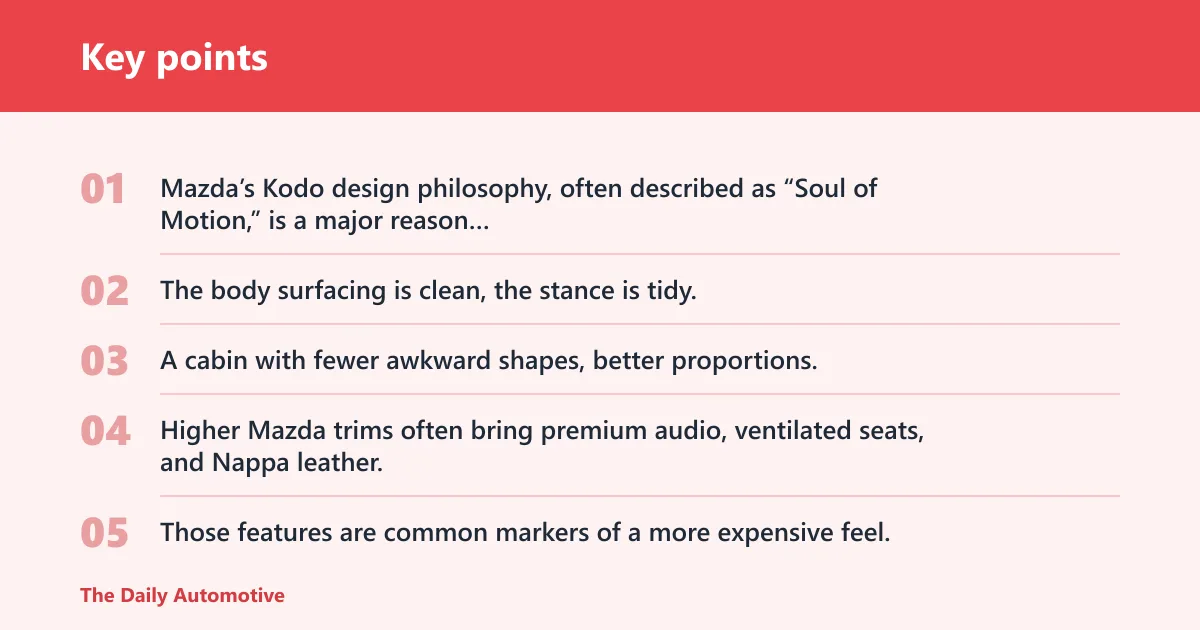
Mazda’s Kodo design philosophy, often described as “Soul of Motion,” is a major reason the brand looks pricier than it is at first glance. The body surfacing is clean, the stance is tidy, and the interiors usually avoid the busy look that makes many mainstream cabins feel cheaper.
That visual discipline matters. A cabin with fewer awkward shapes, better proportions, and calmer controls can feel expensive before you even touch the materials.
Materials, seats, and feature content
Higher Mazda trims often bring premium audio, ventilated seats, and Nappa leather, especially on Signature-badged models. Those features are common markers of a more expensive feel, and Mazda uses them in a way that makes the gap to entry-luxury look small on paper.
Suppose you are comparing a CX-5 Signature with a base luxury compact SUV. The Mazda may give you a quieter-feeling cabin, nicer touch points, and cleaner design for less money, even if the badge and retail structure remain different.
Refinement across the current lineup
Mazda’s refinement is not limited to one model. The Mazda3 sedan starts at $24,650 and the hatchback at $25,650, so even the lower end of the lineup carries some of the same upscale cabin strategy. The CX-5 starts at $29,990 and is often the brand’s mainstream premium benchmark.
The MX-5 Miata, starting at $30,730, adds another layer to Mazda’s identity. It is the enthusiast model people cite when they want to describe the brand as driver-focused rather than strictly luxury-focused.
Why Mazda is not a true luxury brand
Mazda is not a true luxury brand because it does not have a separate luxury division, its retail model is mainstream, and its prestige positioning is not built like Lexus, Acura, Genesis, or similar marques. The products feel elevated, but the brand structure does not change.
No separate luxury division
Mazda does not have a luxury arm today. The historical Amati project was a canceled attempt at a luxury division, and that matters because it explains the gap between Mazda’s premium feel and the lack of a Lexus-style sub-brand.
Car shoppers should treat that as a clean line: a premium mainstream brand can build convincing cabins and strong driving manners, but it is still different from a brand whose whole identity is luxury.
Dealer experience and brand prestige
Luxury brands usually sell more than cars; they sell a distinct ownership atmosphere. Mazda dealers can be good, but the experience is still part of a mainstream franchise network. That means the brand does not consistently deliver the more exclusive retail feel that luxury buyers expect.
Brand prestige follows the same pattern. Mazda has respect, but not the same status signaling as a dedicated luxury badge.
Which Mazda models feel the most luxury-like?
The most luxury-like Mazdas are the CX-90, CX-70, CX-5 Signature, and the top Mazda3 trims. If you want the closest thing to a luxury experience inside the brand, start there. They deliver the highest concentration of materials, feature content, and cabin polish.
CX-90 for three-row buyers
The CX-90 is Mazda’s flagship three-row SUV in Mazda’s lineup. It uses inline-6 turbo power, with a PHEV available starting at $50,695. For families who want a premium-feeling cabin without moving to a full luxury badge, this is the cleanest Mazda answer.
It is the model most likely to satisfy shoppers who want space, presence, and a more expensive interior feel in one package.
CX-70 for two-row buyers
The CX-70 is the two-row counterpart to the CX-90, and Mazda USA lists it starting at $42,750. It also uses inline-6 turbo power, with a PHEV starting at $44,450. If you do not need a third row, it is easier to see the upscale intent in its layout.
That makes it a strong fit for buyers who want a family-size SUV without the visual and packaging compromises of extra seating.
CX-5 Signature and Mazda3 top trims
The CX-5 starts at $29,990 and remains the most common Mazda benchmark for mainstream premium feel. In Signature form, it is the model many shoppers point to when they say a Mazda feels luxury-like without pretending to be luxury.
Top trims give you a smaller, lower-cost way to get Mazda’s refined cabin approach, especially if you want something more urban and less SUV-like.
How Mazda pricing compares with luxury brands
Mazda pricing overlaps the bottom end of some luxury brands, but that overlap is not the same as luxury positioning. The numbers show why shoppers get confused: a well-equipped Mazda can sit close to entry-luxury money while still being sold and branded as a mainstream car.
Where Mazda overlaps entry-luxury pricing
The CX-90 at $39,700 and the CX-70 at $42,750 sit in the same conversation as entry-level luxury SUVs. The CX-70 PHEV at $44,450 and CX-90 PHEV at $50,695 move even closer to that territory.
That is the point where many shoppers start comparing leather quality, seat features, and powertrain refinement against luxury alternatives instead of against other mainstream SUVs.
Where Mazda still undercuts luxury marques
Mazda still usually undercuts luxury brands on badge premium, ownership presentation, and line-of-business separation. The brand is priced to give you upscale content without the full luxury-brand surcharge that often follows the badge itself.
A common first-timer mistake is to judge a Mazda solely by the trim badge instead of its interior finish, ride quality, and available features. A better approach is to compare the sticker, the trim content, and the brand structure together.
Is Mazda a good car if you want value and refinement?
Yes, Mazda is a good choice if you want value and refinement together. It is especially strong for shoppers who care about cabin design, driving polish, and restrained styling, but do not need the status or retail experience of a true luxury brand.
Performance and comfort tradeoffs
Mazda often tunes its vehicles to feel more connected and composed than softly sprung competitors. That helps the brand feel more expensive, but it can also mean a firmer ride than some comfort-first luxury SUVs. Buyers should decide whether they want crispness or cushion.
If you want a soft, isolated ride above all else, Mazda may not be the best fit. If you want a more controlled drive with a clean interior, it is much easier to recommend.
Reliability and ownership value
Mazda often appeals to shoppers who want a stronger value story than many luxury brands offer, especially once feature content is considered. That does not make Mazda immune to repairs or ownership costs, but it does make the brand easier to justify for buyers who want refinement without stretching into luxury pricing.
The practical upside is simple: you can buy a Mazda that feels close to luxury in daily use, then avoid paying for a badge whose main benefit is prestige.
Who should choose Mazda over luxury?
- Choose Mazda if you want near-luxury interior quality without luxury-brand pricing.
- Choose Mazda if you care more about design and driving feel than badge status.
- Choose Mazda if you want a two-row CX-70 or three-row CX-90 with upscale content.
- Choose a luxury brand if the badge, dealer experience, and ownership presentation matter most.
Picture a shopper cross-shopping a CX-5 Signature against an entry-luxury compact SUV. If the Mazda has the materials, features, and ride quality that matter most to that buyer, the badge difference may not be worth the extra spend. If status matters, the answer changes fast.
Frequently asked questions
Is mazda considered a luxury car?
No. Mazda is generally considered a premium mainstream brand rather than a luxury one. The cabins can feel upscale, especially on higher trims, but the brand does not have the separate luxury division, dealer positioning, or prestige structure that define true luxury marques.
Does mazda make a luxury car?
Mazda does not make a true luxury-brand car in the formal sense. It does make premium-feeling vehicles, especially the CX-90, CX-70, CX-5 Signature, and top Mazda3 trims. Those models can feel luxury-like, but they remain Mazda products under a mainstream brand umbrella.
Does mazda have a luxury brand?
No. Mazda does not currently have a luxury brand or separate luxury division. Amati was the canceled historical attempt, but there is no Mazda-branded luxury subline today. That is one of the clearest reasons Mazda stays in the premium mainstream category.
Does mazda have a luxury suv?
Not as a true luxury SUV line, no. The CX-90 is Mazda’s flagship three-row SUV, and the CX-70 is its two-row counterpart. Both can feel upscale and compete with entry-luxury SUVs on content and refinement, but they are still mainstream Mazda models.
What’s the luxury version of mazda
There is no direct luxury version of Mazda today. If you want the closest Mazda experience to luxury, start with the CX-90, CX-70, CX-5 Signature, or a top Mazda3 trim. Those are the trims most likely to deliver premium materials, advanced features, and the calmest cabin presentation.
Is a mazda a good car?
Yes, Mazda is a good car brand for buyers who want value, refinement, and attractive design. The best models offer a premium feel without luxury-brand pricing. The tradeoff is simple: Mazda gives up some prestige and retail polish in exchange for a stronger mainstream value proposition.
Products related to this article
Sponsored / affiliate links. As an Amazon Associate I earn from qualifying purchases. I may earn additional commission from eligible campaigns.
 CAR Pass 5 Seats Luxury Leather Seat Covers Full Set, Waterproof Durable Premium Leather Car Seat Covers, Universal Fit for Most Trucks Sedans Vans SUVs Cars Deluxe Sporty (Black and Gray)
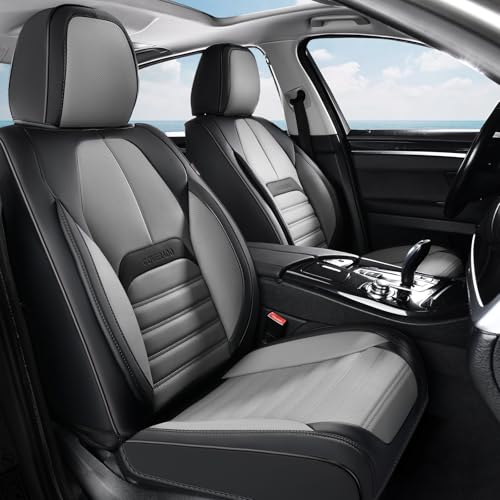 Coverado Waterproof Nappa Leather Car Seat Covers, Automotive Seat Covers,Front Car Seat Cushion & Car Seat Protector, Seat Covers Universal Fit for Most Cars, SUVs,Trucks,Black&Gray