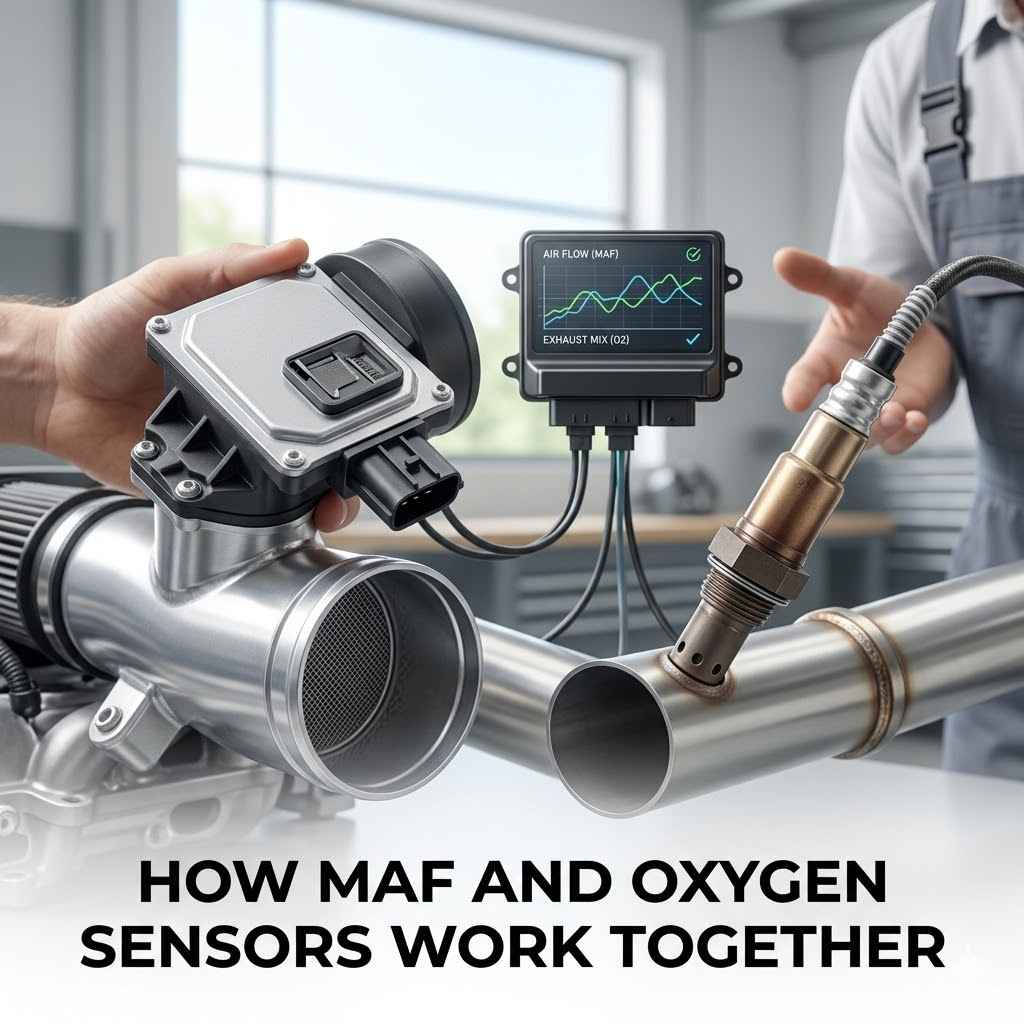
How MAF and Oxygen Sensors Work Together
Understanding your car’s engine can seem tricky at first, especially when you hear about parts like the MAF sensor and oxygen sensor. Many people find it hard to grasp how these two work hand-in-hand to keep your car running smoothly. But don’t worry!
We’re going to break down exactly How MAF and Oxygen Sensors Work Together in a simple, step-by-step way. Get ready to see how these unsung heroes help your engine perform its best.
Understanding the MAF Sensor
The Mass Air Flow (MAF) sensor is a vital component in your car’s engine management system. Its primary job is to measure the amount of air entering the engine. This measurement is crucial because the engine’s computer needs to know how much air is coming in to determine the correct amount of fuel to inject.
Without an accurate air measurement, the fuel-air mixture would be off, leading to poor performance and reduced fuel efficiency.
What is a MAF Sensor?
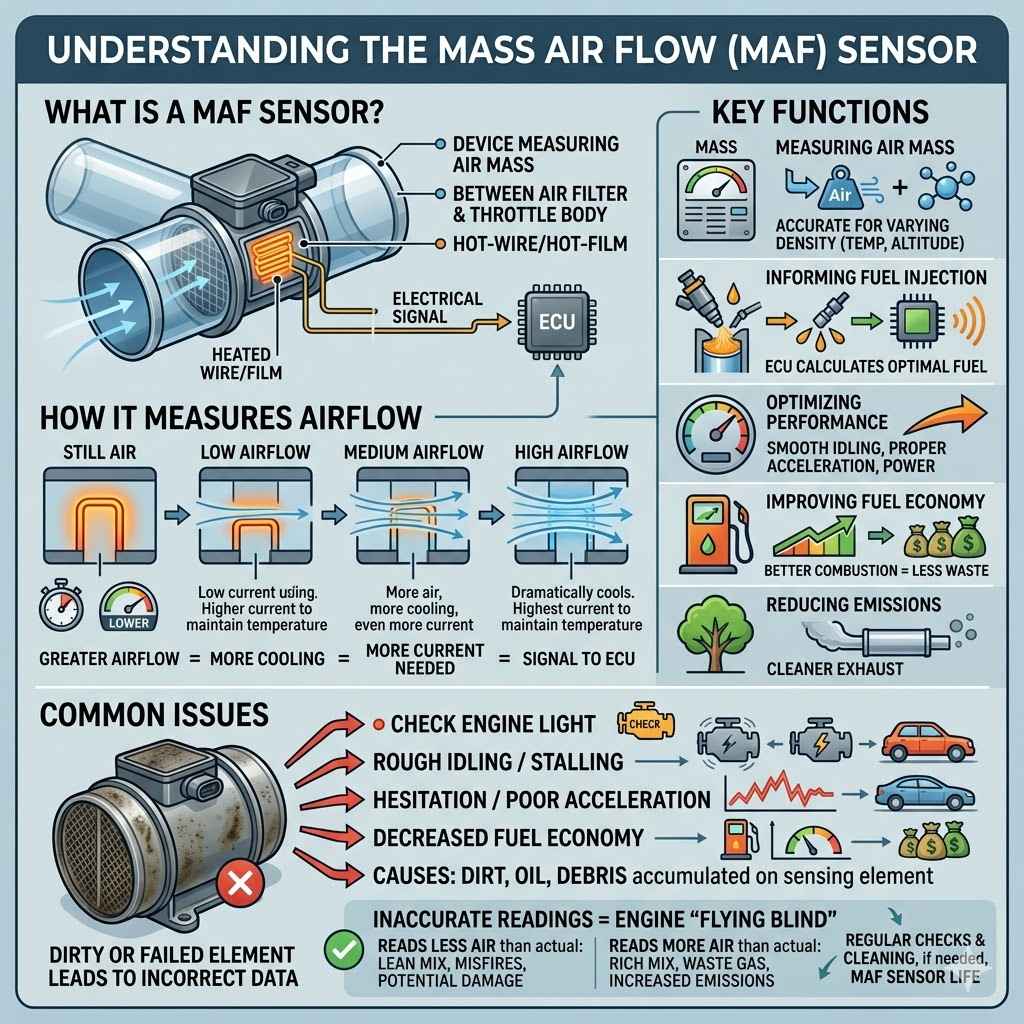
A Mass Air Flow sensor, often simply called the MAF sensor, is a device that measures the mass of air entering an internal combustion engine. It’s typically located in the air intake system, between the air filter and the engine’s throttle body. The MAF sensor plays a key role in ensuring the engine gets the right amount of air for optimal combustion.
The sensor works by using a heated wire or film. As air flows past this heated element, it cools it down. The sensor then measures how much electrical current is needed to keep the wire or film at a constant temperature.
The greater the airflow, the more the element is cooled, and the more current is required. This current measurement is then translated into a signal that tells the engine’s computer exactly how much air is entering the engine. This information is critical for calculating the precise amount of fuel needed.
How the MAF Sensor Measures Airflow
The most common type of MAF sensor uses a “hot-wire” or “hot-film” principle. Inside the sensor housing, there is a sensing element that is kept at a specific temperature above the incoming air. As air flows through the sensor, it carries heat away from the sensing element.
The sensor’s electronics then adjust the electrical current flowing through the element to maintain its set temperature.
The amount of electrical current needed to keep the element hot is directly proportional to the mass of air flowing past it. So, if a lot of air is flowing, the sensor needs more current. If only a little air is flowing, it needs less current.
This precise measurement allows the engine control unit (ECU) to accurately calculate the air density, which is essential for determining the proper fuel-to-air ratio. This ratio is key to efficient engine operation, power output, and emissions control.
Another less common type is the “vane airflow meter.” This uses a flap that swings open based on the amount of incoming air. A potentiometer attached to the flap then sends a signal to the ECU indicating the flap’s position, which corresponds to airflow. However, hot-wire and hot-film sensors are generally more accurate and responsive.
Key Functions of the MAF Sensor
Measuring Air Mass: The MAF sensor’s primary function is to determine the exact mass of air entering the engine. This is more accurate than just measuring air volume because air density can change with temperature and altitude.
Informing Fuel Injection: This air mass data is sent to the engine control unit (ECU). The ECU uses this information, along with other sensor inputs, to calculate the optimal amount of fuel to inject into the cylinders for efficient combustion.
Optimizing Engine Performance: By ensuring the correct fuel-air mixture, the MAF sensor helps maintain smooth idling, proper acceleration, and overall engine power.
Improving Fuel Economy: An accurate air measurement leads to better fuel combustion, which means less wasted fuel and improved miles per gallon.
Reducing Emissions: A properly functioning MAF sensor contributes to cleaner exhaust by ensuring combustion is as complete as possible, minimizing harmful pollutants.
Common MAF Sensor Issues
Over time, MAF sensors can become dirty or fail. Dirt, oil from the air filter, or debris can accumulate on the sensing element, preventing it from accurately reading the airflow. This leads to incorrect data being sent to the ECU.
When this happens, the engine might experience rough idling, stalling, hesitation during acceleration, decreased fuel economy, or trigger a check engine light.
When a MAF sensor is not working correctly, the engine’s computer is essentially flying blind when it comes to air intake. It might inject too much or too little fuel, both of which are detrimental. For instance, if the sensor reads less air than is actually entering, the ECU will inject less fuel.
This can lead to a lean condition where there’s too much air and not enough fuel, causing misfires and potential engine damage. Conversely, if it reads too much air, it will inject too much fuel, creating a rich condition, wasting gas, and increasing emissions.
Sometimes, the MAF sensor is not faulty but is simply reporting inaccurate readings due to a dirty sensing element. In such cases, a specialized MAF sensor cleaner can be used to restore its performance. However, if the sensor is physically damaged or has an electrical fault, it will need to be replaced.
Regular checks and cleaning, if needed, can help extend the life of your MAF sensor and prevent these issues.
Exploring the Oxygen Sensor
The oxygen sensor, also known as the O2 sensor or lambda sensor, is another critical component in your car’s emissions system. Its main job is to measure the amount of unburned oxygen in your exhaust gases. This measurement tells the engine’s computer how efficiently the fuel is being burned inside the engine.
By understanding the oxygen levels, the computer can make fine adjustments to the fuel-air mixture.
What is an Oxygen Sensor?
An oxygen sensor is a device that monitors the oxygen content in the exhaust stream of an internal combustion engine. It’s essential for controlling emissions and optimizing fuel combustion. Located in the exhaust system, typically before and after the catalytic converter, these sensors provide real-time feedback to the Engine Control Unit (ECU).
These sensors are designed to operate at high temperatures, as they are placed directly in the hot exhaust. They work by generating a voltage signal that varies depending on the amount of oxygen present in the exhaust gases. A typical oxygen sensor has a ceramic element, often made of zirconia or titania, which becomes electrically conductive at high temperatures.
This element is coated with platinum electrodes.
When exhaust gases flow over the sensor’s outer surface and outside air flows over its inner surface, a chemical reaction occurs. This reaction creates a voltage difference between the electrodes. If there’s a lot of oxygen in the exhaust (meaning the engine is running lean, with too much air and not enough fuel), the sensor will produce a low voltage.
If there’s very little oxygen (meaning the engine is running rich, with too much fuel and not enough air), it will produce a high voltage. This voltage signal is what the ECU interprets.
How the Oxygen Sensor Works
Oxygen sensors operate by measuring the difference in oxygen partial pressure between the exhaust gas and the ambient air. Zirconia-based oxygen sensors, the most common type, have a hollow zirconia ceramic tube. The inside of the tube is exposed to ambient air, and the outside is exposed to exhaust gas.
A platinum coating on both the inside and outside surfaces acts as electrodes.
At temperatures above 350°C (662°F), the zirconia ceramic becomes an electrolyte. It allows oxygen ions to move through it. When there’s a difference in oxygen concentration between the exhaust gas and the ambient air, a voltage is generated across the ceramic.
This voltage is higher when the oxygen difference is greater.
For example, if the exhaust has a lot of oxygen (lean condition), the voltage output is low, typically around 0.1 volts. If the exhaust has very little oxygen (rich condition), the voltage output is high, around 0.9 volts. The ECU rapidly switches between these low and high voltage signals as the engine adjusts the fuel mixture to maintain an ideal stoichiometric ratio (around 14.7 parts air to 1 part fuel).
This constant cycling ensures the engine runs efficiently and produces minimal emissions.
Types of Oxygen Sensors
Zirconia Sensors: These are the most common type. They generate a voltage that varies with the oxygen content. They are effective but require high temperatures to operate, so they often have a built-in heater to reach optimal operating temperature quickly.
Titania Sensors: These sensors change their electrical resistance based on oxygen content. They are less common than zirconia sensors.
Nernst Cell Sensors: These are a type of zirconia sensor that operates like a battery, producing a voltage directly proportional to the oxygen difference.
Wideband Sensors: These advanced sensors can measure a much wider range of air-fuel ratios than traditional narrow-band sensors. They are often used in high-performance vehicles and for precise tuning, providing more detailed data to the ECU for better control.
Signs of a Failing Oxygen Sensor
A failing oxygen sensor can significantly impact your car’s performance and emissions. One of the most common signs is an illuminated check engine light. The ECU detects anomalies in the oxygen sensor’s readings and flags it for attention.
Other symptoms include poor fuel economy, as the engine may be running too rich or too lean without proper feedback.
You might also notice a rough idle, hesitation during acceleration, or even engine misfires. In some cases, a bad O2 sensor can cause your car to fail emissions tests. If you notice a rotten egg smell coming from your exhaust, it could indicate that the catalytic converter is overheating due to an excessively rich fuel mixture, which is often caused by faulty oxygen sensors.
It’s important to address these symptoms promptly. Replacing a faulty oxygen sensor is generally a straightforward repair that can restore your car’s fuel efficiency, improve performance, and ensure it passes emissions standards. Early detection and replacement can prevent further damage to other engine components, like the catalytic converter.
How MAF and Oxygen Sensors Work Together
The MAF sensor and the oxygen sensor are two key players in your car’s sophisticated engine management system, and they collaborate closely to ensure optimal engine performance and fuel efficiency. The MAF sensor provides the engine control unit (ECU) with a direct measurement of how much air is entering the engine. The oxygen sensor then provides feedback on how well the fuel is being burned with that air.
This constant exchange of information allows the ECU to fine-tune the fuel delivery.
The Synergy Explained
Imagine the MAF sensor as the scorekeeper for incoming air. It tells the ECU precisely how many “players” (air molecules) are entering the “game” (the engine’s combustion chamber). Based on this count, the ECU calculates an initial estimate of how much “food” (fuel) is needed to achieve a balanced “meal” for the engine – a proper air-fuel ratio.
This ideal ratio, known as the stoichiometric ratio, is crucial for complete combustion.
However, no system is perfect, and external factors can always affect the outcome. This is where the oxygen sensor steps in as the “referee.” It checks the “meal” after it’s been cooked (after combustion) by analyzing the exhaust gases for leftover oxygen. If there’s too much oxygen, it signals a “lean” condition, meaning there wasn’t enough fuel.
If there’s too little oxygen, it signals a “rich” condition, meaning there was too much fuel.
The ECU receives these signals from the oxygen sensor and makes real-time adjustments to the fuel injection. If the oxygen sensor reports a lean condition, the ECU will inject slightly more fuel. If it reports a rich condition, it will reduce the fuel injected.
This continuous loop of measurement, estimation, and correction, orchestrated by the MAF and oxygen sensors working in tandem, ensures that the engine is always running as efficiently and cleanly as possible.
The ECU’s Role in the Partnership
The Engine Control Unit (ECU), often referred to as the car’s computer, is the central hub that processes information from both the MAF and oxygen sensors. It doesn’t just receive data; it actively uses it to make critical decisions about engine operation. The ECU receives a constant stream of data from the MAF sensor about the volume and density of air entering the engine.
This is its primary input for calculating the baseline amount of fuel required.
Then, the ECU monitors the voltage signals from the oxygen sensor(s). These signals are like the ECU’s report card on combustion. Based on whether the signal indicates a lean or rich mixture, the ECU constantly modifies the fuel injector pulse width (how long the injectors stay open).
This adjustment is typically made in small increments to keep the air-fuel ratio hovering around the ideal stoichiometric point.
This sophisticated feedback loop allows the ECU to adapt to changing conditions, such as variations in fuel quality, engine temperature, altitude, and driving style. Without the complementary information from both sensors, the ECU would be unable to maintain precise control over fuel delivery, leading to inefficient combustion, increased emissions, and potentially engine damage. The synergy between the MAF and oxygen sensors is fundamental to modern engine management.
How They Influence Each Other
MAF Sets the Baseline: The MAF sensor provides the primary measurement of incoming air. This is the most critical factor the ECU uses to determine the initial fuel injection amount.
Oxygen Sensor Provides Correction: The oxygen sensor’s reading tells the ECU if the initial fuel calculation based on the MAF reading was accurate. It highlights whether the combustion was lean or rich.
ECU Balances the Mixture: The ECU uses the oxygen sensor’s feedback to make fine adjustments to the fuel injected, correcting any deviations from the ideal air-fuel ratio.
Closed-Loop Operation: This entire process, where the ECU uses sensor feedback to adjust engine parameters, is called closed-loop operation. Both sensors are essential for the ECU to maintain this efficient mode.
Real-Life Scenarios
Let’s consider a scenario where you press the accelerator pedal quickly. The MAF sensor registers a sudden surge of air entering the engine. It sends this information to the ECU.
The ECU, knowing that a rapid increase in air requires a proportional increase in fuel to maintain the correct ratio, signals the fuel injectors to deliver more fuel.
Immediately after combustion, the oxygen sensor analyzes the exhaust. If it detects slightly less oxygen than expected, it confirms that the ECU correctly increased the fuel. If it detects too much oxygen, it means the MAF reading might have been slightly off or the fuel delivery system didn’t respond perfectly.
The ECU then quickly adjusts the fuel injector pulse width to compensate for this. This happens in milliseconds, ensuring smooth acceleration.
Another scenario is driving at a steady speed on a highway. The MAF sensor will show a consistent but moderate airflow. The oxygen sensor will also report a steady output, indicating that the engine is running close to the ideal stoichiometric ratio.
The ECU will make only minor fuel adjustments, optimizing for fuel economy and low emissions during cruising. This constant, subtle dance between the sensors and the ECU is what keeps your car running efficiently under various conditions.
Impact on Performance and Emissions
The seamless cooperation between the MAF and oxygen sensors has a profound impact on how your car drives and how clean its emissions are. When both sensors function correctly, they ensure that the engine receives the precise amount of fuel needed for the air it takes in. This leads to optimal power delivery, smooth operation, and significantly reduced pollution.
Performance Benefits
When the MAF sensor accurately measures incoming air and the oxygen sensor provides accurate feedback on combustion, the engine runs at its peak potential. This means you experience better throttle response, smoother acceleration, and consistent power delivery. The engine feels more “alive” and responsive to your inputs.
For instance, a properly functioning MAF sensor ensures that when you step on the gas, the ECU knows exactly how much air is entering and can inject the correct amount of fuel to match it for immediate power. If the MAF sensor is dirty or faulty, it might report less air than is actually present, leading the ECU to inject less fuel. This can result in a noticeable hesitation or lag when you try to accelerate.
Similarly, a working oxygen sensor ensures that the fuel-air mixture isn’t too rich or too lean. A rich mixture wastes fuel and can cause poor performance due to incomplete combustion. A lean mixture can lead to misfires, knocking, and a significant loss of power.
The coordinated effort of these sensors maintains the ideal balance, translating into a more enjoyable and efficient driving experience.
Emissions Control
The primary goal of emissions control systems in modern vehicles is to minimize harmful pollutants released into the atmosphere. The MAF and oxygen sensors are at the forefront of this effort. By ensuring the most efficient combustion possible, they help reduce the production of pollutants like carbon monoxide (CO), hydrocarbons (HC), and nitrogen oxides (NOx).
The stoichiometric air-fuel ratio (about 14.7:1) is the sweet spot for catalytic converters to effectively reduce these harmful emissions. The MAF sensor tells the ECU how much air is available, and the oxygen sensor tells it how complete the combustion was. The ECU uses this information to constantly adjust the fuel injection to keep the air-fuel ratio very close to this ideal point.
Consider this: If the engine runs too rich, excess fuel doesn’t get burned, leading to increased CO and HC emissions. If it runs too lean, combustion temperatures rise, increasing NOx emissions. The constant monitoring and adjustment by the MAF and oxygen sensors ensure that the catalytic converter is always working with the optimal exhaust gas composition, allowing it to do its job of converting these harmful gases into less harmful ones like carbon dioxide and water.
Fuel Economy Advantages
When your engine runs efficiently, it uses fuel more wisely. This directly translates into better fuel economy, meaning you spend less money at the pump and reduce your carbon footprint. The MAF and oxygen sensors are key enablers of this efficiency.
An inaccurate MAF sensor can lead the ECU to inject too much fuel, even if there isn’t enough air for it to burn effectively. This is a wasted expense. Conversely, if it reports too much air, the engine runs lean, which can cause drivability issues and still be inefficient.
The oxygen sensor acts as a quality control check. It tells the ECU if the fuel injection is too high or too low, allowing for precise corrections.
By maintaining the correct air-fuel ratio, these sensors ensure that every drop of fuel burned contributes maximally to generating power, rather than being wasted. This optimization is particularly noticeable during steady-state driving, such as highway cruising, where the engine operates under consistent conditions, and the sensors can maintain a near-perfect balance for optimal mileage.
Statistics on Sensor Impact
| Sensor Type | Impact on Fuel Economy (Estimated Improvement) | Impact on Emissions Reduction (Estimated) |
|---|---|---|
| Properly Functioning MAF Sensor | 5-15% | Up to 20% reduction in certain pollutants |
| Properly Functioning Oxygen Sensor | 10-25% | Up to 30% reduction in certain pollutants |
| Both Functioning Optimally | 15-40% | Significant reduction in overall harmful emissions |
These figures highlight the substantial contribution of well-maintained MAF and oxygen sensors to both your wallet and the environment. For example, a study by the Environmental Protection Agency (EPA) indicated that a faulty oxygen sensor can decrease fuel economy by as much as 40% in some vehicles. This emphasizes the importance of regular checks and timely replacement.
Maintenance and Troubleshooting
Keeping your MAF and oxygen sensors in good working order is crucial for your car’s overall health. While they are designed to be durable, they are not immune to wear and tear or contamination. Understanding basic maintenance and common troubleshooting steps can save you money and prevent bigger problems down the road.
Common MAF Sensor Maintenance
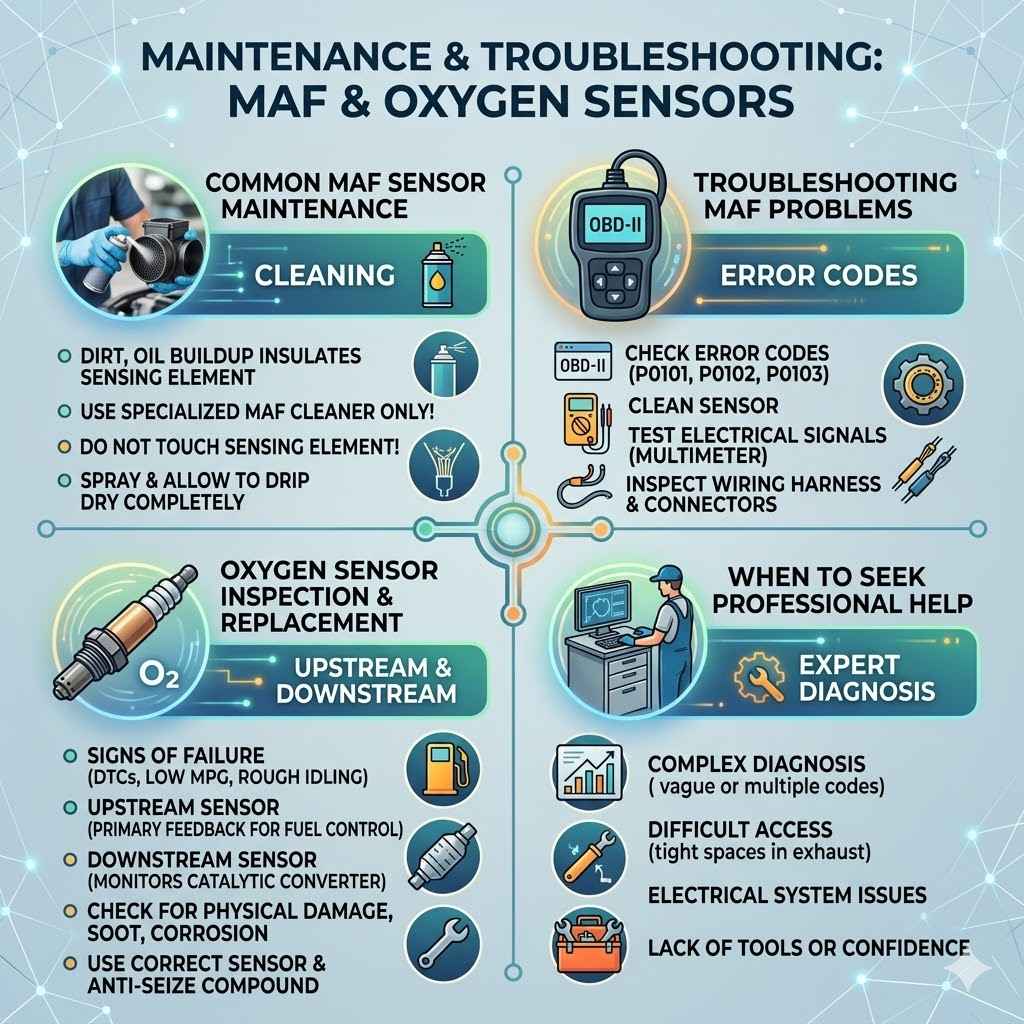
The most common maintenance for a MAF sensor is cleaning. Over time, airborne contaminants like dirt, dust, and oil (especially if an over-oiled aftermarket air filter is used) can build up on the delicate sensing element. This buildup insulates the element, causing it to read airflow inaccurately.
If you suspect your MAF sensor is dirty, the first step is to purchase a specialized MAF sensor cleaner spray. Do not use any other type of cleaner, such as brake cleaner or carb cleaner, as they can damage the sensor. Carefully remove the MAF sensor from the air intake duct.
Gently spray the sensing element with the MAF cleaner, allowing it to drip dry completely. Do not touch the sensing element with your fingers or any tools. Once dry, reinstall the sensor.
Regular visual inspection of the air intake system, including the air filter, can also help prevent MAF sensor issues. Ensuring the air filter is clean and properly seated prevents debris from reaching the MAF sensor and causing damage or contamination. If cleaning does not resolve performance issues, the sensor may have an electrical fault or be damaged and require replacement.
Troubleshooting MAF Sensor Problems
When your car exhibits symptoms like rough idling, stalling, poor acceleration, or a check engine light, a faulty MAF sensor is often a suspect. The first step in troubleshooting is to check for error codes using an OBD-II scanner. Common MAF-related codes include P0101 (MAF Circuit Range/Performance), P0102 (MAF Circuit Low Input), and P0103 (MAF Circuit High Input).
If codes indicate a MAF issue, try cleaning the sensor as described above. If cleaning doesn’t fix the problem, and the codes persist, you might need to test the sensor’s electrical signals. This typically involves using a multimeter to check for proper voltage and resistance readings according to the vehicle’s service manual.
A fluctuating or absent signal often indicates a faulty sensor.
It’s also important to check the wiring harness and connectors leading to the MAF sensor for any signs of damage, corrosion, or loose connections. Sometimes, the problem isn’t the sensor itself but the electrical pathway to it. If all checks point to the MAF sensor being faulty,
Oxygen Sensor Inspection and Replacement
Oxygen sensors have a lifespan, typically ranging from 60,000 to 100,000 miles, depending on the vehicle and sensor type. Signs of failure include the check engine light, decreased fuel economy, rough idling, and failed emissions tests. Error codes like P0420 (Catalyst System Efficiency Below Threshold) or codes specifically mentioning oxygen sensor circuits (e.g., P0130-P0167) often point to O2 sensor issues.
Inspection involves checking the sensor for physical damage, soot buildup, or corrosion on the connector. Many sensors are located in hard-to-reach places in the exhaust system. Special O2 sensor sockets are available to help with removal and installation.
It’s often recommended to apply an anti-seize compound to the threads of the new sensor to prevent it from seizing in the exhaust pipe.
When replacing an oxygen sensor, it’s important to use the correct type for your vehicle. There are often upstream (before the catalytic converter) and downstream (after the catalytic converter) sensors, each with a different function. Upstream sensors provide primary feedback for fuel control, while downstream sensors monitor catalytic converter efficiency.
When to Seek Professional Help
Complex Diagnosis: If you’ve scanned for codes and they are vague or point to multiple potential issues, a professional mechanic has advanced diagnostic tools and experience to pinpoint the problem accurately.
Difficult Access: Some oxygen sensors are located in very tight or hard-to-reach areas of the exhaust system. Forcing them can lead to damage to the exhaust pipe or surrounding components.
Electrical System Issues: If testing reveals electrical problems with the sensor’s wiring or the ECU, it’s best to let a professional handle it, as electrical diagnosis can be complex and require specialized knowledge.
Lack of Tools or Confidence: If you don’t have the necessary tools (like an OBD-II scanner or specialized sockets) or are not comfortable performing the work yourself, a mechanic can efficiently and correctly replace the sensors.
Many drivers find that while basic MAF sensor cleaning is achievable, O2 sensor
Frequently Asked Questions
Question: Can a bad MAF sensor cause my car to stall
Answer: Yes, a faulty or dirty MAF sensor can cause your car to stall. If the MAF sensor sends incorrect information about the amount of air entering the engine, the engine control unit may inject too little fuel, leading to a lean condition that can cause the engine to stall, especially at idle.
Question: How often should I clean my MAF sensor
Answer: There is no set schedule for cleaning a MAF sensor. It’s best to clean it if you notice symptoms of poor performance or if a diagnostic scan indicates a MAF sensor issue. Some people clean it every time they replace their air filter, but this is often unnecessary unless you’ve used an over-oiled filter.
Question: Will a bad oxygen sensor affect my car’s acceleration
Answer: Yes, a failing oxygen sensor can significantly impact your car’s acceleration. If the sensor incorrectly reports a lean condition, the computer will add more fuel, making the mixture too rich and reducing power. If it incorrectly reports a rich condition, the computer will reduce fuel, leading to a lean mixture, hesitation, and poor acceleration.
Question: Can I drive my car with a faulty MAF sensor
Answer: You can often drive your car with a faulty MAF sensor, but it’s not recommended for extended periods. The engine will likely run poorly, have reduced fuel economy, and produce higher emissions. Prolonged driving with a faulty MAF sensor can also potentially cause damage to other engine components.
Question: Are upstream and downstream oxygen sensors interchangeable
Answer: No, upstream and downstream oxygen sensors are generally not interchangeable. The upstream sensor (before the catalytic converter) plays a direct role in fuel mixture control, while the downstream sensor (after the catalytic converter) monitors the converter’s efficiency. They have different functionalities and signal outputs.
Summary
The MAF sensor measures incoming air, and the oxygen sensor checks exhaust for efficient burning. Together, they allow your car’s computer to perfectly balance fuel and air for smooth driving, better gas mileage, and cleaner emissions. Keeping these sensors clean and functioning ensures your engine performs its very best.