How Many Batteries Does A Hybrid Car Have? Essential
A standard hybrid car, like a Toyota Prius, typically has two main batteries: a small 12-volt starting battery and a much larger, high-voltage traction battery that powers the electric motor. The number is simple, but understanding the role of each is key to hybrid ownership!
If you’ve recently switched to a hybrid, you might look under the hood and scratch your head. Where is all the extra electronic stuff? Seeing a hybrid for the first time can make you wonder about its electrical setup. Lots of drivers frequently ask: “How many batteries does a hybrid car have?
It’s a common and smart question! After all, hybrids use electric power, so they must have a giant battery, right? The simple answer is a little surprising. You don’t just have one battery; you usually have two working together. Don’t worry about confusing terms! We’ll break down what each battery does in plain English. By the end of this guide, you’ll feel totally confident about your hybrid’s power sources. Let’s look inside the amazing system that keeps your hybrid running smoothly.
The Two-Battery System: Understanding Your Hybrid’s Heartbeat
When people ask how many batteries a hybrid car has, they are usually thinking about the big, futuristic one that helps save gas. But every hybrid vehicle actually uses a two-part system. Think of it like having a main engine and a small backup generator that handles all the starting duties.
These two batteries serve very different jobs. One handles the everyday tasks your car always needs, and the other handles the heavy lifting of moving the car. Understanding this separation is the first step to stress-free hybrid ownership.
Battery Number One: The Familiar 12-Volt Battery
Yes, your high-tech hybrid still has a regular 12-volt battery, just like the one in your old gas car. This battery is much smaller than you might expect, often tucked away in the trunk, under the rear seat, or sometimes under the hood.
What Does the 12-Volt Battery Do?
This battery is the little powerhouse responsible for the essential “turn-key” functions. It does not power the electric motor that moves the wheels. Instead, it manages all the small electronics required to get the car running. If this battery dies, your hybrid won’t even turn on—even if the big battery is perfectly charged!
- Powering the dashboard lights and infotainment screens.
- Operating the cabin lights, radio, and door locks.
- Sending the initial signal to the computer system (ECU) to wake up the car.
- Operating the smaller traditional accessories like wipers and turn signals.
Because the main hybrid system handles the heavy electrical load, these 12-volt batteries often last longer than those in traditional cars. However, they still need checking! If you notice your dash lights flickering or the car is slow to “wake up,” this small battery might be the culprit.
Battery Number Two: The High-Voltage Traction Battery
This is the battery everyone thinks about when they hear the word “hybrid.” This large, heavy unit is often called the “traction battery” or “main battery pack.” It holds a massive amount of electrical energy, significantly more than the 12-volt battery.
Where is This Big Battery Located?
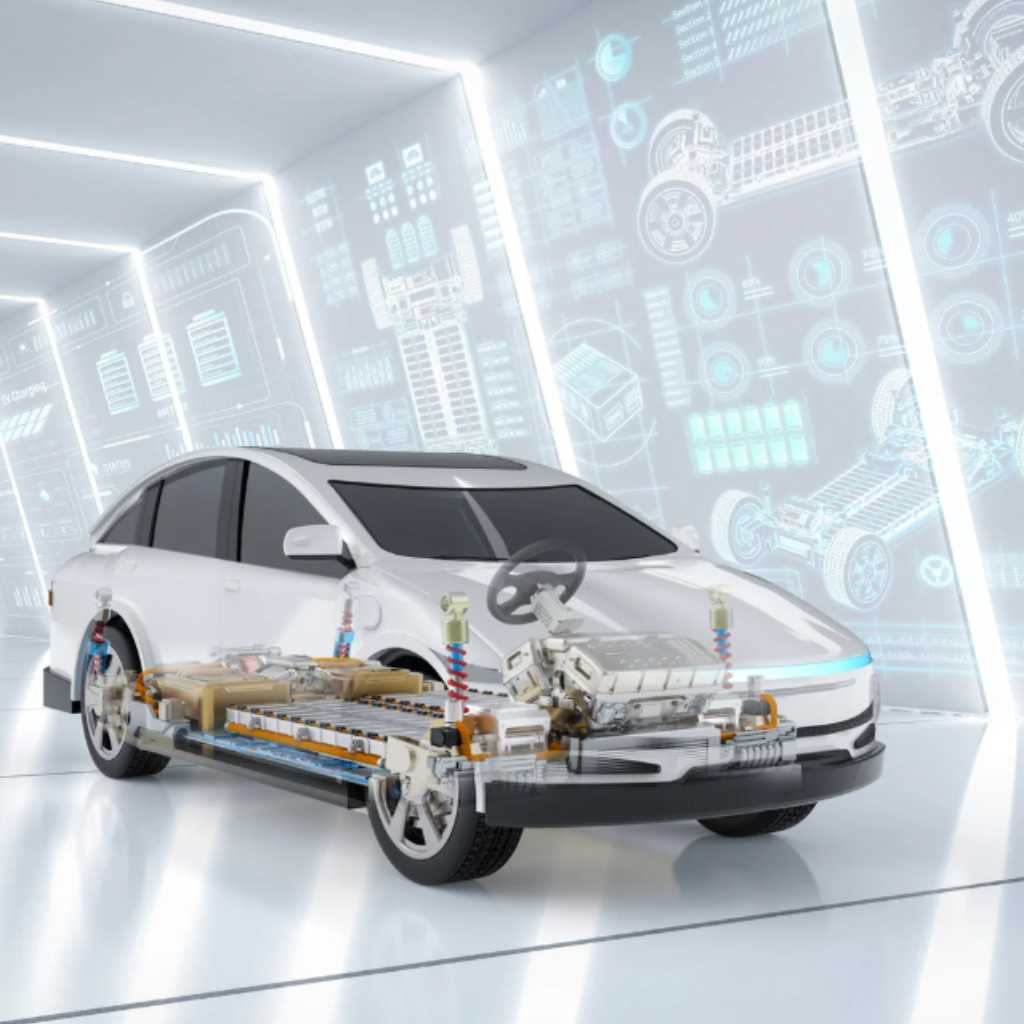
Manufacturers place this heavy battery low down in the vehicle, often under the rear seats or the trunk floor. This placement is intentional! Putting the heaviest component near the center and low down helps keep the car balanced, which improves handling and safety. You won’t find this one under the hood in most standard hybrids, as the engine compartment is reserved for the gasoline engine and smaller components.
What Does the Traction Battery Do?
The high-voltage battery is the core of the hybridization system. Its main job is to power the electric motor(s), which in turn drives or assists the wheels.
- Electric Only Driving: At low speeds (like in a parking lot or slow traffic), the traction battery powers the motor entirely.
- Acceleration Boost: When you press the gas hard, this battery instantly sends power to the motor to help the gasoline engine accelerate faster.
- Regenerative Braking: When you slow down, this battery captures the kinetic energy normally lost as heat in the brakes and stores it as electricity, recharging itself!
This battery usually operates at a much higher voltage—often ranging from 100 volts to over 600 volts, depending on the make and model. This difference in voltage is why you must never try to service the high-voltage system yourself without professional training!

Comparing Voltages: Small vs. Big
To make the difference crystal clear, here is a quick breakdown of the two powering units in your hybrid. This contrast truly shows why you need both working together.
| Feature | 12-Volt Battery (Starting Battery) | High-Voltage Battery (Traction Battery) |
|---|---|---|
| Primary Function | Starting the electronics (lights, radio, computer wake-up). | Propelling the vehicle (electric driving and power assist). |
| Typical Voltage | 12 Volts (Standard Car Battery) | 100 to 650+ Volts (Depending on the model) |
| Size & Weight | Small, lightweight (similar to a traditional car battery). | Very large, heavy module, often under the floorboards. |
| Recharge Method | Charged by the DC-to-DC converter, which pulls power from the main battery pack or alternator. | Charged by the gasoline engine or regenerative braking. |
Do All Hybrids Have the Exact Same Number of Batteries?
This is where things get slightly more nuanced. If you are asking “how many batteries does a hybrid car have,” the answer is almost always “two.” However, the type of hybrid changes the details.
The standard configuration (two batteries) applies to nearly all common models, but let’s look at the different types of electrified vehicles you might encounter.
1. Standard Hybrid Electric Vehicles (HEV)
These are the cars that never plug in—models like the classic Toyota Prius or Honda Insight. They rely entirely on the gasoline engine and regenerative braking to keep the main battery topped up.
Count: Two Batteries (12V + Traction Pack).
2. Plug-in Hybrid Electric Vehicles (PHEV)
PHEVs, such as the Toyota RAV4 Prime or Chrysler Pacifica Hybrid, have better electric-only range. They still rely on the same two core batteries, but with some key differences.
- Larger Traction Battery: The main high-voltage battery must be much bigger to hold more energy, allowing for 15–50 miles of pure electric driving before the gas engine kicks in.
- Same 12V System: They still need the small 12-volt battery to boot up the computers and accessories, just like an HEV.
- Charging Ports: They have an external charge port to plug into an outlet, which charges the large battery pack directly.
Count: Still Two Batteries (12V + Much Larger Traction Pack).
3. Mild Hybrids (MHEVs)
Mild hybrids are the closest relatives to traditional cars. They use a small electric motor/generator system (often called a Belt-Alternator-Starter or BAS) to assist the engine briefly and capture energy. They don’t typically drive on electric power alone for any significant distance.
Because they lack the sophisticated management and high-power demands of a full hybrid, some mild hybrids use a slightly different setup. Some older or simpler MHEV systems might use an enhanced 12-volt system or a specialized 48-volt system to run the electric assist while still using a separate small 12V for accessories.
For the beginner, the simplest rule for MHEVs is: they still rely on a standard 12V battery, but they might have an auxiliary electrical system running on 48V instead of the massive high-voltage pack found on full hybrids.
Count: Usually Two (12V + 48V Auxiliary System, or just one very beefed-up 12V).
4. Full Electric Vehicles (EVs)
While not technically hybrids, it’s important to mention them for context. A Battery Electric Vehicle (like a Tesla or Chevy Bolt) only has one massive battery pack—the one that powers the motor. However, even these vehicles require a small, separate 12-volt battery! Why? Because even an EV needs a small, reliable 12V source to run the safety systems, door locks, and boot up the computers before the massive main battery kicks in. Imagine trying to open your door if the main battery was dead—you need that little auxiliary power!
Count: Two Batteries (12V Auxiliary + Main Traction Pack).
The takeaway here is universal: almost every vehicle with a battery capable of moving the wheels, regardless of whether it uses gas or not, still needs that small, reliable 12-volt battery to start the whole process.
Lifespan and Maintenance: What to Expect on Your Hybrid
One of the biggest concerns new hybrid owners have is battery replacement cost. Both batteries have different lifespans, and knowing what to expect will save you stress (and money!).
Maintaining the 12-Volt Battery
This battery is often treated as disposable, but good care extends its life. Because these batteries are under less stress in a hybrid, they usually last longer than the 3–5 years common in traditional cars. Some hybrids can see 7 to 10 years out of this small battery.
Tips for the 12V Battery:
- Have it tested yearly during routine service.
- If your car uses an older, traditional lead-acid 12V battery, keep the terminals clean, just like any car.
- If your vehicle uses an AGM (Absorbed Glass Mat) 12V battery (common in many newer hybrids), avoid deep draining it, as these are specialized and more expensive to replace.
Expectations for the High-Voltage Traction Battery
This is the big one. Manufacturers know that if this battery fails early, it ruins the reputation of hybrid technology. Therefore, manufacturers heavily back these batteries with long warranties.
In the United States, federal law (and manufacturer agreements) requires hybrid batteries to be covered for at least 8 years or 100,000 miles, whichever comes first. Many manufacturers, like Toyota and Ford, offer excellent 10-year/150,000-mile warranties in certain states that mandate stricter emissions standards. You can review the current standards through the U.S. Department of Energy to see latest coverage details.
Most modern hybrid traction batteries are designed to last the life of the vehicle. They don’t completely empty out; they operate within a safe range (usually keeping them between 40% and 60% charged). This management system protects the battery chemistry from wearing out quickly.
If replacement is needed outside of warranty, it can be expensive—often several thousand dollars. However, modern recycling and refurbishment programs mean there are increasingly affordable options available, preventing the need to always buy brand new from the dealer.
Hybrid Battery Health: Protecting Your Investment
As a responsible driver, you want to ensure both batteries stay healthy for as long as possible. Since the 12-volt system is essential for starting the car, and the traction pack is essential for fuel economy, protecting both pays off!
Action Plan for the 12-Volt Battery
The biggest enemy of the small 12V battery is disuse or being completely drained. Since the main hybrid system recharges it, you usually don’t need to worry about it if you drive regularly. If you let a hybrid sit for weeks without starting it, the 12V system can drain itself checking for security signals, leading to a no-start condition.
Safety Tip: If your hybrid has been parked for a month or more, it is wise to use a smart trickle charger designed for 12-volt batteries to keep a healthy charge maintained. Never connect jumper cables to the high-voltage terminals!
Action Plan for the High-Voltage (Traction) Battery
This battery manages its own state of charge excellently, thanks to complex onboard computers. Your job is simple: drive the car as intended.
- Avoid Extreme Heat: While modern battery cooling systems are good, prolonged parking in intense, direct sunlight during peak summer heat is still the number one environmental stressor for any battery chemistry. Try to keep your car garaged or shaded when possible.
- Drive Regularly: Keep the vehicle in use. Consistent driving allows the system to cycle the battery correctly, maximizing its chemical health.
- Trust the Warning Lights: If you see a major charging or hybrid system warning light, address it quickly. Don’t ignore it, as the system relies on perfect coordination between the two batteries.
Understanding the “Waking Up” Sequence
Why is keeping the 12-volt battery healthy so crucial? Because of the boot-up sequence. When you press the “Start” button on a hybrid, you are not engaging a traditional starter motor. You are commanding the computer system to awaken.
Here is the simplified sequence of events:
- 12V Power: The small 12-volt battery provides the initial, low-power spark to turn on the hybrid control computers, dashboard, and displays.
- System Check: The computers run diagnostic checks on all major systems, including the high-voltage isolation and the state of charge of the main traction battery.
- Relay Engagement: If everything checks out, the computers close the high-voltage contactors (heavy-duty relays) connecting the traction battery to the rest of the electric drive system.
- Ready to Go: Once the high-voltage is accessible, the car displays “Ready,” and you can shift into drive.
If the 12-volt battery is too weak, it cannot complete steps 1 and 2. The computer doesn’t wake up, and the car stays dead—giving you a confusing “dead car” feeling even though the parts that save you gas are perfectly fine!
When Do You Replace the Two Batteries?
Though they are both called “batteries,” replacement timeframes differ significantly.
Replacing the 12-Volt Starting Battery
Replace this based on age and performance, much like a regular car battery. If it’s over five years old and causing slow starts or accessory issues, replacement is recommended. They usually last 5 to 8 years.
Replacing the High-Voltage Traction Battery
This is only done if it degrades significantly or fails unexpectedly. Degradation is slow. While some loss of total electric range might be noticeable after 8–10 years, complete failure requiring replacement is rare before 10–15 years in many well-maintained popular models. Always rely on the dashboard warnings and professional diagnostic scans if you suspect an issue.

Frequently Asked Questions (FAQ) for Hybrid Owners
Q1: If my hybrid car won’t start, is it the big battery or the small one?
A: In almost all cases where the car is completely dead (no dash lights, no sounds), the 12-volt battery is the culprit. If the dash lights up but the “Ready” light doesn’t appear, it could be either battery or an issue with the connection between them. Always check the 12V first!
Q2: Can I jump-start a hybrid battery the same way as a normal car?
A: You jump-start the small 12-volt battery exactly like a normal car, using the designated 12V jump points (usually under the hood, but check your manual!). You should never connect jumper cables to the high-voltage system terminals. Only trained professionals should ever attempt to work near the high-voltage components.