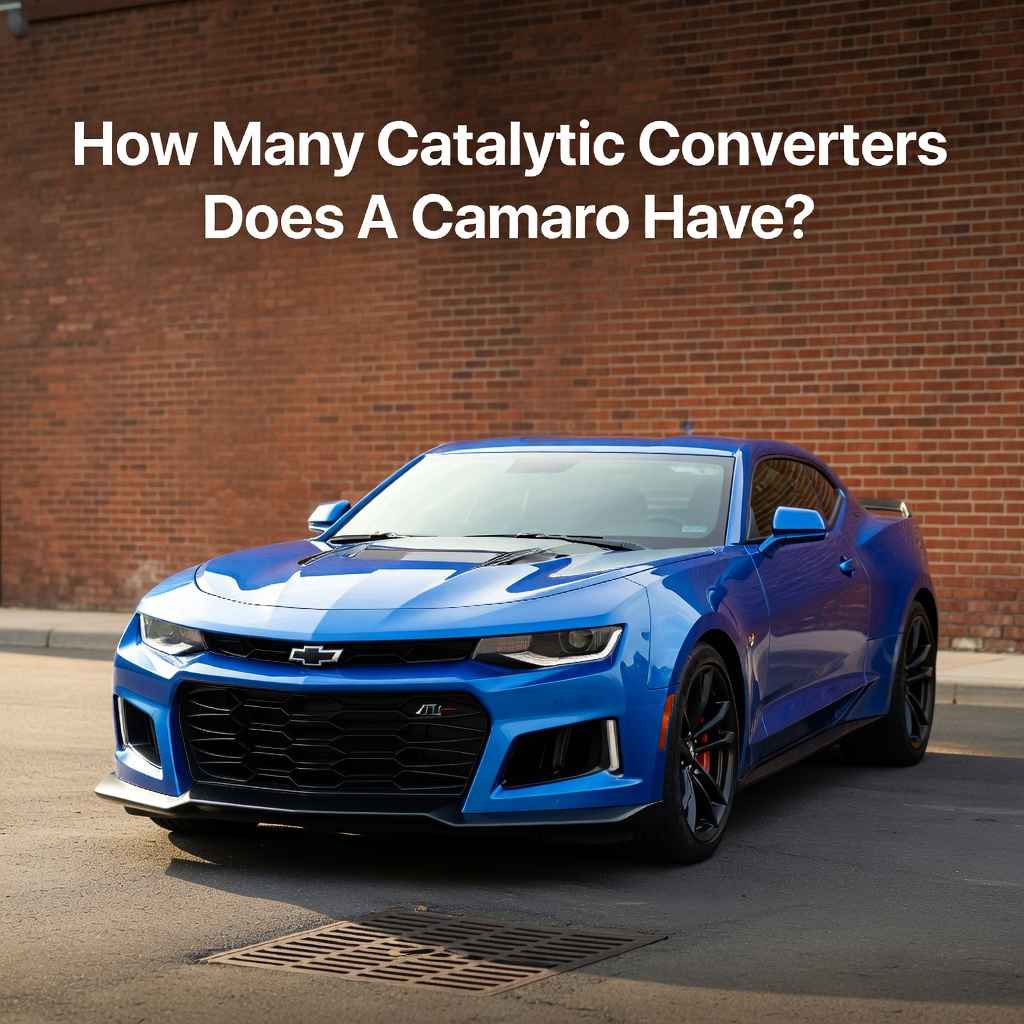
How Many Catalytic Converters Does A Camaro Have?
Figuring out how many catalytic converters your Camaro has can sometimes be tricky, especially if you’re new to car stuff. It’s a common question people ask when they’re checking on their car’s exhaust system or thinking about repairs. Don’t worry, it’s not as complicated as it sounds. We’ll break down exactly how many you’ll find and where to look. Keep reading, and we’ll make it super clear for you, step by step.
Camaro Catalytic Converter Count Explained
Understanding the number of catalytic converters in a Camaro is important for maintenance, emissions testing, and general car knowledge. Many car owners, especially those new to vehicle specifics, might find this information a bit unclear due to variations across different model years and engine types. This section will clarify the typical setup and help you pinpoint the exact number for your specific Camaro.
Why This Question Matters
People often ask How Many Catalytic Converters Does a Camaro Have? because these parts are vital for reducing harmful exhaust emissions. They are a key component of a car’s exhaust system. Knowing the number helps when buying replacement parts, troubleshooting exhaust issues, or understanding emissions regulations.
A catalytic converter, often shortened to “cat,” is a device that converts toxic gases and pollutants in engine exhaust into less harmful substances. It does this through chemical reactions driven by precious metals like platinum, palladium, and rhodium. These metals act as catalysts, speeding up the reactions without being consumed themselves.
When an engine burns fuel, it produces various gases, including carbon monoxide (CO), unburned hydrocarbons (HC), and nitrogen oxides (NOx). These are all harmful to the environment and human health. The catalytic converter’s job is to take these and transform them.
Carbon monoxide is converted into carbon dioxide (CO2). Unburned hydrocarbons are turned into water (H2O) and carbon dioxide. Nitrogen oxides are broken down into nitrogen gas (N2) and oxygen gas (O2). These resulting gases are much safer and are then released into the atmosphere through the exhaust pipe.
The efficiency of a catalytic converter can be affected by engine performance, fuel quality, and the presence of contaminants. For example, if an engine is misfiring, raw fuel can enter the exhaust and overheat the converter, damaging it. Similarly, using leaded gasoline, which is largely phased out for passenger vehicles, can quickly poison the catalysts.
Factors Influencing the Number of Catalytic Converters
The number of catalytic converters in a Camaro isn’t always the same. It depends on a few key things. The most important are the model year of the car and the specific engine it has.
Different generations of Camaros were designed with different emissions standards in mind. Older models might have had fewer, while newer ones, especially those built to meet stricter environmental laws, will likely have more. The engine size also plays a role. Larger, more powerful engines generally produce more exhaust, requiring more converters to effectively clean the gases.
Some Camaros might have two main catalytic converters located further down the exhaust system. Others could have four – two on each side, closer to the engine. The exact configuration is often tied to how the exhaust manifolds are designed and how the exhaust gases are routed.
Common Camaro Exhaust Systems
Camaros, known for their performance and sporty design, often feature dual exhaust systems. This means there are two separate pipes carrying exhaust gases away from the engine. Each of these pipes can have its own set of catalytic converters.
For many Camaros, you will find two catalytic converters. These are typically placed after the exhaust manifolds and before the mufflers. They are a critical part of meeting emission standards for that particular vehicle.
However, some models, particularly those with larger V8 engines or those designed for higher performance, might have additional catalytic converters. These could be pre-catalytic converters, also known as ” öncatalytic converters.” These are smaller converters located very close to the engine’s exhaust ports. They heat up quickly and help to reduce emissions during the initial stages of engine warm-up, when the main converters are not yet at optimal operating temperature.
In some V8 Camaros, you might find four catalytic converters in total. This setup would likely involve two main converters and two öncatalytic converters. The specific arrangement ensures maximum efficiency in cleaning the exhaust gases, especially for powerful engines that produce a larger volume of emissions.
Locating Your Camaro’s Catalytic Converters
Finding your Camaro’s catalytic converters is usually straightforward once you know where to look. You’ll need to get under the car safely. Make sure it’s on a level surface and use jack stands for support. Never rely solely on a jack.
Start by looking at the exhaust system as it leaves the engine. You’ll see the exhaust manifolds or headers, which connect directly to the engine’s cylinders. Following the pipes from these manifolds will lead you to the catalytic converters.
These converters are typically found in the exhaust pipes before the muffler. They are usually larger, cylindrical or oval-shaped metal boxes. They often have heat shields covering them to protect other parts of the car from high temperatures. If your Camaro has a dual exhaust system, you will likely see pairs of these converters.
If you’re unsure, you can also check your car’s owner’s manual. It usually has diagrams of the exhaust system. Alternatively, looking up your specific Camaro model and year online will often provide detailed information and even pictures of the exhaust components.
How Many Catalytic Converters Does A Camaro Have By Model Year
The answer to How Many Catalytic Converters Does a Camaro Have? can shift significantly depending on the specific model year. Automakers adjust their vehicle designs to comply with evolving environmental regulations, which often means changes in exhaust system components like catalytic converters. Understanding these year-by-year differences is crucial for Camaro owners.
Early Camaro Generations (1967-1981)
In the early days of the Camaro, emission control systems were not as stringent as they are today. Cars from the late 1960s and early 1970s often had simpler exhaust setups. Many of these early Camaros, especially those with V8 engines, might have had only one or two catalytic converters, or in some very early years, none at all as emissions standards were still developing.
For example, by the mid-1970s, federal emissions standards became more widespread. This led to the introduction of catalytic converters on many vehicles. A typical V8 Camaro from this era might have had one or two main catalytic converters. These were usually larger units placed further down the exhaust system.
The exact number could vary based on the specific engine option chosen at the time of purchase. Smaller engines might have had less complex exhaust needs, potentially requiring fewer emission control devices. V8 engines, being more powerful, generally produced more exhaust gases and thus required more robust emission control.
It’s also worth noting that some very early models predating strict federal mandates might not have featured any catalytic converters. Instead, they might have used other forms of emission control or simply had less regulated exhaust systems.
Second Generation Camaros (1970-1981)
During the second generation of the Camaro, emissions regulations became more important. By the mid-1970s, catalytic converters were standard on most vehicles sold in the United States.
A common setup for V8 Camaros in this generation would be two catalytic converters. These were usually positioned in the exhaust system after the exhaust manifold and before the muffler. They were designed to handle the higher volume of exhaust gases produced by the V8 engines.
Some configurations, especially those with specific engine sizes or performance packages, might have had slightly different arrangements. However, the general trend was towards including at least one or two main catalytic converters to meet the emission standards of the time.
The complexity of these systems was still less than what we see in modern cars. The focus was on basic conversion of the most harmful pollutants.
Third Generation Camaros (1982-1992)
The third generation of the Camaro saw further advancements in emissions technology. As regulations continued to tighten, manufacturers began incorporating more sophisticated exhaust systems.
For most third-generation Camaros, especially those with V8 engines like the IROC-Z or Z28, you would typically find two main catalytic converters. These were still generally located in the exhaust pipes before the muffler.
However, some models might have also included öncatalytic converters. These are smaller converters that heat up faster and are placed closer to the engine to provide quicker emission control when the engine is cold. If a third-generation Camaro had öncatalytic converters, it could mean a total of four converters in the exhaust system.
The exact number could also depend on the specific engine option, transmission type, and whether the car was destined for California, which historically had stricter emissions standards than the rest of the country.
Fourth Generation Camaros (1993-2002)
In the fourth generation, the Camaro continued to evolve with emissions technology. By this time, catalytic converters were a well-established part of vehicle design.
For most V8 models in the fourth generation, such as the Z28 and SS, the standard configuration typically included four catalytic converters. This would usually consist of two öncatalytic converters located very close to the engine’s exhaust ports and two main catalytic converters further down the exhaust pipes.
This setup provided a more efficient and comprehensive approach to reducing harmful emissions, helping the Camaro meet the demanding emission standards of the 1990s.
The V6 models might have had a slightly different configuration, often with fewer catalytic converters, perhaps two or three, depending on the specific engine and year. Again, California emissions versions could sometimes feature additional or different configurations.
Fifth Generation Camaros (2010-2015)
The fifth generation Camaro brought a significant redesign, and its exhaust systems were updated to match modern emission standards and performance expectations.
For V8 models of the fifth-generation Camaro, a common setup would involve four catalytic converters. This typically includes two öncatalytic converters, positioned close to the engine for rapid catalyst light-off, and two main catalytic converters situated further along the exhaust path.
This arrangement ensures optimal performance in converting pollutants, balancing the high output of the V8 engines with environmental requirements.
V6 models from this generation might have had a slightly simpler system, potentially with two or three catalytic converters. The exact number can be confirmed by looking at the specific vehicle’s exhaust layout or consulting its service manual.
Sixth Generation Camaros (2016-Present)
The current, sixth generation of the Camaro, continues the trend of employing advanced emissions control systems. These vehicles are built to meet the latest and most stringent environmental regulations.
Like its recent predecessors, V8-powered sixth-generation Camaros typically feature a total of four catalytic converters. This configuration includes two öncatalytic converters situated close to the engine’s exhaust manifolds for quick warm-up and initial emission reduction, followed by two main catalytic converters located further downstream.
This quad-converter system is essential for managing the powerful engines and ensuring compliance with current emission standards.
For V6 and four-cylinder models within the sixth generation, the setup might differ slightly. They could potentially have two or three catalytic converters. The specific number depends on the engine size, exhaust manifold design, and the particular emission requirements for the market in which the car is sold.
Understanding Catalytic Converter Functionality
Catalytic converters are sophisticated pieces of engineering designed to clean up your car’s exhaust. They are not just simple metal boxes; they contain complex chemical processes. Let’s break down what they do and why they are so important.
The Chemical Process Inside
A catalytic converter works through a series of chemical reactions that happen at very high temperatures. Inside the converter, there’s a ceramic honeycomb structure. This structure is coated with precious metals like platinum, palladium, and rhodium.
These metals are the catalysts – they speed up chemical reactions without being used up themselves. Think of them as facilitators for a very important process.
When hot exhaust gases from the engine flow through this honeycomb, the catalysts interact with the harmful gases. They break down pollutants into less harmful substances. This is often referred to as a three-way catalytic converter because it handles three main types of pollutants simultaneously.
How Catalytic Converters Reduce Emissions
The primary job of a catalytic converter is to reduce the amount of harmful pollutants released into the atmosphere. Without them, cars would contribute much more significantly to air pollution.
These converters target three main types of harmful gases:
Carbon Monoxide (CO): This is a poisonous gas produced by incomplete fuel combustion. The catalytic converter oxidizes CO into carbon dioxide (CO2), which is less harmful.
Unburned Hydrocarbons (HC): These are fuel vapors that haven’t been completely burned in the engine. They can contribute to smog. The converter oxidizes HC into water (H2O) and carbon dioxide.
Nitrogen Oxides (NOx): These gases are formed at high temperatures in the engine. They contribute to smog and acid rain. The converter reduces NOx into nitrogen gas (N2) and oxygen gas (O2), which are natural components of the air.
The efficiency of this process is crucial. Modern converters are incredibly effective, converting over 90% of these harmful pollutants into safer gases. This is a testament to the advanced chemistry and materials science involved.
Signs of a Failing Catalytic Converter
Knowing the signs of a failing catalytic converter can save you from more significant car problems and ensure your car is running cleanly. A failing converter can affect engine performance and lead to failed emissions tests.
Here are some common indicators that your catalytic converter might be having issues:
Reduced Engine Performance: If the converter becomes clogged, it can restrict exhaust flow. This can make your car feel sluggish, lose power, and accelerate slowly. The engine might also hesitate or stall.
Illuminated Check Engine Light: The “Check Engine” light on your dashboard often comes on when the engine control module (ECM) detects a problem with the catalytic converter or its efficiency. This can be due to a number of issues, including a failing converter, but it’s a strong indicator to investigate.
Sulfur Smell: A rotten egg or sulfur smell coming from your exhaust is a common sign of a failing catalytic converter. This smell usually indicates that the converter is overheating or that the sulfur in your fuel is not being processed correctly.
Failed Emissions Test: If your car fails an emissions test, a clogged or inefficient catalytic converter is often the culprit. The test measures the level of pollutants in your exhaust, and a faulty converter will result in high readings.
Rattling Noise from Under the Car: The ceramic honeycomb inside the converter can break apart over time due to extreme temperatures or physical damage. If this happens, you might hear a rattling or shaking sound coming from the exhaust system.
Catalytic Converter Lifespan and Replacement
Catalytic converters are designed to last a long time, often for the lifetime of the vehicle if maintained properly. However, they are not invincible. Their lifespan can be affected by various factors, including driving habits, fuel quality, and the overall health of the engine.
On average, a catalytic converter can last anywhere from 80,000 to 100,000 miles or more. Some may even last over 150,000 miles. However, this is just an average.
Factors that can shorten a catalytic converter’s life include:
Engine Misfires: When an engine misfires, unburned fuel enters the exhaust system. This raw fuel can ignite inside the catalytic converter, causing it to overheat and fail.
Contaminated Fuel: Using leaded gasoline, or fuel with high levels of contaminants, can poison the catalytic metals, rendering the converter ineffective.
Coolant Leaks: If coolant leaks into the combustion chamber and then into the exhaust, it can damage the converter.
Physical Damage: The converter is located underneath the car, making it vulnerable to impacts from road debris or speed bumps. Damage to the housing can lead to internal issues.
When a catalytic converter needs to be replaced, it’s important to use a high-quality part that meets or exceeds the original equipment specifications. Aftermarket converters are available, but their effectiveness and lifespan can vary. In many regions, there are specific regulations about the types of replacement converters that can be used to ensure they meet emission standards.
Comparing Camaro Engine Types and Converter Counts
The engine in your Camaro plays a significant role in determining how many catalytic converters it has. Performance engines often require more sophisticated emission control systems due to their higher power output and the greater volume of exhaust gases they produce.
V8 Engines versus V6 Engines
V8 engines, by their nature, are more powerful and consume more fuel than V6 engines. This increased fuel consumption and combustion process results in a larger volume of exhaust gases being expelled from the engine.
To effectively clean these larger volumes of exhaust and meet stringent emissions standards, V8 engines typically require more catalytic converters, or larger ones, compared to V6 engines. A V8 engine’s exhaust system is designed to handle a higher flow rate and more pollutants.
V6 engines are generally more fuel-efficient and produce less exhaust. Therefore, their emission control systems can be slightly simpler, often involving fewer or smaller catalytic converters. However, this is not a hard rule, and specific model years and configurations can influence the final count.
Performance Packages and Emissions
Performance-oriented Camaro models, such as the Z28, SS, or IROC-Z variants, often come with larger, more powerful engines. These packages are designed for speed and responsiveness.
To achieve both high performance and compliance with emissions regulations, these models frequently feature more advanced or additional catalytic converters. For instance, a performance V8 engine might be equipped with both öncatalytic converters and main catalytic converters, totaling four units. This multi-stage approach ensures that emissions are cleaned efficiently even under demanding driving conditions.
The inclusion of specific performance packages can also influence the design of the exhaust system, sometimes leading to a different number or arrangement of catalytic converters compared to a standard model of the same year.
Impact of Engine Size on Converter Configuration
The physical size and displacement of the engine are direct factors in how many catalytic converters are needed. A larger engine, like a 6.2-liter V8, will produce significantly more exhaust gas than a smaller 3.6-liter V6.
Consequently, a larger engine requires a more robust emission control system. This often translates to more catalytic converters being integrated into the exhaust system. For example, a 6.2L V8 Camaro might consistently feature four catalytic converters, while a 3.6L V6 Camaro might have two or three.
This relationship is driven by the need to ensure that the engine’s output of pollutants is reduced to legally acceptable levels. The more potent the engine, the greater the challenge for the emission control system, and thus, typically, the more converters are employed.
Frequently Asked Questions
Question: How many catalytic converters does a 2010 Camaro V6 have?
Answer: A 2010 Camaro V6 typically has two catalytic converters. This configuration is common for V6 engines in that model year, balancing emissions control with engine performance.
Question: Do all V8 Camaros have four catalytic converters?
Answer: While many V8 Camaros have four catalytic converters, especially in later model years, it’s not a universal rule for all V8 models. Some earlier V8 Camaros might have had two, and specific configurations can vary by year and performance package.
Question: Where are the catalytic converters located on a Camaro?
Answer: Catalytic converters are located in the exhaust system, typically after the exhaust manifolds or headers and before the muffler. On models with four converters, you’ll usually find two smaller öncatalytic converters closer to the engine and two larger main converters further down the exhaust pipes.
Question: Can a Camaro run without catalytic converters?
Answer: While a Camaro can mechanically run without catalytic converters, it is illegal in most places to do so due to emissions regulations. It will also likely fail emissions tests, cause a check engine light, and may perform poorly.
Question: How do I know if my Camaro’s catalytic converter needs replacing?
Answer: Signs include a glowing check engine light, a significant loss of engine power, a rotten egg smell from the exhaust, or a rattling noise from underneath the car. A failed emissions test is also a strong indicator.
Conclusion
The number of catalytic converters in a Camaro varies primarily by model year and engine type. Most modern V8 Camaros feature four converters, with two öncatalytic converters near the engine and two main converters further back. V6 models and older Camaros often have fewer, typically two or three. Always check your specific model year and engine for precise information.