How Many Gears Does a Car Have? Manual, Auto & CVT Explained
Most cars have 5 or 6 gears in a manual transmission, and 6 to 10 gears in an automatic — the Ford-GM 10-speed automatic in the F-150 Raptor and Mustang is the most common current 10-speed. Electric vehicles are the exception: nearly all use a single-speed reduction gear instead of a multi-speed gearbox. This guide covers gear counts by transmission type and why the number varies.
Quick Answer
Manual transmission cars typically have 5 or 6 gears. Automatic transmission cars range from 6 to 10 gears, with the 10-speed Ford-GM automatic (F-150 Raptor, Mustang, Silverado) among the most common current 10-speeds. Most electric vehicles use just 1 gear, since electric motors don’t need a multi-speed gearbox to stay in their efficient RPM range.
Introduction To Car Gears
Gears change the ratio between how fast the engine spins and how fast the wheels turn. Lower gears multiply torque for starting and climbing, while higher gears let the engine turn more slowly at highway speed, saving fuel. The number of gears a car has directly affects both performance and fuel economy — more gears generally mean smaller steps between ratios, which keeps the engine closer to its efficient RPM range more of the time.
Types Of Car Gears
Gears help a car move smoothly across its full speed range. Lower gears (1st and 2nd) provide the torque multiplication needed for starting and climbing hills, while higher gears let the engine spin more slowly at speed, which improves fuel economy and reduces noise.
First gear delivers maximum power to get the car moving. Second and third gears build speed for city driving. Fourth gear and up are for normal and highway driving. Some performance cars add extra gears specifically to keep the engine in its powerband during acceleration.
Manual Transmission Gears
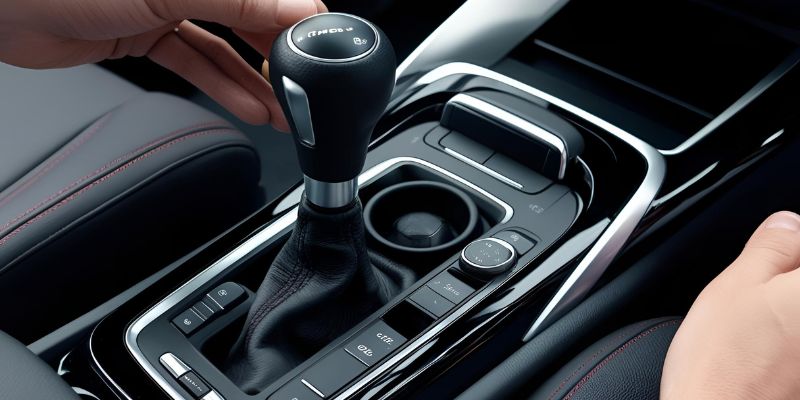
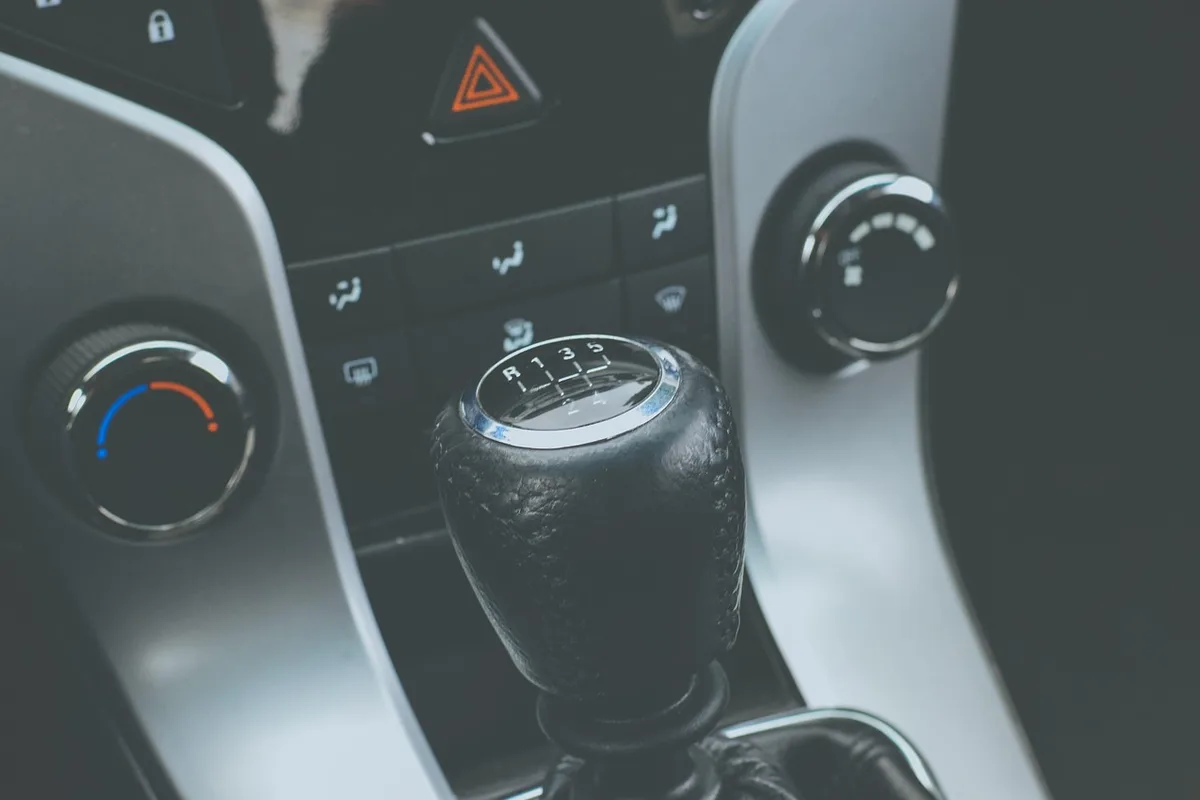
Manual transmission cars usually have 5 or 6 forward gears plus a reverse gear. Some older or economy-focused cars have only 4 gears, while a handful of sports cars and heavy trucks use 7 or more. Shifting involves pressing the clutch pedal, moving the gear stick to the next position, and releasing the clutch smoothly — each gear position is designed for a specific speed and load range.
Automatic Transmission Gears
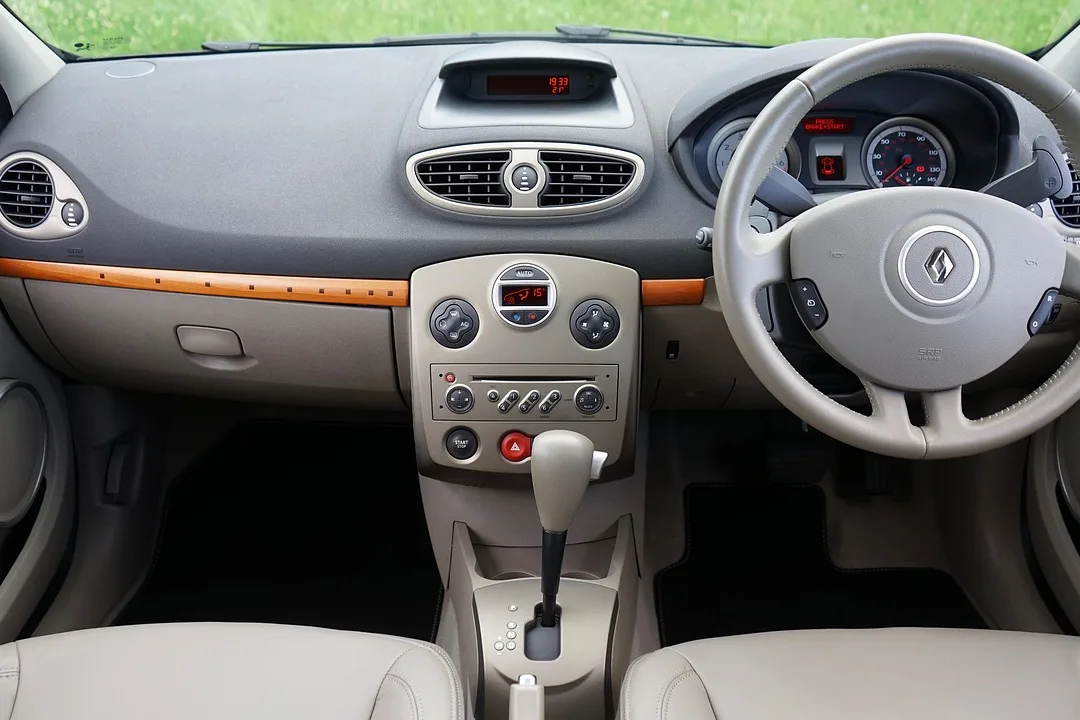
Automatic transmission cars shift gears on their own, using a computer that reads engine speed, throttle position, and road speed to decide when to change gears. Most current automatics have 6 to 10 gears, with 8-speed and 9-speed transmissions now common on mainstream sedans and SUVs. More gears generally means smaller steps between ratios, which keeps the engine closer to its efficient RPM range and can modestly improve fuel economy.
What’s the Most Gears a Production Car Has?
10 speeds is currently the highest gear count in mainstream production cars. The Ford-GM 10-speed automatic (co-developed by Ford and General Motors) appears in the Ford F-150 Raptor, Ford Mustang, and Chevrolet Silverado, among others. Cadillac also offers a 10-speed automatic as an option on the CT5-V and CT4-V Blackwing performance sedans. Going beyond 10 gears runs into diminishing returns — the ratio steps become so small that the added mechanical complexity and weight outweigh the efficiency gain.
Dual-Clutch Transmission
Dual-clutch transmissions (DCT) use two separate clutches — one handling odd-numbered gears, the other even-numbered gears — so the next gear is already engaged before the current one disengages. This produces near-instant gear changes with no interruption in power delivery, which is why DCTs are popular in performance cars from Porsche (PDK), Volkswagen/Audi (DSG), and BMW’s M models. For a deeper look at how this works and which cars use it, see our full DCT explainer.
Continuously Variable Transmission (CVT)
A CVT doesn’t use fixed gears at all. Instead, it relies on a belt or chain running between two variable-diameter pulleys, which can smoothly change the effective gear ratio across an infinite range rather than shifting between discrete steps. This lets the engine stay in its most efficient RPM band continuously, which is why CVTs are common in fuel-economy-focused cars like the Toyota Corolla and Honda Civic. The tradeoff is a driving feel some drivers describe as “rubber-bandy” under hard acceleration, since there’s no discrete gear change to feel.
Factors Affecting Gear Numbers
Engine type and vehicle purpose both drive how many gears a car needs. A small, low-power engine needs fewer gears since it has a narrower usable RPM range. A larger, high-torque engine — or one used for towing or hauling — benefits from more gears to keep power delivery smooth across a wider range of loads. Race cars often use 6 or more gears to stay in the engine’s power band during acceleration, while economy-focused city cars can get by with fewer.
Why Do Electric Cars Only Have One Gear?
Most electric vehicles use a single-speed reduction gear instead of a multi-speed transmission. Electric motors deliver maximum torque from 0 RPM and can efficiently spin across a much wider RPM range than a gasoline engine, so there’s no need to shift gears to keep the motor in an efficient band. A few exceptions exist — the original Porsche Taycan uses a 2-speed transmission on its rear motor specifically to balance strong acceleration with a higher top speed — but a single gear remains the norm for EVs.
Gear Count By Transmission Type
| Transmission Type | Typical Gear Count | Example |
|---|---|---|
| Manual | 4-6 (up to 7-8 in some sports cars/trucks) | Mazda MX-5 Miata (6-speed) |
| Automatic | 6-10 | Ford F-150 Raptor (10-speed) |
| Dual-clutch (DCT) | 6-8 | Porsche 911 (PDK, 7 or 8-speed) |
| CVT | No fixed gears (infinite ratios) | Toyota Corolla |
| Electric vehicle | 1 (2 in rare cases) | Tesla Model 3 (1-speed) |
“More gears aren’t automatically better — a 10-speed automatic makes sense in a truck that needs to smoothly cover towing loads and highway cruising, but the same gearbox in a small city car would add cost and complexity for a fuel-economy gain most drivers would never notice.”
— A common engineering tradeoff cited across automotive transmission design coverage
Future Of Car Gears
As more of the market shifts to electric vehicles, the multi-speed gearbox is becoming less central to how cars are engineered. Automakers are instead focusing on refining single-speed EV reduction gears, dual-clutch transmissions for performance models, and CVTs for economy models — rather than continuing to chase ever-higher gear counts in traditional automatics. Hybrid vehicles, which combine a gas engine with electric motors, often use their own specialized transmission designs that blend both approaches.
Frequently Asked Questions
What does gear 1, 2, 3, 4, 5 mean?
Gears 1 through 5 (or 6) represent different ratios between engine speed and wheel speed in a manual transmission. Gear 1 provides the most torque for starting from a stop, while each higher gear lets the car go faster with the engine turning more slowly.
Can a car have 8 gears?
Yes. 8-speed automatic transmissions are common on modern sedans and SUVs, offering a good balance of smoothness and fuel efficiency without the added complexity of a 9 or 10-speed unit.
Do any cars have 7 gears?
Yes. Several performance cars use 7-speed dual-clutch transmissions, including the Porsche 911 (PDK) and BMW M models, while some Mercedes-Benz models have used 7-speed automatics.
What’s the most gears a production car has ever had?
10 speeds is the current maximum in mainstream production. The Ford-GM 10-speed automatic is used in the Ford F-150 Raptor, Mustang, and Chevrolet Silverado, and Cadillac offers a 10-speed automatic option on its CT5-V and CT4-V Blackwing sedans.
Why do electric cars only have 1 gear?
Electric motors produce maximum torque from a standstill and can spin efficiently across a much wider RPM range than a gas engine, so a single-speed reduction gear is enough to cover the full range of driving speeds without shifting.
Conclusion
Gear count varies by transmission type and purpose: manual cars typically have 5-6 gears, automatics range from 6-10, dual-clutch performance cars use 6-8, CVTs skip fixed gears entirely, and most EVs use just 1. More gears aren’t inherently better — they’re a tradeoff between smoothness, efficiency, cost, and complexity suited to how the car is actually used. Check your owner’s manual for your specific vehicle’s exact gear count and ratios.
Products related to this article
Sponsored / affiliate links. As an Amazon Associate I earn from qualifying purchases. I may earn additional commission from eligible campaigns.