How Much Does It Cost to Replace a Car Door? (2026 Prices)
A new car door typically costs $500 to $2,500 to replace, including the door assembly, paint, and labor — though the final number depends heavily on which door you choose and where you get the work done. A used door from a salvage yard installed by a friend with a socket set might run you a couple hundred dollars. A brand-new OEM door with a factory color-match and camera recalibration at a dealership on a newer luxury car can climb past $5,000.
Here’s the real 2026 price breakdown, what actually drives the cost up or down, and a few ways to keep more money in your pocket without ending up with a door that doesn’t fit right.
Quick answer: A new car door typically costs $500 to $2,500 to replace, including the door itself, paint, and labor. Basic scenarios — a used door from a salvage yard, or an aftermarket panel installed at an independent shop — land at the low end. A full OEM door with a factory color-match and sensor recalibration on a newer vehicle can run $4,000 to $5,800 or more.
What Does a New Car Door Cost? (2026 Price Ranges)
There isn’t one flat price for “a new car door” — the same repair can cost $200 or $5,000 depending on the part source, the shop, and how much the vehicle’s own features add to the job. Industry pricing data from JD Power and collision-repair estimators puts the realistic range for most drivers between $500 and $2,500, with luxury vehicles and full paint jobs pushing well past that.
| Scenario | Typical Total Cost |
|---|---|
| Used/salvage door, self-installed | $100 – $400 |
| Aftermarket door, installed at an independent shop | $800 – $1,600 |
| OEM door with full paint blend, independent shop | $1,500 – $2,500 |
| OEM door, full color-match + ADAS camera/sensor recalibration, dealership | $2,100 – $5,800+ |
That last row isn’t rare anymore. Most doors built since the early 2020s house at least one electronic feature — a blind-spot camera in the mirror, a keyless entry sensor, or wiring for a power window motor — and swapping the whole assembly often means a shop has to recalibrate that hardware before the car is safe to drive again. That labor and equipment time is exactly why dealership quotes on newer vehicles run so much higher than a basic panel swap on an older car.
Handy for a DIY Door Job
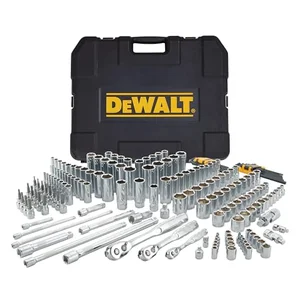 |
DEWALT 192-Piece Mechanics Tool Set – $164.99 If you’re pulling the door panel yourself to save on labor, you’ll need SAE and metric sockets, extensions, and a few different wrenches — this set covers nearly every fastener you’ll run into.
|
What’s Included in the Price: Parts, Labor & Paint
A door replacement quote is really three separate costs bundled together, and knowing what each one covers helps you spot whether a quote is reasonable.
- Door assembly (OEM or aftermarket): $450 – $950, depending on the make, model, and trim level.
- Labor (roughly 3.5 to 6.5 hours): $350 – $780 at a typical shop rate of $100 to $150 an hour. That figure has climbed noticeably in recent years — if a shop is still quoting $50 to $60 an hour, it’s worth double-checking what’s included.
- Paint and refinishing: $250 – $980 if the new door needs to be color-matched to the rest of the car, more for tri-coat, pearl, or matte finishes that are harder to blend.
- ADAS recalibration (if applicable): $150 – $600 extra when the door houses a blind-spot camera or sensor that needs to be reprogrammed after installation.
Add those up on a straightforward job and you land close to $1,000 to $1,600. Add luxury-brand parts pricing and a full color-match on top, and a dealership quote of $4,000 or more for a single door isn’t an exaggeration — it’s the real cost of parts, paint, and recalibration on a modern car.
OEM vs. Aftermarket vs. Used Doors — Which Should You Buy?
Where the door comes from is the single biggest lever on the final bill.
OEM (original equipment manufacturer) doors come straight from the automaker and fit exactly as designed, but they typically cost around 85% more than an equivalent aftermarket part. They’re the safest choice if the door has to house factory sensors, cameras, or a keyless entry pad that needs to line up precisely.
Aftermarket doors are made by third-party manufacturers to fit your vehicle and usually land in the middle of the price range. Quality varies by brand, and panel gaps can occasionally be a little off, so it’s worth asking your shop which aftermarket supplier they use before you agree to one.
Used or salvage-yard doors are the cheapest option by far, sometimes just $100 to $300 for the part itself. The catch is that you need to match the exact paint code, trim level, and electronics (window motor, mirror wiring, lock actuator) to your car, or you’ll end up paying for parts you can’t use. A salvage yard that can pull the VIN of the donor car and confirm the color code is worth the extra phone call.
What Makes One Door Replacement More Expensive Than Another?
A handful of factors explain most of the price gap between a $600 repair and a $3,000 one.
- Material. Steel doors are the most common and the cheapest to source. Aluminum doors, used on some SUVs and newer trucks for weight savings, cost more and often require specialized welding or bonding techniques that not every shop offers.
- Built-in features. Power windows, heated or power-folding mirrors, blind-spot cameras, and keyless entry keypads all add parts cost and labor time, since they need to be transferred or recalibrated on the new door.
- Brand and rarity. Luxury and low-volume models often only have OEM parts available, and dealership markup on those parts tends to be steeper than on a mainstream Honda or Toyota.
- Paint complexity. A common solid color is cheap and fast to match. Pearl, tri-coat, and metallic-flake finishes take more time and materials to blend so the new door doesn’t stand out.
Labor rates also shift by region — similar to how tire prices vary by area, big-city shops and dealerships tend to charge more per hour than independent shops in smaller towns, so it’s worth getting at least one quote from each type of shop before committing.
Does Insurance Cover a New Car Door?
It depends on your coverage and how the damage happened. Comprehensive coverage generally pays for door damage from theft, vandalism, weather, or hitting an animal. Collision coverage pays for damage from hitting another car or object, including a door you dent backing into a pole. If you only carry liability insurance, a new door on your own car comes out of your own pocket — liability only pays for damage you cause to someone else’s vehicle.
If you do file a claim, start with a call to your insurer, take photos of the damage from a few angles, and have your policy number and (if relevant) a police report ready. An adjuster may inspect the vehicle or ask for photos before approving the repair. Keep in mind your deductible applies either way — if your deductible is $1,000 and the repair costs $900, filing a claim won’t actually save you anything, and it can still affect your premium at renewal.
DIY vs. Professional Door Replacement
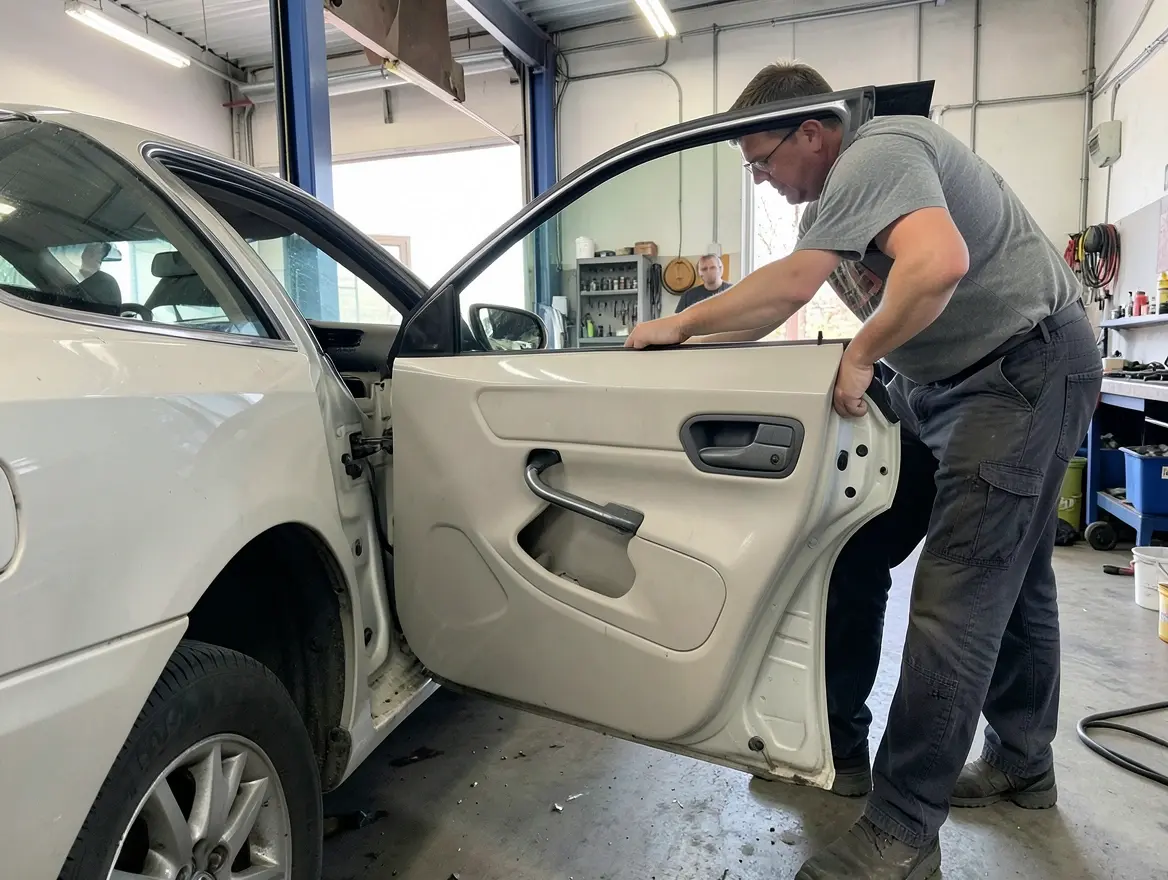
Swapping a car door yourself can cut the labor cost out of the equation entirely, but it’s not a job to underestimate. You’ll need to disconnect the wiring harness for the window, locks, and mirror; support the door’s weight while removing the hinge bolts; and get the new door aligned so it closes flush and seals properly. A basic socket and wrench set covers most of the fasteners you’ll run into — the tool box above is the kind of setup that handles both metric and SAE hardware without leaving you short a size halfway through.
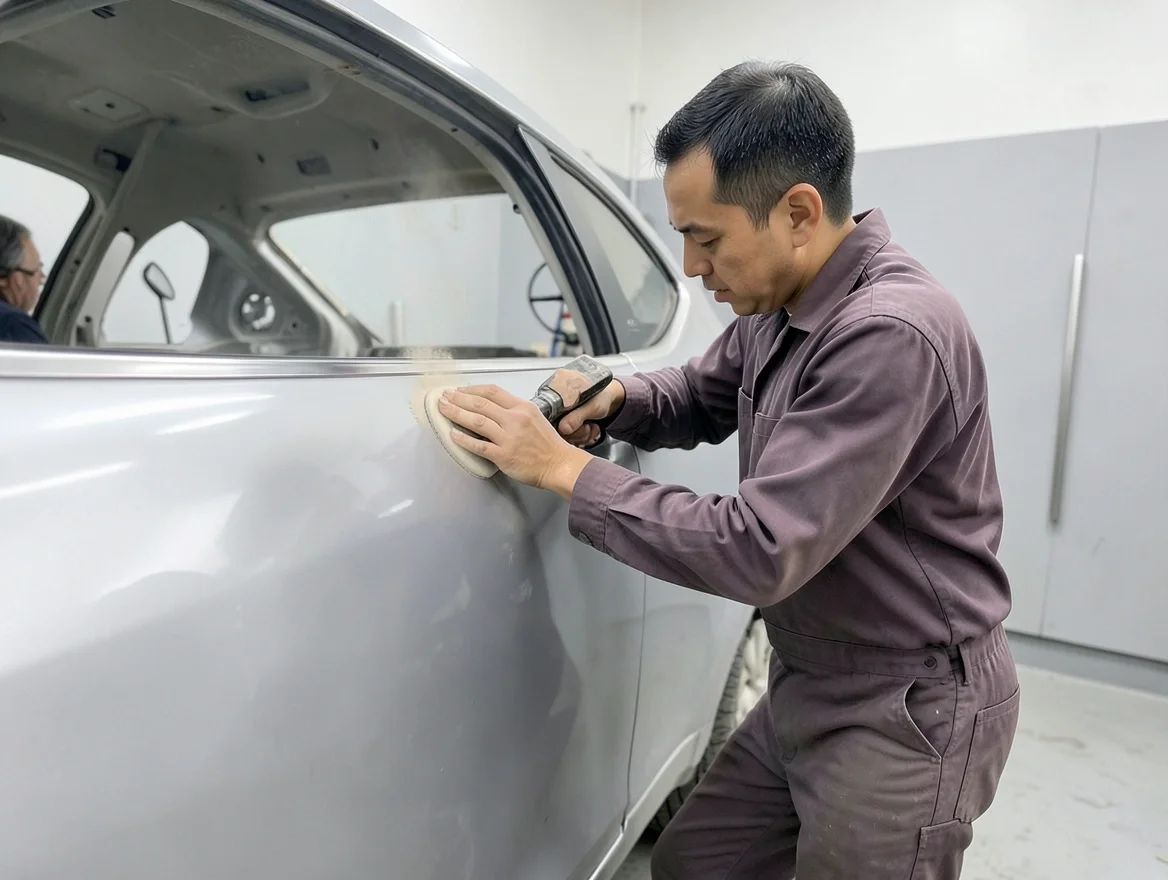
Where DIY gets riskier is anything involving color-matched paint or ADAS recalibration. Getting a paint blend to disappear against the rest of the car takes real spray-booth experience, and recalibrating a blind-spot camera or lane-assist sensor usually requires dealer-level diagnostic equipment that most home garages simply don’t have. For those two pieces, paying a professional is usually cheaper in the long run than redoing a botched paint job or driving around with a safety system that isn’t reading correctly.
How to Reduce the Cost of a New Car Door
- Get at least three quotes. Prices for the exact same job can vary by hundreds of dollars between a dealership, an independent body shop, and a mobile mechanic.
- Ask about aftermarket or used parts. Many shops default to OEM unless you specifically ask about cheaper alternatives — it never hurts to ask what the price difference actually is.
- Check salvage yards and OEM take-off parts. Online marketplaces for used auto parts let you search by VIN or paint code, which makes it much easier to find an exact match than calling junkyards one by one.
- Ask your insurer about a deductible waiver. Some policies waive the deductible for certain types of glass or safety-related repairs — it’s worth asking rather than assuming.
- Weigh repair against a minor cosmetic fix. If the door still closes, seals, and locks properly and the damage is purely cosmetic, a simple alignment or dent repair may solve the problem for a fraction of a full replacement.
Frequently Asked Questions
How much does it cost to replace a car door?
Most drivers pay between $500 and $2,500 for a full door replacement, including parts, paint, and labor. A used door installed yourself can cost as little as $100 to $400, while a luxury vehicle needing a full OEM color-match and sensor recalibration can run $4,000 to $5,800 or more.
Is it cheaper to repair a car door than replace it?
Usually, yes. Dent removal, panel straightening, and re-painting a damaged section typically cost a few hundred dollars, well under the price of a full new door. Repair only makes sense if the door’s frame and internal structure are still sound — if the hinge mounts are bent or the door won’t seal, replacement is often the safer and ultimately cheaper choice.
Does insurance cover a new car door?
It depends on your coverage. Comprehensive insurance covers door damage from theft, vandalism, or weather, and collision coverage covers damage from an accident. Liability-only policies don’t cover damage to your own vehicle at all. Your deductible still applies to any claim you file.
Can you use a used car door from a junkyard?
Yes, and it’s usually the cheapest way to get a replacement door. The key is matching the exact paint code, trim level, and electronics (window motor, mirror wiring, lock actuator) to your specific vehicle. A salvage yard that can look up the donor car’s VIN and confirm the color code makes this much easier to get right.
How long does it take to replace a car door?
A straightforward swap takes roughly 3.5 to 6.5 hours of shop labor. Add a full paint blend and the car may need another day or two for the paint to cure properly, and ADAS recalibration can add an extra hour or more if the door houses a camera or sensor.
Conclusion
A new car door can cost anywhere from a couple hundred dollars to well over $5,000, and the biggest factor by far is which door you choose — used, aftermarket, or OEM — and whether it needs a full paint blend or sensor recalibration. Get a few quotes before committing, ask directly about aftermarket or salvage options, and check your insurance coverage before assuming the cost is entirely on you. If the damage is purely cosmetic, it’s also worth weighing repair costs against your car’s overall value before sinking money into a full replacement.
Products related to this article
Sponsored / affiliate links. As an Amazon Associate I earn from qualifying purchases. I may earn additional commission from eligible campaigns.