Car Air Filter Replacement Cost: What You’ll Pay
Most engine air filter replacements are commonly reported at about $25 to $75 total, with dealer pricing and hard-to-reach housings sometimes pushing the bill past $100. A clogged filter can hurt fuel economy, throttle response, and engine protection. This guide breaks down parts, labor, access difficulty, and whether reusable performance filters pay off.
Typical cost range
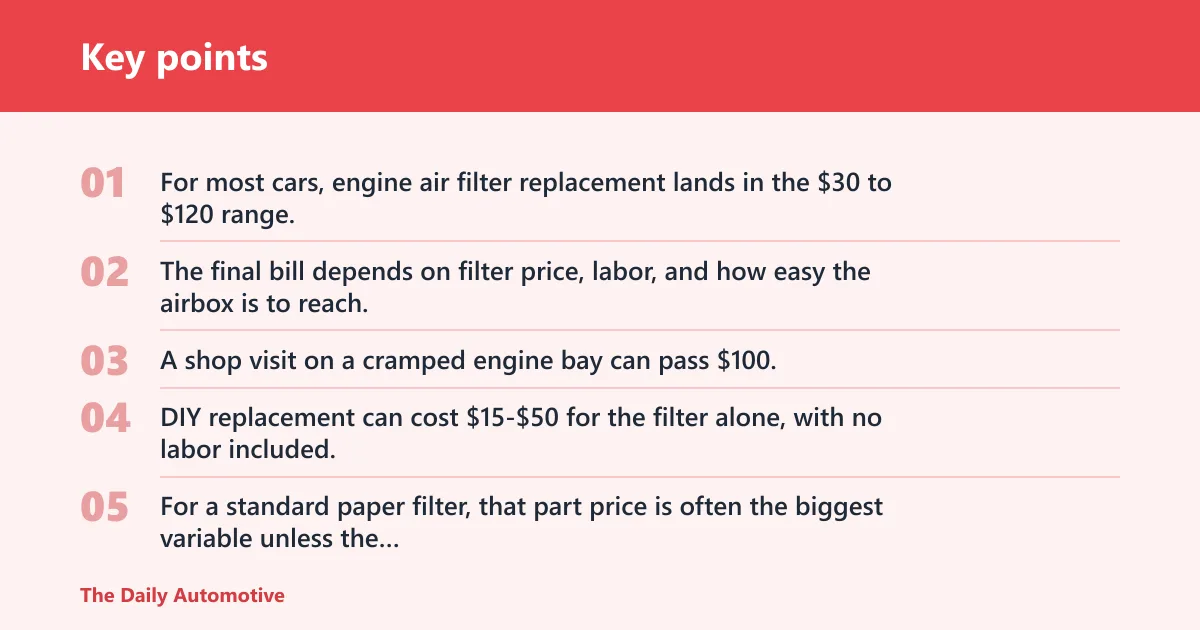


For most cars, engine air filter replacement lands in the $30 to $120 range. The final bill depends on filter price, labor, and how easy the airbox is to reach. A simple DIY swap stays near the low end. A shop visit on a cramped engine bay can pass $100.
Typical parts price range
DIY replacement can cost $15-$50 for the filter alone, with no labor included. For a standard paper filter, that part price is often the biggest variable unless the vehicle uses a special shape or a factory-fit filter with tighter tolerances.
How labor changes the total bill
Professional replacement can total $50-$150 including labor. A mechanic may add $10-$50 in labor, and many air filter jobs take about 15-20 minutes. On an easy-access car, that charge may stay small. On a tight layout, the time and access matter more than the part itself.
Why some cars cost more to service
Some vehicles use airboxes tucked under cowl panels, batteries, intake ducting, or engine covers. Others use odd-shaped filters that cost more and take longer to seat correctly. If the airbox is hard to open or the clip layout is awkward, the labor bill rises even when the filter itself is ordinary.
Engine air filter vs. cabin air filter
The engine air filter cleans intake air before it enters the engine. The cabin air filter cleans air that enters the passenger compartment. They are separate parts, priced separately, and they should not be treated as the same service even though both are often replaced on a similar schedule.
What each filter does
The engine air filter protects the engine from dust and grit that can enter through the intake. The cabin air filter works on the HVAC side, catching pollen, road dust, and other debris before that air reaches the vents. A bad engine filter can affect drivability; a bad cabin filter usually affects comfort and airflow.
Why they are priced differently
Cabin filter replacement can be cheap or awkward depending on access, but it is a different job from an engine air filter swap. The engine filter often sits in an under-hood housing where seal quality matters for engine protection. Because the two parts do different jobs, their prices and labor times can differ a lot.
How to tell which one needs replacement
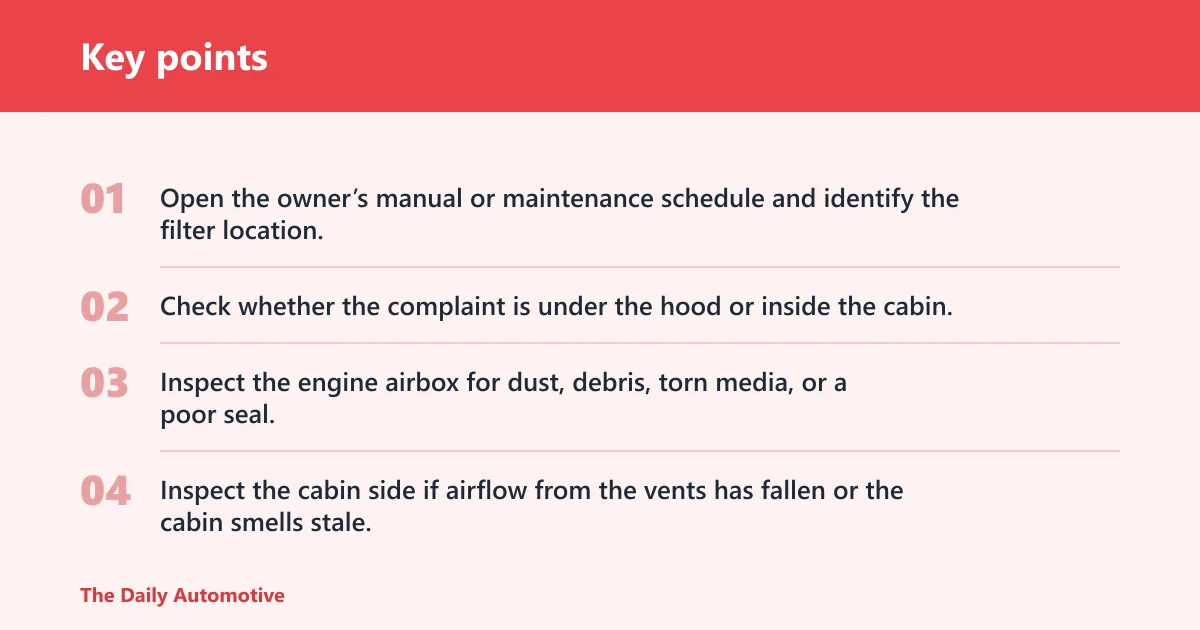
- Open the owner’s manual or maintenance schedule and identify the filter location.
- Check whether the complaint is under the hood or inside the cabin.
- Inspect the engine airbox for dust, debris, torn media, or a poor seal.
- Inspect the cabin side if airflow from the vents has fallen or the cabin smells stale.
Say your sedan has weak cabin airflow but normal acceleration. That points to the cabin air filter, not the engine air filter. The fix is different, and so is the cost.
What affects air filter replacement price?
Price depends on the filter type, the shape of the housing, and the labor rate where you live. OEM air filters usually cost more than aftermarket parts, and labor can add a modest amount on an easy car or much more on a cramped one. Dusty use and shorter service intervals also raise yearly cost.
OEM vs aftermarket filter pricing
An OEM air filter is the factory-fit replacement option. It usually costs more than aftermarket, but it is often preferred when exact fit matters. An aftermarket air filter can be a lower-cost replacement, but quality varies by brand, so fit and filtration need to be checked before you buy.
Airbox access and filter shape
Some filters are flat and simple. Others are large, curved, or tucked under ductwork. A special shape can make the part more expensive and the swap slower. If the housing takes extra clips, screws, or duct removal, the job price rises even though the filter media itself may be ordinary.
Labor charges by shop and location
Labor charge varies by shop and location, and that is where many price differences show up. A quick 15-minute job at one shop can still cost more than the part because the shop has a minimum charge. Dealer labor and urban labor rates often sit above a basic independent shop quote.
When should you replace the air filter?
Most engines use mileage- or time-based replacement intervals, and some schedules list every 12,000-15,000 km. Dusty roads, stop-and-go traffic, and long idle time can shorten that interval. If the car lives in a dusty city, earlier inspection makes more sense than waiting for a fixed mileage target.
Mileage and time-based intervals
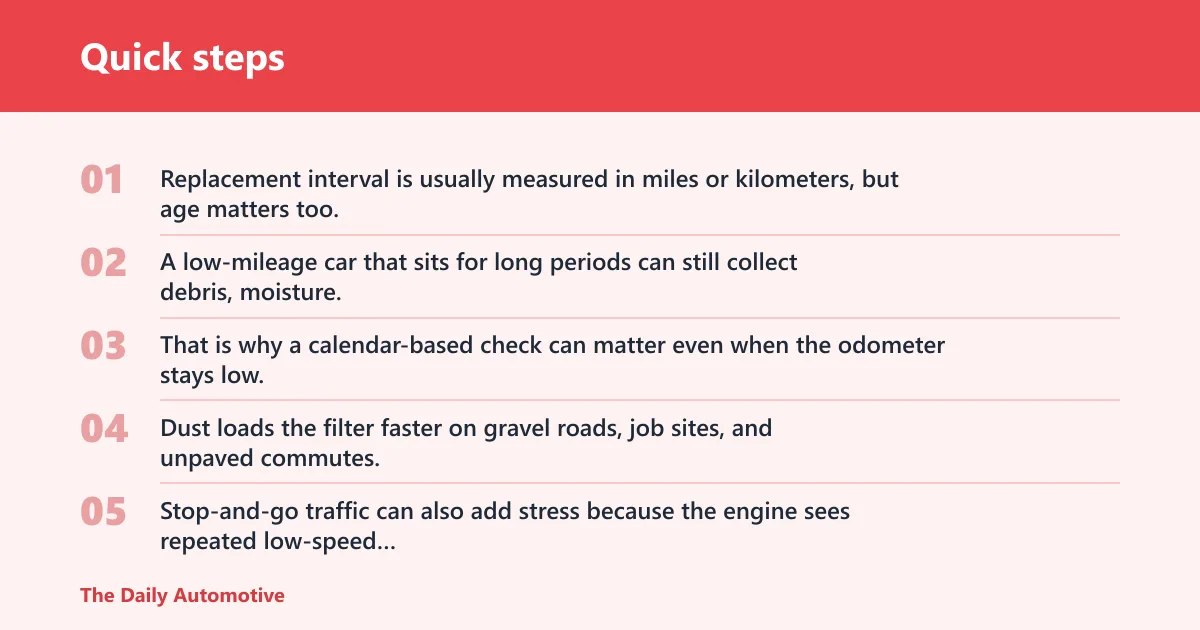
Replacement interval is usually measured in miles or kilometers, but age matters too. A low-mileage car that sits for long periods can still collect debris, moisture, or insect matter in the airbox. That is why a calendar-based check can matter even when the odometer stays low.
Dusty roads and stop-and-go driving
Dust loads the filter faster on gravel roads, job sites, and unpaved commutes. Stop-and-go traffic can also add stress because the engine sees repeated low-speed airflow and frequent heat soak. Shorter intervals are often sensible in those conditions, even if the service schedule looks generous.
Signs that call for earlier inspection
A dirty filter can cause rough idling at stoplights and can also reduce power when merging. That said, those symptoms are not proof by themselves. Air leaks, ignition faults, and MAF sensor issues can create similar complaints, so inspection matters before replacing parts blindly.
Picture a compact crossover used for a daily 6-mile city commute with construction dust on the route. If the engine starts feeling sluggish at merge speeds and the filter looks gray and packed, earlier replacement is reasonable. If the housing is dusty around the seal, the airbox should be checked too.
Air filter cost comparison table
This table compares engine air filter ownership over three replacement cycles. It separates parts, labor, and cleaning kit cost so the total is easier to compare. The reusable option has a higher upfront cost, but it may become cheaper if the car keeps the same filter long enough and the paper-filter jobs are shop-installed.
| Scenario | Parts cost | Labor | Cleaning kit cost | Estimated total outlay | When it becomes cheaper |
|---|---|---|---|---|---|
| DIY paper filter over 3 cycles | $75 total | $0 | $0 | $75 | Cheapest from the start if you can do the swap yourself. |
| Shop-installed paper filter over 3 cycles | $75 total | $60 total | $0 | $135 | Cheaper than a reusable filter only if labor stays low and service stops after one or two cycles. |
| Reusable performance filter over 3 cycles | $120 total | $0 | $20 | $140 | Usually pulls ahead after the third or fourth paper-filter replacement, depending on the paper filter price and labor. |
Are reusable performance filters worth it?
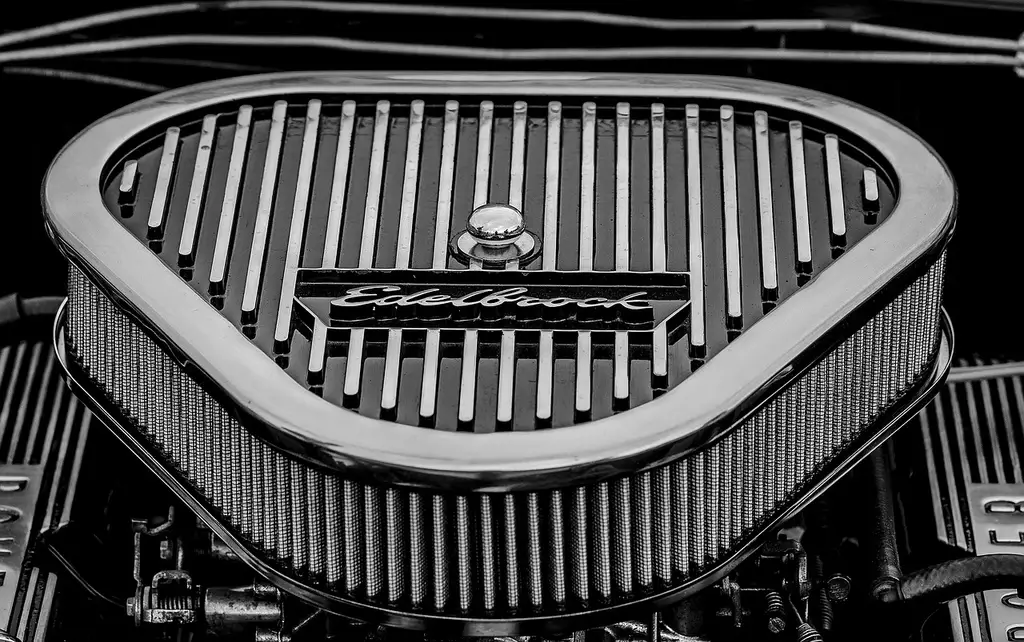
Reusable performance filters can make sense if you keep a vehicle for a long time and are willing to clean and re-oil the filter on schedule. They are not automatic savings. The upfront price is higher, the cleaning kit adds cost, and a poor maintenance routine can erase the benefit quickly.
Upfront cost versus recurring replacement cost
Performance cotton filter pricing can climb well above a standard paper filter, and premium air filter models can reach $300. The tradeoff is that you may avoid recurring paper-filter purchases. The math depends on how often your vehicle needs service and whether the filter is cleaned correctly instead of ignored.
Cleaning kit expense and maintenance
A reusable filter needs a cleaning kit, and that cost belongs in the total. It also needs time to dry after cleaning before it goes back in the airbox. If the filter is pre-oiled, over-oiling can be a problem because it may contaminate sensitive intake sensors if installed carelessly.
When a reusable filter can be cheaper
A reusable filter can become cheaper when the vehicle uses expensive paper filters, needs frequent replacement in dusty conditions, or stays in service long enough to spread the upfront cost over several cleanings. It is less attractive for a low-mileage driver who replaces a paper filter once every long interval and pays little labor.
Can a dirty air filter hurt fuel economy?
Yes, a restricted engine air filter can hurt fuel economy, especially if airflow drops enough to affect combustion and throttle response. The effect is usually gradual, not dramatic. If the car also idles rough or feels flat on merges, the filter deserves a look, but those symptoms can come from other faults too.
What a restricted filter can change
When airflow through the filter is reduced, the engine may need to work against that restriction. The result can be weaker response and less efficient operation in some cases. Fuel economy complaints are worth checking, but the filter should be inspected alongside the intake tract, spark condition, and sensor data.
Symptoms that may come from something else
A dirty filter is not the only cause of rough idle or weak acceleration. Vacuum leaks, a dirty throttle body, a failing MAF sensor, or ignition issues can feel similar. If the filter looks clean, or if replacement does not change the symptom, the diagnosis should move beyond the filter.
When to inspect the airbox and seals
The airbox or filter housing must seal properly after installation. A loose seal can let unfiltered air bypass the filter, which defeats part of the job. If the housing has dust tracks, a misseated gasket, or a warped cover, inspection matters as much as replacement.
Frequently asked questions
How much does a car air filter replacement cost?
A simple DIY swap can be much less because DIY replacement can cost $15-$50 for the filter alone. Hard-to-reach housings and dealer labor push the bill higher.
Is engine air filter replacement cheaper if I do it myself?
Yes. DIY replacement is usually cheaper because you pay only for the filter and skip labor. That can matter even more on cars with easy airbox access. If the filter is tucked under ducting or covers, though, a shop may be worth the extra cost for correct fit and sealing.
What affects the price of a car air filter change
Filter type, labor rate, and airbox access are the biggest drivers. OEM air filters usually cost more than aftermarket parts, and special shapes can cost more still. A mechanic may add $10-$50 in labor, which is a small number on some cars and a major share on others.
How often should I replace my engine air filter?
A common interval is every 12,000-15,000 km, but the right schedule depends on driving conditions. Dusty roads, construction zones, and stop-and-go use can shorten that timeline. Low-mileage cars should still get inspected on time, because age and debris buildup can matter even without many miles.
Can a dirty air filter really hurt fuel economy?
Yes, but the effect is usually modest and symptoms can overlap with other faults. A restricted filter can reduce airflow, which may hurt response and efficiency. If rough idle or weaker merging shows up, inspect the filter first, then check for air leaks or sensor issues if the problem remains.
What is the difference between an engine air filter and a cabin air filter?
The engine air filter protects the engine by filtering intake air before it enters the engine. The cabin air filter cleans air entering the passenger compartment. They are separate parts with different jobs, different service locations, and often different prices, so they should be priced and replaced separately.
Are performance air filters worth the extra cost?
Sometimes, but only if the long-term math fits your driving and maintenance habits. A reusable performance filter can cost more up front and needs a cleaning kit. It may save money over time if you keep the vehicle long enough and would otherwise buy several paper filters.
Can I clean a paper air filter instead of replacing it?
No. Paper air filters are meant to be replaced, not cleaned and reused as a standard practice. Cleaning can damage the media or leave debris behind. If the filter is dirty, replacement is the safer and more predictable choice, especially when sealing and filtration performance matter.
Products related to this article
Sponsored / affiliate links. As an Amazon Associate I earn from qualifying purchases. I may earn additional commission from eligible campaigns.