Chrome Delete vs. Vinyl Wrap
Choose Chrome Delete for trim, grilles, window surrounds, and badges. Choose Vinyl Wrap for panels or a full color change. Pick the wrong method and you can waste money, create peeling edges, or end up with mismatched gloss. This guide breaks the choice down by vehicle area, cost, durability, and reversibility.
| Factor | Chrome Delete | Vinyl Wrap | Winner |
|---|---|---|---|
| Best fit | Trim-only blackout on window surrounds, grille trim, handles, mirror caps, badges, and roof rails | Panels, partial color changes, or a full body color change | Chrome Delete for trim; Vinyl Wrap for panels |
| Cost | About $500 to $1,900 installed, with DIY film or overlays sometimes lower | Starting around $2,500 or higher | Chrome Delete |
| Install time | A couple of hours to two or three days | 3 to 5 days | Chrome Delete |
| Coverage | Targets trim pieces only; does not change the vehicle body | Changes painted body panels and can cover a full vehicle | Vinyl Wrap |
| Risk on complex shapes | Higher on tight corners, deep recesses, and complex surrounds if film is used poorly | Higher on large panels if installation is rushed or edges are not finished well | Tie |
| Reversibility | Good with removable film or overlays | Good when removed correctly, but damaged panels can leave more work behind | Chrome Delete |
Cost and coverage differences
The core trade-off is simple: Chrome Delete changes trim, while Vinyl Wrap changes panels. Chrome Delete works best for blackout accents and an OEM-style look. Vinyl Wrap is the stronger choice when the body color needs to change. The decision comes down to the surface, not only the finish.
Cost
Chrome Delete usually costs less because it covers smaller parts. Full Vinyl Wrap starts around $2,500 or higher, while Chrome Delete pricing is shown from $500 to $1,900, depending on vehicle shape and shop work. If you only want bright trim removed, paying for a full-body film job is usually money spent on the wrong job.
Coverage
Chrome Delete targets trim pieces only, not the vehicle body. Vinyl Wrap changes the color of the entire vehicle body, or part of it if you are wrapping only the hood, roof, doors, quarter panels, bumpers, trunk, or pillars. That is why the two options solve different problems.
Durability and maintenance
Vinyl can peel at edges and corners, and car washes can damage vinyl edges. Chrome Delete overlays are described as car-wash safe and UV resistant, which gives them an edge for trim work that sees frequent washing. Neither option is immune to damage, but the weak spots differ.
What chrome delete covers
Chrome Delete covers exterior trim, not painted body panels. Common areas include window surrounds, grille trim, door handles, mirror caps, badges, and roof rails. The usual finishes are gloss black, satin black, matte black, and body-color match, with gloss black being the most common choice for a clean blackout look.
Finish choices and fit
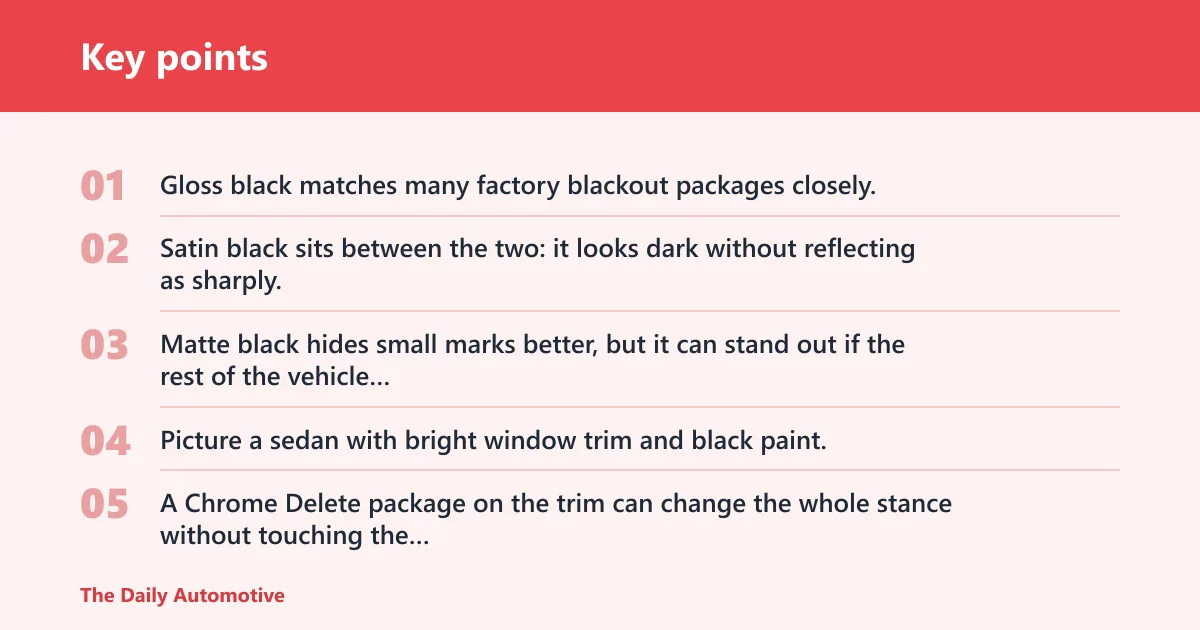
Gloss black matches many factory blackout packages closely, but it also shows fingerprints, dust, and surface flaws more readily than satin or matte. Satin black sits between the two: it looks dark without reflecting as sharply. Matte black hides small marks better, but it can stand out if the rest of the vehicle has glossy trim.
Picture a sedan with bright window trim and black paint. A Chrome Delete package on the trim can change the whole stance without touching the body color. Add tint, and the visual change becomes stronger without moving into a full wrap.
Snap-on overlays and film options
Trim Illusion says its chrome delete overlays are ABS plastic, need no tools for installation, are car-wash safe, and have a UV-resistant coating. That matters for owners who want a removable, trim-specific option rather than a film job on every edge. It also changes the risk profile: snap-on parts avoid some adhesive issues, but they still need to fit the exact trim shape.
What vinyl wrap covers
Vinyl Wrap covers painted panels for full or partial color changes. It is used on the hood, roof, doors, quarter panels, bumpers, trunk, and pillars, and it can be gloss, matte, satin, metallic, or color-shift. If the body color itself is the goal, Vinyl Wrap is the right tool.
Film types and coverage styles
3M Wrap Film Series 2080 is described as cast adhesive-backed film used for full vehicle wraps, accents, and partial decoration wraps. That makes it suitable for a complete color change or for a smaller section like a roof, hood, or accent panel. The bigger the panel, the more the installation depends on careful stretching, heat, and edge finishing.
Suppose a crossover has a black roof, body-color doors, and bright roof rails. A roof-only Vinyl Wrap changes one panel and keeps the rest of the paint untouched. A chrome delete on the roof rails can then finish the look without wrapping the whole vehicle.
Chrome delete matrix
This matrix gives the practical answer by vehicle goal. The best option depends on what you want to change, how much surface area is involved, and how much risk you want to take on during installation. For small accents, Chrome Delete usually wins. For body color changes, Vinyl Wrap does.
| Vehicle goal | Best option | Reason | Cost-and-risk note |
|---|---|---|---|
| Keep factory paint but kill chrome | Chrome Delete | Targets trim only and leaves body panels alone | Lower cost than a full wrap; watch for fit on tight trim |
| Change roof only | Vinyl Wrap | The roof is a painted panel, not trim | Costs more than trim work; edges need careful finishing |
| Build a stealth look on a lease | Chrome Delete | Removes bright trim without changing the body color | Good reversibility with removable film or overlays; verify lease rules |
| Black out a complex window surround | Chrome Delete | The part is trim, but shape complexity matters | Higher install risk if corners and joints are tight |
| Full color change on a daily driver | Vinyl Wrap | Only a body wrap changes the vehicle’s overall color | Highest cost and longest install time; damaged edges can peel |
| Match mirror caps to black wheels | Chrome Delete | Mirror caps are often trim pieces, not full panels | Cheaper than panel wrap; snap-on parts can reduce adhesive risk |
| Black out badges and grille surround | Chrome Delete | Badges and grille trim are standard chrome delete zones | Low material use, but small parts demand careful alignment |
| Wrap a hood and keep the rest painted | Vinyl Wrap | The hood is a painted panel with a large visible area | More film and more labor than trim-only work |
| Replace bright trim with a body-color look | Chrome Delete | Chrome delete can use body-color match on trim | Best when you want an OEM-style finish without panel work |
| Cover worn clearcoat on a single panel | Vinyl Wrap | Panel film can hide a problem area better than trim work | Still needs prep; damage under the film does not disappear |
Why the matrix is split this way
The vehicle area decides the method. A trim job should not be turned into a body-wrap bill, and a body color change should not be solved with small blackout pieces. That is the clearest rule in the comparison.
A common first-timer mistake is asking for “chrome delete” on a roof or door skin. That area is a panel, so the right answer is Vinyl Wrap. The same mistake can go the other way too: paying for a full wrap when only the grille surround and window trim need attention.
How much do they cost?
Chrome Delete is usually cheaper than Vinyl Wrap because it covers less surface and often takes less labor. For many owners, the cost gap is the first sign that trim work and panel work are different jobs.
Why vehicle shape changes the bill
Vehicle complexity matters. Tight-corner trims, door handles, and complex window surrounds take more time and more care than straight, open trim lines. The same is true for wraps on contoured bumpers and deep panel recesses, where film has to settle cleanly or the edges can fail early.
DIY film chrome delete can cut cost, but it adds risk if the trim has sharp curves or small openings. Snap-on overlays reduce that burden because Trim Illusion says they need no tools for installation and are car-wash safe. Shop-installed work costs more, but the bill often reflects the shape of the vehicle, not just the material.
When to choose chrome delete or vinyl wrap
Choose Chrome Delete if you want trim-only changes, a lower bill, and a subtler look. Choose Vinyl Wrap if you want panels or a full-body color change, or if the roof, hood, or other painted areas are part of the plan. The right answer follows the surface you are changing.
Choose chrome delete if…
You want to black out window surrounds, grille trim, badges, mirror caps, or roof rails. You want to keep the factory paint. You want a more OEM-style look, and you want a lower-cost path that can be paired with tint or other blackout mods.
Choose vinyl wrap if…
You want to change the color of the body itself. You want a full or partial panel restyle. You are willing to pay more and wait longer for a result that can be gloss, satin, matte, metallic, or color-shift.
Use both when the design call is split between trim and panels. For example, a black roof with blackout trim on a white sedan gives a cleaner result than either change alone. That pairing is common because each method does one job well.

Frequently asked questions
What is the difference between chrome delete and vinyl wrap?
Chrome Delete blackens or recolors trim pieces only, while Vinyl Wrap changes painted body panels. One changes accents such as window surrounds and grille trim; the other changes the body color of the vehicle or a selected panel. That difference in area drives the difference in cost, time, and risk.
Is chrome delete cheaper than vinyl wrap?
Yes. The gap grows when the vehicle has complex trim, but Chrome Delete still usually costs less because it covers less material and less labor.
Can vinyl wrap be used for chrome delete?
Yes, but only in some cases. Vinyl can black out trim pieces, and Trim Illusion says vinyl chrome delete typically costs about $400 to over $800. Even so, snap-on overlays or proper chrome-delete film are often a better fit for small trim parts because they are made for that shape.
How long does chrome delete last compared with vinyl wrap?
Chrome Delete can be very durable when done with quality film or overlays, and Trim Illusion says its overlays are car-wash safe and UV resistant. Vinyl Wrap can last well too, but it is more exposed at edges and corners, where peeling can start. Wash habits matter for both.
Do I need a professional to install chrome delete or vinyl wrap?
Not always, but the harder the shape, the more a professional helps. Simple trim can suit DIY film or snap-on overlays, while tight-corner trims, door handles, and complex window surrounds raise the risk. Full wraps are more demanding because large panels need careful alignment and edge finishing.
Can I do chrome delete and vinyl wrap together?
Yes. That is often the cleanest way to build a complete look without overpaying for body film you do not need. Use Chrome Delete on trim, then Vinyl Wrap on the roof, hood, or other panels if you want a stronger contrast or a true color change.
Which looks better on a daily driver: chrome delete or vinyl wrap?
For a daily driver, Chrome Delete usually looks more restrained and easier to live with because it focuses on trim rather than the whole body. Vinyl Wrap looks more dramatic and can transform the vehicle, but it brings more cost, more install time, and more edge care. The better look depends on how much change you want to see every day.
Products related to this article
Sponsored / affiliate links. As an Amazon Associate I earn from qualifying purchases. I may earn additional commission from eligible campaigns.
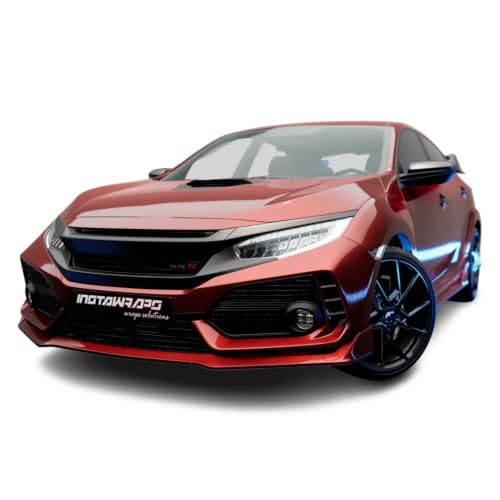 3M Car Wrap Roll 2080 Gloss Red Metallic | G203 | (5ft x 10ft (50 Sq/ft)) | Automotive Vinyl Wrap for Cars - Car Interior Wrap & Exterior | w/Free Instawraps Pro Glove
 3M Car Wrap Roll 2080 Gloss Flame Red | G53 | (5ft x 5ft (25 Sq/ft)) | Automotive Vinyl Wrap for Cars - Car Interior Wrap & Exterior | w/Free Instawraps Pro Glove