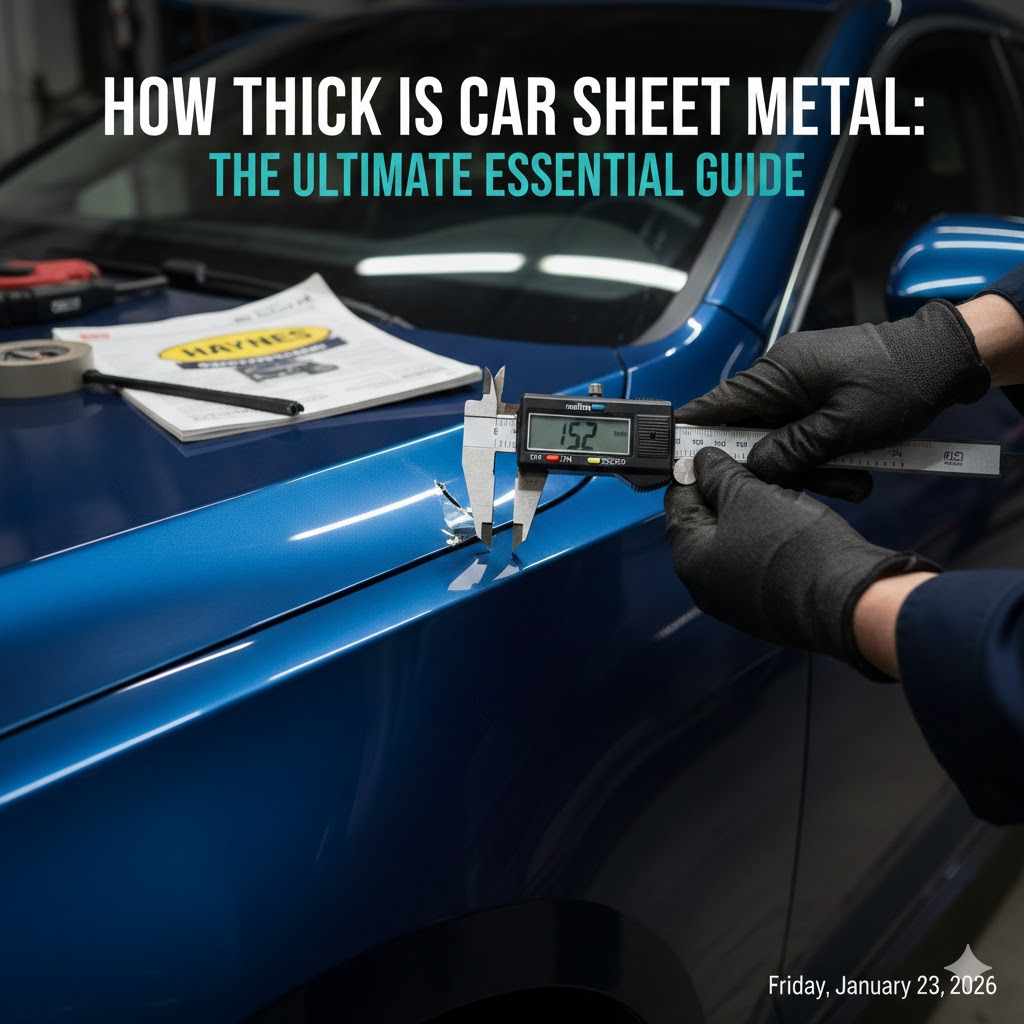
How Thick Is Car Sheet Metal: The Ultimate Essential Guide
Most modern car sheet metal is surprisingly thin, typically ranging from 0.7 to 1.0 millimeters (about 0.03 to 0.04 inches). This is thinner than a dime! However, its strength comes from advanced steel alloys and clever engineering, not pure thickness, balancing safety with fuel efficiency.
Have you ever leaned against your car and accidentally created a small dent? Or maybe you’ve tapped on a new car’s fender and thought, “Wow, this feels thin.” If so, you’re not alone. It’s a common question that pops into every car owner’s mind: just how thick is the metal on my car?
It can be worrying to think the metal protecting you is so thin. You might wonder if it’s safe or if carmakers are just cutting costs. The good news is, there’s a lot of smart science behind it all. Understanding car sheet metal isn’t just for mechanics; it helps you appreciate your car’s design and make better decisions about repairs.
In this guide, I’ll walk you through everything you need to know in simple, easy-to-understand terms. We’ll uncover the real thickness, why it has changed over the years, and how it keeps you safe. Let’s get started!
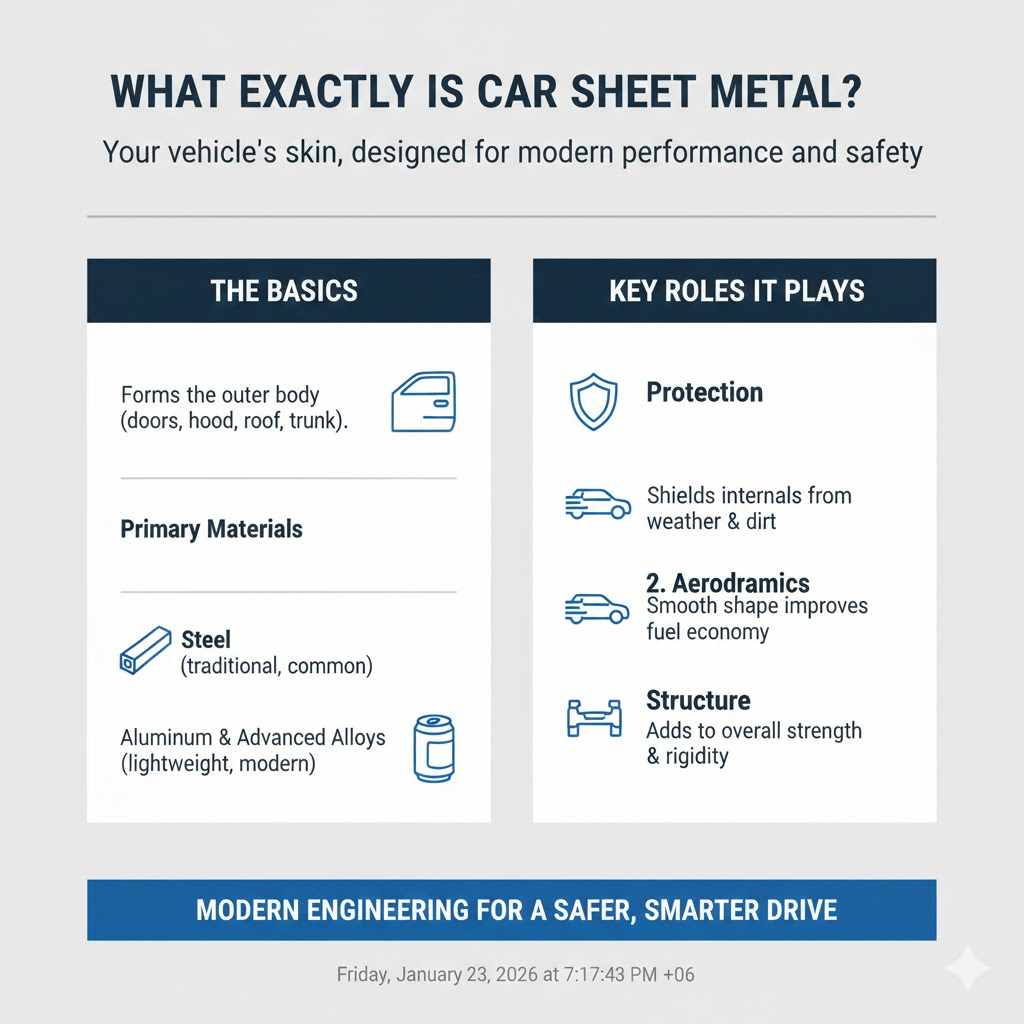
What Exactly Is Car Sheet Metal?
Think of car sheet metal as your vehicle’s skin. It’s the material that forms the outer body of your car—the doors, hood, roof, fenders, and trunk lid. It’s the part you wash, wax, and unfortunately, sometimes dent.
This “skin” isn’t just for looks. It plays a few very important roles:
- Protection: It shields the car’s inner workings (like the engine and electronics) from rain, sun, and dirt.
- Aerodynamics: Its smooth shape helps the car cut through the air, which improves fuel economy.
- Structure: It contributes to the overall strength and rigidity of the car, working together with the frame underneath.
For decades, this metal was almost always a type of steel. Today, things are a bit different. While steel is still the most common material, many automakers now use lightweight aluminum and other advanced materials to build their cars.
Why Thickness Isn’t the Whole Story
It’s easy to think that thicker metal means a stronger, safer car. That was true for the big, heavy cars of the 1950s and 60s. But automotive engineering has come a long way. Today, safety is about being smart, not just being thick.
Here are the key factors that modern car designers balance:
1. Safety First: Crumple Zones and Passenger Cages
Modern cars are designed with safety as the top priority. They use a concept called a “safety cell” or “passenger cage.” This is the super-strong structure around you and your passengers. It’s made from incredibly tough, thick, high-strength steel that is designed not to bend or break in a crash.
The parts outside of this cage—like the front hood and the rear trunk area—are called crumple zones. These areas are made of thinner, softer metal. Why? Because they are designed to crumple and absorb the energy of a crash, slowing the car down more gradually. This process is crucial because it reduces the force that reaches the people inside. As the U.S. government’s National Highway Traffic Safety Administration (NHTSA) explains, features like these are vital for occupant protection. A car with a front end that doesn’t crumple would stop instantly, causing much more harm to everyone inside.
2. Weight and Fuel Economy
A heavier car needs more energy to get moving and to stop. Using thinner, lighter sheet metal helps reduce the car’s overall weight. This has a direct impact on your wallet and the environment.
- Better Fuel Economy: A lighter car uses less gas, saving you money at the pump.
- Better Performance: Lighter cars can accelerate faster, handle better in corners, and stop more quickly.
- Lower Emissions: Better fuel economy means the car produces fewer harmful emissions.
This is a big reason why many manufacturers are switching to lightweight aluminum for parts like hoods and doors.
3. Durability and Dent Resistance
Of course, nobody wants a car that dents if you look at it the wrong way. This is where the type of metal, not just its thickness, becomes important. Automakers use different types of steel alloys. Some modern steels, known as High-Strength Steels (HSS), can be much thinner than older mild steel but offer far greater resistance to dents and bending.
So, that new car panel that feels thin might actually be stronger than the thick panel on a car from 30 years ago!
The Numbers: How Thick is Car Sheet Metal, Really?
Okay, let’s get to the main question. Car sheet metal thickness is usually measured in millimeters (mm) or by a standard called gauge. With gauge, a smaller number means thicker metal. For example, 18-gauge steel is thicker and stronger than 22-gauge steel.
The thickness of sheet metal on a modern car is not uniform. It varies depending on the part and its function.
Here is a typical breakdown of car sheet metal thickness on a modern passenger vehicle:
| Car Part | Typical Thickness (in Millimeters) | Typical Thickness (in Gauge) | Reason for Thickness |
|---|---|---|---|
| Roof Panel | 0.7 mm – 0.8 mm | 22-24 Gauge | Lighter weight is a priority here; it’s not a primary impact zone. |
| Doors (Outer Skin) | 0.7 mm – 0.9 mm | 21-23 Gauge | Thin for weight savings, but reinforced inside with impact beams. |
| Hood (Outer Panel) | 0.7 mm – 0.8 mm | 22-24 Gauge | Designed to be lightweight and to crumple in a frontal collision. |
| Quarter Panels / Fenders | 0.8 mm – 1.0 mm | 20-22 Gauge | Slightly thicker for more rigidity and dent resistance. |
| Floor Pan | 1.2 mm – 1.5 mm | 16-18 Gauge | Provides structural support for the entire cabin. |
| Frame Rails / Chassis | 2.0 mm+ | 14 Gauge or thicker | The backbone of the car; made of high-strength steel for maximum safety. |
As you can see, the most critical structural parts, like the frame and floor, are much thicker than the outer “skin” panels like the roof and doors. This is modern safety engineering at its best: strength where you need it, and lightweight design where you don’t.
Steel vs. Aluminum: The Two Main Players
Most cars on the road today have bodies made primarily of steel. However, aluminum is becoming more and more popular, especially in luxury vehicles and trucks, like the Ford F-150.
Let’s compare them side-by-side:
Steel
Steel is an alloy of iron and carbon. It’s been the go-to material for cars for over a century for good reason.
- Pros: Strong, relatively cheap to produce, and easy to repair. Most auto body shops are experts at working with steel.
- Cons: It’s heavy and can rust if the paint and protective coatings are damaged.
Aluminum
Aluminum is a much lighter metal. It offers significant weight savings, which is why it’s used in high-performance cars and for improving the fuel economy of trucks and SUVs.
- Pros: Very lightweight (about one-third the weight of steel for the same volume), corrosion-resistant (it doesn’t rust), and can be very strong.
- Cons: It’s more expensive than steel and more difficult to repair. Fixing a dent in an aluminum panel requires special tools and training, which can make repairs more costly.
| Feature | Steel | Aluminum |
|---|---|---|
| Weight | Heavier | Lighter |
| Strength-to-Weight Ratio | Good | Excellent |
| Cost | Lower | Higher |
| Rust Resistance | Prone to rust without coatings | Excellent (does not rust) |
| Repairability | Easy and inexpensive | Difficult and more expensive |
How Car Metal Has Evolved: Classic vs. Modern
If you’ve ever worked on a classic car from the 1960s or 70s, you’ll know the sheet metal feels thick and heavy. It’s true—it was much thicker back then, often around 1.2 mm (18-gauge) or even more for body panels.
So, were older cars safer? Not at all. Here’s why:
- “Dumb” Metal: The steel used in classic cars was simple, “mild” steel. It was thick, but it wasn’t particularly strong. In a crash, it would bend and stay bent, transferring a huge amount of force directly to the passengers. The car might look repairable, but the occupants would have been subjected to dangerous forces.
- Lack of Safety Design: Classic cars lacked crumple zones, safety cages, and other modern features. The entire car was rigid. This meant that in a crash, the whole vehicle would stop suddenly instead of absorbing the impact.
- “Smart” Metal: Today, cars use a variety of advanced steels. According to research from institutions like the ASM International, which focuses on materials science, modern vehicles use everything from mild steel to Ultra High-Strength Steel (UHSS). This UHSS is incredibly strong and allows engineers to make parts that are both thinner and safer.
A modern car is designed to sacrifice its outer body to protect the people inside. It might look like a total loss after a serious accident, but that’s a sign that it did its job perfectly.
Debunking Common Myths About Car Metal
There’s a lot of misinformation out there about car bodies. Let’s clear up a few common myths.
Myth #1: Thicker metal is always safer.
Fact: As we’ve learned, this is false. Safety comes from smart design, including crumple zones that are intentionally weaker and a passenger cage that is incredibly strong. A car made entirely of thick, rigid metal would be like crashing inside a steel box.
Myth #2: You can judge a car’s quality by knocking on the fender.
Fact: The sound a panel makes when you tap it has more to do with sound-deadening materials, insulation, the panel’s shape, and how it’s braced from behind than the thickness or quality of the metal itself. A dull “thud” might just mean there’s a lot of sound insulation, not that the metal is thick.
Myth #3: Modern cars are “flimsy” and designed to fall apart.
Fact: Modern cars are designed to crumple in specific, controlled ways to manage crash energy and protect you. The core structure around the passenger cabin is stronger than ever before. This perception of being “flimsy” comes from seeing the effective work of crumple zones after an accident.
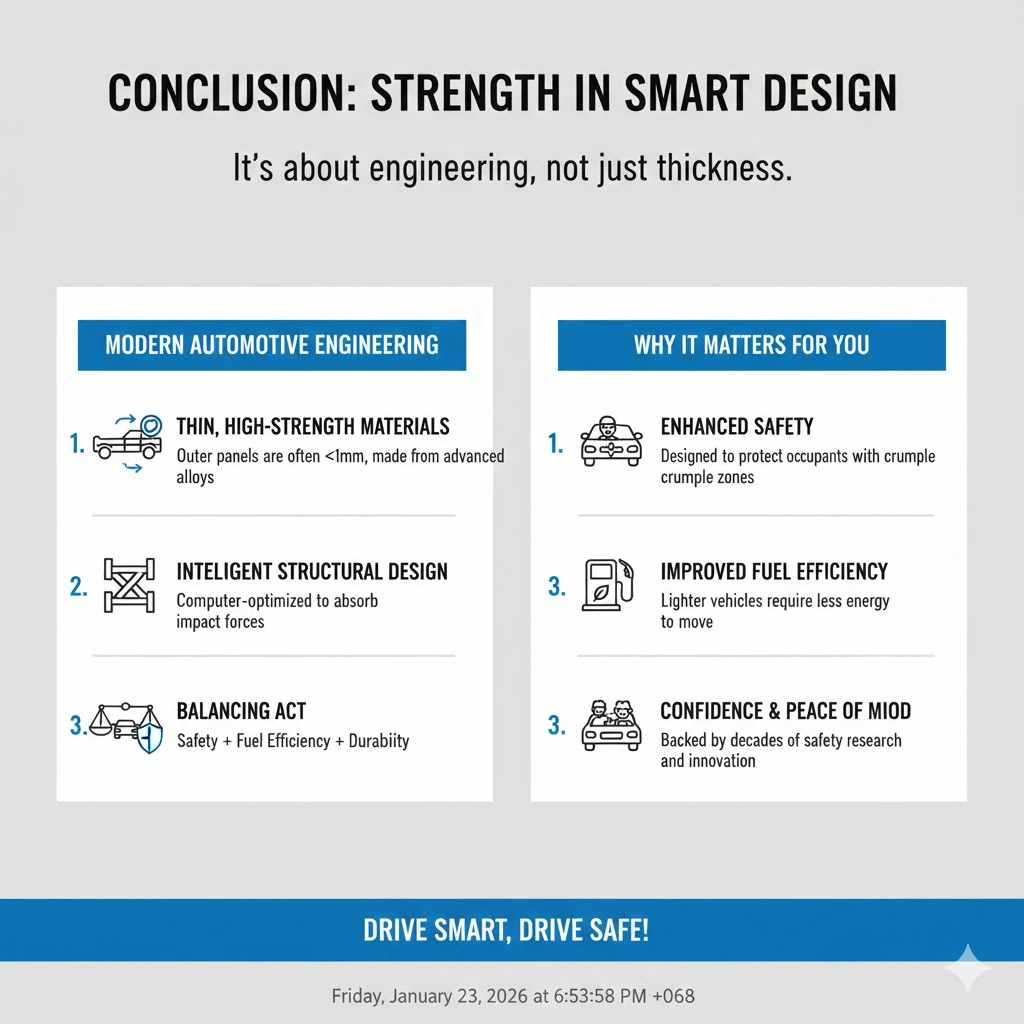
Conclusion: Strength in Smart Design, Not Just Thickness
So, how thick is car sheet metal? The simple answer is “thinner than you probably think”—often less than a millimeter for outer panels. But as we’ve discovered, that’s only a tiny part of a much bigger and more interesting story.
Modern cars are a marvel of engineering, perfectly balancing the need for safety, fuel efficiency, and durability. Carmakers use advanced, high-strength materials and intelligent designs to create vehicles that are lighter, more economical, and safer than ever before. The thickness of the metal is carefully chosen for each specific part of the car, working as a system to protect you and your family.
The next time you tap on your car door or hood, don’t worry if it feels a little thin. Instead, feel confident knowing that you’re protected by decades of safety research and smart science. Your car is designed to be a safe, reliable, and efficient partner for all your journeys.
Frequently Asked Questions (FAQ)
1. Is thicker car metal actually better for safety?
Not necessarily. Modern car safety relies on a system of strong and weak zones. The passenger cabin is protected by a very strong “safety cage” made of thick, high-strength steel. The front and rear of the car, however, use thinner metal designed to crumple and absorb crash energy. This crumpling action is what keeps passengers safe, so thicker isn’t always better.
2. Why do some new cars seem to dent so easily?
This can be due to a few factors. Outer body panels, like doors and fenders, are made from thinner metal to save weight and improve fuel economy. While modern alloys are stronger, a sharp impact from a shopping cart or another car door can still cause a dent. The design is a trade-off between everyday dent resistance and overall vehicle weight.
3. Can I use a magnet to tell if a car panel is steel or aluminum?
Yes, this is a great and simple trick! A standard refrigerator magnet will stick firmly to a steel panel but will not stick to an aluminum panel at all. This is a common way that body shop technicians and car buyers quickly check what a panel is made of.
4. How thick was the sheet metal on a classic car?
Classic cars from the 1950s to the 1970s generally used much thicker sheet metal, often around 1.2 mm to 1.5 mm (or 16 to 18 gauge) for their body panels. While it felt very solid, the steel itself was a simple mild steel, which was not as strong as modern alloys and did not incorporate today’s advanced safety designs.
5. Why is the frame of the car so much thicker than the body panels?
The frame (or chassis) is the car’s skeleton. Its job is to provide all the structural support and to form the rigid safety cell that protects occupants in a crash. It needs to be extremely strong and resist bending. The outer body panels are just the “skin”—their main jobs are aerodynamics and protecting the internal components from the weather, so they can be much thinner and lighter.
6. Is it more expensive to repair aluminum body panels?
Yes, typically it is. Aluminum has different properties than steel and requires special tools, training, and techniques to repair properly. It doesn’t have the same “memory” as steel, meaning it’s harder to pull out a dent. Because of this specialized labor and equipment, bodywork on aluminum panels usually costs more than repairs on traditional steel panels.
7. Does a car’s paint or clear coat add to its thickness and durability?
A car’s paint job, including the primer, base color, and clear coat, is incredibly thin—usually around 0.1 mm in total, or about the thickness of a human hair. While the clear coat provides crucial protection against UV rays and minor scratches, it does not add any significant structural strength or dent resistance to the metal panel underneath.