Can I Use Synthetic Oil in an Older Car? What a Mechanic Actually Says
You’ve probably heard the old story: a friend’s grandfather put synthetic oil in his 1987 pickup and suddenly the rear main seal started weeping oil all over the driveway. So you’re standing in the auto parts aisle with a 5-quart jug of full synthetic, looking at a car with 150,000 miles on the clock, and you’re wondering if you’re about to make the same mistake.
Here’s the honest answer: yes, you can use synthetic oil in most older cars, and it’s often the best thing you can do for an engine that’s seen some miles. But there are a few real caveats about seals, sludge, and what the engine was designed for. This article walks you through exactly when synthetic is a good idea, when a high-mileage blend makes more sense, and how to avoid the leak-after-switch problem entirely.
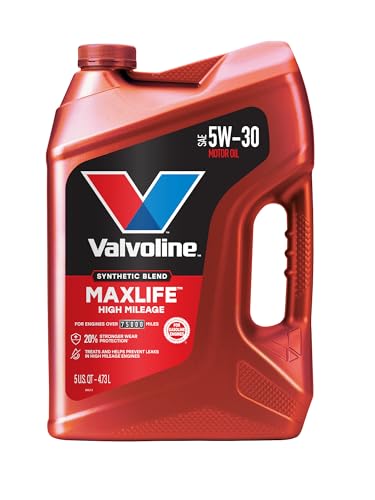
Valvoline
Valvoline MaxLife High Mileage 5W-30 Synthetic Blend…
- Formulated for engines with 75,000 miles or more, Valvoline MaxLife High Mileage synthetic blend is formulated with seal condition…
- Delivers 20% better wear protection and 15% better sludge defense than industry standards to help prevent engine breakdown
- Extra detergents safeguard against friction, corrosion and deposits to keep high-mileage engines clean
You’ll leave knowing the specific conditions that matter, not just a general thumbs-up or thumbs-down.
If you’re driving something with 75,000 miles or more on it, a product like Valvoline MaxLife High Mileage 5W-30 Synthetic Blend sits right in the sweet spot. It uses seal conditioners that gently re-swell dried-out gaskets, so you get the benefits of synthetic protection without the sudden leak risk that sometimes comes with a full synthetic switch on a high-mileage engine.
Why the Old “Synthetic Causes Leaks” Myth Won’t Die
The fear isn’t completely made up. Older engines, especially those from the 1980s and early 1990s, often have seals made from a type of rubber that shrinks and hardens over time. Conventional oil leaves a layer of varnish and sludge on those seals, which actually acts like a patch. Switch to a full synthetic, and its stronger detergent package starts cleaning that varnish away. Once the crud is gone, the shrunken seal has nothing left to fill the gap, and oil finds its way out.
That’s not the synthetic oil damaging anything. It’s the synthetic oil revealing damage that was already there. The seal was already brittle; the varnish was just hiding it.
The second part of the myth comes from viscosity. Some older engines were designed for thicker oils like 10W-40 or 20W-50. If you pour in a modern 0W-20 full synthetic, it flows faster when cold and can sneak past worn rings or valve guides that a thicker oil would have struggled to get through. That’s a mismatch in grade, not a failure of synthetic chemistry.
So the real question isn’t synthetic versus conventional. It’s about choosing the right viscosity and the right additive package for the engine you actually have.
What Actually Matters: Mileage, Seal Condition, and Driving Habits
Let’s break this down into three concrete factors you can check before you pour anything.
Mileage and seal condition. If your car has under 100,000 miles and no visible oil leaks, full synthetic is a no-brainer. The engine’s seals are still pliable, and the superior wear protection pays off immediately. If you’re past 120,000 miles and you see a little dampness around the valve cover or oil pan gasket, you’re better off with a high-mileage synthetic blend. Those blends include seal conditioners that work to restore flexibility rather than just cleaning aggressively.
Viscosity requirements. Open your owner’s manual. If it calls for 5W-30 or 10W-30, you’re fine with a modern synthetic in that same grade. If it calls for 10W-40 or 20W-50, you need to be more careful. You can still use synthetic, but you need to match that higher viscosity. A 5W-30 full synthetic in an engine designed for 20W-50 will cause oil consumption and potential bearing wear. That’s not the synthetic’s fault; it’s a viscosity error.
How you drive it. Synthetic oil handles heat better than conventional. If your older car is a weekend cruiser that gets driven gently on sunny days, conventional oil is honestly fine. But if you drive it daily in stop-and-go traffic, tow anything, or live somewhere with extreme temperatures, synthetic’s higher thermal stability and better cold-flow properties make a measurable difference in engine life.
Full Synthetic vs. High-Mileage Blend vs. Conventional: A Straight Comparison
Here’s the table I wish someone had shown me before I made my own mistake with a 1993 Volvo. I went full synthetic, got a small rear main seal drip, and panicked. A high-mileage blend would have been the smarter first step.
| Oil Type | Best For | Key Benefit | Watch Out For |
|---|---|---|---|
| Conventional | Low-mileage classics, engines with no leaks, budget builds | Cheapest, matches original spec exactly | Breaks down faster under heat, needs more frequent changes |
| Full Synthetic | Engines under 100k miles, performance cars, severe climates | Best wear protection, resists thermal breakdown, flows better in cold | Can clean away varnish that was masking a weak seal, causing new leaks |
| High-Mileage Synthetic Blend | Engines with 75k+ miles, minor seal seepage, daily drivers | Seal conditioners re-swell gaskets, extra detergents clean slowly, 20% better wear protection than industry standard | Not as thermally stable as full synthetic in extreme racing conditions |
The middle column is the one you should pay attention to. That’s where the decision actually happens.
How to Switch Safely Without Causing a Leak
If you’ve decided to go synthetic, don’t just drain and fill. There’s a smarter way to do it that dramatically reduces the chance of a surprise puddle.
- Start with a high-mileage synthetic blend like the Valvoline MaxLife mentioned above. Run it for a full oil change interval. The seal conditioners give the gaskets time to re-swell gradually.
- Check your oil level every week during this first interval. If it drops, you’ll catch it early before it becomes a problem.
- If the engine stays dry, you can switch to a full synthetic on the next change if you want the maximum protection. The seals have already been conditioned.
- If you see a drip, don’t panic. A small seep that uses a quarter quart between changes is often manageable. A steady drip that leaves spots on the ground means you need to replace the gasket, and that’s a mechanical job, not an oil problem.
This gradual approach works because it isolates the two variables. You’re not changing the oil chemistry and the viscosity at the same time. You’re letting the seal conditioners do their job first.
Five Questions People Actually Ask About Synthetic Oil in Older Engines
Will synthetic oil damage old engine seals?
No, synthetic oil won’t damage seals. It can remove the accumulated varnish that was acting as a patch for a seal that had already dried out and shrunk. The seal itself was already compromised. High-mileage blends with seal conditioners are the right answer here because they address the root cause by re-hydrating the rubber instead of just cleaning it.
Is it okay to switch back to conventional oil after using synthetic?
Yes, you can switch back and forth without any mechanical issue. Synthetic and conventional oils are fully compatible and mix without harm. The only reason to stay consistent is that synthetic lasts longer, so if you switch back to conventional, you’ll need to return to a shorter oil change interval. There’s no damage from the switch itself.
What’s the difference between a synthetic blend and full synthetic?
A blend is typically 10-30% synthetic base oil mixed with conventional oil. It provides better protection than conventional but not quite the full performance envelope of a 100% synthetic. For an older car, a blend is often the better choice because it cleans more gently and usually includes the seal conditioners that a full synthetic might not have.
My car has 200,000 miles. Is it too late to start using synthetic?
It’s not too late, but you should be more cautious. At that mileage, you almost certainly have some wear in the rings and valve guides. Stick with a high-mileage blend in the exact viscosity your manual specifies. If the engine has been running conventional oil its whole life, the first synthetic change might increase oil consumption slightly as deposits loosen. That’s normal and usually stabilizes after a couple of changes.
Can I mix synthetic oil with the conventional oil already in my engine?
Yes. If you’re low on oil and you only have synthetic on hand, top it off. The two will mix and the engine will be fine. The blend will just have slightly lower performance than pure synthetic. This is a practical solution, not a permanent strategy, but it won’t hurt anything.
What to Do Next: Practical Advice for Your Specific Car
Here’s the bottom line, stripped of all the forum drama and old-wives’ tales.
- Check your owner’s manual for the required viscosity first. Matching that is more important than choosing synthetic versus conventional.
- If your car has over 75,000 miles, choose a high-mileage synthetic blend. The seal conditioners are worth the extra dollar per quart.
- If you see any existing oil seepage, do not switch to a full synthetic. Use a blend for at least one change interval.
- Monitor your oil level weekly for the first month after any switch. Catching a leak early saves you a much bigger repair.
- Full synthetic is safe for older engines that are healthy and leak-free. The horror stories usually involve a viscosity mismatch or an engine that was already on its way out.
- Don’t be afraid to ask a mechanic who knows your specific engine model. A 1990 Honda Civic and a 1990 Mercedes 300E have very different seal materials and tolerances.
For more detail on the specific mechanics of this, you can check out this synthetic oil guide that covers the seal chemistry in depth. If you’re also thinking about your oil filter, this filter compatibility article explains why some filters handle synthetic’s flow rates better than others. And if you’re curious about whether high-mileage oil in a newer car causes problems, this high-mileage oil analysis flips the question around.
Your engine doesn’t care what label is on the bottle. It cares about viscosity, cleanliness, and a consistent film of oil between moving parts. Give it those three things, and it’ll keep running well past the point where everyone tells you to buy a new car.
Products related to this article
Sponsored / affiliate links. As an Amazon Associate I earn from qualifying purchases. I may earn additional commission from eligible campaigns.