How to Become a Carnie: Entry Jobs, Hiring, and Travel
Start by applying for an entry-level carnival job, ticket seller, ride operator, game worker, food stand helper, or setup crew, then apply directly to operators, show up ready for travel, and pass the background and drug checks many outfits require. vague_step means the instruction is too unclear to turn into a specific action. Skip the practical steps, and you can waste weeks chasing seasonal work, miss hiring windows, or get turned away after arrival. This guide covers the hiring path, common entry roles, what employers look for, and the day-to-day reality of traveling carnival work.
What you’ll need before you apply



- Government ID and contact information.
- A simple work history summary or resume.
- Work-ready clothing: long pants, closed-toe shoes, and weather layers.
- A phone number you can answer reliably during hiring season.
- A willingness to travel, share space, and work outdoors.
- Any food-handler card, mechanical experience, or ride-safety training you already have.
Before you apply, gather the basics and be ready to talk clearly about availability. Carnival hiring moves fast, and many employers care less about polished formatting than about whether you can start on time, travel, and work safely.
How do I become a carnie?
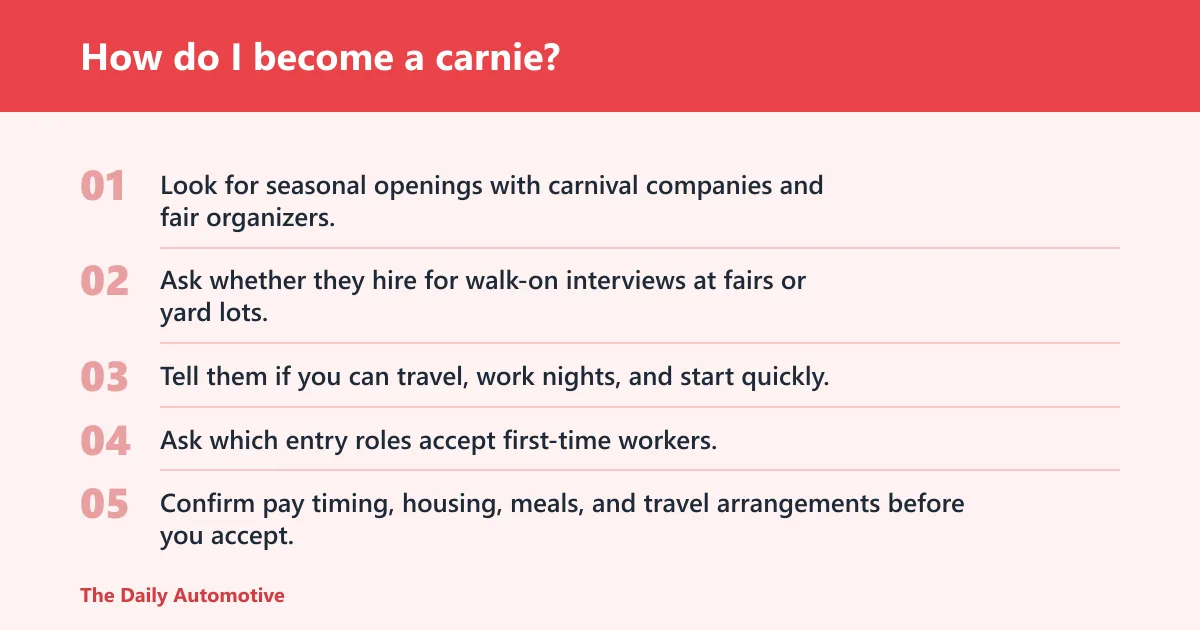
Start by applying for an entry-level position with a traveling carnival, fair operator, midway company, or amusement provider that hires for temporary events. A carnie is a worker in a traveling carnival, circus, or amusement park, and the job usually begins with setup, guest service, ride work, or concession support.
How to find the first opening
- Look for seasonal openings with carnival companies and fair organizers.
- Ask whether they hire for walk-on interviews at fairs or yard lots.
- Tell them if you can travel, work nights, and start quickly.
- Ask which entry roles accept first-time workers.
- Confirm pay timing, housing, meals, and travel arrangements before you accept.
Traveling carnival work often moves from town to town every few days or weeks. That means the first real filter is not enthusiasm; it is whether you can keep up with the pace, the schedule, and the repeated teardown-and-reset cycle.

What a carnival job looks like from day one
Day one often starts with orientation, then a safety briefing, then training at the booth, ride, or food stand you will support. After that, you are expected to follow the routine, keep pace with the crew, and adapt when weather or the schedule changes.
- Show up on time and ready to work.
- Listen to the safety briefing before handling guests or equipment.
- Learn the script, station layout, and who to report problems to.
- Practice the loading, selling, serving, or cleanup routine until it is steady.
- Expect setup, teardown, and last-minute changes in the same shift.
Suppose a fair closes early because of rain. The crew may still need to secure equipment, cover stock, and reset for the next town. That pressure is normal, not exceptional.
What jobs are available at a carnival?
Common entry roles often include ride operator, game booth operator, concession staff, and setup or teardown crew. Some outfits may also hire ticket sellers, cleaners, and grounds staff, depending on the operation.
| Role | Main duties | Good fit for |
|---|---|---|
| Ride operator | Loads and unloads riders, runs the ride, enforces safety rules | People who stay calm and watch details |
| Game booth operator | Explains rules, runs games, awards prizes | Friendly, fast-speaking workers |
| Concession staff | Prepares and serves food and drinks | Quick workers with food-safety discipline |
| Maintenance and repair technician | Keeps rides running smoothly, troubleshoots mechanical problems | Mechanically skilled applicants |
Ride operator, game booth operator, concession staff, and maintenance and repair technician are common entry paths that many applicants hear about first. Those roles are not interchangeable, and some need specific skills before you are cleared to work alone.
What skills do you need to work a carnival?
You need customer service skills, patience, reliability, adaptability, and enough physical stamina to work long hours. Strong customer service skills matter because workers interact with the public constantly. Reliability matters because missing work can affect the whole operation. Adaptability matters because weather, mechanical issues, and schedule changes can happen quickly.
Skills that matter most
- Customer service: stay friendly and clear with guests.
- Patience: handle kids, families, and frustrated customers without escalating.
- Teamwork: hand off tasks cleanly and keep the crew moving.
- Reliability: arrive when scheduled and stay reachable.
- Adaptability: switch tasks when the day changes.
A common first-timer mistake is assuming attitude matters more than consistency. In carnival work, a good mood does not replace showing up, following directions, and keeping the line moving.
How much physical work is involved in carnival jobs?
Quite a lot. Carnival work often involves long hours and a physically demanding workload, including standing for long periods, lifting, carrying, setting up equipment, and working in heat, cold, wind, or rain. Even guest-facing jobs can be strenuous because the pace rarely slows down.
What that means in practice
Ride crews may be on their feet for most of the shift. Setup crews may move heavy parts and tools. Concession staff may repeat the same motions for hours. If you cannot handle manual labor and weather exposure, the work becomes hard quickly.
Is being a carnie a traveling lifestyle?
Yes. Traveling carnivals often move to different towns and cities every few days or weeks, and workers may live in temporary housing, bunk trailers, RVs, or shared rooms depending on the employer. The job is built around movement, not a fixed worksite.
Road-life realities
Meals may be provided, discounted, or entirely your responsibility, depending on the operation. Rest, laundry, internet access, and private space can all be limited. Shared living is common, and changing schedules can make simple routines harder to keep.
Picture a crew that finishes teardown at midnight, sleeps near the lot, then drives to the next site before sunrise. That is a normal rhythm for many traveling outfits, not an outlier.
What are the risks or challenges of carnival work?
The biggest challenges are fatigue, weather exposure, equipment hazards, long shifts, and the pressure that comes with serving the public while moving quickly. Safety rules are serious, especially around rides, loading zones, food handling, and mechanical repairs. Missing work or ignoring instructions can affect the whole crew.
Safety, licensing, and permits
Some jobs may require food-handler certification, ride-specific training, background checks, or drug screening. State fair permits and local event rules can also shape who can work, especially for ride operations and food service. Ask what documentation the employer needs before you travel.
If you have mechanical training, that can help in repair work, but it does not remove the need to follow ride procedures and lockout-style safety habits. If you are a teen or first-time applicant, expect more limited roles and closer supervision.
What is a first-job checklist for aspiring carnies?
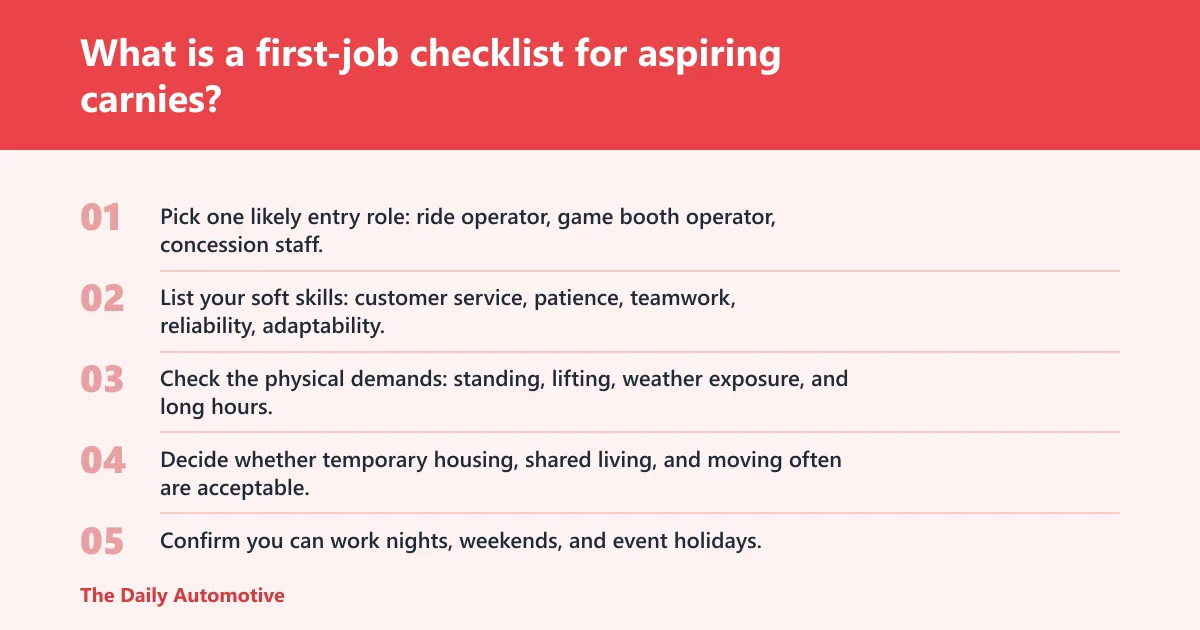
Use this as a fit check before you send an application: choose an entry role, confirm you can travel, and make sure the physical and social demands match your limits. If the basics do not fit, you are better off knowing that now than quitting after the first move.
- Pick one likely entry role: ride operator, game booth operator, concession staff, or setup crew.
- List your soft skills: customer service, patience, teamwork, reliability, adaptability.
- Check the physical demands: standing, lifting, weather exposure, and long hours.
- Decide whether temporary housing, shared living, and moving often are acceptable.
- Confirm you can work nights, weekends, and event holidays.
- Gather ID, references, and any relevant food or mechanical credentials.
- Ask about background checks, drug tests, and safety training before you commit.
Before you apply: self-assessment
- Can you show up on time every day?
- Can you take directions without arguing?
- Can you work around strangers all shift?
- Can you handle heat, rain, or cold?
- Can you leave when the job moves?
Common mistakes and reasons applicants get rejected
Applicants often get rejected for poor reliability, weak communication, or because they do not understand the physical workload. Others quit early after their first long teardown, their first weather delay, or the first time they discover that housing and meals are not as comfortable as they expected.
What goes wrong most often
- They miss calls, orientation, or the first travel date.
- They cannot handle customer complaints or busy lines.
- They ignore safety instructions around rides or food.
- They expect travel to feel like a trip instead of work.
Common first-timer mistakes are overselling flexibility and underselling hard limits. Say your back cannot handle repeated lifting, or suppose you cannot share housing for weeks at a time. That honesty helps both sides avoid a bad hire.
Frequently asked questions
Do you need experience to get a carnival job?
Not always. Many entry roles are open to first-time workers, especially setup help, concessions, and some ride positions. Mechanical roles and some food-service jobs may require related experience, food handling, or technical skill before an employer will put you on shift.
Products related to this article
Sponsored / affiliate links. As an Amazon Associate I earn from qualifying purchases. I may earn additional commission from eligible campaigns.