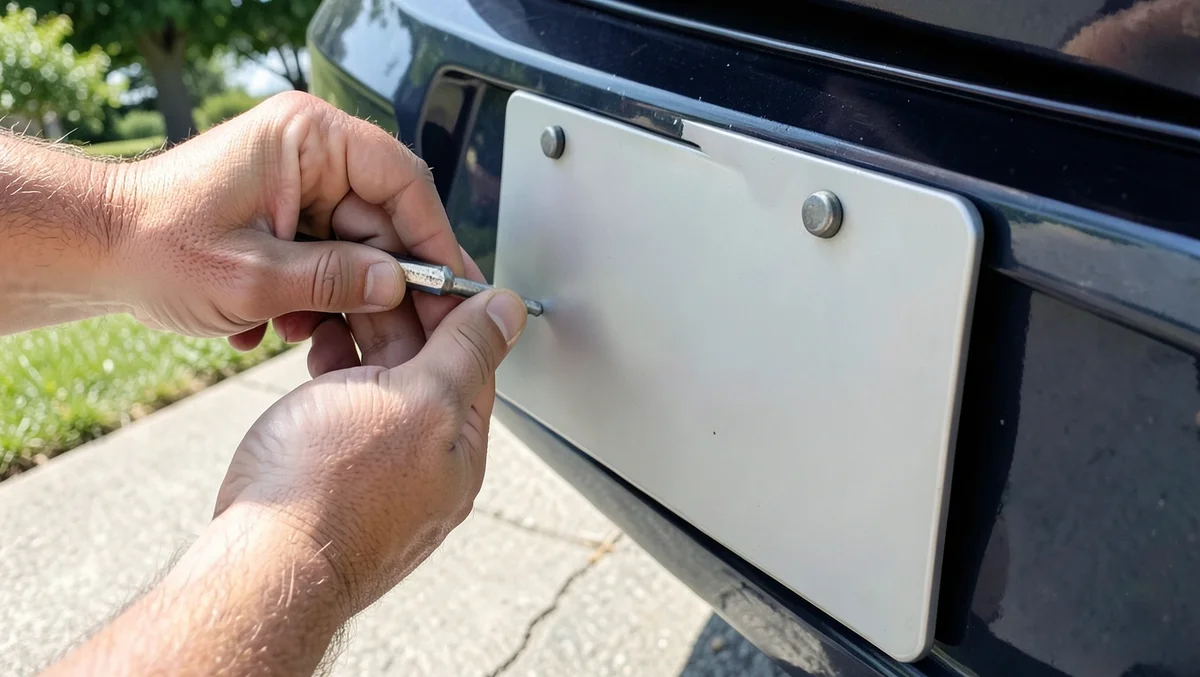
How to Change a Car License Plate: DIY Swap and DMV Steps
Changing a car license plate is really two separate jobs: a five-minute physical swap with a screwdriver, and a legal step at your state motor vehicle agency to get the new plate issued in your name. The physical part is the same almost everywhere. The legal part varies by state, so the steps below flag exactly where you need to check your own state’s rules instead of assuming one process fits every driver.
People end up changing a plate for a handful of reasons: the old one is bent, faded, or unreadable; it was lost or stolen; you just moved to a new state; you are selling the car or moving the plate to a new one; or you had a personalized or vanity plate and want to switch back to a standard, state-issued design. Each of those has a slightly different process, and this guide walks through all of them.
Tools You Need to Change a License Plate Yourself
ANTI-THEFT MOUNTING KIT
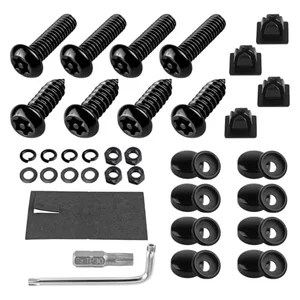 |
YALOK Anti-Theft License Plate Screw Kit – $6.47 A rust-proof stainless steel screw set with a matching security screwdriver, so your new plate goes on cleanly and cannot be pulled off by hand.
|
The physical swap itself needs almost nothing special. A Phillips or flathead screwdriver handles most factory screws, though a small socket wrench is handy if your car uses bolts instead. Keep a rust penetrant spray on hand, since the original screws on an older car are often corroded in place after years of road salt and weather. A clean cloth for wiping down the mounting area finishes the list. None of this needs to cost much, and a basic rust-proof screw kit like the one above is often the only extra purchase worth making.
When You Need a New Plate From Your State DMV
Before you can bolt on a new plate, you usually need to get it issued by your state’s motor vehicle agency first. What that involves depends on why you are getting a new one:
| Situation | What You Typically Need to Do |
|---|---|
| Plate lost, stolen, or destroyed | Some states ask you to file a police report first, then apply for a replacement plate with a new plate number |
| Plate faded, bent, or unreadable | Apply for a replacement using your current plate number; many states let you do this online |
| You moved to a new state | Register the vehicle in your new state within the deadline your new state sets, which issues you that state’s plate |
| Selling the car or moving the plate to a new vehicle | Handled differently from a simple replacement; see our separate guide on transferring a license plate to another car |
| Switching a personalized or vanity plate back to standard | Cancel or surrender the personalized plate through the DMV and request a standard-issue replacement |

Fees vary quite a bit by state. Replacement plates generally run somewhere between $5 and $30, with a handful of states charging as little as a few dollars and a few charging over $30, and personalized or specialty plates usually cost more, often starting around $25 and up. There is no single nationwide number, and your own state’s registration fees, county add-ons, and any specialty-plate surcharges are layered on top of that, so treat any figure you see online, including this one, as a starting estimate rather than what you will actually owe. Your state DMV, motor vehicle agency, or its online fee calculator will have the exact number for your plate type.
Switching a Personalized or Vanity Plate Back to Standard
If you paid extra for a personalized or vanity plate and have decided you would rather have the plain, randomly assigned version, most states treat this the same way as any other plate change: you surrender or cancel the personalized plate through the DMV, and a standard plate with a new plate number is issued in its place. You generally cannot keep your old personalized combination and simply drop the “vanity” status from it, since the standard plate program assigns numbers automatically rather than letting you choose one.
A few practical points are worth checking before you do this. Personalized plates are often billed as an annual add-on fee on top of regular registration, so ask whether canceling mid-cycle gets you a partial refund or simply stops future renewal charges. You will also need to update your car’s registration and insurance records to reflect the new plate number, since insurers and toll agencies match a policy or transponder to a specific plate.
Step-by-Step: Removing the Old Plate and Installing the New One
- Clean the mounting area. Wipe down the bumper or plate bracket with a soft cloth and some soapy water, then let it dry. A clean, dry surface helps the new plate sit flat and keeps it from rattling.
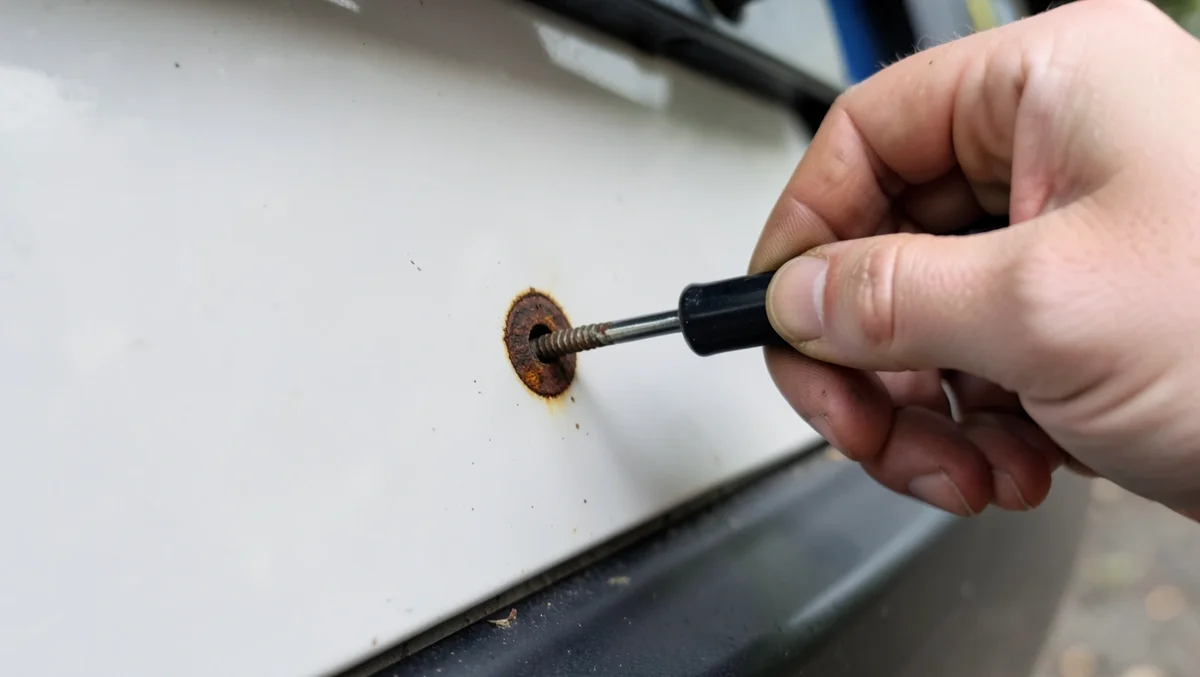
- Inspect the old screws. Check whether they are Phillips, flathead, or a bolt-and-nut setup, and look for rust. Rusty screws are far more likely to strip than snap cleanly out.
- Loosen and remove the old screws. Turn counterclockwise with a screwdriver that fully fits the head. If a screw will not budge, spray it with a rust penetrant, let it sit for a few minutes, and try again rather than forcing it and stripping the head.
- Set the old plate aside. If you are switching to a new plate number, most states want the old plate turned in or, depending on the reason for the change, kept as proof; check what your state requires before recycling or discarding it.
- Position the new plate. Line up the mounting holes with the bracket and make sure the plate sits centered and level. A tilted or off-center plate is one of the easier things an officer will notice.
- Start the screws by hand. Begin one screw in a corner, then the opposite corner, before tightening either one fully. This keeps the plate from shifting out of position as you work.
- Tighten firmly, not forcefully. Snug each screw down until the plate cannot wiggle, but stop there. Over-tightening can crack the plate or strip the screw threads in the bracket.
- Do a final wiggle test. Grab the plate at both corners and try to move it. It should not shift, rattle, or tilt.
Do You Need a Front Plate As Well As a Rear One?
As of 2026, 28 states plus Washington, D.C. still require a front license plate on most passenger vehicles, while the rest only require one on the rear. That list has been shrinking; Utah dropped its front-plate requirement in January 2025, following Ohio in 2020 and Alaska in 2022. If you drive across state lines regularly, or just moved somewhere new, it is worth confirming whether your current state requires both plates before you mount only one, since a missing front plate is a ticketable offense in states that require it.
After You Install the New Plate
- Double-check visibility. The plate should be clean, level, and not blocked by a trailer hitch, bike rack, or license plate frame that covers the numbers or state name.
- Update your insurance. Most insurers ask for your current plate number, and a mismatch can slow down a claim if you are ever in an accident.
- Update any toll transponders. Electronic toll accounts are usually linked to a specific plate number, so a plate change without updating the account can cause billing errors or missed tolls.
- Keep your registration paperwork. Hold onto the receipt or confirmation from the DMV until the new plate and registration are fully reflected in the state’s system, in case you get pulled over in the meantime.
Frequently Asked Questions
How Do I Replace a Lost or Stolen License Plate?
Start by checking whether your state requires a police report for a stolen plate; some do and some do not. Then apply for a replacement through your state DMV, either online or in person, which typically issues a new plate number rather than reprinting your old one. Processing usually takes anywhere from a few days to a few weeks depending on the state.
Can I Transfer My License Plate to a New Car?
In most states, yes, you can move your existing plate to a newly purchased or leased vehicle instead of getting a brand new one, as long as you handle the registration paperwork correctly. The exact steps and required forms differ enough by state that it is worth reading a dedicated walkthrough; see our guide on how to transfer a license plate to another car for the full process.
Do All States Require a Front License Plate?
No. As of 2026, 28 states plus Washington, D.C. require a front plate on most passenger vehicles, and the rest require only a rear plate. The list of states that dropped the front-plate rule has grown in recent years, most recently Utah in January 2025, so it is worth checking your specific state rather than assuming.
How Much Does It Cost to Replace a License Plate?
Replacement plate fees generally run between about $5 and $30 depending on the state, and personalized or specialty plates usually cost more, often starting around $25 and up. There is no single national fee, and county or registration add-ons can raise the total further, so check your own state DMV or its fee calculator for the exact amount before you apply.
Can I Switch a Vanity Plate Back to a Standard One?
Yes. You surrender or cancel the personalized plate through your state DMV, and a standard, randomly assigned plate is issued in its place. You typically cannot keep your personalized combination once it reverts to standard, and it is worth asking whether canceling gets you a partial refund of the annual personalization fee.
What Tools Do I Need to Change a License Plate Myself?
A screwdriver that matches the mounting screws is usually all you need, along with a socket wrench if your car uses bolts instead. A rust penetrant spray helps with corroded original screws, and a rust-proof replacement screw kit is worth the few dollars if the old hardware is too far gone to reuse.
Products related to this article
Sponsored / affiliate links. As an Amazon Associate I earn from qualifying purchases. I may earn additional commission from eligible campaigns.
 Mandark Car License Plate Screws, Rust-Proof Anti-Rattle Vehicle Front Rear License Plate Bolts, Auto Tag Mounting Fastener, Universal Fit (4 Set/Black-Anti-Theft)
 Mandark Car License Plate Screws, Rust-Proof Anti-Rattle Vehicle Front Rear License Plate Bolts, Auto Tag Mounting Fastener, Universal Fit (4 Set/Black-Cross)