Do I Need a Car Seat on a Plane? FAA Rules Explained
No — the FAA does not require a car seat on a plane, even for children under age two. It strongly recommends securing kids under about 40 pounds in an FAA-approved car seat or the CARES harness instead of holding them as a lap infant, since a parent’s arms cannot protect a child through sudden turbulence. This guide breaks down exactly what is required versus recommended, how to tell if your seat is actually approved for flying, and when the CARES harness is the easier option.
What the FAA Actually Requires vs. Recommends
The FAA’s rule is narrower than most parents expect. A child under two can still fly as an unticketed “lap infant,” held in an adult’s arms for the entire flight — no car seat, harness, or extra ticket is required by federal regulation. The National Transportation Safety Board has pushed the FAA to close that gap since 1979, arguing that a parent’s arms simply cannot hold onto a child through unexpected turbulence or a hard landing, and studies on in-flight injuries back that up. So while the FAA will not stop you from flying with a toddler on your lap, its own guidance is to buy the child a seat and secure them in an approved car seat or harness any time they weigh under roughly 40 pounds.
How to Tell If Your Car Seat Is Approved for Flying
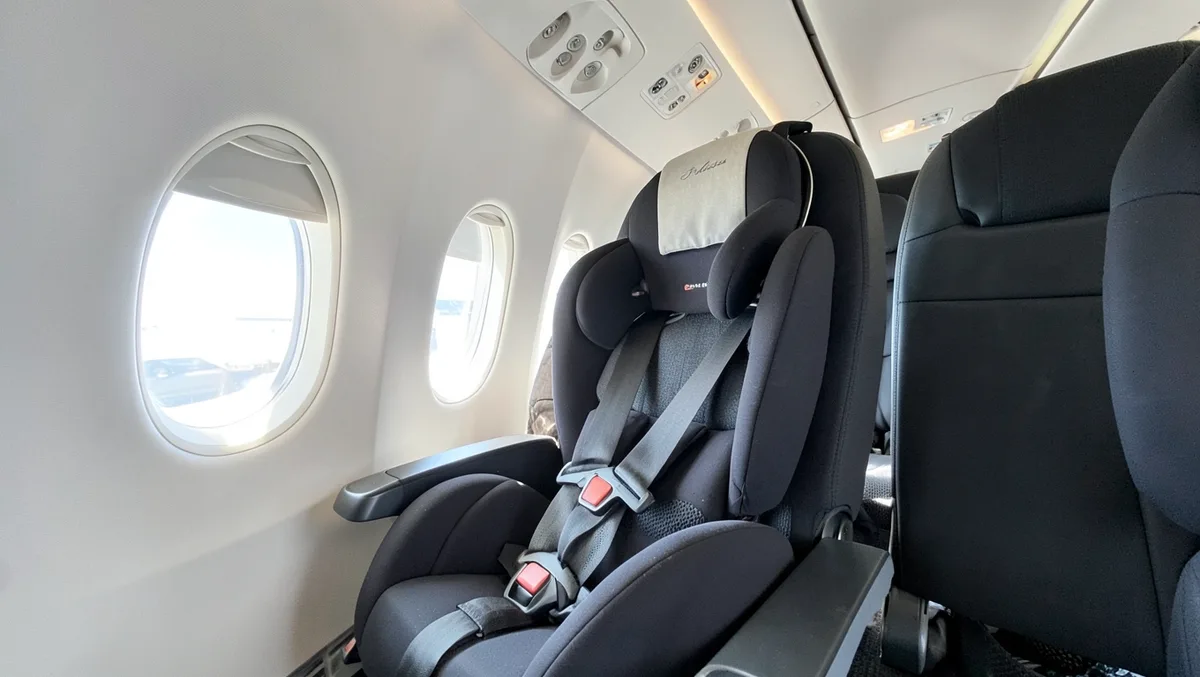
Not every car seat that is fine for your minivan is fine for a plane. Look for a sticker on the seat’s shell, usually on the side or back, stating that it is “certified for use in motor vehicles and aircraft.” If that exact wording is not there, the FAA does not consider the seat approved for flying, even if it is a perfectly good car seat on the road. Belt-positioning booster seats are excluded entirely; only seats with their own built-in five-point harness qualify, since a booster relies on the airplane seat’s shoulder belt geometry, which most aircraft do not have.
Size matters too. Most airplane window seats only accept a car seat that is about 16 inches wide or narrower, and airlines only allow child restraints in window seats — never in an aisle seat, and never in or next to an emergency exit row, since a car seat there could block a quick evacuation. If your seat is wider than that, or you end up with a middle or aisle assignment, the CARES harness below is usually the easier fix.
The CARES Harness: A Lighter FAA-Approved Alternative
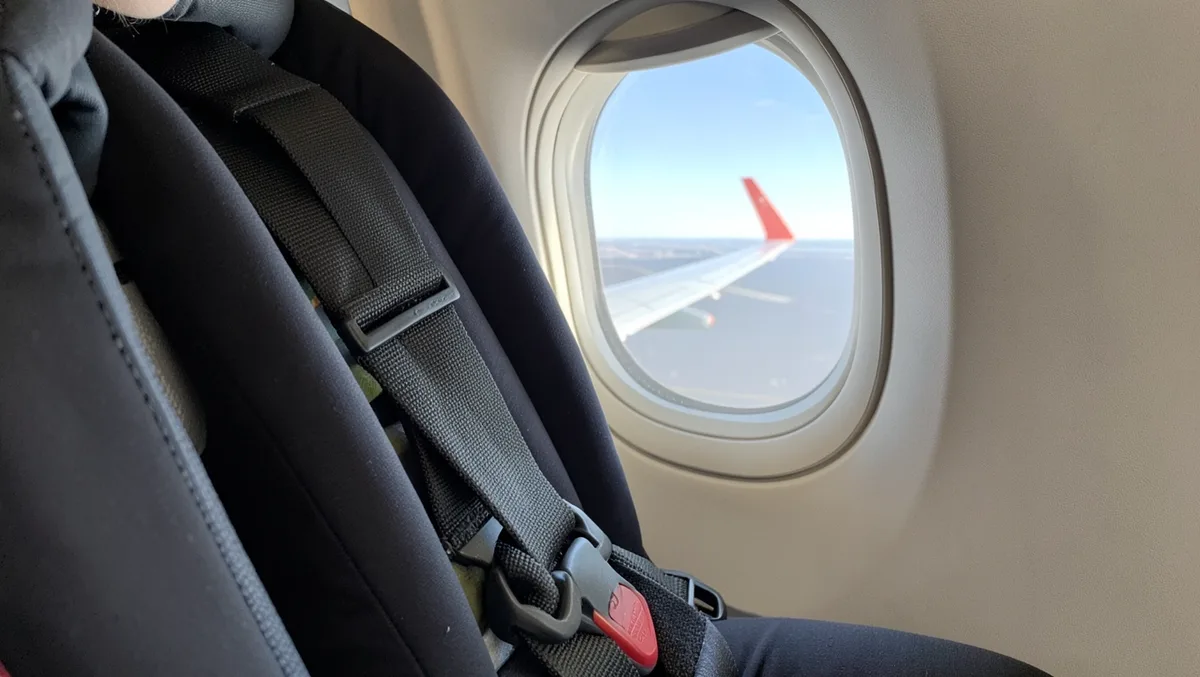
If hauling a bulky car seat through security sounds like too much hassle, there is a purpose-built alternative. The CARES Safety Restraint System — sold as the “Kids Fly Safe” CARES harness — is the only harness-type device the FAA has certified as an equivalent level of safety to a car seat, and it is accepted on all 10 major U.S. airlines plus most international carriers. It is built for children roughly 22 to 44 pounds, about one to four years old, clips around the airplane seat’s own headrest and lap belt, and packs down small enough to fit in a diaper bag — no base, no straps trailing through the jet bridge, no gate-checking a 20-pound car seat.
BEST FOR A LIGHTWEIGHT, FAA-APPROVED ALTERNATIVE
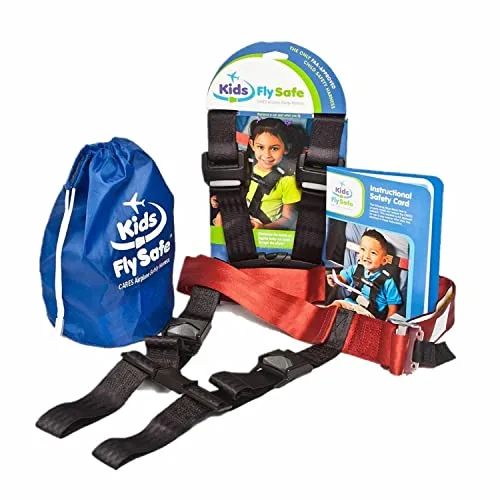 |
CARES Safety Restraint System – $72.99 The only harness-type child restraint the FAA has certified as an equivalent level of safety to a car seat, for kids about 22-44 lbs.
|
Weighing the Tradeoffs of Bringing a Car Seat
A full car seat still has real advantages a harness does not. It reclines, so a sleeping toddler does not slump against a stranger’s shoulder, and a child who is used to their own seat at home tends to settle in faster on a long flight. The tradeoff is bulk: a car seat is heavy to carry through security, eats into legroom for the passengers around you, and some airlines treat it as extra checked baggage if you gate-check it rather than carry it on. Renting one at your destination sidesteps the lugging problem — some rental counters, including Alamo, offer this — but it adds its own cost and means trusting an unfamiliar seat’s condition and history.
Before You Fly: Check the Seat’s Age and Your Airline’s Policy
Every car seat has an expiration date molded into the plastic or printed on a label, usually six to ten years from its manufacture date, and an expired seat is not considered safe or FAA-approved even if it still has the right sticker. That is worth a second look if the seat you are planning to fly with has been sitting in a garage or handed down for a few years. Airline rules on car seats vary in the details too — some waive baggage fees for car seats, some are stricter about which rows they allow — so it is worth a quick check of your specific airline’s policy before you fly rather than assuming every carrier handles it the same way.
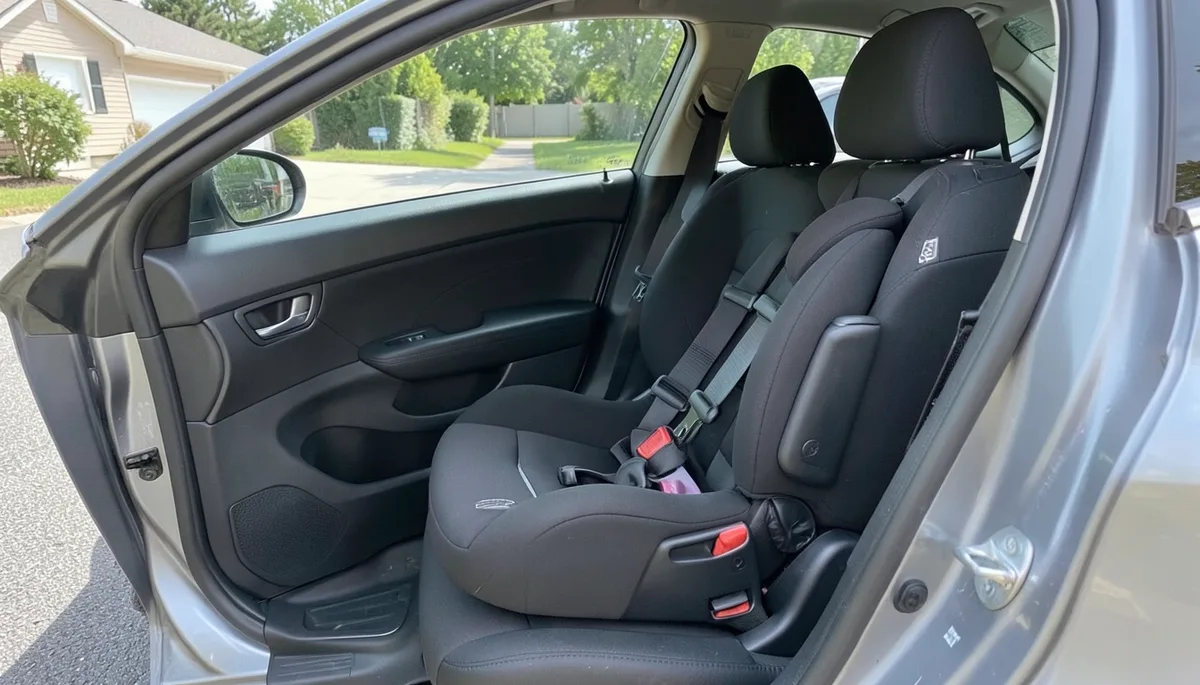
Between trips, storing the seat properly away from direct sun and extreme heat also helps it hold up until its expiration date, and keeps the certification label from fading past the point where a gate agent can read it.
Frequently Asked Questions
Do I need a car seat on a plane for my toddler?
No federal rule requires one, but the FAA recommends securing children under about 40 pounds in an FAA-approved car seat or the CARES harness rather than holding them as a lap infant, since a lap hold offers no real protection during turbulence.
Can you fly with a baby without a car seat?
Yes. A child under two can fly as an unticketed lap infant with no car seat or harness required by law. The FAA simply recommends against it and encourages buying the child a seat instead.
What is the FAA sticker that shows a car seat is approved for flying?
Look for wording on the seat’s shell stating it is “certified for use in motor vehicles and aircraft.” Without that exact certification, the seat is not considered airplane-approved even if it is road-legal, and booster seats never qualify since they need a built-in five-point harness instead.
What is the CARES harness, and who can use it?
The CARES Safety Restraint System is the only FAA-certified harness-type child restraint for flying. It fits children roughly 22 to 44 pounds, straps around the airplane seat itself, and is accepted by all 10 major U.S. airlines as an alternative to bringing a full car seat.
Is it free to bring a car seat on a plane?
Most U.S. airlines let you check a car seat at the gate or in checked baggage at no extra charge, separate from your regular baggage allowance, but policies vary by carrier, so confirm with your airline before you fly.
Can a car seat go in any airplane seat?
No. The FAA only allows child restraints in window seats, never in an aisle seat or an emergency exit row, since a bulky seat there could block an evacuation. Most also need to be about 16 inches wide or narrower to fit.
Conclusion
There is no rule forcing you to buy your toddler a seat, but every safety body that has studied this — the FAA, the NTSB, and independent pediatric safety researchers — lands in the same place: an approved car seat or a CARES harness protects a small child far better than an adult’s arms ever can. Weigh the extra ticket cost and the hassle of carrying a car seat against that protection, check your specific airline’s policy before you book, and you will be set for a smoother flight either way.
Products related to this article
Sponsored / affiliate links. As an Amazon Associate I earn from qualifying purchases. I may earn additional commission from eligible campaigns.