Is It Bad to Park Your Car Outside in Winter?
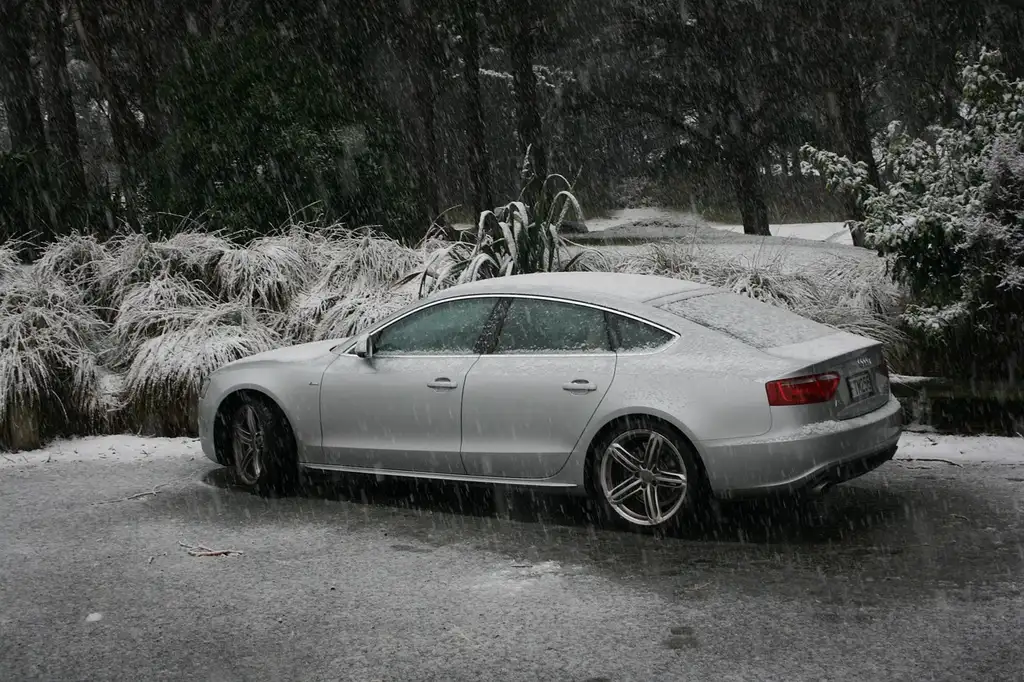
Parking your car outside in winter is usually fine if it starts cleanly in subfreezing weather and you keep the battery, tires, fluids, and body protected; if you keep seeing cold-start trouble or heavy road-salt exposure, move it indoors or add protection. Bad winter parking can drain the battery, freeze locks and washer fluid, and speed up corrosion. This guide covers the risks, the maintenance checks that matter most, and a simple yes-or-no parking rule for your climate.
Winter parking checklist
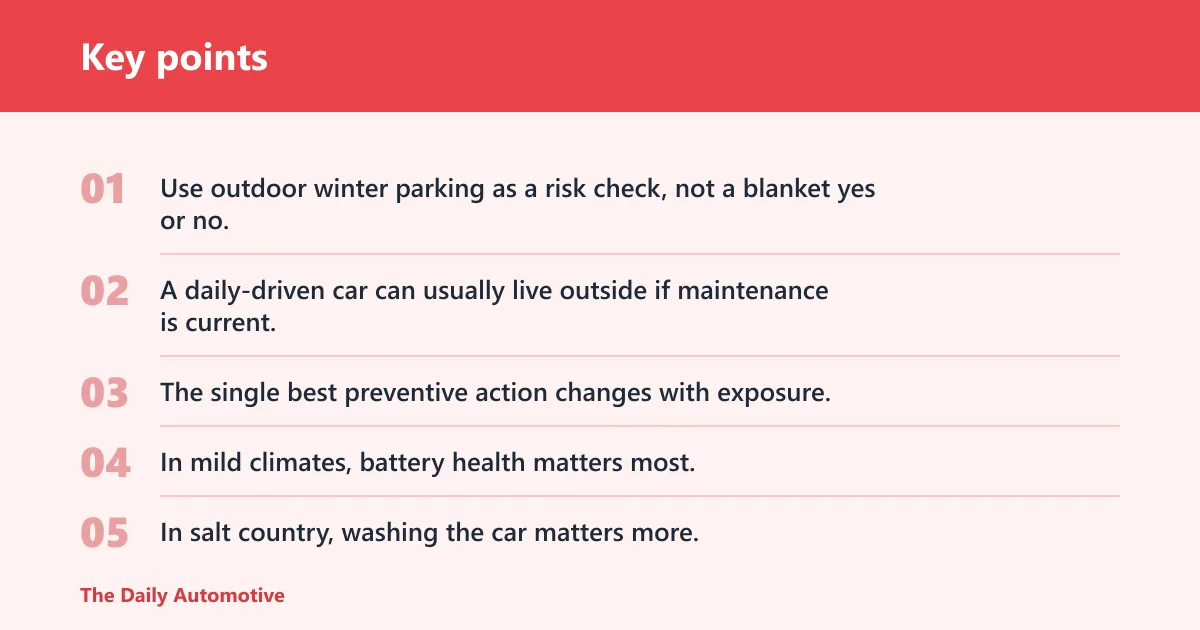


Use outdoor winter parking as a risk check, not a blanket yes or no. A daily-driven car can usually live outside if maintenance is current, but longer exposure in salt, slush, and freeze-thaw cycles raises the odds of slow starts, ice buildup, and corrosion.
| Climate condition | Expected vehicle stress | Highest-risk component | Single most important preventive action |
|---|---|---|---|
| Mild winter, light frost, little road salt | Moderate cold-start load and minor ice buildup | 12-volt battery | Check battery age and state of charge before the coldest stretch |
| Moderate winter, regular freezing nights, some salt use | More cold cranking, tire-pressure loss, and moisture exposure | Tires and brake hardware | Check tire pressure when tires are cold and wash salt off often |
| Severe winter, deep cold, frequent snow, heavy salt | High cold-start load, fast ice buildup, strong corrosion risk | Battery, underbody, and visibility systems | Test the battery, keep washer fluid winter-rated, and rinse salt quickly |
| Gas vehicle | Cold crank demand on the starter and battery | 12-volt battery | Have the battery and charging system checked if starts slow |
| Hybrid vehicle | Frequent 12-volt dependency for control systems and start-up | 12-volt battery | Keep the 12-volt battery healthy before long cold spells |
| EV | Reduced range, cold-soaked battery, and possible charge-port icing | Traction battery support systems and 12-volt battery | Keep charge state adequate and precondition when the maker allows it |
The single best preventive action changes with exposure. In mild climates, battery health matters most. In salt country, washing the car matters more. In severe winter, both matter, and the battery, tires, and washer system all need attention.
Is parking outside in winter bad?
Parking outside in winter is often acceptable for a daily driver if the car is prepared for cold starts, moisture, and salt. It becomes a reliability problem when the battery is weak, the tires are underinflated, the washer fluid is wrong for the weather, or the car sits untouched for long stretches in severe cold.
When it is usually fine
A car that is driven often, maintained on schedule, and parked where snow can be cleared away is often fine outdoors. Cold weather still increases stress, but the risk stays manageable when the battery is healthy, the cooling system is correct for the climate, and the car gets regular salt removal.
When exposure becomes a reliability problem
Exposure turns into a problem when cold starts get slower, electrical accessories dim, doors and wipers freeze, or the car spends days under slush and salt. That is where outdoor parking stops being a convenience question and starts becoming a maintenance question.
Say your sedan sits outside overnight in a city that salts roads daily. If the battery is already old and the car now cranks slowly at dawn, the issue is not the parking spot alone. It is the combination of cold, age, and repeated load.
Overnight use versus long-term storage
Overnight parking and long-term storage are different. Overnight outside parking is mainly a cold-start and frost problem. Long-term outdoor storage adds battery drain, flat-spot risk, moisture buildup, and more corrosion exposure. A car that is parked for weeks needs a different plan than one that leaves at 7 a.m. every day.
What cold does to your battery
Cold weather makes the 12-volt battery work harder and deliver less. AAA reports that a conventional battery can lose about 35% of its strength at 32°F and roughly 60% at 0°F. Cold temperatures may also cause battery fluid to freeze and expand, which shortens battery life.
12-volt cranking performance and age sensitivity
The battery’s age matters more in winter than many drivers expect. A battery that seems acceptable in mild weather can struggle once temperatures fall, especially if it is already near the end of its life. Slow cranking, repeated start attempts, or dim interior and exterior lights are warning signs.
Suppose a compact SUV starts fine on Monday, then takes longer to fire on Thursday after a cold snap. That pattern points to reduced cranking performance, not just a random bad start. In that case, the battery and charging system need attention before the weather gets worse.
What slow starts and dim lights suggest
Slow cranking usually means the battery is weak, the charging system is not keeping up, or both. Dimming headlights, sluggish power windows, or accessories that seem weaker than usual are useful clues. Do not judge battery health by feel alone.
When to have the battery and charging system checked
Have the battery tested before a long cold spell if it is several years old, if starts are slow, or if the car has been sitting. If the vehicle struggles to start in cold weather, the charging system should be checked too. Follow the vehicle manual and local safety rules if any charging or jump-start work is needed.
How winter affects tires and fluids
Tire pressure drops when temperatures fall, and that can make an otherwise healthy car feel unstable or trigger a warning light. Fluids matter just as much. Engine coolant must match the vehicle’s approved mix and freeze-protection requirements, and washer fluid needs a winter-rated formula that protects the system and visibility.
Tire pressure when temperatures drop
Pressure can drop about one to two PSI for every 10°F temperature change. Check tires when they are cold, use the PSI listed on the driver-door placard, and pay attention to the low-pressure warning light. Cold air causes tire pressure to drop and can lead to underinflated tires.
NHTSA recommends checking tire tread and sidewalls for cuts, cracks, bulges, punctures, and uneven wear. If tread is worn or the sidewall is damaged, winter traction and safety both suffer.
Coolant freeze protection and approved mix/spec
Engine coolant is not a guesswork item. Use the vehicle-approved mix and specification from the owner’s manual, and confirm that it provides the freeze protection your climate needs. Not all winter fluids are interchangeable, and topping off with the wrong product can cause problems.
Winter washer fluid and visibility
Use a winter-rated windshield-washer fluid that meets the vehicle’s requirements. It should resist freezing, support the washer system, and keep the windshield clear enough for safe visibility. If the wrong fluid freezes, visibility drops fast and the washer system can suffer.
A common first-timer mistake is topping off with summer washer fluid after the first snowfall. The reservoir still fills, but the fluid can freeze when you need it most. That is why the label and the owner’s manual both matter.
Will outdoor parking cause rust?
Outdoor parking itself does not create rust overnight, but winter salt and trapped moisture can cause real damage over time. Road salt is highly corrosive and can rust wheel wells and body panels. Parking outside in winter may also accelerate brake rotor rust through moisture exposure.
Road salt on underbodies and brakes
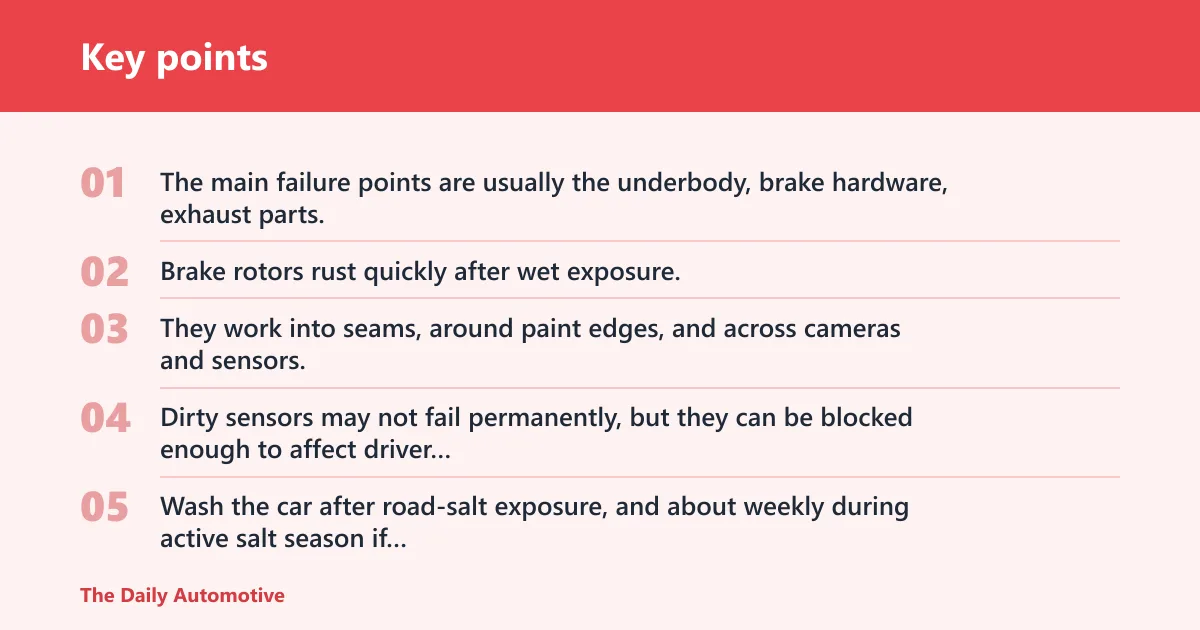
The main failure points are usually the underbody, brake hardware, exhaust parts, and seams where salty water can sit. Brake rotors rust quickly after wet exposure, and repeated salt contact can attack metal and coatings below the body where you do not see it.
Seams, paint edges, cameras, and sensors
Salt and slush do not stop at the frame. They work into seams, around paint edges, and across cameras and sensors. Dirty sensors may not fail permanently, but they can be blocked enough to affect driver aids and parking systems.
Wash triggers during salt season
Wash the car after road-salt exposure, and about weekly during active salt season if conditions and local water rules allow it. The trigger is salt, not the calendar alone. If roads are dry and untreated, washing can wait. If the car has been through slush or brine, do not let it sit.
How do you protect a car parked outside?
Protection starts with reducing ice buildup, moisture exposure, and salt contact. A fitted windshield cover can help when the vehicle maker allows it, wipers must be kept in good shape, and a clean, dry car cover can help in storage situations. Winter tires and a sheltered spot also improve the odds.
Windshield covers and wiper blades
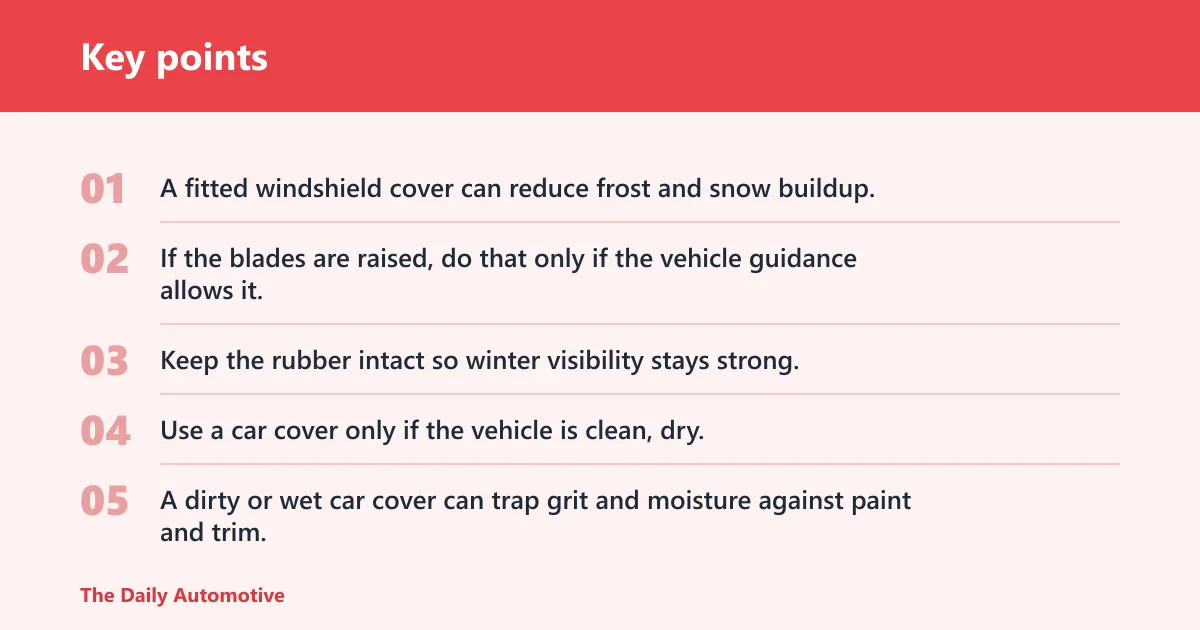
A fitted windshield cover can reduce frost and snow buildup, but remove it carefully and use it only where vehicle instructions permit. Wiper blades can freeze to the glass. Do not force them loose. If the blades are raised, do that only if the vehicle guidance allows it. Keep the rubber intact so winter visibility stays strong.
Car covers for clean, dry vehicles only
Use a car cover only if the vehicle is clean, dry, and the cover is weatherproof and properly fitted. A dirty or wet car cover can trap grit and moisture against paint and trim. That matters more for longer storage than for a car that leaves every morning.
For roof or hitch cargo, follow the vehicle and product manual, never exceed the vehicle’s rated roof, hitch, or tow limit, keep items out of airbag zones and the driver’s view, and check local laws. The same caution applies when using any cover or accessory that could interfere with visibility or moving parts.
Winter tires and sheltered parking
Winter tires improve grip in snow and ice, especially for frequent winter driving. They do not replace pressure checks, alignment checks, or braking attention. A sheltered parking spot can reduce snow and ice accumulation, but it does not remove the need for winter maintenance.
Garage parking versus outside
Garage or covered parking reduces snow and ice buildup and can help keep the battery warmer. It is not always a pure win. If a wet, salty car is parked inside a poorly ventilated garage, the meltwater can add condensation and humidity, which can increase rust risk.
Snow and ice reduction
Inside parking usually means less scraping, less frozen glass, and less snow packed into seals and trim. That makes the morning routine easier and can reduce stress on wipers, doors, and locks.
Battery warmth and condensation tradeoffs
A warmer space helps the battery and often reduces cold-start strain. But if the car comes in covered with slush, the garage can turn that moisture into humid air. OCTO warns that snow melting in a garage can create condensation and humidity with road salt, and repeated temperature changes can deteriorate rubber seals. Keeping the garage around 5 C is advised in the supplied guidance.
Ventilation for wet or salty cars
If you park a wet or salty car inside, ventilation matters. Letting snow melt and evaporate without airflow leaves salt and moisture on the car and the floor. A dry vehicle in a ventilated garage is a different situation from a slushy one in a closed space.
Frequently asked questions
Is it bad to park your car outside in the winter?
Not usually, if the car is maintained for cold weather and driven often. Outdoor winter parking becomes a problem when the battery is weak, the tires are underinflated, the washer system is not winter-ready, or salt exposure is heavy and unwashed. Long-term storage outside is a different risk level.
Is it bad to leave a car outside in winter?
It is acceptable for many daily drivers, but the car needs winter prep. The battery, tires, coolant, and washer fluid should all be suited to the climate. If the car sits for long periods in deep cold or heavy salt, the risk rises and indoor parking becomes more attractive.
Is it bad to leave your car outside in cold weather?
Cold weather by itself is not fatal to a car, but it stresses the battery and can freeze moisture on glass, locks, and wipers. The bigger issue is repeated exposure with weak maintenance. If starts are slow or the battery is old, cold weather makes the problem show up faster.
Can you leave your car outside in winter?
Yes, if it is ready for it. Check the battery before prolonged cold, keep tires at the placard pressure when cold, use approved coolant with the right freeze protection, and keep washer fluid winter-rated. For frequent salt exposure, wash the car often enough to remove buildup.
What happens if you park your car outside in winter?
You get more frost, more cold-start strain, more tire-pressure drop, and more salt contact if roads are treated. Over time, that can mean weaker battery performance, frozen wipers or washer fluid, and corrosion on underbody parts, brakes, seams, and exposed edges. The risk grows with time and severity.
How do you protect a car parked outside in winter?
Start with a healthy battery, correct tire pressure, approved coolant, and winter washer fluid. Use a fitted windshield cover where allowed, keep wiper blades in good shape, wash off road salt regularly, and choose a sheltered spot if you can. For long storage, a dry, properly fitted cover can help.
Does parking outside in winter hurt your battery?
Yes, cold reduces a conventional battery’s strength, and a weak or aging battery will show it first. Outdoor parking does not automatically ruin a battery, but repeated cold starts and long sits in freezing weather shorten the margin. Slow cranking or dim lights are the warning signs to act on.
Does parking outside in winter cause rust?
It can, mainly through salt and trapped moisture rather than the cold itself. Road salt is highly corrosive and can rust wheel wells and body panels, while moisture can accelerate brake rotor rust. Regular washing during salt season is the best defense for a car that lives outside.
Should you cover a car parked outside in winter?
Sometimes. A properly fitted weatherproof cover can help a clean, dry vehicle, especially for longer exposure or storage. It can also trap moisture if used on a dirty or wet car, so fit and dryness matter. Follow the vehicle and cover instructions, and do not block visibility or airflow where the manual warns against it.
Products related to this article
Sponsored / affiliate links. As an Amazon Associate I earn from qualifying purchases. I may earn additional commission from eligible campaigns.