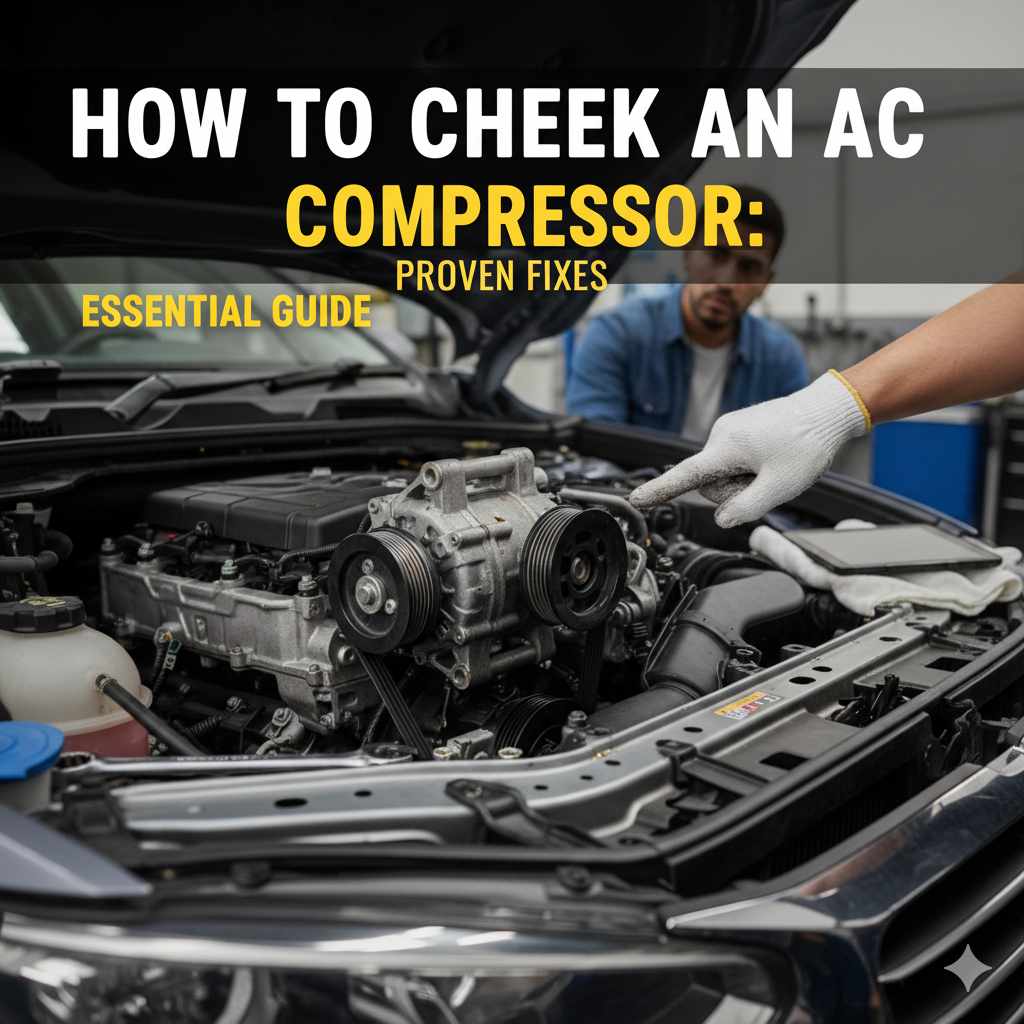
How to Check An AC Compressor: Essential Guide
Checking your car’s AC compressor involves a few simple steps to identify potential issues. Listen for unusual noises like grinding or squealing, check for leaks around the unit, and ensure the clutch engages properly. These checks can help you determine if a professional AC repair is needed.
Is your car’s air conditioning system blowing warm air instead of the cool breeze you crave? It can be frustrating, especially on a hot day. One of the most vital parts of your car’s AC system is the compressor. Think of it as the heart of the system, pumping the refrigerant that makes the air cold. If it’s not working right, you won’t get cool air. But don’t worry, understanding how to check an AC compressor on a car doesn’t require you to be a master mechanic. We’ll walk through it step-by-step, making it easy to spot common problems early. This guide will help you identify if your compressor is the culprit, saving you time and potential repair costs.
Understanding Your Car’s AC Compressor
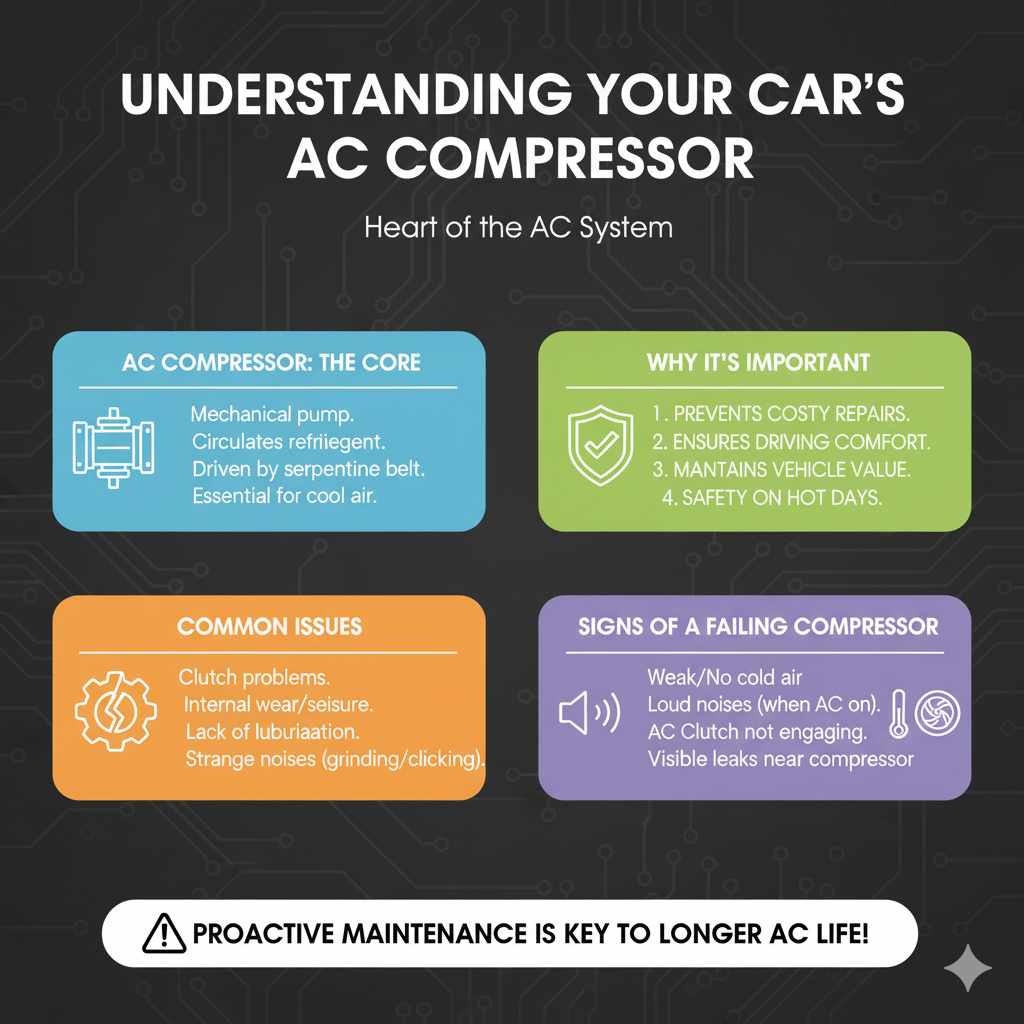
Your car’s air conditioning system is a marvel of engineering, working to keep you comfortable during drives. At its core is the AC compressor. It’s a mechanical pump responsible for circulating the refrigerant throughout the AC system. Without a properly functioning compressor, the refrigerant can’t do its job of absorbing heat from the cabin and releasing it outside. This means no cool air. When you turn on your AC, the compressor clutch engages, and the unit starts its vital work. It’s often driven by the engine’s serpentine belt, which means it shares this essential power source with other critical parts of your car.
Common issues that can affect an AC compressor range from simple clutch problems to more complex internal wear. Sometimes, a lack of proper lubrication can cause damage, or external factors like debris can interfere with its operation. Recognizing the signs of a failing compressor is the first step to getting it fixed. We’ll cover how to listen for strange sounds, look for visible cues, and understand what the clutch’s behavior tells us.
Why Checking Your AC Compressor is Important
Regularly checking your AC compressor is a smart move for any car owner. Here’s why:
- Prevent Costly Repairs: Catching a minor issue early can prevent it from escalating into a major, expensive problem. A failing compressor can sometimes damage other AC components if left unchecked.
- Ensure Comfort: Nobody wants to drive in a hot car. Knowing your AC system is in good working order means you can count on it when you need it most.
- Maintain Vehicle Value: A fully functional AC system is a key feature when selling a car. Keeping it in good shape helps maintain its market value.
- Safety: On extremely hot days, a malfunctioning AC can make the cabin unbearable, potentially affecting driver focus and comfort.
This guide will equip you with the knowledge to perform a basic check, empowering you to make informed decisions about your vehicle’s AC maintenance.
Tools You Might Need for a Basic Check
While we’re focusing on a beginner-friendly check, having a few basic tools can make the process easier and safer. You don’t need a full mechanic’s toolkit for this. Here’s what can be helpful:
- Protective Eyewear: Always wear safety glasses to protect your eyes from dust, debris, or any accidental splashes.
- Work Gloves: Keep your hands clean and protected from any sharp edges or grime.
- Flashlight: A good flashlight is essential for illuminating the compressor and surrounding components, especially in tight engine bays.
- A Piece of Hose or Extension Tube (Optional): This can be a simple garden hose or a dedicated listening device to help you pinpoint noises coming from the engine bay.
- Car Manual: Your owner’s manual can be a great reference to help you locate the AC compressor in your specific vehicle.
Remember, safety is paramount. If you’re ever unsure about a step or feel uncomfortable working around a running engine, it’s always best to consult a professional. You can find great resources on automotive safety from organizations like the National Highway Traffic Safety Administration (NHTSA).
How to Check an AC Compressor on a Car: Step-by-Step Guide
Checking your AC compressor involves observing its behavior and listening for tell-tale signs. We’ll break this down into manageable steps so you can confidently assess its condition.
Step 1: Locate the AC Compressor
The AC compressor is typically found at the front of the engine, mounted on a bracket. It’s usually driven by the serpentine belt. Look for a pulley-driven component with refrigerant lines (metal pipes) running to and from it. Your car’s owner’s manual is your best friend here, as the exact location can vary significantly between makes and models.
Tips for Finding It:
- Open your car’s hood and locate the serpentine belt. The compressor is usually one of the components that the belt wraps around, with a pulley at its front.
- Look for two metal lines (one larger, one smaller) connected to the compressor body. These are the refrigerant lines.
- If you have a flashlight, use it to get a clearer view.
Step 2: Visually Inspect the Compressor
With the engine OFF and cool, take a good look at the compressor. What should you be looking for during this visual check?
- Leaks: Check the seals and connections for any signs of oily residue. Refrigerant oil often escapes with leaking refrigerant. This might look like dark, greasy spots on the compressor body or near the fittings.
- Damage: Look for any obvious physical damage to the compressor housing or its pulley.
- Belt Condition: While you’re there, inspect the serpentine belt that drives the compressor. Is it cracked, frayed, or overly worn? A bad belt can affect compressor performance or prevent it from running altogether.
Step 3: Listen for Unusual Noises (Engine Running)
This is a critical step, but it requires caution because you’ll be working around a running engine. Make sure your car is parked on a level surface with the parking brake engaged. Have a friend help you if possible – one to operate the engine/AC controls, and one to listen.
Important Safety Note: Stay clear of moving parts like belts and fans when the engine is running. Do not wear loose clothing.
- Start the Engine: Let the engine run for a minute to stabilize.
- Turn on the AC: Set your AC to the coldest setting and the fan to high.
- Listen Carefully: This is where your ear becomes your best tool. As you turn on the AC, you should hear a distinct “click” when the compressor clutch engages. After the click, listen to the compressor itself.
-
Common Noises to Listen For:
- Grinding or Rumbling: This often indicates internal damage or bearing failure within the compressor.
- Squealing: A high-pitched squeal, especially when the AC is first turned on or when the engine is revved, could point to a worn belt, a faulty clutch bearing, or over-tensioned belt.
- Knocking or Clattering: These sounds can suggest internal mechanical problems, such as worn pistons or valves.
- Hissing: A faint hiss might be normal as the refrigerant circulates, but a loud, continuous hiss could indicate a refrigerant leak.
- Use a Listening Aid (Optional): If you have a piece of hose, you can carefully place one end to your ear and the other near different parts of the compressor (away from moving parts!) to isolate the source of any noises.
Step 4: Check the Compressor Clutch Engagement
The AC compressor has a clutch on the front of its pulley. When you turn on the AC, this clutch should engage, causing the center part of the pulley to spin with the outer part. When you turn the AC off, the center part should stop spinning.
How to Check:
- Engine Off: With the engine off, try to spin the pulley by hand (wear gloves!). The outer part of the pulley should spin freely on its own. The center hub (the clutch plate) should NOT spin with the pulley. You should feel some resistance from the compressor’s internal components, but the hub should remain stationary.
- Engine On & AC Off: With the engine running and AC off, the outer pulley should spin, but the center hub (clutch) should remain stationary.
- Engine On & AC On: With the engine running and AC turned on (cold setting, high fan), you should hear a distinct “click” as the clutch engages. The center hub should now be spinning along with the outer pulley.
- Engine On & AC Off: Turn the AC off. You should hear another click, and the center hub should stop spinning, while the outer pulley continues to spin with the belt.
What to Look For:
- No Engagement: If the center hub doesn’t spin when the AC is on, the clutch might not be engaging. This could be due to electrical issues (blown fuse, faulty clutch coil, bad pressure switch) or a problem with the clutch itself.
- Stuck Engaged: If the center hub spins constantly, even when the AC is off, it can indicate a stuck clutch, which can lead to premature wear.
- Intermittent Engagement: If the clutch engages and disengages rapidly or inconsistently, it could be a sign of low refrigerant, a failing clutch, or an electrical problem.
Step 5: Inspect for Refrigerant Leaks
Refrigerant leaks are a common reason for AC system failure, and they often manifest around the compressor.
How to Inspect:
- Oily Residue: As mentioned earlier, look for greasy, dark spots on the compressor, its connections, and nearby engine components. Refrigerant oil is used to lubricate the compressor, and it will often leak out with the refrigerant gas.
- Detergent and Dye (Advanced): Some mechanics add a UV dye to the AC system. If there’s a leak, the dye will show up brightly under a UV light, pinpointing the source. This isn’t a common DIY step but is worth knowing about.
A sign of a refrigerant leak is often accompanied by a decrease in cooling performance. If your AC isn’t as cold as it used to be, suspect a leak. Repairing AC leaks requires specialized equipment and knowledge, often involving vacuuming the system and recharging it with the correct amount of refrigerant.
Common AC Compressor Problems and What They Mean
Understanding the noises and visual cues can help you diagnose what might be wrong. Here’s a breakdown of common issues:
| Symptom | Potential Cause | What It Means |
|---|---|---|
| Grinding/Rumbling Noise | Worn compressor bearings or internal damage | The compressor’s internal components are failing. This usually requires replacement. |
| Squealing Noise (when AC is on) | Loose or worn serpentine belt; worn clutch bearing | Could be a simple fix if it’s just the belt. If it’s the bearing, the clutch assembly or compressor may need servicing. |
| Knocking/Clattering Noise | Internal compressor damage (e.g., broken valve, piston issue) | Severe internal damage. The compressor likely needs to be replaced. |
| AC Blows Warm Air, but Compressor Clutch Doesn’t Engage | Low refrigerant, electrical issue (fuse, relay, pressure switch, clutch coil), faulty clutch | The compressor isn’t receiving the signal or power to work, or the clutch itself has failed. |
| AC Blows Warm Air, Compressor Clutch Engages, but No Cold Air | Low refrigerant, internal compressor failure, blocked expansion valve or orifice tube | The compressor might be running, but it’s not effectively compressing refrigerant, or there’s another blockage in the AC system. |
| Visible Oily Residue | Refrigerant leak | Refrigerant is escaping the system, reducing its cooling efficiency and potentially causing environmental harm. Needs professional repair. |
It’s important to remember that these are just common indicators. Diagnosing AC issues can be complex, as several components work together. For instance, a faulty pressure switch can prevent the clutch from engaging even if the compressor is perfectly fine. Similarly, a blocked expansion valve can cause symptoms that mimic a failing compressor.
When to Call a Professional
While these checks can help you identify potential issues, there are times when professional help is essential. DIY AC repair can be tricky and sometimes dangerous due to the high pressures and specific refrigerants involved.
You should definitely call an automotive AC technician if:
- You hear loud grinding, banging, or other severe noises coming from the compressor. This often signifies significant damage.
- You suspect a refrigerant leak. Handling refrigerants requires special licenses and equipment to do it safely and legally. You can learn more about AC refrigerant safety from the U.S. Environmental Protection Agency (EPA).
- The compressor clutch doesn’t engage and you’ve checked the obvious (like fuses) without success. Electrical diagnostics for AC systems can be complex.
- Your AC system was recently serviced, but still isn’t working correctly.
- You are uncomfortable performing any of the checks or working around a running engine. Safety first!
- You need a refrigerant recharge. This requires specialized equipment to ensure the correct amount is added and the system is properly vacuumed and leak tested.
A professional technician has the tools and expertise to accurately diagnose the problem, repair it safely, and ensure your AC system is performing optimally. They can perform system-wide checks, including refrigerant levels, pressures, and the condition of other components like the condenser and evaporator.
Can I Drive with a Bad AC Compressor?
This is a common question, and the answer depends on the severity of the problem and your driving conditions. If the AC compressor has completely failed or is making extremely loud, damaging noises, it’s best to avoid driving the vehicle if possible, especially for long distances or in high temperatures. The reason is:
- Potential for Further Damage: A severely damaged compressor can break apart and damage other engine components, including the serpentine belt, radiator, or hoses.
- Stranded: If the compressor fails while you’re driving, you’ll be left without air conditioning, which can be very uncomfortable and even unsafe in extreme weather.
- Belt Issues: In some cases, a seized compressor can cause the serpentine belt to break, which will disable not only the AC but also vital engine functions like the alternator, power steering pump, and sometimes the water pump. This would leave you stranded immediately.
If the issue is minor, such as reduced cooling or a slight noise that doesn’t worsen, you might be able to drive for short periods. However, it’s always wise to get it diagnosed and repaired as soon as possible to prevent more serious problems and ensure your safety and comfort.
Frequently Asked Questions (FAQ)
Q1: How much does it cost to replace an AC compressor?
The cost can vary widely depending on your vehicle make and model, as well as your location. Generally, you can expect to pay anywhere from $500 to $1,500 or more for parts and labor. This includes the cost of the compressor itself, refrigerant, and the technician’s time for diagnosis and installation.
Q2: How long does an AC compressor typically last?
With proper maintenance, a car’s AC compressor can last for many years, often between 100,000 and 150,000 miles, or roughly 8-10 years. However, factors like driving environment, usage frequency, and system leaks can affect its lifespan.
Q3: Is it always the compressor if my AC is blowing warm air?
No, not necessarily. Warm air can be caused by many issues, including low refrigerant, a clogged cabin air filter, a faulty blend door actuator, a bad blower motor, or problems with the condenser or evaporator. The compressor is just one part of a complex system.
Q4: Can I just add more refrigerant if my AC isn’t cold?
Adding refrigerant without diagnosis is generally not recommended. If your AC system is low on refrigerant, it indicates a leak. Simply topping it off without fixing the leak is a temporary fix that can be harmful to the environment and may lead to further damage. It’s best to have leaks repaired first.