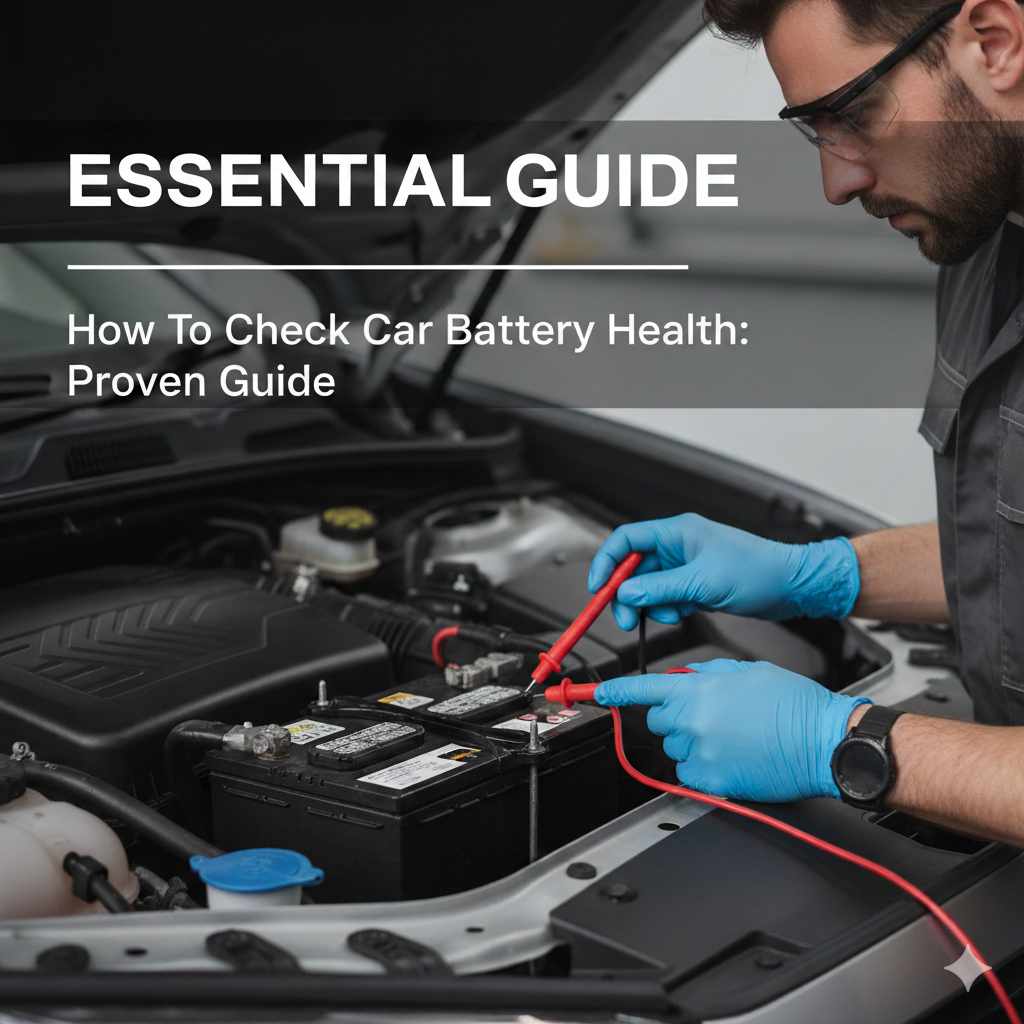
How to Check Car Battery Health: Proven, Essential Guide
Checking your car battery’s health is simple! You can often tell by looking for corrosion, checking cranking power with a voltmeter, or observing starting issues. This guide explains how to do it easily at home and when to seek professional help to keep your car running smoothly.
Ever been stranded with a car that just won’t start? It’s a frustrating feeling, especially when you’re in a hurry. Often, the culprit is a car battery that’s seen better days. Don’t worry, though! You don’t need to be a master mechanic to check your car battery’s health. We’ll walk through the simple steps you can take right now to see if your battery is up to snuff. You’ll learn what to look for, what tools you might need (and how to use them!), and how to understand what the results mean. Let’s get your car back to reliable starting power!
Why Your Car Battery Matters
Your car battery is the unsung hero of your vehicle. It’s not just about starting the engine; it powers almost everything electrical when the engine is off, and it provides the initial jolt of electricity needed for your alternator to start generating power once the engine is running. Think of it as the heart of your car’s electrical system.
A healthy battery ensures reliable starting, especially on cold mornings. It also keeps your car’s lights, radio, power windows, and all those other modern conveniences working without a hitch. When a battery starts to weaken, you might notice dim headlights, slow engine cranking, or electrical accessories acting strangely. These are all signs that it’s time to pay attention to your battery’s health.
Signs Your Car Battery Might Be Failing
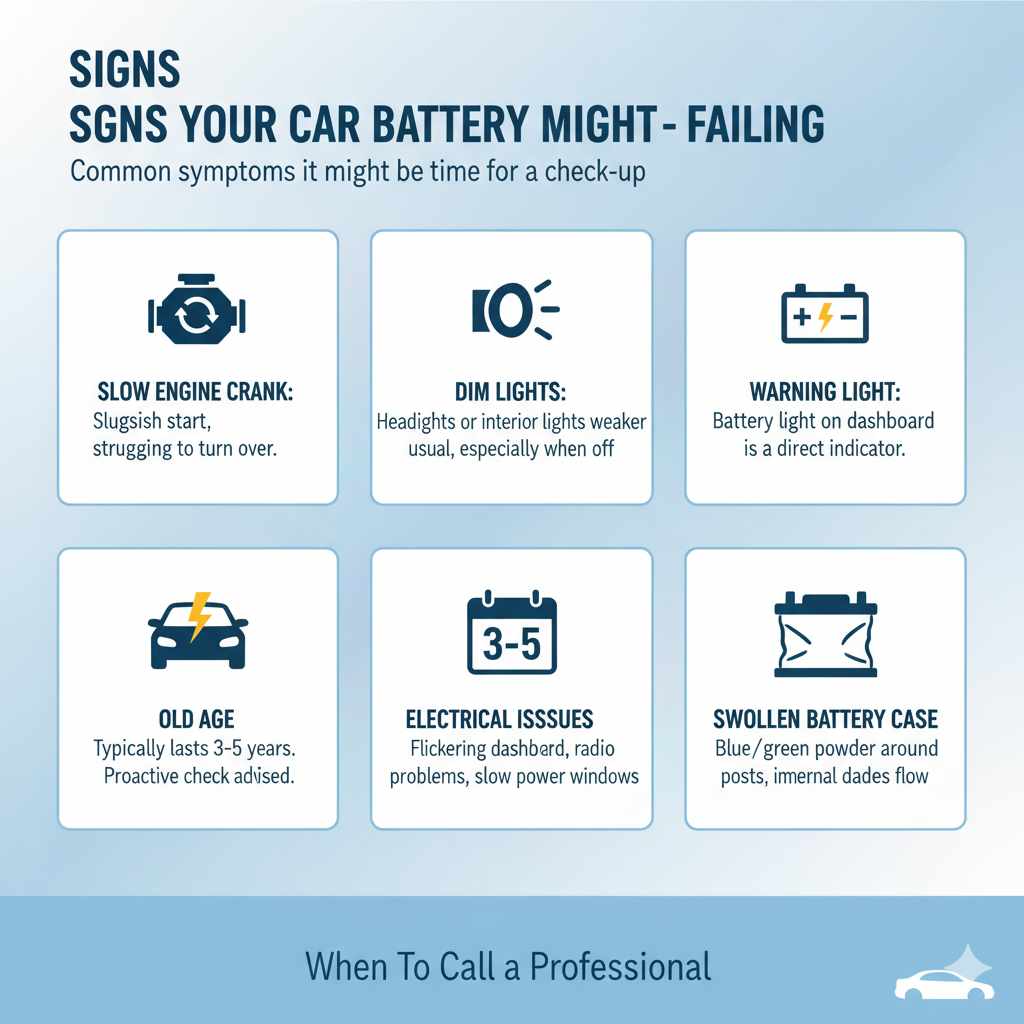
Before we dive into checking the battery, let’s talk about the common symptoms that tell you it might be time for a check-up:
- Slow Engine Crank: When you turn the key, does the engine sound sluggish, like it’s struggling to turn over? This is a classic sign of a weak battery.
- Dim Headlights or Interior Lights: If your lights seem dimmer than usual, especially when the engine isn’t running, the battery might not be holding a full charge.
- Warning Light: Many cars have a battery warning light on the dashboard. If this is on, it’s a direct indicator of a battery or charging system problem.
- Electrical Issues: Flickering dashboard lights, intermittent power to accessories like the radio, or power windows operating slowly can all point to battery trouble.
- Old Age: Car batteries typically last between 3 to 5 years. If yours is approaching or past that age range, it’s wise to check its health proactively.
- Swollen or Bloated Battery Case: This often indicates the battery has been overcharged or has overheated, which can damage it internally.
- Corrosion on Terminals: You might see a blue or greenish powdery substance around the battery posts. This corrosion can impede electrical flow.
How to Check Car Battery Health: A Step-by-Step Guide
There are several ways to assess your car battery’s health. Some are visual checks you can do right away, while others involve simple tools. We’ll cover both!
Step 1: Visual Inspection (The Easy Check)
This is the simplest and quickest way to start. Pop your hood and locate your car battery. It’s usually a rectangular box, often toward the front of the engine bay.
What to look for:
- Corrosion: Check the battery terminals (the metal posts where the cables attach). If you see any fuzzy, chalky, or greenish-blue buildup, that’s corrosion. It can prevent a good electrical connection.
- Physical Damage: Look at the casing of the battery. Is it cracked, warped, or swollen? If the battery case looks physically damaged, it needs to be replaced immediately by a professional. Swollen sides can be a sign of internal damage.
- Loose Cables: Ensure the battery cables are securely attached to the terminals. They shouldn’t wiggle or feel loose.
How to deal with minor corrosion: If you find a small amount of corrosion, you can clean it yourself. You’ll need:
- Safety glasses (to protect your eyes)
- Rubber gloves
- A wire brush or an old toothbrush
- A mixture of baking soda and water
- A rag or paper towels
First, disconnect the negative (black) cable, then the positive (red) cable. This prevents accidental shorts. Apply the baking soda and water paste to the terminals and posts. Scrub gently with the brush to remove the corrosion. Rinse with clean water and dry thoroughly with a rag before reconnecting the cables (positive first, then negative).
Step 2: Listen to Your Car Start
This is what we touched on earlier, but it’s worth repeating. The sound your engine makes when you turn the key is a good indicator. A healthy battery will provide a quick, strong “vroom!” to get the engine going. If you hear a slow, drawn-out “rrr-rrr-rrr” sound, or if it struggles significantly, your battery might be weak or on its way out.
Step 3: Test the Battery Voltage with a Multimeter (The DIY Electrical Check)
This is where you get a more precise reading of your battery’s state. A multimeter is a tool that measures electrical voltage, current, and resistance. You can buy a basic one at most auto parts stores or online for a reasonable price. For this test, you just need the voltage setting.
Tools you’ll need:
- A digital or analog multimeter
- Safety glasses
- Gloves
Steps:
- Park Safely: Make sure your car is parked on a level surface, and the engine is off. Turn off all lights, the radio, and any other accessories.
- Locate Battery Terminals: Open the hood and find the battery. Identify the positive (+) and negative (-) terminals.
-
Set the Multimeter: Set your multimeter to measure DC voltage (VDC). You’ll look for a setting that includes a ‘V’ with a straight line above it and dashes below, or a symbol like V_
. Choose a range that can handle at least 12 volts, like 20V. -
Connect the Multimeter Probes:
- Carefully touch the red probe of the multimeter to the positive (+) battery terminal.
- Carefully touch the black probe of the multimeter to the negative (-) battery terminal.
It’s important not to let the probes touch each other or any other metal when they are connected to the battery.
-
Read the Voltage: Look at the multimeter’s display.
- A reading of 12.6 volts or higher: Indicates a fully charged battery.
- A reading between 12.4 and 12.6 volts: Means the battery is about 75-90% charged. It’s likely still good but might need a charge soon.
- A reading between 12.0 and 12.4 volts: Suggests the battery is about 50-75% charged. This is a warning sign; the battery might be weakening.
- A reading below 12.0 volts: Indicates a significantly discharged battery. It could be faulty or simply needs a long charge. If it doesn’t hold a charge after charging, it needs replacement.
- Record Your Results: Note down the voltage reading and the date. This can help you track the battery’s health over time.
- Disconnect Probes: Remove the black probe from the negative terminal, then the red probe from the positive terminal.
Keep in mind that this test works best when the battery has been sitting for at least a few hours (or preferably overnight) without the car being driven, so it’s not being influenced by the alternator. A reading taken right after driving might be higher due to charging.
Step 4: Test the Battery Under Load (More Advanced Check)
While a voltage test is useful, it doesn’t always tell the whole story. A battery might show a good voltage when resting but fail when it has to work hard, like during starting. This is where a load test comes in.
What is a Load Test? A load tester is a specialized tool that simulates the demanding conditions of starting your engine. It draws a significant amount of power from the battery for a short period while measuring the voltage drop. A healthy battery will maintain its voltage under this load, while a weak one will see a significant drop.
How to perform a load test:
- Professional Check: Most auto parts stores offer free battery testing, including load tests, as a service. This is the easiest and safest way for beginners to get this done. They have the specialized equipment and know-how.
- DIY Load Tester: You can purchase a basic automotive load tester. The process involves connecting the tester to the battery terminals and applying a specific load for about 15 seconds. You then observe the voltage reading. Instructions vary slightly by tester model.
Interpreting Load Test Results: A battery is generally considered good if its voltage stays above 9.6 volts during the load test (with the load applied, at room temperature). If it drops below this, the battery is likely weak and should be replaced soon.
Step 5: Check Your Car Battery Reserve Capacity
Reserve capacity is a battery’s ability to keep running essential systems for a period if the alternator fails. It’s measured in minutes and refers to the time a fully charged battery can discharge at a specific rate (25 amps) under normal temperatures without dropping below 10.5 volts.
Why it matters: A higher reserve capacity means your battery can provide more backup power. For example, if you’re stuck in traffic and have to turn off your engine, a battery with a good reserve capacity will keep your lights, fan, and radio running longer than a battery with a low reserve capacity.
A qualified mechanic or auto parts store can often check your battery’s reserve capacity using specialized equipment. While you can’t easily test this at home without professional tools, it’s a good specification to know about when considering a replacement battery. You can usually find the reserve capacity rating listed on the battery itself or in your vehicle’s owner’s manual specifications.
Understanding Battery Specifications
When you look at a car battery, you’ll see a lot of numbers and acronyms. Here are a few important ones:
| Term/Acronym | What It Means | Why It’s Important for Health |
|---|---|---|
| CCA (Cold Cranking Amps) | The number of amps a battery can deliver at 0°F (-18°C) for 30 seconds while maintaining a voltage above 7.2 volts. | Higher CCA is better for starting in cold weather. A low CCA reading can indicate a battery is losing its ability to crank the engine effectively. |
| AH (Ampere-Hour) | Measures the battery’s energy storage capacity. For example, a 100 Ah battery could theoretically supply 5 amps for 20 hours. | Indicates how long the battery can power low-draw accessories or sustain its charge. A battery with very low AH capacity might struggle to hold a charge or power electronics when the engine is off. |
| RC (Reserve Capacity) | The number of minutes a fully charged battery can deliver 25 amps at 80°F (27°C) before dropping below 10.5 volts. | Crucial for powering essential car functions if the alternator fails. A low RC means less time your car can run on battery power alone. |
| Voltage | The electrical potential difference, measured in volts. A car battery is nominally 12 volts. | As we saw with the multimeter, voltage is the most straightforward indicator of charge. A consistently low voltage means a problem. |
Your vehicle’s manufacturer specifies the type and rating of battery required. Using a battery with insufficient CCA or AH could lead to starting problems, especially in extreme weather.
When to Call a Professional
While these DIY checks are great, there are times when it’s best to let a professional handle it.
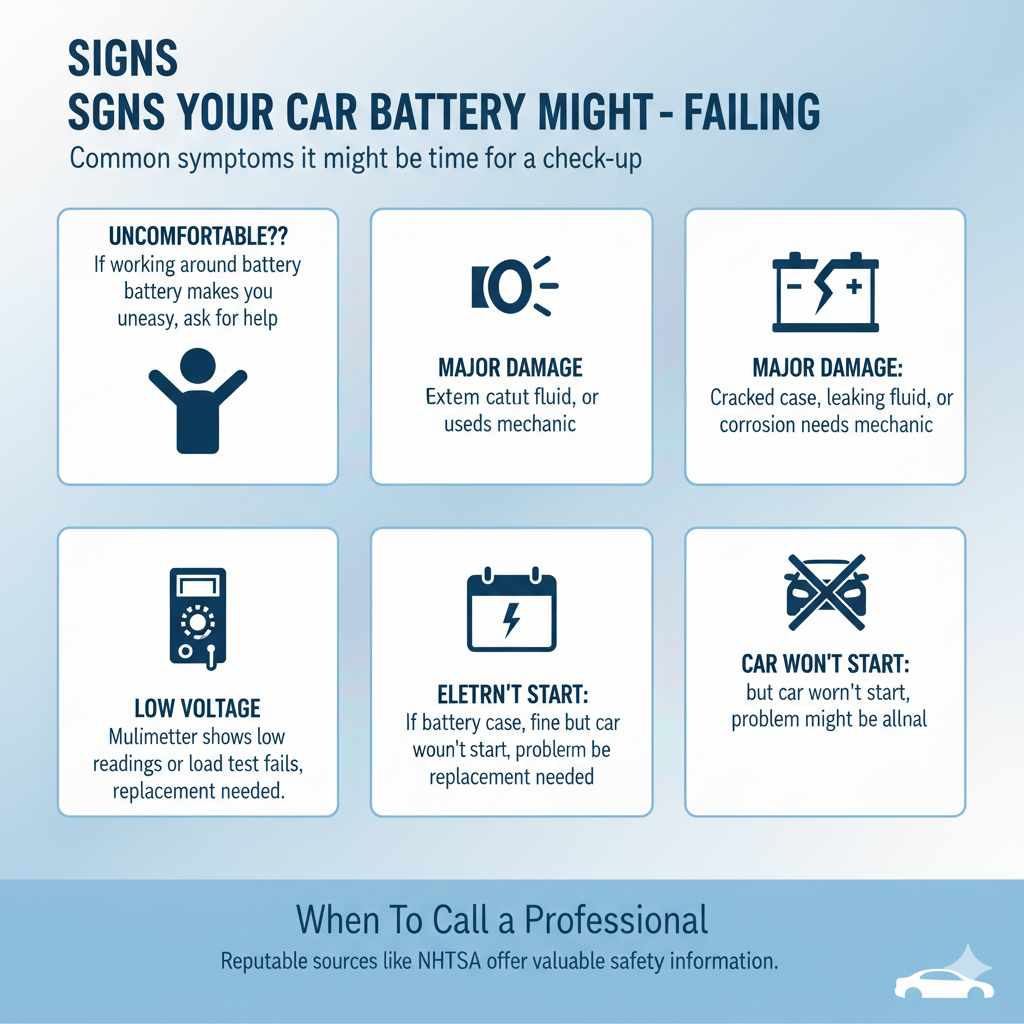
- You’re uncomfortable with the process: If working around the battery, especially with tools, makes you uneasy, it’s okay to ask for help.
- The visual inspection reveals major damage: Cracked cases, leaking fluid, or extreme corrosion that you can’t clean safely should be handled by a mechanic.
- Your battery consistently shows low voltage or fails load tests: If your multimeter readings are always low, or if a load test confirms weakness, it’s time for a replacement, which a professional can perform.
- The car still won’t start after addressing the battery: A weak battery can sometimes mimic other automotive problems. If you’ve checked the battery and it seems fine, or if replacing it doesn’t solve your starting issue, the problem might be elsewhere in the charging system (alternator) or ignition system.
- You need a battery replacement: While replacing a battery can be a DIY job for some, if you’re unsure, a mechanic or auto parts store can do it quickly and correctly. They’ll also ensure they dispose of your old battery responsibly. Batteries contain hazardous materials and should never be thrown in regular trash. Many places that sell batteries will take your old one for recycling.
Reputable sources like the National Highway Traffic Safety Administration (NHTSA) offer valuable safety information regarding vehicle maintenance and battery handling.
Frequently Asked Questions (FAQ)
How often should I check my car battery health?
It’s a good idea to perform a quick visual inspection every few months, perhaps when you check your oil or tire pressure. A more thorough voltage check with a multimeter is recommended annually, or if you notice any of the warning signs like slow starting.
Is it safe to check my car battery myself?
Yes, it is generally safe if you take basic precautions. Always wear safety glasses and gloves when working near the battery. Avoid letting metal tools touch both terminals at the same time, as this can cause a dangerous spark or short circuit. If you are uncomfortable or the battery looks significantly damaged, it’s best to have a professional do it.
What’s the difference between a dead battery and a bad battery?
A “dead” battery is one that is simply discharged and has no or very low voltage. It might be revived with a jump start or a good, long charge. A “bad” battery has likely reached the end of its lifespan internally. Even after charging, it won’t hold a charge or provide enough power. A load test is the best way to determine if a battery is truly bad versus just discharged.
Can extreme weather really affect my car battery?
Absolutely. Extreme cold can reduce a battery’s power output significantly, making it harder to start the engine even if the battery is healthy. Extreme heat, on the other hand, can accelerate the battery’s internal chemical reactions and lead to faster degradation and shorter lifespan. That’s why batteries often fail in the summer heat after enduring a harsh winter.
My car battery warning light is on, what should I do?
If the battery warning light illuminates on your dashboard, it indicates a problem with the charging system or the battery itself. You should have your car checked by a mechanic as soon as possible. The light usually means the alternator is not charging the battery properly, or there’s an issue with the battery’s ability to accept a charge. Driving with this light on could eventually leave you stranded.
How long can I expect a car battery to last?
The average lifespan of a car battery is typically between 3 to 5 years. However, this can vary greatly depending on factors like climate, driving habits (frequent short trips can shorten battery life), vehicle maintenance, and the quality of the battery itself. Regularly checking your battery’s health can help you anticipate its end-of-life.