How Long Do Electric Car Batteries Last? (2026 Data & Warranty Guide)
Most electric car batteries last 12 to 20 years or 200,000+ miles before falling below a usable capacity — and in practice, the battery pack usually outlives the rest of the car around it. Under normal driving, expect to lose roughly 2% of your range every year, so a car with 300 miles of range when new might still deliver around 250–270 miles after eight years.
That degradation rate is the difference between a battery that fades quietly over a decade and one that needs a $4,000 to $25,000+ replacement well before the car is paid off. Every automaker selling EVs in the US is legally required to back its battery with at least an 8-year/100,000-mile warranty, and real-world failure rates outside that window sit under 2% — but the fine print still varies a lot by brand.
This guide walks through what recent large-scale EV data actually shows about degradation, how warranty coverage compares across Tesla, Hyundai/Kia, Ford, and GM, what a replacement really costs by battery size, and the charging habits that make the biggest measurable difference in how long your pack lasts.
How Long Do Electric Car Batteries Actually Last?
The short answer: most EV battery packs are engineered to outlast the car around them. Automakers design packs to hold a usable charge for 12 to 20 years or 200,000+ miles, well beyond the roughly 8 to 12 years most people keep a vehicle. Real-world fleet data backs this up — a 2026 Recurrent analysis covering more than 1 billion miles of real-world EV driving found that the average EV retains 97% of its original range after 3 years and 95% after 5 years, a much smaller drop than most new EV buyers expect.
Total pack failure well before that point is rare. Geotab’s 2026 fleet study, which tracked degradation across a much larger vehicle dataset than earlier reports, still found that outright battery failures requiring a full replacement affect under 2% of EVs once they’re outside the manufacturer’s warranty window. The bigger, far more common issue isn’t a dead battery — it’s gradually shrinking range that most owners barely notice from one year to the next.
SLOW DOWN THE DEGRADATION
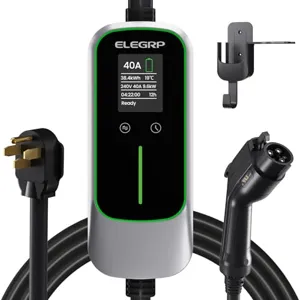 |
ELEGRP Level 2 EV Charger (40A, J1772) – $209.99 As this guide explains, relying on slower Level 1/2 AC charging instead of DC fast charging is one of the biggest factors in keeping your battery’s degradation rate closer to 1.5% a year instead of 3%.
|
EV Battery Degradation: What the 2026 Data Shows
Battery degradation isn’t linear, and it isn’t identical from car to car. Geotab’s 2026 fleet study — based on a larger dataset than its earlier reports, reflecting more real-world fast-charging use — puts the average degradation rate at about 2.3% per year. But that headline number hides a wide spread depending on how and where a car is charged and driven.
| Factor | Effect on Degradation |
|---|---|
| DC fast charging (150kW+) as primary method | ~3.0%/year, roughly double the rate of AC charging |
| Level 1/2 AC home charging as primary method | ~1.5%/year |
| Hot climate (regular high heat exposure) | About 0.4%/year faster than mild climates |
| Range retention (fleet average) | 97% at 3 years, 95% at 5 years |
| Battery chemistry (LFP vs. NMC) | LFP packs degrade more slowly and tolerate regular 100% charging better |
That last row — chemistry — matters more than most shoppers realize, and it comes down to what the pack is physically made of. Our guide to how electric car batteries are made breaks down the difference between LFP and NMC cell chemistry in more detail, including why LFP has become standard in models like the Tesla Standard Range and many Ford and BYD EVs.
What Affects How Long Your EV Battery Lasts
- Fast charging frequency — DC fast charging generates more heat and stress per session than slower AC charging. Using it occasionally for road trips is fine; using it as your everyday charging method roughly doubles the annual degradation rate.
- Climate exposure — sustained heat ages a battery faster than cold does. Parking in shade or a garage, and choosing a car with active liquid thermal management, both help meaningfully over years of ownership.
- State-of-charge habits — keeping the battery roughly between 20% and 80% for daily driving, instead of routinely charging to 100% or running it down to empty, reduces long-term stress on individual cells.
- Total mileage and calendar age — like any lithium-ion battery, both cumulative charge cycles and simple age play a role, though modern EV packs are engineered to handle thousands of cycles before meaningful capacity loss.
- Driving style — aggressive acceleration and heavy loads draw more current, adding heat and wear over time, though this factor is smaller than charging habits and climate exposure.
EV Battery Warranties by Automaker (2026)
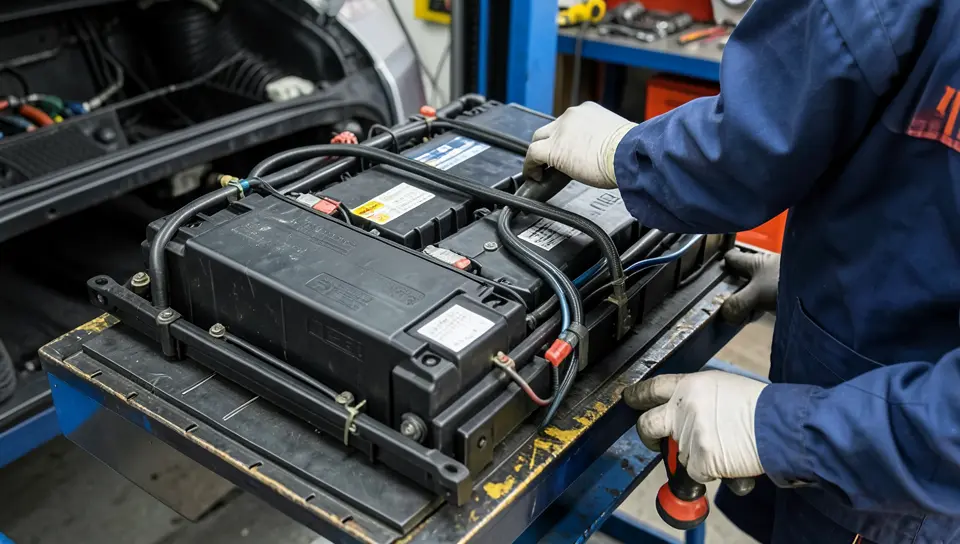
Federal law requires every automaker selling EVs in the US to cover the battery for at least 8 years or 100,000 miles, whichever comes first. In California and the other states that follow California’s emissions rules, that minimum extends to 10 years or 150,000 miles. Most warranties also guarantee the battery won’t drop below a set percentage of its original capacity — typically 70% — so if your pack fails that test within the coverage period, you get a repair or replacement.
| Automaker | Warranty Length | Capacity Floor | Notes |
|---|---|---|---|
| Hyundai / Kia | 10 years / 100,000 mi | 70% | Fully transferable to a new owner |
| Tesla | 8 years / 100,000–150,000 mi | 70% | Varies by trim; Supercharging does not void coverage |
| Ford | 8 years / 100,000 mi | 70% | Standard federal minimum |
| Chevrolet / GM | 8 years / 100,000 mi | 75% | Strictest capacity floor among major brands |
Always check your specific state and trim level — warranty mileage can vary within the same model lineup, and a used EV’s remaining coverage is based on the vehicle’s original in-service date, not the date you bought it.
How Much Does It Cost to Replace an EV Battery?
Out-of-warranty replacement costs vary enormously by pack size — a small Nissan Leaf pack costs a fraction of what a full-size truck or performance pack runs. As of 2026, expect roughly $130 to $200 per kWh of battery capacity, installed.
| Pack Size | Example Models | Typical Replacement Cost |
|---|---|---|
| Small (20–30 kWh) | Nissan Leaf, Chevy Volt | $4,000 – $9,000 |
| Mid-size (40–60 kWh) | Chevy Bolt, VW ID.4 base, early Model 3 | $7,000 – $14,000 |
| Large (75–100 kWh) | Model 3 Long Range/Model Y, Ioniq 5, Mustang Mach-E | $10,000 – $18,000 |
| Flagship/performance (100+ kWh) | Model S Plaid, Rivian R1T, Lucid Air | $15,000 – $25,000+ |
The good news: most owners never pay this. Between the mandatory 8-year/100,000-mile warranty and a real-world out-of-warranty failure rate under 2%, a full pack replacement is the exception, not the rule. Costs have also fallen substantially since 2020 as cell prices have dropped and a third-party refurbished-pack market has grown.
How to Extend Your EV Battery’s Life
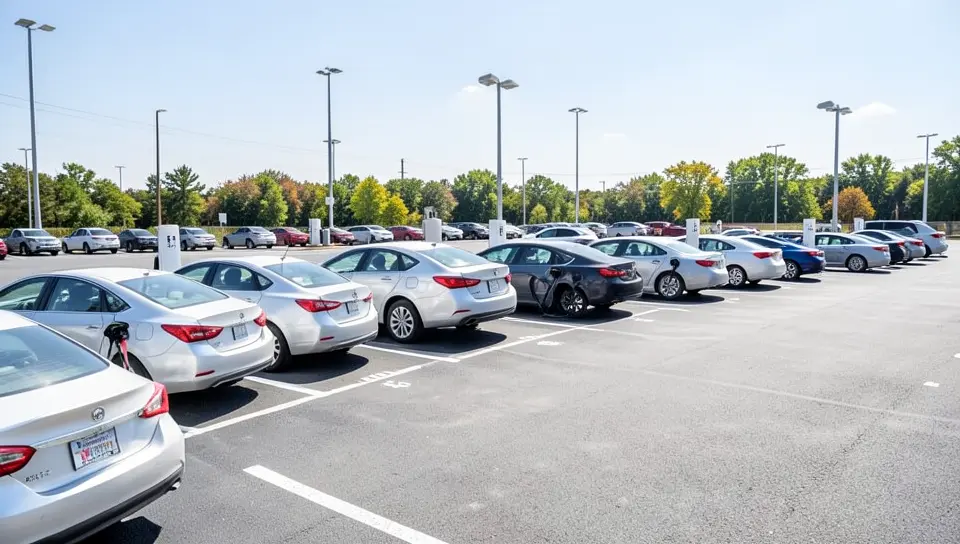
- Charge to 80% for daily driving and save 100% charges for long trips.
- Avoid letting the battery sit at a very low charge (under 10%) for extended periods.
- Use Level 1/2 AC charging as your default and treat DC fast charging as the occasional exception, not the routine.
- Park in a garage or shade during extreme heat, and use battery preconditioning before fast charging or driving in cold weather if your car supports it.
- Keep up with your automaker’s software updates — battery management improvements are frequently delivered over the air.
Frequently Asked Questions
How long do electric car batteries actually last in years?
Most EV batteries last 12 to 20 years or more before dropping below a usable capacity, based on real-world fleet data from Recurrent and Geotab. In practice, the battery pack typically outlasts the rest of the car, and outright pack failure affects under 2% of EVs once they’re outside warranty.
How much does it cost to replace an EV battery in 2026?
Replacement costs range from about $4,000 for a small pack, like a Nissan Leaf’s, to $25,000 or more for a flagship performance pack, like a Tesla Model S Plaid’s — roughly $130 to $200 per kWh installed. Most drivers never pay this because the mandatory federal warranty covers at least 8 years or 100,000 miles.
What is a normal EV battery degradation rate per year?
Recent large-scale data puts average degradation at about 2.3% per year, though this varies widely. Cars that rely mainly on DC fast charging degrade roughly twice as fast, around 3.0% per year, compared to about 1.5% per year for cars charged mostly on Level 1/2 AC power.
Does every automaker offer the same EV battery warranty?
No. Federal law sets an 8-year/100,000-mile minimum, extended to 10 years/150,000 miles in California and CARB states, but coverage details still vary. Hyundai and Kia offer 10 years/100,000 miles across the board, Chevrolet/GM guarantees a stricter 75% capacity floor instead of the more common 70%, and Tesla’s mileage cap varies by trim.
Does fast charging really damage EV batteries faster?
Yes, but only modestly if used occasionally. Frequent high-power DC fast charging above roughly 100kW about doubles the annual degradation rate compared to slower Level 1/2 charging, mainly because fast charging generates more heat. Using it for road trips while charging at home most of the time has little long-term impact.
Should I worry about buying a used EV because of battery life?
Not as much as most buyers assume. With average degradation around 2 to 2.3% per year, a 5-year-old EV typically still has roughly 90 to 95% of its original range, and any remaining factory warranty transfers with the vehicle — Hyundai/Kia’s coverage is fully transferable, and most other brands’ coverage follows the VIN rather than the original owner.
Conclusion
The real story on EV battery life is a lot less dramatic than the old horror stories suggest: most packs are built to outlast the car, degrade by roughly 2% a year under normal use, and come with a legally mandated warranty covering the first 8 to 10 years regardless of brand. The habits that matter most are simple — charge to 80% most of the time, don’t rely on DC fast charging as your default, and avoid parking in extreme heat when you can.
If you’re shopping for a used EV or deciding whether to keep your current one past its warranty, the real degradation and cost numbers above — not the worst-case figures alone — are the ones worth planning around.
Products related to this article
Sponsored / affiliate links. As an Amazon Associate I earn from qualifying purchases. I may earn additional commission from eligible campaigns.