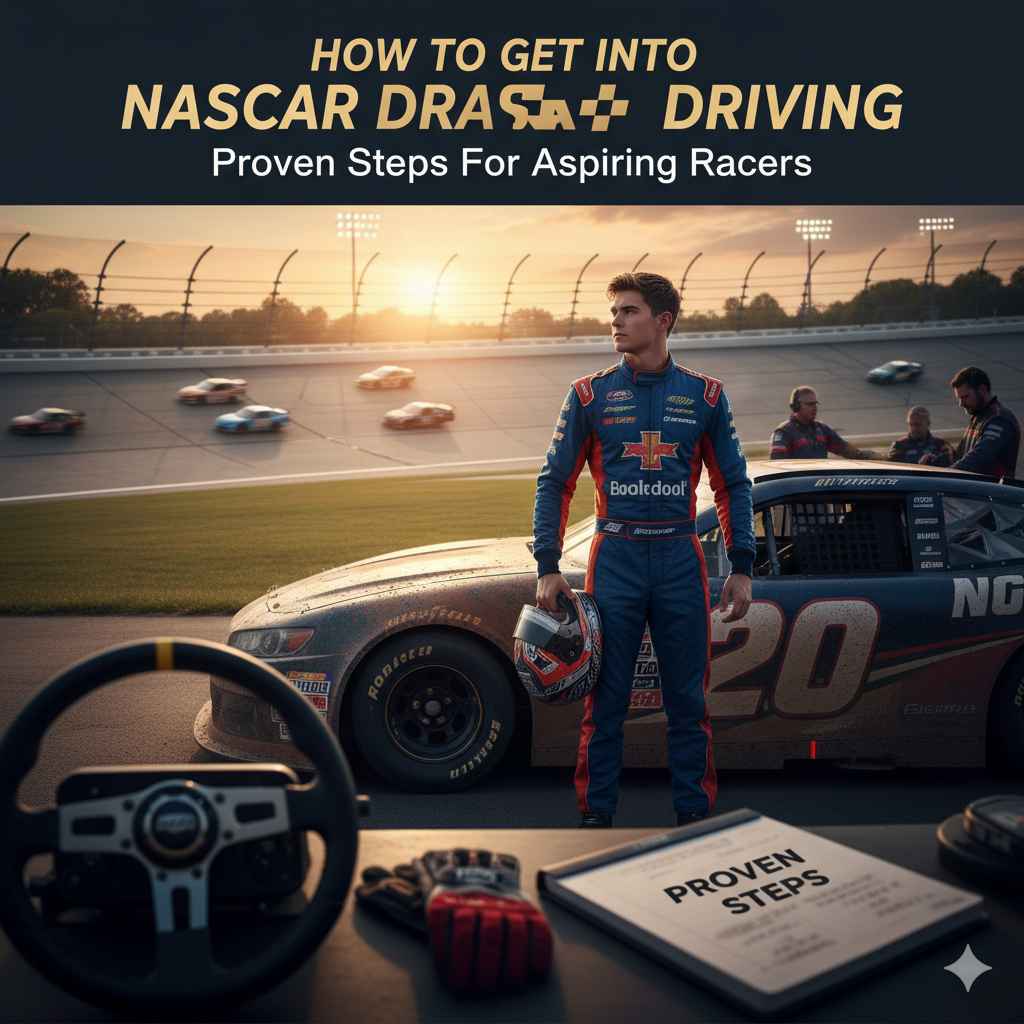
How To Get Into Nascar Driving: Proven Steps For Aspiring Racers
Aspiring to be a NASCAR driver? Get started by building a strong foundation in karting or local racing series, obtaining the right training and licenses, and networking within the racing community. It’s a journey requiring dedication, skill, and a passion for speed.
Ever watched a NASCAR race and felt the thrill of the speed, the roar of the engines, and thought, “I could do that!”? It’s a dream many share, but turning that dream into reality can seem like a distant finish line. The world of professional racing, especially NASCAR, can appear complex and exclusive.
But don’t let that slow you down! Getting into NASCAR driving is absolutely achievable with the right approach. It’s a path paved with passion, hard work, and strategic steps. You don’t need to be born into a racing family to make your mark.
This guide is here to break down exactly how you can start your journey towards becoming a NASCAR driver. We’ll cover everything from the crucial first steps on the track to navigating the professional ladder. Are you ready to put the pedal to the metal?
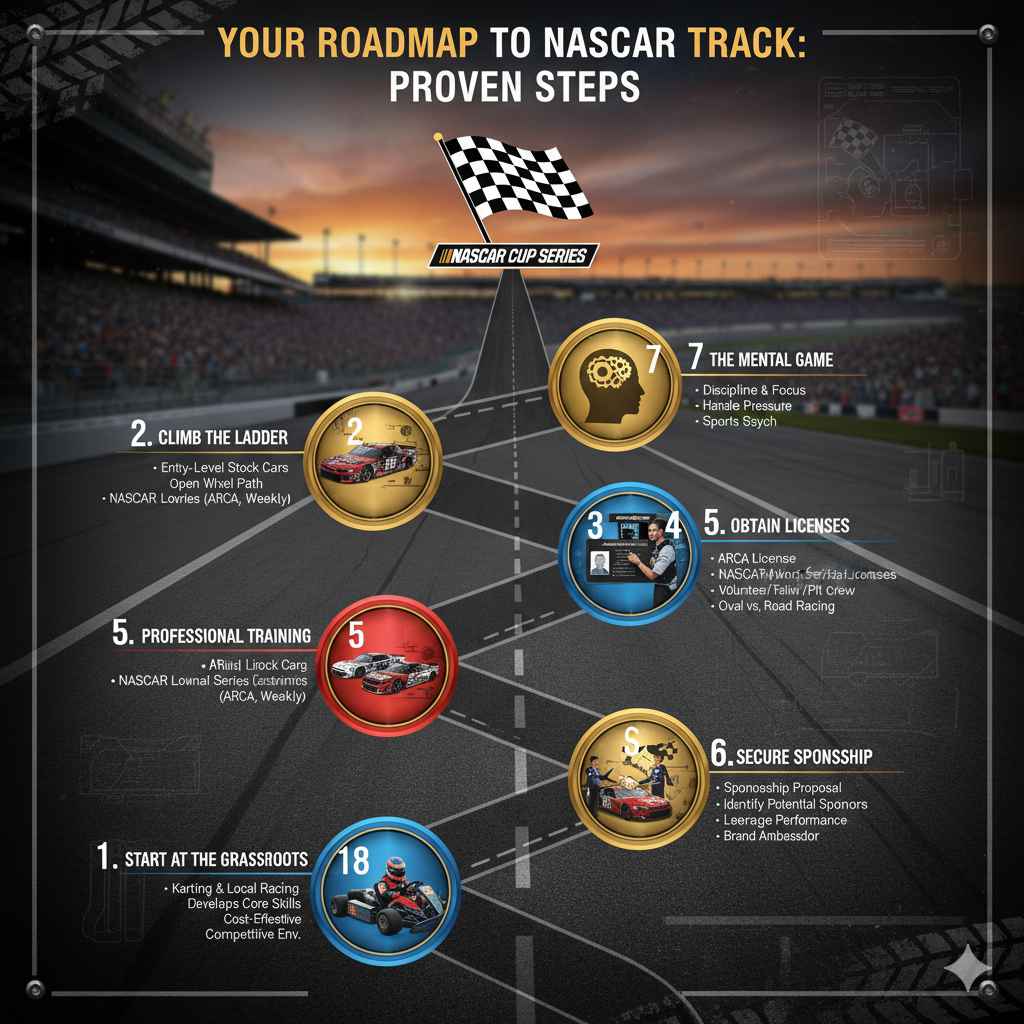
Your Roadmap to the NASCAR Track: Proven Steps
Becoming a NASCAR driver is a marathon, not a sprint. It requires a blend of raw talent, dedicated practice, smart decision-making, and often, a bit of luck. But with a clear plan, you can navigate the journey effectively. Here’s a breakdown of the proven steps aspiring racers can take.
Step 1: Start at the Grassroots – The Importance of Karting and Local Racing
Before you even think about a stock car, you need to master the fundamentals of racing. This is where karting shines. It’s the universal starting point for most professional race car drivers, including many NASCAR stars.
Why Karting?
- Develops Core Skills: Go-karts are nimble and fast, forcing drivers to develop precise steering control, quick reflexes, and an innate understanding of racing lines and car dynamics. You learn to feel what the machine is doing.
- Cost-Effective Entry: Compared to other forms of motorsport, karting is generally more accessible and affordable, making it an ideal place to test your passion and skill without a massive initial investment.
- Competitive Environment: Karting leagues and championships are plentiful, offering a competitive arena to hone your racing craft against peers with similar aspirations.
- Builds a Driving Resume: Success in karting provides a solid foundation and a starting point for your racing resume, which is crucial for attracting sponsors and attention later on.
If karting isn’t readily available or you’re looking for an alternative stepping stone, consider local dirt track racing, late model series, or entry-level sports car racing. The key is to get seat time in a competitive environment and learn to race wheel-to-wheel.
Step 2: Gain Experience and Climb the Ladder
Once you’ve proven yourself in karting or local series, it’s time to move up. This involves progressing through different levels of racing, each offering unique challenges and opportunities to develop as a driver.
The Racing Ladder:
- Entry-Level Stock Cars: This could be anything from the SRL (Super Late Model Racing) series to regional late model touring classes. These cars offer a taste of what full-size stock cars are like, requiring different techniques than karts or open-wheel cars. You’ll learn about tire management, drafting, and race strategy on larger tracks.
- The Open Wheel Path: Many drivers also transition through open-wheel racing, such as the IndyCar Series feeder programs or local Formula 1000 series. While different from stock cars, open-wheel racing sharpens driving reflexes and car control to an extreme degree.
- Developing Skills in Lower NASCAR Divisions: The ultimate goal is to enter NASCAR’s sanctioned series. The typical progression involves starting in divisions like the ARCA Menards Series (now generally referred to as ARCA Menards Series East/West or the main ARCA Menards Series) or NASCAR Weekly Racing Series (now called the NASCAR Advance Auto Parts Weekly Series) on short tracks. These series are designed to be the proving grounds for future NASCAR talent.
Each step requires you to adapt to different cars, tracks, and the evolving demands of professional racing. Performing well at each level is critical for building your reputation and attracting the attention of potential teams and sponsors.
Step 3: Honing Your Driving Skills with Professional Training
Raw talent is essential, but professional training can significantly accelerate your development as a driver and help you avoid costly mistakes.
Driving Schools and Coaching:
- Seek out reputable racing schools that offer advanced driving courses. These schools not only teach advanced techniques but also provide access to professional instructors who can offer personalized feedback.
- For example, the Daytona Driving Experience offers opportunities to drive race cars on famous tracks, providing a glimpse into the speed and intensity of professional racing. While not a direct training program for aspiring professionals, it showcases the environment and skills needed.
- Consider hiring a driving coach. A coach can work with you on racecraft, telemetry analysis, mental preparation, and understanding the nuances of different racing disciplines.
Professional training helps you refine your technique, improve consistency, and develop the mental fortitude required for high-pressure racing situations. It’s an investment in your future as a driver.
Step 4: Obtain the Necessary Licenses and Credentials
NASCAR has a structured licensing system designed to ensure drivers have the necessary skills and experience to compete safely at each level. Understanding and obtaining these licenses is a critical step.
NASCAR Licensing:
- ARCA License: To compete in ARCA series, you’ll need to apply for an ARCA license, which involves demonstrating past racing experience and passing safety and driving procedure evaluations.
- NASCAR National Series Licenses: Progressing to the NASCAR Xfinity Series, NASCAR Truck Series, and ultimately the NASCAR Cup Series requires a NASCAR-specific license. This is typically earned by accumulating points and demonstrating proficiency in lower NASCAR-sanctioned series. NASCAR evaluates drivers based on performance, car control, and adherence to rules.
- Road Racing vs. Oval Racing: Be aware that NASCAR has different license paths and requirements for road course racing versus oval racing.
You can find detailed information on the official NASCAR website, including application processes, eligibility requirements, and fees. Starting this process early and understanding the criteria will keep you on track. You can typically find updated licensing information on the official NASCAR website.
Step 5: Build Your Network and Find a Team
Motorsport is a community, and strong relationships are often the key to unlocking opportunities. Finding the right team can provide the resources, equipment, and expertise you need to succeed.
Networking Strategies:
Attend industry events, trade shows, and local race tracks. Get to know team owners, crew chiefs, engineers, and fellow drivers. Be professional, respectful, and enthusiastic.
- Seek Mentorship: Connect with experienced drivers or crew members who can offer advice and guidance.
- Volunteer or Work Pit Crew: Sometimes the best way to get your foot in the door is by offering your help. Working on a race team, even in a supporting role, gives you invaluable insight into the operation and allows you to build connections.
- Research Teams: Identify teams that operate at the level you aspire to reach and whose philosophies align with yours. Understand their current driver lineup and potential openings.
- Develop a Professional Presentation: Have a well-crafted racing resume, highlight reels of your best performances, and be prepared to articulate your goals and how you can contribute to a team’s success.
Finding the right team is often about more than just speed; it’s about finding people who believe in your potential and are willing to invest in your career.
Step 6: Secure Sponsorship and Funding
Professional racing is incredibly expensive. Securing sponsorship is a crucial, and often challenging, part of a driver’s career.
Sponsorship Essentials:
- Develop a Sponsorship Proposal: This document should clearly outline your racing background, achievements, marketing potential, and the benefits a sponsor will receive.
- Identify Potential Sponsors: Look for companies that align with your brand or have an interest in reaching the NASCAR audience. This can range from automotive companies to food and beverage brands, technology firms, or even local businesses.
- Leverage Your Performance: Consistent strong finishes, media attention, and a positive public image make you a more attractive prospect for sponsors.
- Be a Brand Ambassador: As a sponsored driver, you are a representative of the sponsor. Be professional, engage with their brand, and be willing to participate in promotional activities.
- Start Early and Small: Don’t wait until you’re racing nationally to seek sponsorship. Begin building relationships with smaller sponsors at the local or regional level.
Securing funding is an ongoing process. You’ll need to continuously demonstrate value to your sponsors and seek new partnerships as your career progresses.
Step 7: The Mental Game: Discipline, Resilience, and Focus
Beyond the physical skills and technical knowledge, the mental aspect of racing is paramount. NASCAR driving demands incredible mental strength.
Mental Fortitude:
- Focus and Concentration: Maintaining awareness and focus for extended periods, often under extreme G-forces and in high-stress environments, is vital.
- Handling Pressure: The ability to perform under pressure, make split-second decisions, and manage the expectations of teams, sponsors, and fans is an essential trait.
- Resilience and Learning from Defeat: Not every race will be a win. Learning to bounce back from crashes, mechanical failures, or disappointing results is key to long-term success. Analyze what went wrong and use it as a learning opportunity.
- Discipline: Adhering to training regimens, team instructions, and disciplined driving habits on and off the track.
Many drivers work with sports psychologists to develop strategies for mental preparation, performance enhancement, and managing the emotional challenges of professional racing. This aspect of development is as important as any on-track practice.
Essential Tools and Resources for Aspiring NASCAR Drivers
While you don’t need to own a race shop on day one, certain tools and resources will be invaluable on your journey. Think of these as investments in your development.
| Resource/Tool | Purpose | Beginner Focus |
|---|---|---|
| Go-Kart/Entry-Level Race Car | Hands-on experience, skill development | Provides the foundational seat time |
| Racing Suit, Helmet, Gloves, Shoes | Safety and compliance with regulations | Essential for any track activity |
| Driving Simulator Software/Hardware | Practice tracks, learn racing lines, car control | Affordable way to learn tracks and fundamentals |
| Telemetry Analysis Software (e.g., Performance Analysis) | Reviewing driving data to identify improvements | Can be used with coaches or reviewed later |
| Racing Schools/Coaching Services | Professional instruction and feedback | Speeds up learning curve significantly |
| Sponsorship Proposal/Presentation Materials | Attracting funding and partners | Develop early to attract local support |
| Networking Platforms (Industry events, social media) | Building connections within motorsport | Active participation opens doors |
| Fitness Equipment/Program | Maintaining physical stamina and strength | Crucial for enduring long races |
The Financial Reality: What Does It Cost?
Let’s be honest: racing is expensive. The cost escalates significantly as you move up the ladder.
- Karting: Can range from a few thousand dollars for a competitive kart setup to tens of thousands for high-end equipment and race support for a season.
- Local/Regional Series (Late Models): Think anywhere from $30,000 to $200,000+ per season, covering car, parts, tires, fuel, track fees, and travel.
- NASCAR’s Lower Divisions (ARCA/Trucks): Costs can easily climb into the hundreds of thousands, and well into the millions for a full Xfinity or Cup Series season.
This is where sponsorship becomes absolutely critical. Many aspiring drivers rely on personal savings, family support, and aggressive sponsorship acquisition to fund their careers.
Frequently Asked Questions (FAQs)
Q1: How old do you have to be to start NASCAR racing?
A: While there isn’t a strict age minimum to start in grassroots racing like karting (local rules apply), to get a NASCAR license for their national series (Trucks, Xfinity, Cup), drivers generally need to be at least 16 years old for the Truck Series and 18 for the Xfinity and Cup Series. Some exceptions or specific developmental series may have different age requirements.
Q2: Do I need to race open-wheel cars before I can get into NASCAR?
A: Not necessarily. While many drivers have open-wheel experience, the primary path into NASCAR is through stock car racing, starting with karting and progressing through late models and ARCA series. NASCAR evaluates drivers based on their demonstrated ability in relevant stock car disciplines.
Q3: How much money does a NASCAR driver need to start?
A: It varies greatly. You can start a competitive karting season for a few thousand dollars. However, moving into late models or ARCA can cost tens to hundreds of thousands of dollars per season. Professional racing requires significant funding, primarily through sponsorships.
Q4: What is the most important skill for a NASCAR driver?
A: It’s a combination, but adaptability and consistency are key. Drivers must be able to adapt to different cars, track conditions, and race situations while consistently performing at a high level. Excellent racecraft, car control, and mental toughness are also vital.
Q5: How do I get noticed by NASCAR teams?
A: Perform well consistently in lower series like ARCA, NASCAR Weekly Racing Series, or late models. Build a strong racing resume, create highlight reels, attend industry events, network professionally, and develop strong relationships with team owners and personnel. Showing sponsorship potential is also a major factor.
Q6: Are there specific fitness requirements for NASCAR drivers?
A: Yes, absolutely. NASCAR drivers need exceptional physical fitness to withstand G-forces, heat, and the demands of a long race. This includes cardiovascular endurance, neck and core strength, and overall stamina. Many drivers have rigorous training programs.
The Finish Line is Just the Beginning
Getting into NASCAR driving is a challenging but incredibly rewarding pursuit. It’s a path that demands unwavering dedication, continuous learning, and a profound love for the sport. From the thrill of your first kart race to the roar of the crowd at a national event, every step is part of a grander journey.
Remember, your journey will be unique. There isn’t one single formula for success, but by focusing on building a strong foundation, honing your skills, developing a professional network, and managing the financial realities, you can significantly increase your chances of achieving your NASCAR dreams. Keep pushing, stay focused, and never stop chasing that checkered flag!