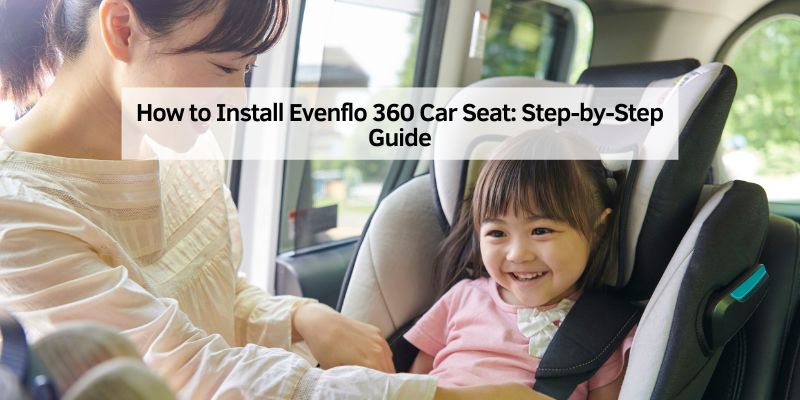
How to Install an Evenflo 360 Car Seat (LATCH & Seat Belt)
An Evenflo 360 car seat installs with LATCH lower anchors (up to 30 lb rear-facing, 35 lb forward-facing) or a locked seat belt — never both at once — plus a required top tether in every mode. Get the recline angle and tether wrong and the seat can shift more than an inch in a crash. This guide covers rear-facing setup, the one-time-install rotation to forward-facing, and the exact indicators that confirm a correct fit.
Insert your Affiliate Disclosure reusable block here.
Quick Answer
Install the base with LATCH (child under 30 lb rear-facing, under 35 lb forward-facing) or a locked seat belt — never both — then always attach the top tether, even rear-facing. Recline fully rear-facing to rotate the seat; the Rotation Lock Indicator turns green when it’s locked correctly in either direction. Pull all slack out and confirm under 1 inch of movement at the belt path before your child rides in it.
Which Evenflo 360 Do You Have? (Revolve360, Slim, Extend & Gold)
“Evenflo 360” isn’t one seat — it’s a family of rotating convertible car seats, and the exact weight limits and features on your model depend on which one you own. Check the label on the seat shell or your printed manual for the exact chart, since Evenflo updates these specs by model year.
| Model | Rear-Facing | Forward-Facing | Booster Mode | Key Difference |
|---|---|---|---|---|
| Revolve360 (original) | 4–40 lb | 30–65 lb | Yes, 40–120 lb | Widest seat (19.8 in), 10 years of use |
| Revolve360 Slim | 4–50 lb | 30–65 lb | No | Narrower 16.7 in footprint, better for 3-across |
| Revolve360 Extend | Similar to original | Similar to original | Varies by version | Quick Clean Cover or Green & Gentle fabric options |
| Gold Revolve360 Slim | 4–50 lb | 30–65 lb | No | Adds SensorSafe smartphone alerts (temperature, unbuckled clip, unattended child) |

Before You Install: Tools and Compatibility Check
You don’t need any tools for a standard LATCH or seat belt installation — Evenflo’s Sure360 system is designed to tighten by hand. Have your car seat manual and vehicle owner’s manual open to the LATCH and tether-anchor pages, since anchor locations vary by row and by vehicle.
- Your vehicle’s owner’s manual, open to the section on LATCH lower anchors and top tether anchors
- The Evenflo 360 car seat manual (or the free PDF from Evenflo’s manuals page) for your exact model
- A locking clip only if your vehicle’s seat belt retractor doesn’t lock on its own (rare in vehicles made after the mid-1990s)
Not every seating position works. Check that the row you’re using has either accessible lower anchors within reach (not buried too deep in the seat crease) or a seat belt that locks when pulled all the way out, plus a top tether anchor — required in every mode on this seat.
Best Car Seat Install Accessory Pick
Kaiphy Car Seat Protector Mat
A thick, waterproof mat that goes under the base before you tighten LATCH or the seat belt — it stops the heavy Sure360 base from denting or staining your vehicle’s upholstery.
- Best for: protecting leather or fabric seats under a heavy rotating base
- Why we picked it: non-slip backing won’t loosen your LATCH or belt tension once installed
- Main drawback: adds slight thickness, so re-check your recline angle after placing it
Compare more car seat install accessories
 Option 1 Shynerk Rear-Facing Baby Car Mirror
|
 Option 2 SKCAZA LATCH Interface Connector Strap
|
 Option 3 Universal Harness Chest Clip Buckle
|
As an Amazon Associate we earn from qualifying purchases.
Unboxing and Inspection
Take everything out of the box and match it against the parts list in the manual: the seat shell, the rotating base, the infant insert, and the top tether strap (stored on the base, not the shell). Count each piece before you install anything — a missing part means calling the store for a replacement, not improvising.
Inspect every strap, buckle, and the plastic shell for cracks, rips, or scratches. A car seat with any visible damage — even cosmetic — should be returned rather than installed, since you can’t verify hidden structural damage from the outside.
How to Install an Evenflo 360 Car Seat Rear-Facing
Rear-facing is required until your child outgrows the seat’s rear-facing weight or height limit (4–40 lb on the original Revolve360, 4–50 lb on the Slim and Gold Slim — check your model’s label). Follow these steps in order:
- Set the recline angle for your child’s weight: Recline the seat to match the indicator band on the shell — the white band generally covers roughly 4–20 lb and the black band roughly 20–40 lb rear-facing. A more reclined angle keeps a newborn’s airway open; check your exact model’s chart, since bands can differ slightly by version.
- Choose LATCH or seat belt — never both: Using both the lower anchors and the seat belt at the same connection point is not a stronger install; it’s not tested that way and voids the seat’s crash certification for that configuration.
- Route the belt or connect LATCH: For LATCH, connect both lower anchor connectors to your vehicle’s lower anchors. Evenflo specifies LATCH lower anchors are for a child up to 30 lb in rear-facing mode. For a seat belt, thread it through the rear-facing belt path, buckle it, then lock it — pull the shoulder belt all the way out and let it retract to engage the built-in locking mechanism (most vehicles built since the mid-1990s lock this way automatically).
- Attach and tighten the top tether: Unlike many convertible seats, the Evenflo 360 requires the top tether in rear-facing mode as well as forward-facing. The tether anchor is stored on the base — connect it to your vehicle’s tether anchor and remove the slack.
- Remove all slack and test the fit: Push and pull the seat at the belt path in every direction. It should move less than 1 inch. If it moves more, redo the installation — don’t just add extra pulling to a loose base.
- Confirm the Rotation Lock Indicator is green: A green indicator on either side of the seat confirms it’s locked correctly in the rear-facing position, not just resting there.
How to Rotate to Forward-Facing (Without Reinstalling)
The Evenflo 360’s main selling point is a true one-time installation: once the base is installed with LATCH or a locked seat belt, you can rotate between rear-facing and forward-facing without unbuckling the vehicle belt or disconnecting LATCH again.
- Recline fully rear-facing first: The seat will only rotate the full 360 degrees when it’s in the most reclined rear-facing position — it will not lock forward-facing from any other angle.
- Squeeze the rotation handle: Only a caregiver should operate this — squeeze the handle on either side of the seat and rotate it slowly until it faces forward.
- Switch to the forward-facing belt path: The forward-facing belt path is a separate channel from the rear-facing one, typically marked in a different color. Re-route the seat belt or LATCH connector through this path — the tether stays required in this mode too.
- Recheck the recline angle for forward-facing: Adjust to the forward-facing recline position and remove the infant insert — Evenflo’s own instructions state the insert must come out once you switch to forward-facing mode.
- Retest and confirm green: Re-pull slack, retest for under 1 inch of movement, and check the Rotation Lock Indicator is green in the new position before your child rides forward-facing.
Common Installation Mistakes to Avoid
- Using LATCH past its weight limit: Evenflo’s own limit is 30 lb rear-facing and 35 lb forward-facing for the lower anchors — switch to a locked seat belt once your child passes that weight, even though the seat’s overall weight limit is much higher.
- Skipping the tether rear-facing: Because most other car seats only require a tether forward-facing, it’s easy to assume the Evenflo 360 doesn’t need one rear-facing. It does, in every mode.
- Rotating from the wrong angle: If the seat won’t rotate to forward-facing, it usually means it isn’t fully reclined to the rear-facing position first — not a defect.
- Trusting a loose-feeling install: A car seat that “feels” tight isn’t the same as one that passes the 1-inch movement test at the belt path. Always test, don’t assume.
- Leaving the infant insert in forward-facing mode: The insert is rear-facing only per Evenflo’s instructions — remove it before rotating the seat forward.
📊 A correctly installed car seat reduces the risk of a fatal crash injury by 71% for infants and 54% for toddlers, yet nearly half of all car seats in the U.S. are installed incorrectly. — Source: NHTSA, Car Seat Installation Tips
Caring for and Maintaining Your Evenflo 360 Car Seat
Clean the fabric cover with mild soap and water only — bleach and harsh solvents can degrade the flame-resistant treatment and fabric strength. Remove the cover per your manual’s instructions, wash it gently, and let it air dry completely before reattaching; a wet cover trapped against foam padding can grow mildew. Wipe the plastic shell and harness webbing with a damp cloth instead of submerging them.
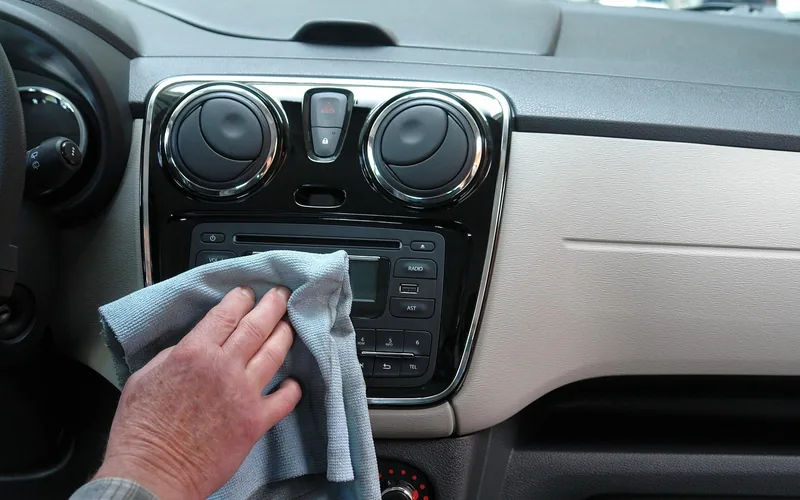
Inspect the seat monthly: check for cracks in the shell, fraying on the harness straps, and stiffness in the buckles. Re-verify the installation itself every few months, since vehicle seat foam compresses over time and can loosen even a correctly installed seat.
“Evenflo has spent lots of time ensuring the Revolve360 is user friendly and easy to install. The wide open belt path and potential for a true one-time installation for harness mode is a huge perk.”
Find more on when a seat’s usable life ends in our guide to car seat expiration dates, and general household safety habits in our car safety tips for families. If you’re installing a different style of seat, our guide to rear-facing car seat installation covers the general method, and which side of the car to use explains seat positioning. If you’d rather have a professional double-check your work, see where to get a free car seat inspection.
Frequently Asked Questions
How do I properly install an Evenflo 360 car seat?
Secure the base with LATCH lower anchors (up to 30 lb rear-facing, 35 lb forward-facing) or a locked vehicle seat belt — never both together — then attach the required top tether in every mode. Set the recline angle to match your child’s weight, remove all slack, and confirm the seat moves less than 1 inch at the belt path before checking that the Rotation Lock Indicator shows green.
Is it better to install a car seat with a seat belt or LATCH?
Both are equally safe when installed correctly — choose based on which method you can get tighter in your specific vehicle. LATCH is often faster, but on this seat it has a lower weight limit than the seat belt method, so most children eventually switch to seat belt installation as they grow, even though the overall seat is still within its weight range.
How do you rotate an Evenflo 360 car seat between rear-facing and forward-facing?
Recline the seat fully into the rear-facing position first — it will only rotate the full 360 degrees from this angle. Squeeze the rotation handle on either side of the seat and turn it slowly until it locks facing forward, then switch the belt or LATCH connector to the separate forward-facing belt path and re-tighten the tether.
When should you remove the infant insert in an Evenflo Revolve360?
Per Evenflo’s own instructions, the optional infant insert can be used at any time in rear-facing mode but must be removed once you rotate the seat to forward-facing — Evenflo ties removal to the mode, not a specific weight. As a general newborn-safety practice, many child passenger safety technicians also recommend removing or loosening the insert earlier if your baby’s head reaches the top of it, even while still rear-facing.
Is there a weight limit for using LATCH on an Evenflo 360 car seat?
Yes. Evenflo specifies its LATCH lower anchors are rated for a child up to 30 lb in rear-facing mode and up to 35 lb in forward-facing mode. Past those weights, install the seat with a locked vehicle seat belt instead — the seat’s overall weight range goes much higher, but the lower anchors themselves have this manufacturer-set limit.
Do you need a tether when an Evenflo 360 is installed rear-facing?
Yes — this is a point many owners miss. The Evenflo 360 requires the top tether to be connected in both rear-facing and forward-facing harness installations, unlike many other convertible seats that only require a tether forward-facing. The tether anchor is stored on the rotating base rather than the seat shell.
What’s the difference between the Evenflo Revolve360, Slim, and Extend?
The original Revolve360 is the widest (19.8 in) and the only one with a built-in high-back booster mode. The Revolve360 Slim is narrower (16.7 in, better for fitting three seats across) with a higher 50 lb rear-facing limit but no booster mode. The Revolve360 Extend is a separate collection distinguished mainly by its fabric and cover options. Gold-branded versions add SensorSafe smartphone alerts. Always confirm your exact specs on the label of your own seat.
A correctly installed Evenflo 360 shouldn’t need to be reinstalled again until your child outgrows the seat entirely — that’s the entire point of its rotating design. Recheck the fit every few months, follow the LATCH weight limits and tether rule above, and when in doubt, have a certified Child Passenger Safety Technician verify your work at a free local inspection.
Products related to this article
Sponsored / affiliate links. As an Amazon Associate I earn from qualifying purchases. I may earn additional commission from eligible campaigns.