How to Pop a Tire on a Car: Blowout Causes & Safe Deflation
A car tire pops — bursts or rapidly deflates — from punctures, curb impacts, underinflation, or heat buildup, not from anything you can safely trigger on purpose. NHTSA found underinflated tires are three times more likely to be a factor in a crash. This guide covers what actually causes a tire to pop, the exact steps to take if it happens at speed, and the only legal, safe ways a shop deflates a tire for repair or removal.
Insert your Affiliate Disclosure reusable block here.
Quick Answer
A tire "pops" on its own from a puncture, curb strike, underinflation, or heat, never from a safe deliberate method. If it happens while driving, ease off the gas (don’t brake), grip the wheel, and coast to a stop below 30 mph. The only legitimate way to fully deflate a tire on purpose is with a valve core tool, done by a technician removing a tire for repair, rotation, or disposal — intentionally damaging someone else’s tire is a crime in every state.
What Causes a Car Tire to Pop or Blow Out?
A tire blowout is a sudden loss of air pressure caused by a break in the tire’s structure. It almost always comes from one of five sources: a puncture from road debris, a hard impact against a curb or pothole, underinflation that lets the tire flex and overheat, prolonged heat buildup from high-speed driving, or age-related dry rot in a tire that’s past its useful life. A tire in good condition, at the right pressure, does not pop on its own.
📊 Underinflated tires are three times more likely to be listed as a critical factor in a crash when they’re 25% or more below the recommended pressure — Source: NHTSA, TireWise Program
Common Tire Blowout Causes at a Glance
| Cause | How It Happens | How to Prevent It |
|---|---|---|
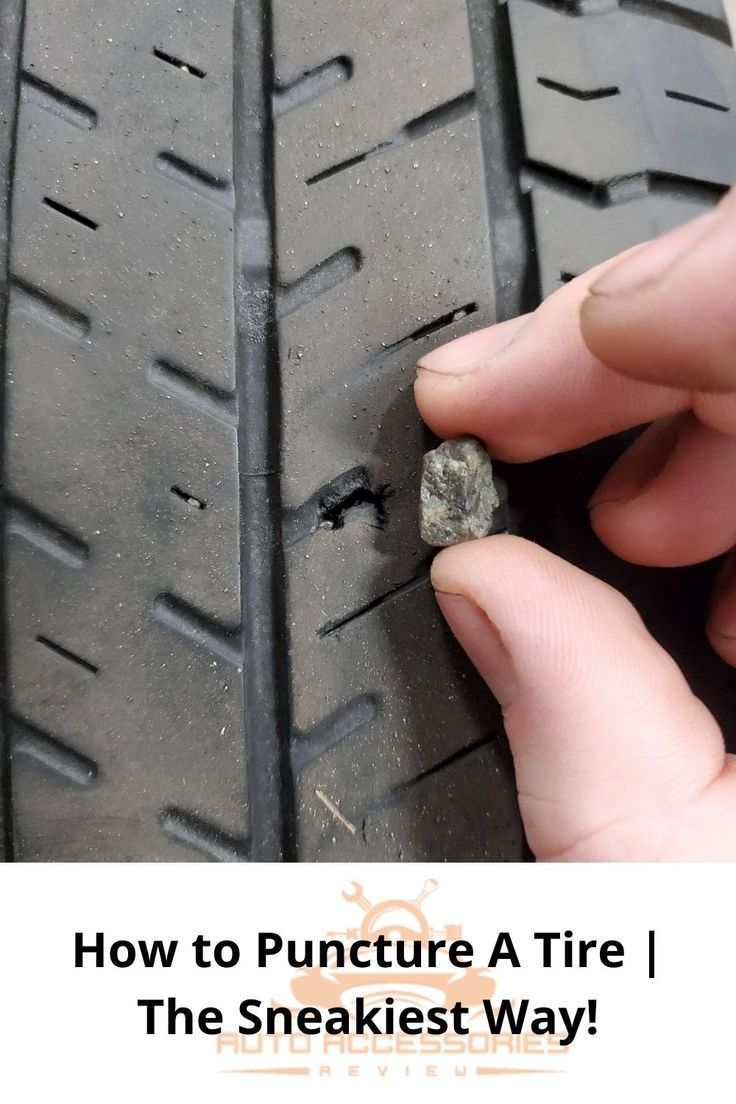
| Puncture (nail, glass, debris) | A sharp object slices the tread or sidewall while driving | Avoid visible road debris; patch small punctures right away |
| Curb or pothole impact | A hard hit breaks the internal cords or the bead seal | Slow down over potholes and give curbs extra clearance |
| Underinflation | Low pressure lets the tire flex more, building up heat | Check pressure monthly with a gauge, including the spare |
| Heat buildup | Long high-speed drives or hot pavement raise internal tire temperature | Check pressure before long trips; don’t overload the vehicle |
| Old or worn tire | Dry rot and thin tread weaken the tire’s structure over time | Replace tires every 6 years or sooner based on tread wear |
What to Do If Your Tire Pops While Driving
A tire that pops at speed pulls the car hard toward the side that failed. The instinct to brake or jerk the wheel is exactly what makes a blowout dangerous — the safest response is to do less, not more, until the car has slowed down on its own.
- Grip the wheel firmly: Hold the steering wheel with both hands and resist the urge to jerk it in either direction.
- Ease off the gas: Take your foot off the accelerator immediately instead of hitting the brake.
- Let the car slow down: Allow the vehicle to decelerate on its own until your speed drops below about 30 mph.
- Brake gently and steer to safety: Once you’re under 30 mph, apply light, steady brake pressure and steer toward a flat shoulder or parking lot away from traffic.
- Turn on your hazard lights: Signal your presence to other drivers before you come to a complete stop.
- Exit safely and call for help: Set the parking brake, stay clear of traffic, and call roadside assistance if you can’t safely change the tire yourself.
"We tell every reader the same thing: the moment a tire pops, your only job is to keep the wheel straight and get off the gas. Braking hard or overcorrecting is what turns a blowout into a spin."
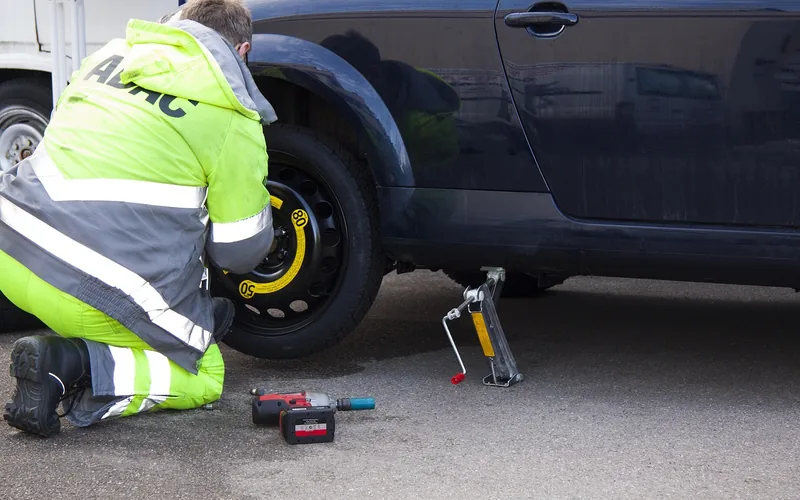
Not every dropped-air situation is a full blowout. If you’re just dealing with a slow leak, our guide on driving on low tires too long covers how much time and distance you actually have before it becomes dangerous.
The Only Legal Ways to Intentionally Deflate a Tire
There is no safe way to make a tire "pop" the way a nail or a hammer does, and we won’t walk through those methods here — they risk injury and property damage and, applied to a car that isn’t yours, are a crime (more on that below). The only legitimate reason to fully deflate a tire on purpose is to remove it from the rim for repair, rotation, or disposal, and shops do this one specific way.
How a Shop Fully Deflates a Tire for Removal
- Remove the valve cap: Locate the valve stem on the sidewall and unscrew the small plastic cap.
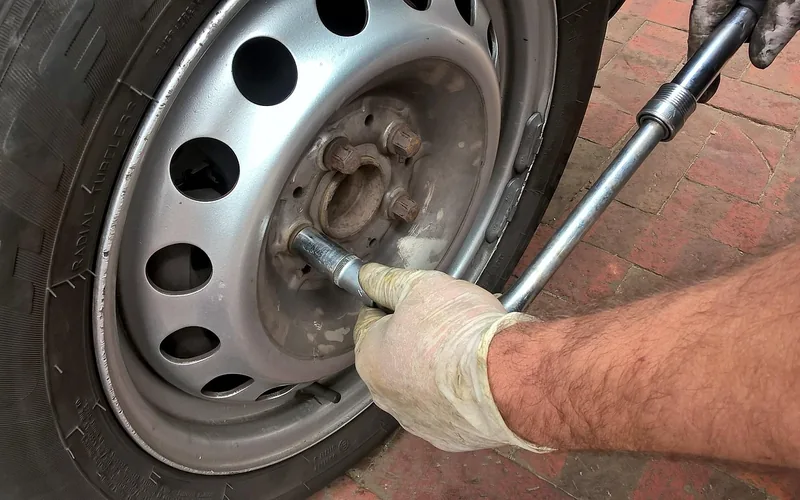
- Unthread the valve core: A valve core tool twists the core counterclockwise and lifts it out, letting all the air escape in seconds rather than through the slow press-and-hiss method.
- Break the bead if needed: If the tire still holds its shape against the rim, a bead breaker or tire machine separates the bead seal so the tire can come off cleanly.
- Wear eye and hand protection: Gloves and safety glasses guard against grit and any sharp edge on the rim during removal.
If what you actually need is precise, partial deflation — for off-roading, towing, or matching a specific PSI — a dedicated deflator tool is the better call than fully emptying the tire. See our picks in how to let air out of a car tire for that use case.
Best Tire Safety Kit Pick
AUTOWN Heavy Duty Tire Plug Repair Kit (68-Piece)
Plugs a puncture yourself roadside so a small hole never turns into a full blowout.
- Best for: Sealing a nail or screw puncture without removing the tire
- Why we picked it: Matches this guide’s focus on preventing a pop before it happens
- Main drawback: Only works on tread punctures, not sidewall damage
Compare more tire safety options
 Option 1 AstroAI Digital Tire Pressure Gauge (150 PSI)
|
 Option 2 Lisle 15190 Valve Core Removal Tool
|
 Option 3 AstroAI L7 Portable Tire Inflator (150 PSI Cordless)
|
As an Amazon Associate we earn from qualifying purchases.
Is It Illegal to Pop or Slash Someone Else’s Tire?
Yes. Intentionally damaging or deflating another person’s tire without their permission is criminal mischief or vandalism in every U.S. state, regardless of the method used or how many tires are affected.
According to the Cornell Legal Information Institute, a person is guilty of criminal mischief when they purposely or recklessly damage the tangible property of another. Charges typically scale with the dollar value of the damage: many states treat damage under roughly $100–$1,000 as a misdemeanor, punishable by fines, probation, and restitution, while higher-value or repeat offenses can be charged as a felony carrying jail time. Targeting multiple vehicles in one incident is treated more seriously and can push a case from misdemeanor to felony territory.
If someone else’s vehicle is causing a real problem — blocking your driveway, parked illegally, or involved in a dispute — the legal options are to contact local law enforcement or a towing authority, not to damage their property yourself. Doing so exposes you to the same charges described above, on top of whatever the original issue was.
How to Properly Dispose of a Tire After It’s Deflated
Old tires can’t go in the regular trash in most areas, and dumping them in a landfill is illegal in many states because the rubber doesn’t biodegrade and can leach chemicals into soil and water. Burning a tire is worse — it releases toxic smoke that includes benzene and sulfur dioxide.
- Return it to a tire retailer: Most shops take your old tire when you buy a new one, often for a disposal fee under $25 per tire.
- Drop it at a recycling facility: Many municipalities run tire pick-up or drop-off programs; the tire needs to be off the rim first.
- Ask an auto repair shop: Some accept used tires for a small fee — call ahead to confirm before dropping one off.
Recycled tire rubber gets a second life in things like playground surfacing, road material, and rubberized mulch, so proper disposal isn’t just about following the law — it keeps usable material out of a landfill.
Frequently Asked Questions
What causes a car tire to pop or blow out?
A car tire pops or blows out mostly from punctures (nails, glass, road debris), impact damage from potholes or curbs, underinflation, or heat buildup from long high-speed drives. NHTSA data shows tires underinflated by 25% or more are three times more likely to be a critical factor in a crash. Age and worn tread also weaken the tire’s structure over time.
What should you do if your tire pops while you’re driving?
Grip the wheel firmly, ease off the gas instead of braking, and let the car slow down gradually on its own. Once you’re below about 30 mph, brake gently and steer to a flat shoulder or parking lot away from traffic, then turn on your hazard lights before you get out.
Is it illegal to pop or slash someone else’s tire?
Yes. Intentionally damaging another person’s tire is criminal mischief or vandalism in every U.S. state, even if only one tire is affected. Damage under roughly $100–$1,000 (the exact threshold varies by state) is typically a misdemeanor; higher-value or repeat damage can be charged as a felony with restitution and jail time.
What’s the fastest legal way to fully deflate a tire?
A technician removes the valve core with a valve core tool, which releases all the air in seconds instead of the slower press-and-hiss method. This is only done for a legitimate reason, such as pulling a tire off the rim for repair, rotation, or disposal, and it’s always performed with the vehicle off the road.
Will driving over a glass bottle or pothole pop a tire?
Yes. Sharp glass shards can slice through the tread and sidewall, and a hard pothole or curb strike can break the tire’s internal structure or the bead seal. Both can cause an instant flat or a slower leak, depending on how much damage occurs.
Can a tire lose air or go flat without any puncture?
Yes. Tires naturally lose about 1–2 PSI per month even with no damage, and cold weather speeds this up because air contracts as the temperature drops. A tire that’s significantly low with no visible puncture usually has a slow leak at the valve stem, the bead seal, or the wheel rim.
Conclusion
A tire "popping" is almost always the result of a puncture, an impact, low tire pressure, or age — not something you can safely make happen. If it happens while you’re driving, ease off the gas and keep the wheel straight until you’ve slowed down enough to pull over. And if you ever need a tire fully emptied of air, the only legitimate route is a valve core tool in the hands of a technician, whether that’s for a repair, a rotation, or getting the tire ready for disposal. For more on how a tire blowout can affect your car beyond the tire itself, see our companion guide.
Products related to this article
Sponsored / affiliate links. As an Amazon Associate I earn from qualifying purchases. I may earn additional commission from eligible campaigns.