How to Tell If Your Car Has a Block Heater
Not all vehicles have block heaters. If you find a cord, follow where it exits and check the plug shape. Missing it can mean cold-start trouble on a cold morning. This guide gives a no-tools checklist for cord location, plug clues, and vehicle signs.
This guide is part of our Winter Car Care: The Complete Cold-Weather Guide series.
What a block heater does
A block heater warms the engine before start-up. That helps vehicles start in cold weather. Not all cars have block heaters, and many modern vehicles have engine block heaters only as an option, not as standard equipment.
Cold-climate drivers care because a warm engine cranks easier and reaches usable heat sooner. That matters most after an overnight freeze, when oil thickens and the battery has less margin.
Why many vehicles have it only as an option
For many brands, the block heater is optional. That means two similar vehicles can leave the factory with different hardware, and a dealership may install the block heater before delivery. In warm regions, the same model may be sold without it.
Do not assume a heater is present because the vehicle is common in a snowy area. Presence still depends on build spec, dealer prep, and whether the previous owner added equipment later.
Does your car have one?
Paperwork is often the quickest place to check. Open the owner’s manual or buyer’s guide first, because either may explicitly list whether the vehicle has a block heater. If you have the window sticker, Monroney label, or dealer paperwork, those documents can also help confirm it before you search under the hood.
- Check the owner’s manual or buyer’s guide for a block heater listing.
- Look at the window sticker, Monroney label, or dealer delivery paperwork if you still have it.
- Open the hood and look for an external cord or plug.
- Follow the cord path into the engine bay if one is visible.
- Check the grille, bumper, and headlight area for a household-style plug end.
If the paperwork lists a cold-weather package, that can be another clue, but do not treat it as proof by itself. Some packages include a block heater, while others bundle different cold-weather hardware.
Say your crossover came from a northern dealer and the manual says “block heater, optional.” If you also find a cord taped neatly to the engine bay, that combination points much more strongly to an installed heater than the manual alone.
Block heater ID matrix
| Inspection clue | Likely factory-installed | Likely dealer-installed | Likely aftermarket |
|---|---|---|---|
| Cord exit point | Goes into the engine bay with tidy routing and no loose slack | Routed cleanly, but sometimes added after shipment | Loose, visible splice, or routed in a less integrated way |
| Plug location | Under the grille or near the headlights | Often in the same external areas, depending on dealer fitment | May sit in a custom bracket, bumper opening, or exposed spot |
| Owner’s manual or buyer’s guide | Often lists the heater or cold-weather package | May not list the dealer-added item, but delivery paperwork may | Usually not listed in factory paperwork |
| Cord appearance | May be wrapped with brightly colored tape and tied into factory routing | May use the same tape and a clean install, but not always | More likely to look added later or taped separately |
| Cord tie-in | More likely to look clipped or secured with the main cable run | Can be tied in neatly after dealer prep | May run independently of the main harness |
This matrix is about likelihood, not certainty.
Find the cord path
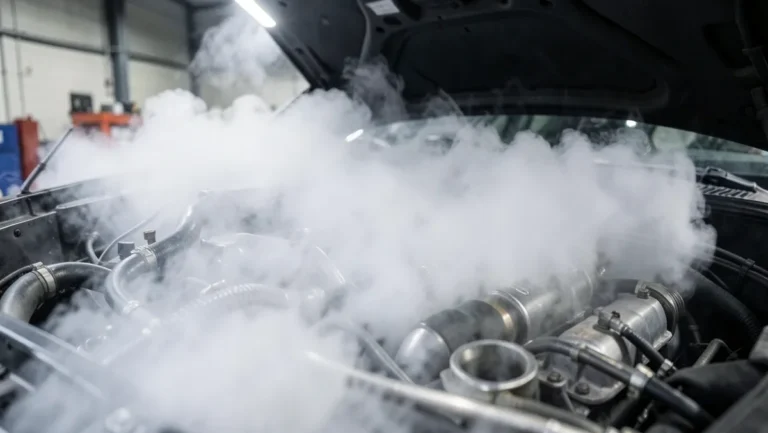
The simplest no-tools inspection starts in the engine bay. Look for a block heater cord, then trace it to where it disappears into the engine or follows the harness. The cord may be on the left or right side of the engine bay, so check both sides instead of guessing one route.
Inspect the engine bay first
Search for a cord with a household-style plug end or a cable wrapped in brightly colored tape. The tape is a useful visual clue, because it often makes the cord easier to spot against black plastic and hoses.
Look for clipped routing, short runs along the harness, or a lead that disappears toward the engine block. Those are the strongest visual clues that the cord belongs to the heating system and not to a charger, light, or accessory add-on.
Check the grille, bumper, and headlight area
The plug may sit under the grille or near the headlights. That makes the front of the vehicle the next place to inspect from outside, especially on trucks and SUVs where the front opening can hide a small plug neatly.
Check the bumper face, lower grille, and both headlight corners. If a plug is present but tucked away, it may look like a small capped connector rather than an obvious outlet.
A common first-timer mistake is stopping after a quick glance at the radiator support. On some vehicles, the cord drops lower or exits farther to one side, so the left front corner can hide the only visible clue.
Look for factory, dealer, and aftermarket clues
Factory and dealer installs usually look intentional. The cord may be secured with the cable run, tucked behind panels, or marked with brightly colored tape. Aftermarket setups often show extra clips, visible splices, or routing that does not follow the vehicle’s main cable run.
If the cord is taped but the tape looks like an added marker rather than factory wrapping, that does not prove anything by itself. Use the tape together with routing and paperwork confirmation.
Where is the plug?
If the vehicle has a block heater, the plug is often found at the front of the vehicle, under the grille, or near the headlights. There is no universal location. The right place to look depends on how the vehicle was built and who installed the heater.
External plug locations to check
Start with the grille opening, then scan the bumper corners and headlight area. On some vehicles, the plug hangs in plain view. On others, it sits behind a small cover or in a bracket that keeps it out of the airstream.
Suppose a pickup has a capped connector just below the left headlight and a second cord disappearing into the engine bay. That pattern strongly suggests the heater is present even if the plug is not easy to reach by hand.
What a missing or hidden plug can mean
A missing visible plug does not always mean the car lacks a heater. The cord may be tucked behind trim, routed deep in the engine bay, or left with no obvious access point after a dealer install. It can also mean the previous owner removed the external end.
If you find a cord in the engine bay but no accessible plug, stop there and check the manual before pulling on anything. Do not invent a new access path or force hidden parts out of place.
Does your block heater work?
A visible cord or plug tells you the vehicle likely has a block heater, but it does not prove the heater is live. To answer that, check whether the cord is complete, intact, and connected where the manual says it should be. If the cord end is damaged, missing, or abandoned, the system may not work as intended.
What a live cord or plug tells you
A household-style plug end attached to the heater cord means the system was meant to be powered from outside the vehicle. If the cord runs cleanly to the engine block and the plug end looks intact, the heater is more likely to be functional than one with a cut or missing end.
Look for broken insulation, melted plastic, or a cord that hangs free without a clear route into the engine. Those are failure cases that can leave the heater useless even when the vehicle originally had one.
When to stop and consult the manual
Do not plug into an outlet until you confirm the manual’s connection order and any model-specific cautions. Some vehicles with a block heater also have other cold-weather hardware, and the manual may note a specific plug location or storage method.
Follow the vehicle and product manual. Do not guess at electrical connections, and do not work under a vehicle supported only by a jack; use jack stands on level ground.
Vehicle types and climate clues
Gasoline, diesel, pickup, and SUV setups can differ in how often a block heater appears, but the inspection logic stays the same. Diesel and heavy-duty trucks are more likely to have one from the factory or dealer, while smaller gasoline vehicles may have it only in colder markets.
Brands and models vary widely.
That list is not a shopping guide. It only shows that block heaters appear across different makes and body styles, so the vehicle itself does not settle the question.
Cold regions are more likely to include the option, but warm regions may not include it by default. If the vehicle spent time in a northern fleet or was sold through a cold-climate dealer, the odds go up. If it came from a warm market, paperwork becomes even more important.
Frequently asked questions
How do I know if my car has a block heater?
Start with the owner’s manual or buyer’s guide, then inspect the engine bay for a cord with a household-style plug end. From there, check the grille, bumper, and headlight area. If the cord is taped, clipped to the cable run, or routed into the engine block, that is a strong sign.
How can I tell if my car block heater is working?
A complete cord and intact plug suggest the heater is present, but not necessarily live. Check the manual for the exact hookup method and look for damage, missing ends, or abandoned routing. If anything looks incomplete, stop and verify the vehicle-specific procedure before power is applied.
Does my car have a block heater from the factory?
Factory equipment is most likely when the manual or buyer’s guide lists the heater, the cord follows clean routing, and the external plug sits neatly under the grille or near a headlight. If the paperwork is silent, the dealer may have added it before delivery.
Where is the block heater plug on a car?
There is no single universal spot. The plug may sit under the grille or near the headlights, and the cord may exit on the left or right side of the engine bay. Inspect both front corners and follow any visible cord back to the engine.
Can I check the owner’s manual for a block heater?
Yes. The owner’s manual or buyer’s guide is one of the best first checks, because it may explicitly list whether the vehicle has a block heater. It can also tell you whether the heater is optional, bundled with a package, or mentioned only in cold-weather equipment notes.
Are block heaters optional on some vehicles?
Yes. For many brands, the block heater is optional, and dealerships may install the block heater before delivery. That is why two similar vehicles can have different hardware, even when they share the same trim and engine.
What does a block heater cord look like?
A block heater cord often looks like a small power lead with a household-style plug end. It may be wrapped with brightly colored tape and may run along the left or right side of the engine bay. The cleanest clue is the cord’s path into the engine, not the cord color alone.
Products related to this article
Sponsored / affiliate links. As an Amazon Associate I earn from qualifying purchases. I may earn additional commission from eligible campaigns.