How To Keep A Car Cool: Proven Essential Tips
Keep your car cool by using sunshades, parking in the shade, checking your AC system, and using reflective materials. This guide provides easy, proven tips to beat the heat and ensure a comfortable ride all summer long.
Living in a warm climate means dealing with a hot car. That feeling of stepping into an oven on wheels is never pleasant, especially when you’re already feeling the heat. But don’t worry! Keeping your car cool is totally achievable with a few smart, simple strategies. This guide will walk you through easy-to-follow steps so you can enjoy a comfortable drive, no matter how high the temperature climbs.
Why Does a Car Get So Hot?
A car’s interior acts like a greenhouse. Sunlight enters through the windows and warms the surfaces inside, like the seats, dashboard, and steering wheel. This heat gets trapped, and with no easy way to escape, the temperature inside the car can skyrocket much faster than the outside air temperature. Dark-colored interiors absorb even more heat, making the problem worse. On a sunny day, the inside temperature of a car can reach over 130°F (54°C), creating a dangerous and uncomfortable environment.
Proven Essential Tips to Keep Your Car Cool
Let’s dive into some practical, easy-to-implement methods to keep your car’s interior at a comfortable temperature. These tips are great for everyday drivers and won’t require any special tools or mechanical knowledge.
1. Park Smart: Seek Shade Whenever Possible
This is the simplest and most effective way to prevent your car from turning into a sauna. Whenever you have the choice, opt for a shaded parking spot.
- Under Trees: Natural shade from trees is your best friend. It significantly blocks direct sunlight.
- Parking Garages: If available, parking garages offer complete protection from the sun.
- Building Shadows: Even the shadow cast by a building can make a difference, especially during the hottest parts of the day.
While finding shade isn’t always possible, make it a priority when you can. Even a few hours out of direct sun can keep your car noticeably cooler.
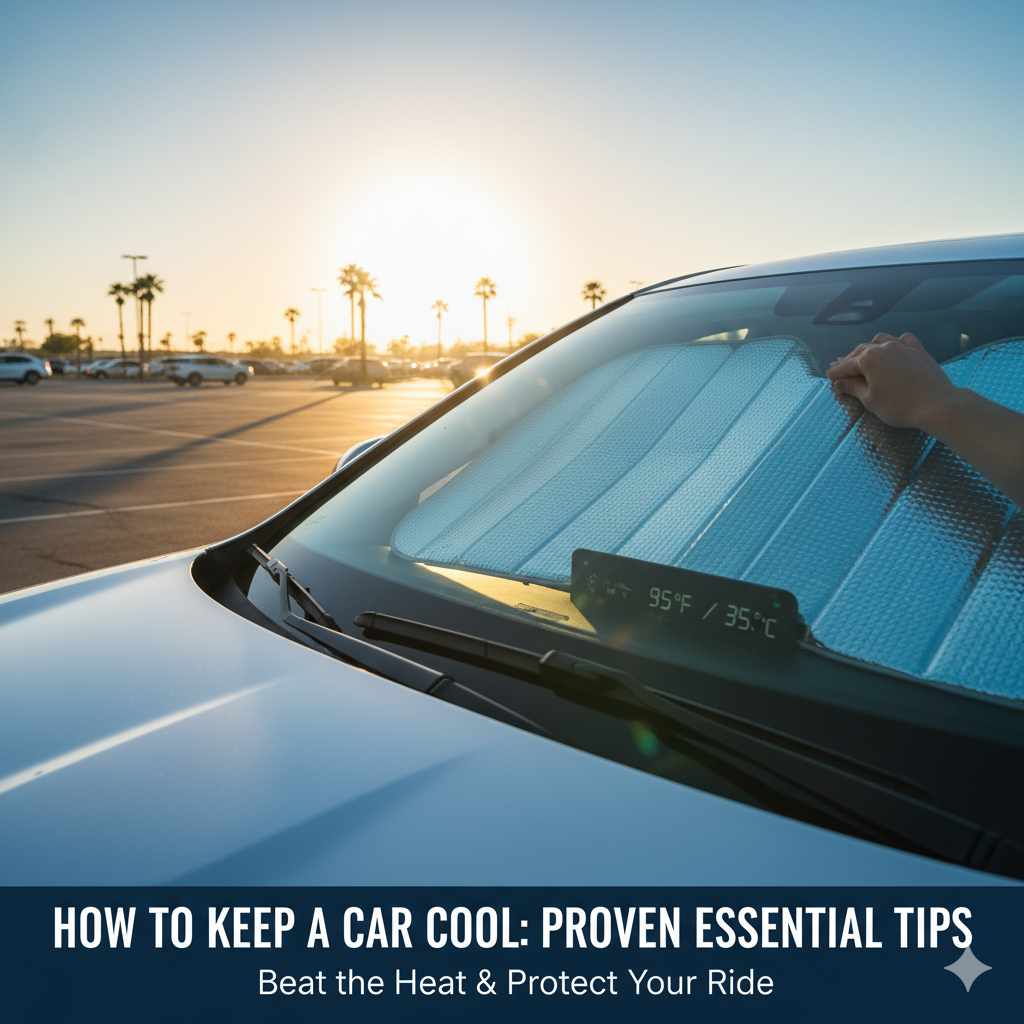
2. Use a Windshield Sunshade
A good sunshade is an absolute must-have for sunny days. It acts as a barrier, preventing sunlight from directly hitting your dashboard and heating up the cabin.
- Types of Sunshades:
- Reflective Shades: These are typically silver on one side and have a darker material on the other. The silver side faces outwards to reflect sunlight.
- Foldable Shades: Easier to store.
- Custom-Fit Shades: These are designed specifically for your car’s make and model, offering a snug fit and maximum coverage.
How to Use: Simply place the sunshade on the inside of your windshield when you park. It’s that easy! It can reduce the interior temperature significantly.
3. Crack Your Windows (Safely)
Leaving your windows slightly ajar allows hot air to escape, preventing it from building up inside the car. This creates a convection effect, letting cooler outside air circulate.
- How Much to Open: Just a tiny crack, about a quarter to half an inch, is usually enough.
- Security: This small gap is generally not enough for a thief to reach inside or break in easily.
- Rain: Be mindful of unexpected rain showers.
This is a great passive cooling method that requires no effort once your car is parked.
4. Use Car Window Covers or Tinting
Beyond a simple sunshade, other options can help block solar heat.
- Window Covers: You can purchase mesh covers that attach to the outside or inside of your side windows. These block sunlight while still allowing some visibility.
- Window Tinting: Professionally applied window tint can significantly reduce the amount of heat that enters your car. Different tint levels offer varying degrees of heat rejection and darkness. Check your local laws regarding the legality of window tinting. For more on vehicle safety regulations, you can refer to resources from the National Highway Traffic Safety Administration (NHTSA).
While tinting is a more permanent solution, window covers offer a flexible alternative.
5. Use Lighter Colored Seat Covers and Dashboard Mats
Dark surfaces inside your car absorb more heat. Switching to lighter colors can make a noticeable difference.
- Seat Covers: Light-colored fabric seat covers can prevent your seats from becoming scorching hot.
- Dashboard Mats: A light-colored dashboard mat can stop the dashboard from absorbing excessive heat and radiating it into the cabin. It also protects your dashboard from UV damage.
Consider materials like light cotton or breathable fabrics for seat covers.
6. Cover Your Steering Wheel and Seats
Even if you use a sunshade, the steering wheel and seats can still get very hot, especially if they are leather or dark-colored.
- Steering Wheel Cover: A fabric steering wheel cover can be placed over the wheel when parked. It’s easy to remove before driving.
- Towels: A simple bath towel can work in a pinch to cover your seat or steering wheel.
These are quick, temporary solutions to avoid those painfully hot surfaces.
7. Utilize Your Car’s Air Conditioning System Effectively
Your AC is designed to cool your car, but using it efficiently makes a big difference.
- Initial Cooling: When you first get into a hot car, open all the doors and windows for a minute or two to let the super-hot air escape. Then, roll up the windows and turn on the AC to its highest setting for a few minutes before adjusting to your preferred temperature.
- Recirculation Mode: Once the car has cooled down, switch the AC to recirculation mode. This means the system cools the air already inside your car, which is more efficient than constantly cooling hot outside air.
- Regular Maintenance: Ensure your AC system is serviced regularly. Check your cabin air filter and refrigerant levels. A clogged cabin air filter can significantly reduce airflow and cooling efficiency. You can find replacement filters at most auto parts stores.
Proper AC maintenance is key for optimal performance. If you suspect an issue, consulting a mechanic is a good idea.
8. Check Your Car’s Coolant Levels
While this is more about your car’s engine, an engine that overheats can indirectly affect cabin temperature and, more importantly, your car’s overall function. The cooling system prevents the engine from overheating, which impacts everything.
- Importance: The coolant (antifreeze) circulates through the engine to absorb heat. If the coolant is low or old, the engine can’t cool itself effectively.
-
How to Check:
- Ensure the engine is completely cool. Never open a hot radiator cap.
- Locate the coolant reservoir, usually a translucent plastic tank near the engine.
- Check the fluid level against the “MIN” and “MAX” lines on the reservoir.
- If low, add the correct type of coolant/water mixture as specified in your owner’s manual.
- Professional Check: If you’re unsure, have your coolant levels and the condition of your cooling system checked by a mechanic during routine maintenance.
Keeping your engine’s cooling system in good shape is fundamental to your car’s health and performance, especially in hot weather.
9. Consider a Dashboard Fan
For an extra boost, especially if your AC seems weak or you want faster circulation, a dashboard fan can help.
- Types: These can be small, battery-operated fans or ones that plug into your car’s 12V outlet. Some even have solar panels to operate when parked.
- Benefits: They help move air around the cabin, making you feel cooler even at lower AC settings.
These are relatively inexpensive and can be a great addition for extra comfort.
10. Keep Your Car Clean and Organized
A cluttered car can trap heat. Removing unnecessary items, especially dark-colored ones like excess blankets or car mats, can help slightly with heat management.
- Remove Clutter: Less stuff means better air circulation internally.
- Ventilation: Ensure your air vents are clear of debris.
This is a good practice for overall car maintenance and can contribute to a cooler cabin environment.
Table: Sun Protection Comparison
Here’s a quick look at some popular sun protection methods and their general effectiveness and ease of use:
| Method | Effectiveness | Ease of Use | Cost |
|---|---|---|---|
| Parking in Shade | Very High | Simple (if available) | Free |
| Windshield Sunshade | High | Easy | $ – $$ |
| Window Tinting | High | Professional installation | $$ – $$$ |
| Window Covers | Medium | Easy | $ – $$ |
| Cracking Windows | Low to Medium | Very Easy | Free |
The best approach often involves combining several of these strategies for maximum benefit.
Advanced Tips and Considerations
For those looking to go a step further, here are a few more points to consider.
Ventilation Systems
Some advanced car accessories are designed to keep the air circulating even when the car is parked and off.
- Solar-Powered Fans: These small devices fit into the top of a window and use a solar panel to power a fan, drawing hot air out of the car. They can work effectively in direct sunlight.
- Ventilators That Use Car Battery: Some systems are designed to vent your car for a set period after you leave, using a small amount of battery power. Be cautious with these to ensure they don’t drain your battery completely.
These options can offer continuous passive cooling.
Car Cover Materials
If you park your car outside for extended periods, a car cover can provide a layer of protection.
- Reflective Covers: Choose covers made from reflective materials that bounce sunlight away.
- Breathable Fabrics: Ensure the cover is breathable to prevent moisture buildup.
A full car cover can help keep the entire vehicle cooler, not just the interior.
Cooling Seat Cushions
For extremely hot climates or long drives, cooling seat cushions can provide direct relief.
- How They Work: These cushions often use fans to circulate air through perforated seats, or they might contain cooling gel.
- Power Source: Most plug into the car’s 12V outlet.
These are a comfort aid and can be especially helpful for those sensitive to heat.
How to Keep a Car Cool: Frequently Asked Questions
Can leaving your car windows cracked really make a difference?
Yes, even a small crack of about a quarter to half an inch can help vent hot air from building up inside your car. This allows for some natural air circulation and can lower the interior temperature compared to fully sealed windows.
What’s the best way to cool down a car quickly after it’s been sitting in the sun?
First, open all the doors and windows for a minute or two to let the super-hot air escape. Then, roll up the windows, start the engine, and turn the AC to its highest setting for a few minutes. Once it feels cooler, you can adjust the temperature and fan speed.
Is it safe to leave a sunshade in my car all the time?
Yes, it is safe and recommended to leave a sunshade in your car when parked and exposed to sunlight. They are designed for this purpose and help protect your interior from UV rays and reduce heat buildup.
How often should I get my car’s AC serviced?
It’s generally recommended to have your car’s AC system inspected by a professional every one to two years. Regular checks can ensure it’s running efficiently and catch potential problems early. Also, regularly check and replace your cabin air filter, which plays a big role in AC performance.
Are those solar-powered car fans effective?
Solar-powered car fans can be effective in reducing interior heat buildup, especially when the car is parked in direct sunlight. They work by actively drawing hot air out of the cabin. While they won’t cool a car to a refrigerated temperature, they help prevent extreme heat buildup.
What’s the difference between window tinting and window covers?
Window tinting is a film applied to the inside of the glass, offering a permanent solution that reduces heat and UV rays. Window covers are typically removable fabric or mesh shades that attach to the windows, offering a more temporary and flexible option for sun protection.
Can I use my car’s regular coolant to top up the reservoir?
No, you should always use the specific type of coolant recommended in your car’s owner’s manual. Coolants come in different formulations (e.g., for different metals or operating temperatures), and using the wrong type can damage your cooling system.
Conclusion
Keeping your car cool during hot weather doesn’t have to be a struggle. By incorporating simple habits like parking in the shade, using effective sunshades, and ensuring your AC system is well-maintained, you can make a huge difference. Remember, a cooler car not only means a more comfortable ride but also helps protect your car’s interior from sun damage and premature wear. These tips are designed to be straightforward and practical, empowering you to take control of your car’s comfort and longevity. Stay cool, and enjoy your summer drives!