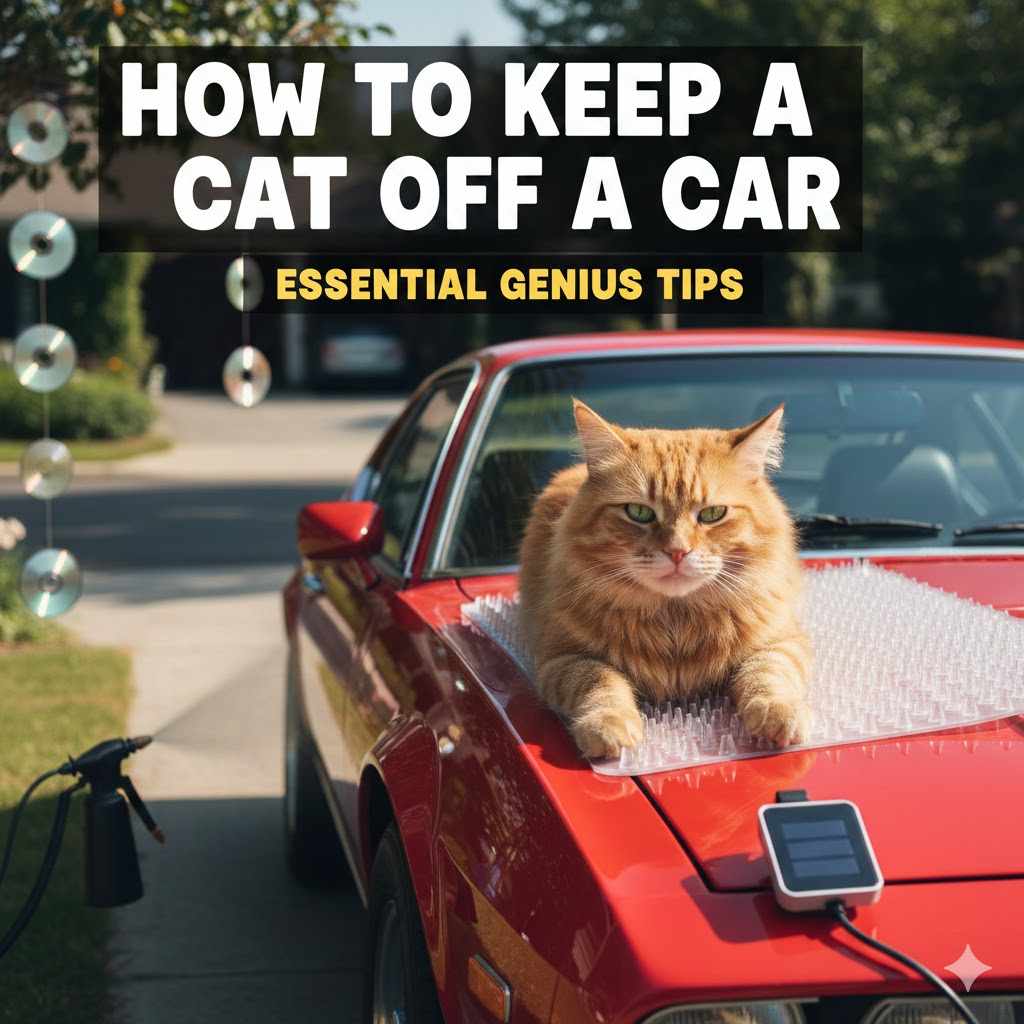
How To Keep a Cat Off a Car: Essential Genius Tips
To keep a cat off your car, the most effective method is using a quality car cover. You can also use motion-activated sprinklers, ultrasonic repellers, or safe, scent-based deterrents like citrus sprays. Always be sure to check under your hood before starting your car, especially in cold weather, to ensure a cat isn’t hiding inside.
Hello there! It’s Md Meraj, your friendly guide to all things car care. Have you walked out to your car only to find a surprise visitor? A cat, lounging on your hood as if it owns the place? You’re not alone. It’s a common issue that can be more than just a little annoying. Those tiny paw prints and unexpected scratches can really ruin your day and your car’s beautiful finish.
But don’t worry, this is a problem you can solve. You don’t need to be a cat whisperer or an expert mechanic. We’re going to walk through some simple, safe, and super-effective ways to gently tell those furry friends that your car is a no-nap zone. Let’s get your car back to being cat-free!
Why Your Car is a Cat Magnet
Before we jump into the solutions, it helps to understand why cats are so drawn to cars in the first place. When you know what they’re looking for, it’s much easier to make your vehicle less appealing. Think of it like this: your car is a five-star hotel in the eyes of a neighborhood cat.
Warmth and Coziness
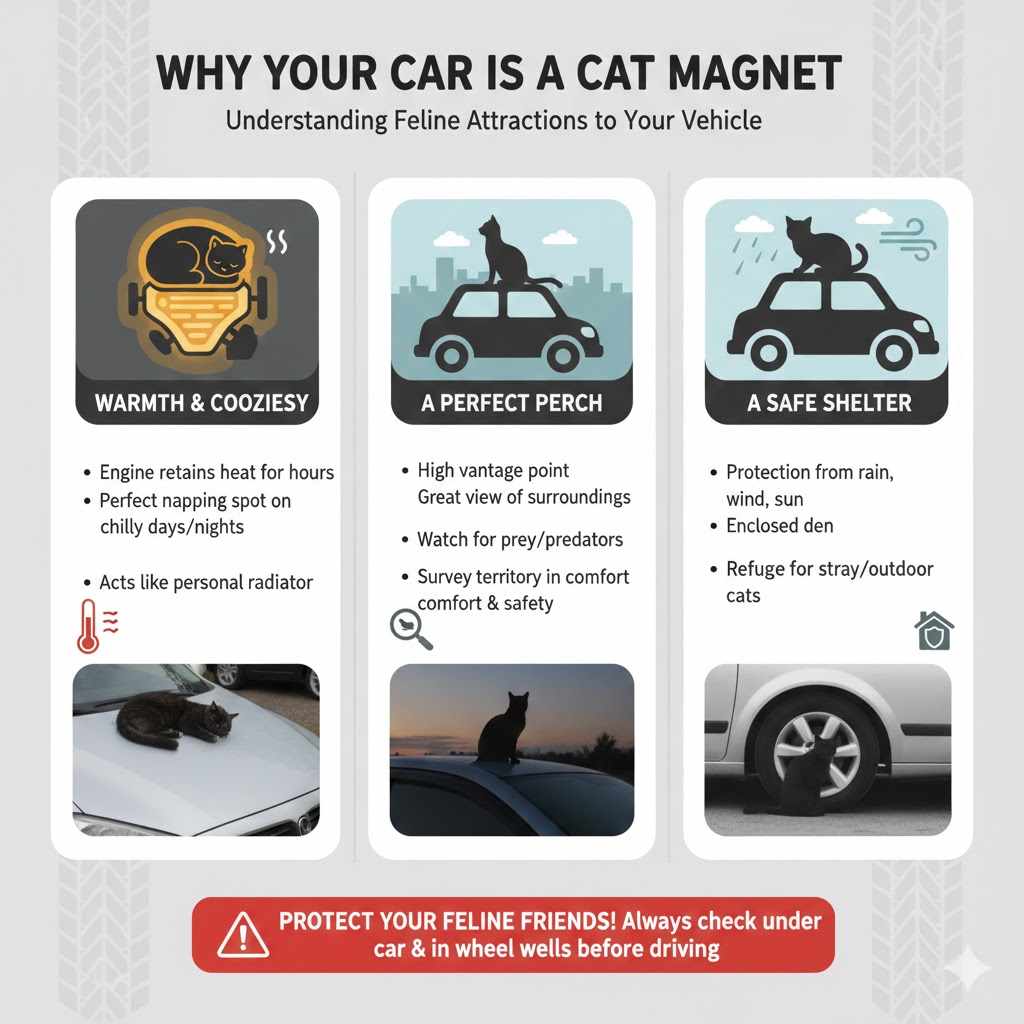
Cars, especially after being driven, are wonderfully warm. The engine retains heat for hours, making the hood a perfect spot for a cozy nap, especially on a chilly day or night. Cats are experts at finding the warmest spot around, and your car’s engine is like a personal radiator for them.
A Perfect Perch
Cats love high places. It gives them a great view of their surroundings, helping them watch for potential prey or predators. The roof or hood of your car offers an ideal vantage point. From there, they can survey their territory in comfort and safety.
A Safe Shelter
Your car also provides shelter. Underneath the car, they are protected from rain, wind, and the hot sun. The wheel wells and even the engine bay can seem like a safe, enclosed den to a cat seeking refuge. This is especially true for stray cats or outdoor cats looking for a secure place to rest.
The Damage Cats Can Cause to Your Vehicle
While a napping cat might look cute, the reality is they can cause real damage to your car. It’s not because they are malicious; it’s just the natural result of them being… well, cats. Understanding the potential harm can motivate you to find a solution that works.
- Paint Scratches: This is the number one complaint. As a cat jumps on or off your car, its claws can extend and leave fine scratches and swirl marks in the clear coat. If they get spooked, they might dig their claws in to get traction, causing deeper, more noticeable damage.
- Dirty Paw Prints: Cats walk through all sorts of things—dirt, mud, dust—and then track it all over your clean car. These prints can be stubborn to remove and may even contain abrasive particles that can scratch the paint when you try to wipe them off.
- Engine Bay Dangers: This is the most serious risk. A cat seeking warmth might crawl up into your engine compartment. If you start the car without knowing it’s there, the fan belt or other moving parts can cause serious injury or death to the animal and potentially damage your engine, leading to expensive repairs.
Level 1: Gentle & Simple Deterrents
Let’s start with the easiest and most common-sense solutions. These methods are non-invasive, kind to the animals, and often the most effective for keeping cats off your car for good. You don’t need any special tools, just a little bit of planning.
The Ultimate Solution: A Car Cover
If you want the most reliable, surefire way to keep a cat off your car, a car cover is your best friend. It creates a physical barrier that a cat simply can’t get past. They might still jump on the cover, but your paint will be completely protected from claws and dirt.
- Pros: 100% effective at preventing scratches and paw prints. It also protects your car from sun, rain, dust, and bird droppings.
- Cons: It takes a minute or two to put on and take off every day, which can be a hassle for some drivers.
Look for a cover that is breathable to prevent moisture from being trapped underneath. A soft inner lining will provide an extra layer of protection for your paint.
Park Smarter, Not Harder
Sometimes, the solution is as simple as where you park. If you have a garage, use it! This is the most secure place for your vehicle. If you don’t have a garage, a carport is the next best thing. Cats are less likely to hang around in enclosed or semi-enclosed spaces. If you must park outside, try choosing a well-lit, open area away from bushes, dumpsters, or fences where cats might hide or hang out.
Use Scents Cats Dislike (Commercial Sprays)
Cats have an incredibly sensitive sense of smell, which you can use to your advantage. There are many commercial cat repellent sprays available that are safe for car paint. These sprays use scents that cats find unpleasant, but are often neutral or even pleasant to humans.
- Common Scents: Most repellents use natural ingredients like citrus, lavender, peppermint, or citronella.
- How to Use: Lightly spray the product around the perimeter of your car on the ground, not directly on the paint unless the label says it is safe. You can also spray it on the tires and undercarriage. The scent creates an invisible barrier that cats prefer not to cross.
Create Your Own DIY Cat Repellent
You can save money by making your own repellent spray with common household ingredients. These are natural, safe, and easy to mix up. Remember to always test your spray on a small, hidden area of your car’s paint first (like a door jamb) to ensure it doesn’t cause any discoloration.
| Recipe Name | Ingredients | Instructions | Safety Note |
|---|---|---|---|
| Citrus Power Spray | 2 cups of water, 1 cup of lemon, orange, or lime peels | Boil the peels in water for 20 minutes. Let it cool, strain the liquid into a spray bottle. | Citrus oils can be strong. Always test on a small paint area first. |
| Vinegar Barrier | 1 part white vinegar, 1 part water | Mix equal parts of vinegar and water in a spray bottle. Shake well. | Never spray directly on paint. Use on the ground around the car and on tires. |
| Herbal Scent Shield | 2 cups of water, a handful of fresh rosemary or lavender | Boil the herbs in water, let it steep and cool. Strain into a spray bottle. | Generally very safe for all surfaces, but a spot test is still a good idea. |
Level 2: Environmental & Tech Solutions
If the simple deterrents aren’t quite cutting it, you can step up your game with a few clever environmental or technological tricks. These methods work by making the area around your car an undesirable place for a cat to be.
Motion-Activated Sprinklers
This is a highly effective and humane method. Motion-activated sprinklers use an infrared sensor to detect movement. When a cat (or any other animal) walks into its range, it lets out a short, harmless burst of water. Most cats hate getting wet and will learn very quickly to avoid the area. You can position one or two sprinklers to cover the area where you park your car.
Ultrasonic Animal Repellers
These electronic devices emit a high-frequency sound that is irritating to cats, but silent to most humans. When a cat enters the device’s sensor range, it activates. The sound startles them and encourages them to leave. The effectiveness of these devices can vary. Some cats are more sensitive to the sounds than others, and the quality of the device matters.
Make Other Areas More Appealing
Sometimes the best defense is a good offense. You can lure the cat away from your car by creating a spot that is even more attractive. Find a quiet corner of your yard, perhaps under a porch or in a garden, and set up a cozy alternative.
- Create a Cat-Friendly Zone: Place a small, warm, and waterproof cat shelter or even just a cardboard box with a soft blanket inside.
- Add Some Catnip: Sprinkling a little catnip in the designated area can help draw them to their new favorite spot.
- Remove Food and Water: Make sure you aren’t accidentally inviting them over. Secure your trash can lids and don’t leave pet food or water bowls out overnight.
Use Uncomfortable Textures
Cats are picky about where they walk. You can use this to your advantage by placing materials with textures they dislike on the ground around your car. This makes the approach to your car unpleasant. Good options include plastic carpet runners (placed upside down so the little plastic nubs face up) or a few sheets of aluminum foil, which cats dislike the feel and sound of.
What NOT to Do: Keeping it Safe and Humane
It’s easy to get frustrated, but it is incredibly important to only use methods that are safe for the cats, other animals, and the environment. Using harmful substances is not only cruel but can also be illegal and dangerous.
Avoid Toxic Chemicals at All Costs
Never, ever use mothballs, ammonia, bleach, or antifreeze to deter cats. These substances are highly toxic. A cat could ingest them while grooming its paws, leading to severe illness or death. These chemicals can also harm children, other pets, and local wildlife. For more information on pet toxins, you can consult reliable sources like the ASPCA Animal Poison Control Center.
Do Not Trap or Harm the Animal
It can be tempting to trap a persistent cat and relocate it, but this is often not a permanent solution and can be very stressful for the animal. A new cat may simply move in to take its place. Physically harming an animal is cruel and illegal. Always choose kindness.
Don’t Use Scare Tactics
Yelling, chasing, or aggressively scaring a cat away might work in the short term, but it can make the animal fearful and unpredictable. A startled cat may panic and run into traffic or dig its claws into your car’s paint to escape. Gentle, consistent deterrents are always the better approach.
| Deterrent Method | Effectiveness | Cost | Pros | Cons |
|---|---|---|---|---|
| Car Cover | Very High | Medium | Protects from all elements, 100% scratch-proof. | Requires daily effort to put on/take off. |
| Repellent Sprays | Moderate | Low | Easy to use, inexpensive. | Needs to be reapplied, especially after rain. |
| Motion-Activated Sprinkler | High | Medium | Very effective, humane, deters other pests too. | Requires a hose connection, may spray you by accident! |
| Ultrasonic Repeller | Variable | Medium | Silent to humans, low maintenance. | Effectiveness can vary greatly between cats and devices. |
The Most Important Safety Check: Look Before You Start
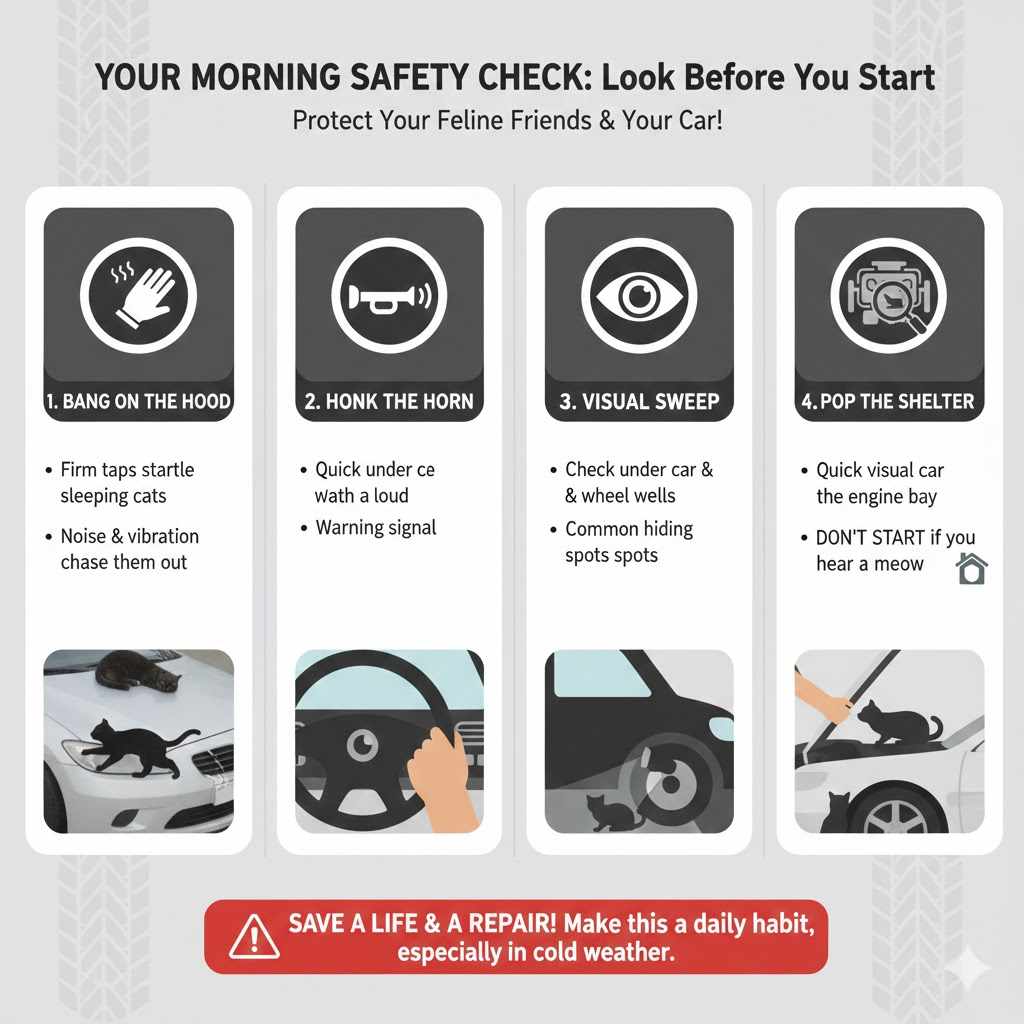
This is the most critical piece of advice I can give you, especially during cold months. Before you get in your car and turn the key, you must check for cats hiding in the engine bay. It only takes a few seconds and can save an animal’s life and prevent a costly repair bill.
- Bang on the Hood: Give the hood of your car a few firm taps. The noise and vibration are often enough to startle a sleeping cat and give it a chance to run out.
- Honk the Horn: A quick tap of the horn can also work as a warning signal.
- Do a Quick Visual Sweep: Look underneath the car and in the wheel wells. These are common hiding spots.
- If You Can, Peek Under the Hood: If you are comfortable doing so, pop the hood and do a quick visual check before starting the engine. If you hear a meow, do not start the car until you locate the cat.
Making this simple check a part of your daily routine is the best way to ensure the safety of both your car and your neighborhood’s furry residents.
Frequently Asked Questions (FAQ)
Will cat repellent sprays damage my car’s paint?
Most commercial cat repellents are formulated to be safe for car paint, but you should always read the label and test it on an inconspicuous area first. For DIY sprays, especially those with citrus oils or vinegar, it’s best to spray them on the ground around your car rather than directly on the paint job.
Are ultrasonic cat repellers really effective?
Their effectiveness can be mixed. Some car owners swear by them, while others see no effect. It seems to depend on the specific device and the individual cat’s sensitivity to the high-frequency sound. They are a humane option to try, but they aren’t a guaranteed solution for every situation.
What smells do cats hate the most?
Cats generally dislike strong citrus scents (lemon, orange, grapefruit), lavender, peppermint, rosemary, and citronella. They also have an aversion to the smell of vinegar and cayenne pepper. Using these scents can be a great way to make an area less inviting for them.
Is it safe to use mothballs to keep cats away?
Absolutely not. Mothballs are extremely toxic to cats, dogs, wildlife, and even humans. The pesticides they contain can cause severe organ damage or death if ingested. Please never use mothballs as an animal deterrent.
How can I clean cat paw prints off my car without scratching the paint?
First, rinse the area with water to remove any loose dirt or grit. Then, use a car-specific cleaning spray (a quick detailer works well) and a clean, soft microfiber towel. Gently wipe the prints away. Avoid using a dry cloth, as this can drag abrasive particles across the paint and cause scratches.
Why is my cat suddenly sleeping on my car?
A sudden change in behavior could be due to several factors. There might be a new threat in the area (like a dog) that makes their usual spot feel unsafe. The weather might have changed, making the warm hood of your car more appealing. Or, a new cat could have moved into the territory, forcing your cat to find a new, high-and-mighty resting spot.
Does aluminum foil actually keep cats away?
For many cats, yes! They dislike the crinkly sound and the strange texture of foil under their paws. Placing a few sheets on the hood and roof of your car overnight can be a simple and effective deterrent, though it can be a bit of a hassle to do every night.
Your Car, Your Sanctuary
There you have it—a full toolkit of safe, humane, and effective ways to keep cats from treating your car like their personal lounge. The best solution for you will depend on your specific situation, but often a combination of these methods works wonders. Start with the simplest options, like a scent deterrent or smarter parking, and move on to other methods if needed.
Remember, the goal is not to harm the animals, but to gently guide them to find a more suitable place to relax. By being consistent and using a little creativity, you can protect your car’s finish and ensure the safety of your neighborhood cats at the same time. You’ve got this!