How to Fix a Jammed Seat Belt: Unlock a Stuck Retractor Fast
A seat belt that will not pull out or will not wind back is almost always doing one of three things: its normal sudden-pull lock has caught, it has been switched into child-seat locking mode, or it is dirty or twisted. The first two usually clear in under a minute by letting the belt wind all the way back and then pulling it out slowly. A belt that locked after a crash, or that is frayed or cut, is a different problem and needs a shop, not a trick.
This guide separates those cases with a symptom table, gives the gentle fixes that the vehicle makers’ own manuals describe, and lists what never to do to a restraint system. It does not cover cutting, disassembling or defeating a belt, because no manual we read allows it.
Why Do Seat Belts Get Stuck?
A retractor has more than one way to lock, and each one has its own cause and its own release. Telling them apart is the whole job.
| Symptom | Likely cause | Safe check | When to see a pro |
|---|---|---|---|
| Belt locks when you yank it but frees if you let it wind in and pull slowly | Normal emergency lock caught by a sudden pull | Let the belt wind back as far as it goes, then pull it out slowly and evenly | Not needed if it now moves freely |
| Belt will not pull out at all, and it clicks as it winds in, often after a child seat was fitted | Retractor left in automatic locking (child seat) mode | Unbuckle, take any child seat out, and let the belt wind fully back to its stowed position | If it still will not extend after full retraction |
| Belt pulls out but winds back slowly or not at all | Dirty or sticky webbing, a twist, or the belt caught on trim or hardware | Pull the belt fully out, look for a twist or a snag, clean with mild soap solution, let it dry completely before it retracts | If it stays sluggish after cleaning |
| Buckle will not latch, or will not release | Foreign object or liquid in the latch | Look for visible debris only, and keep liquids away | Have the buckle checked or replaced |
| Belt locked solid after a collision, or the airbag light is on | Retractor locked under crash load, or the pretensioner fired | Do not try to reset it | Replacement by a dealer or qualified shop |
| Webbing frayed, cut, stiff or burned, or hardware cracked | Damage | Stop using that belt | Replacement by a dealer or qualified shop |
Best Emergency Escape Tool Pick
|
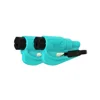
resqme Original Emergency Keychain Car Escape Tool, Seatbelt Cutter and Window Breaker, Pack of 2 This is an escape tool for a crash, fire or water emergency. It is not a fix for a stuck belt, and it should never be used to cut a belt that is simply locked.
|
As an Amazon Associate we earn from qualifying purchases. This pick is based on the product listing, not hands-on testing.
Why a hard tug makes it worse. The sudden-pull lock exists to hold you in a crash, so a quick yank on the belt can trip it the same way. The same Volkswagen and Audi instructions describe the test for a healthy retractor: it should lock when the webbing is pulled rapidly. That means a belt that locks under a jerk is behaving normally. The fix is patience, not force.
Some retractor designs also use a sensor that reacts to how the vehicle is tilted, so a belt can lock when the car is parked on a steep slope. This comes from retractor patent literature, not from a manual, so check your own manual before relying on it. Moving the vehicle to level ground costs nothing, so try that if the belt only sticks on an incline.
How to Unlock a Car Seat Belt: Step-by-Step Guide
Work through these in order and stop as soon as the belt moves freely. None of them needs a tool, and none involves opening the retractor housing.
- Stop pulling. Sit back and let go of the belt. Repeated hard tugs keep the lock engaged.
- Look for a twist or a snag. The Volkswagen and Audi instructions warn against letting belts get caught in door or seat hardware. Free the webbing and straighten any twist by hand, gently.
- Let it wind back, then pull slowly. Hold the tongue, guide the belt back into the pillar as far as it will go, pause a second, then draw it out slowly and evenly.
- If a child seat was installed, reset the retractor. Kia’s manual says that when the belt is allowed to retract to its fully stowed position the retractor switches from automatic locking mode back to the emergency lock mode for normal adult use. Press the buckle release, pull the belt out of the child seat, and let it wind all the way in.
- Clean the webbing if it is dirty. See the cleaning section below. Do not let a wet belt retract.
- Test it before you drive. The belt should extend smoothly when pulled slowly, lock when you give it a short sharp tug, and wind back by itself when released.
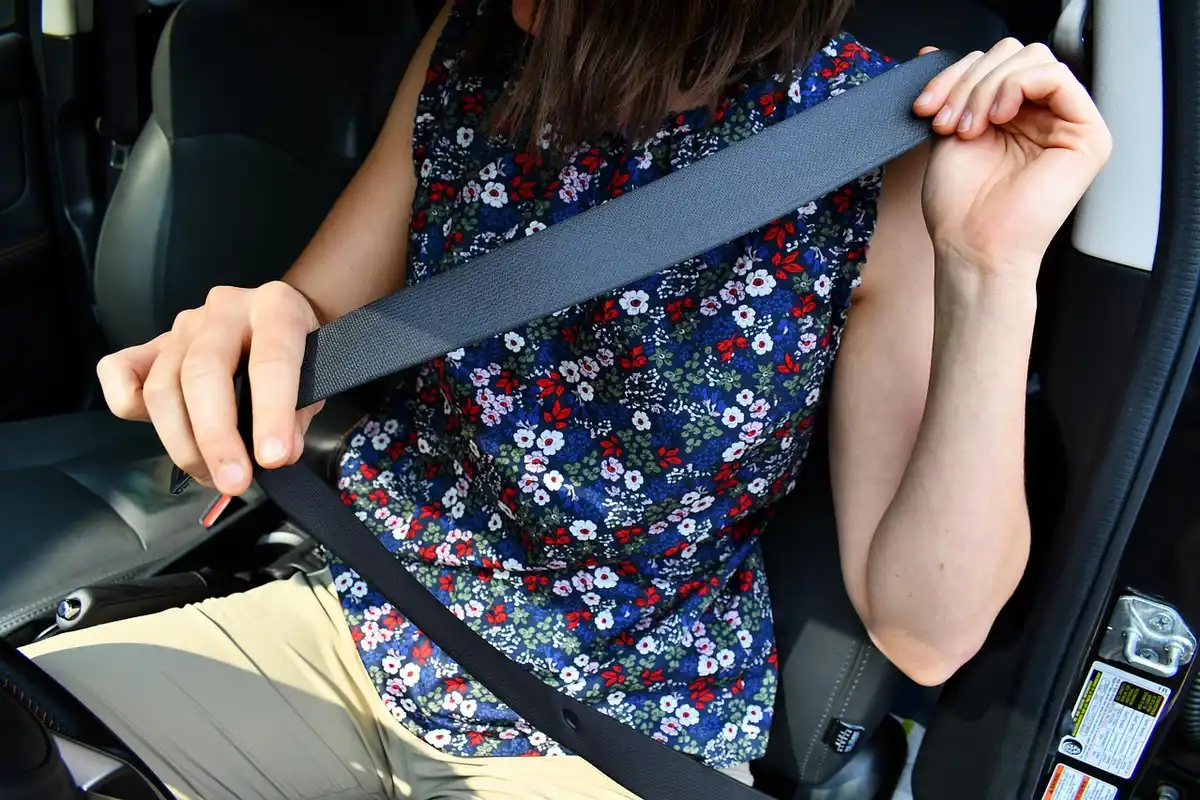
If the belt still will not move after these steps, do not drive with that seat occupied. Use another seat with a working belt and book a repair.
Child Seat Locking Mode Explained
Most modern passenger belts have two lock modes in one retractor. In normal use the belt moves freely and locks only under a sudden pull or a hard stop. For a child seat, you pull the shoulder belt all the way out; Kia’s manual says that when it is fully extended it shifts the retractor into automatic locking mode, and you then hear a clicking or ratcheting as the belt winds back. In that mode the belt can tighten but cannot be pulled back out. Volkswagen and Audi describe the same switchable feature, with the same test: after reinstalling, you should no longer be able to pull the belt out.
That is the correct behavior when a child seat is installed. It only looks like a jam when the child seat has been removed and the belt is still in locking mode. The release is to let the belt wind fully back. Our guide on how to lock a seat belt for a car seat covers the installation side, and the Kia owner’s manual page on automatic locking mode shows the manufacturer’s wording. Follow your own vehicle’s manual, because details differ by model.
Cleaning a Dirty or Sticky Seat Belt Safely
Dirt and sticky residue can stop a belt from winding. The Volkswagen and Audi maintenance instructions filed with NHTSA give a clear method, and they are strict about what not to do:
- Remove coarse dirt with a soft brush.
- Pull the dirty belt out of the retractor and keep it out while you work.
- Clean the webbing with a mild soap solution.
- Let the belt dry completely before it retracts. The instructions say moisture can damage the retractor and keep it from working properly.
- Never use chemical cleaning agents, solvents or any substance that may weaken the webbing.
- Never take the belt apart to clean it.

That list also rules out a popular shortcut: spraying lubricant or cleaner into the retractor. The same instructions say a belt tensioner unit must not be treated with grease, cleaning solution or similar substances. Wipe the webbing only, and leave the housing alone.
When a Stuck Belt Is a Warning Sign, Not a Jam
A belt that locked during or right after a collision is not stuck in the everyday sense. Many belts use a pyrotechnic pretensioner that tightens the belt in a crash. The Volkswagen and Audi instructions are blunt: the pretensioner can be activated only once, and if it has been activated the belt must be replaced. They add that belt systems with pretensioners cannot be repaired, that the units contain explosive material and must not be disassembled, and that you should never repair, adjust or change them yourself.
- Do not reset or force it. Do not probe the retractor with tools, heat it, or try to open it.
- Replacement can be needed even when nothing looks wrong. The same instructions say a belt that was stretched in a crash must be replaced, and that replacement after a crash may be necessary even if the belt shows no visible damage. The anchorages that took the load must also be inspected.
- Airbag light on? Treat the belts and the airbag system as one restraint system and have it inspected by a dealer or qualified shop before relying on it.
- Check for open recalls. Look up your VIN on the NHTSA recall lookup. Belt and pretensioner recalls are repaired by the dealer.
What Never to Do to a Seat Belt
A belt only protects you if it is intact and working as designed, so the list of things to avoid is short and absolute.
- Never cut a belt to free yourself from a nuisance lock, to defeat the warning chime, or to make it “easier”. Cutting is an emergency escape action only.
- Never open the retractor cover or take the belt apart. The old advice to pry off the plastic cover with a screwdriver is unsafe on any belt with a pretensioner, and the maintenance instructions say belts must never be taken apart for cleaning.
- Never use comfort clips or anything that adds slack to the shoulder belt. The instructions say never to use them, because slack lets your body travel farther before the belt takes load.
- Never repair a damaged belt yourself. Damaged belts must be replaced, not repaired.
- Never swap in a belt from another seat or vehicle. The replacement must match your vehicle, model year and seating position.
How to Inspect Webbing Before You Decide It Is Fine
Pull each belt fully out in good light and look at the whole length, including the part that normally stays inside the pillar. Torn or frayed belts can tear in a crash, and damaged hardware can break, according to the Volkswagen and Audi instructions. Their advice is to inspect belts periodically and have any damage to webbing, bindings, buckles or retractors replaced immediately.
- Fraying, cuts, or pulled threads along the edges
- Stiff, glazed or discolored sections, or melted spots
- A buckle that does not latch with a firm click, or a tongue that pulls free
- Cracked plastic on the buckle, or a bent or loose anchor point
- A belt that will not retract fully on its own
If your issue is a frayed strap, broken buckle or a belt that will not stay buckled, see our broader guide on how to fix a seat belt in your car. For getting a belt out of the car for service, see how to remove a seat belt in a car, and if you are replacing belts, our seat belt shopping page lists what to look for.
Is an Emergency Cutter Worth Keeping in the Car?
An emergency tool does not solve a stuck retractor, but it belongs in the same conversation because a belt can trap an occupant after a crash, a fire or a water entry. Keep one where the driver can reach it without unbuckling, such as a visor or console, and out of reach of children. Our window breaker comparison covers the other styles. A cutter is for escape only. A belt that is simply locked should be released with the steps above, never cut.
Frequently Asked Questions
Why is my seat belt stuck and will not pull out?
Most often the retractor has caught its sudden-pull lock, or it is still in automatic locking mode from a child seat. Let the belt wind fully back, then pull it out slowly and evenly. If it still will not extend, or it locked after a crash, have it checked before anyone sits there.
How do I release a seat belt that locked after I used a child seat?
Press the buckle release, pull the belt out of the child seat, and let it retract all the way to its stowed position. Kia’s manual says the retractor then returns to emergency lock mode for normal adult use. Check your own manual for the exact steps.
What if my seat belt locked because of a crash?
Do not try to reset it. A belt whose pretensioner has fired must be replaced, and replacement can be needed after a crash even when the belt looks undamaged. Have a dealer or qualified shop inspect and replace the belts and check the anchorages.
Can I clean a seat belt that is sticking?
Yes, with a soft brush and a mild soap solution, per the Volkswagen and Audi instructions. Keep the belt pulled out until it is completely dry, and never use solvents or chemical cleaners or take the belt apart.
Is it safe to drive with a stuck seat belt?
No. A belt that will not extend, will not latch, or is damaged cannot be relied on in a crash. Use a seat with a working belt and get the stuck one repaired.
Can I cut or disable a seat belt that keeps locking?
No. Cutting, removing or modifying a belt removes the protection it is there to give. A belt that locks under a quick yank is working as designed, and a belt that locks for other reasons should be inspected by a shop.
Products related to this article
Sponsored / affiliate links. As an Amazon Associate I earn from qualifying purchases. I may earn additional commission from eligible campaigns.
 Seat Belt Covers for Kids, 2 in 1 Car Seat Strap Covers & Auto Seatbelt Pillow for Kids nap, Car Travel Pillow & Strap Pads Cushion for headrest, Neck/Shoulder Support, fit Child, Adult, Grey;
 Teuaktty Car Seat Covers Universal Car Protective Front Seat Covers Washable Non-Slip Seat Protectors for Gym Workouts,Waterproof and Sweatproof Towel Seat Covers for Cars,Trucks, Jeeps (2 Pack Grey)