How to Pay for Car Repairs Without Wrecking Your Finances
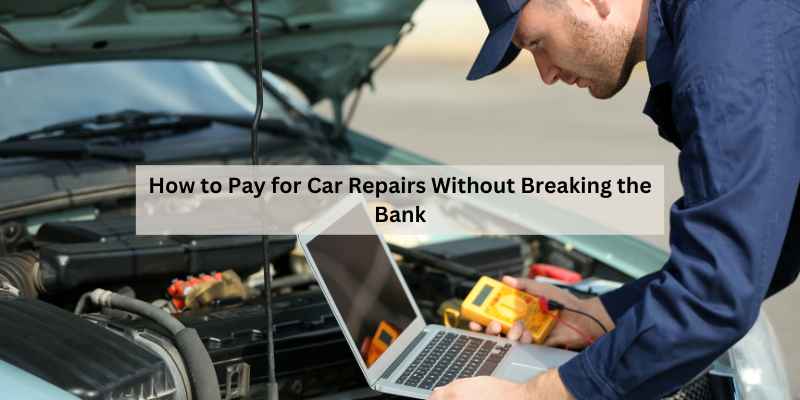
The check engine light comes on Wednesday. The mechanic calls Thursday with the news: new alternator, serpentine belt, and a coolant flush. Total bill: $1,150. Your first thought isn’t about the parts. It’s about the money.
Most drivers don’t have $1,000 sitting around for unexpected repairs. A 2026 survey found that 56% of Americans couldn’t cover a $1,000 emergency with savings. So you’re not alone if your wallet just did a double-take. This guide walks through every realistic way to handle a repair bill—from the cheapest option to the most dangerous—so you can make a decision based on math, not panic.

Rain-X
Rain-X 600001 Windshield Repair Kit for Chips,…
- Stops The Spread of Chips and Cracks - Rain-X Windshield Repair Kit Helps You Minimize The Appearance And Stop The Spread Of Chips…
- Easy To Use - Everything You Need Is Included, Takes Only Minutes With Minimal Steps. For Cracks Simply Apply Resin To Crack Then…
- Durable Resin Formula - Use Durable Resin To Make Windshields Stronger Than Before, Repairing All Types Of Laminated Windshields U…
You’ll learn what repairs actually cost, which payment methods are traps, and exactly what to say to a mechanic to lower the price before you authorize a single bolt being turned.
Before we get into the money side, one small note: if the damage is a windshield chip or crack, a repair kit can stop it from spreading and save you a $200 glass replacement. Something like the Rain-X Windshield Repair Kit costs a fraction of what a shop charges and works on chips up to an inch across. It’s not a fix for a shattered windshield, but it’s a legitimate way to keep a small problem from becoming a big bill.
How Much Does a Car Repair Actually Cost? (Average Prices by Job)
You can’t plan a payment strategy without a number. Here are typical out-the-door prices at independent shops in 2026. Dealerships run 20-40% higher.
- Brake pad and rotor replacement: $300–$600 per axle
- Alternator replacement: $500–$1,000 (parts plus labor)
- New starter: $400–$800
- Water pump: $550–$1,200
- Catalytic converter: $1,200–$2,500 (parts are expensive)
- Transmission rebuild: $2,500–$5,000
- Head gasket replacement: $1,800–$3,500
Labor rates at independent shops average $80–$120 per hour. Dealerships charge $130–$200. The biggest variable is diagnosis time—a tricky electrical issue can add two hours of labor before a single part is replaced.
Ask for a written estimate before work starts. A reputable shop will break down parts, labor, and shop fees. If they won’t put it in writing, find another shop.
The 5 Best Ways to Pay for Car Repairs (Ranked by Cost & Risk)
Here’s the financial triage. Each method gets ranked by total cost and how much damage it can do to your financial life. Start at the top and work down.
1. Your Emergency Fund (The Only ‘Free’ Option)
Cash is king. If you have $1,500 in a savings account labeled ‘car stuff,’ you pay the bill and move on. No interest. No monthly payment. No stress.
If you don’t have an emergency fund, you’re not alone—but you need to build one after this repair. Start with $500, then work toward $1,500. That amount covers 80% of common repair bills. A full emergency fund of 3-6 months of expenses is the long-term goal, but for car repairs specifically, $1,500 is the sweet spot.
2. 0% APR Credit Cards (If You Can Pay It Off Fast)
Many credit cards offer a 0% introductory APR on purchases for 12 to 18 months. If your repair is under $2,000 and you can pay it off within that window, this is nearly free money.
Here’s the catch: the moment the promo period ends, the remaining balance gets hit with the regular APR—often 20% to 29%. So you must have a plan. Divide the bill by the number of months in the promo period. That’s your monthly payment. Set up autopay so you don’t miss a single month.
One more tactic: if the repair is already on a high-interest card, a balance transfer to a new 0% APR card can stop the bleeding. You’ll pay a transfer fee (usually 3-5% of the balance), but that’s often cheaper than 25% interest for a year. The same rule applies—pay it off before the promo ends, or the interest hits retroactively on the remaining balance.
3. Personal Loans for Auto Repair (Best for Large Bills)
For repairs over $2,500, a personal loan from a bank or credit union can make sense. Rates for good credit (690+) run 8% to 15% APR. Terms range from 12 to 60 months.
Credit unions are the best bet. They cap rates at 18% by federal law, and many offer small-dollar loans specifically for car repairs. Some even have ‘second chance’ programs for members with thin credit files.
The downside: you’ll pay interest on the full amount even if you pay it off early (unless the loan has no prepayment penalty—always ask). And a hard credit pull will ding your score by a few points temporarily.
4. Mechanic Payment Plans (In-House Financing)
Some independent shops and national chains (Pep Boys, Firestone) offer in-house payment plans. These are often ‘buy now, pay later’ services like Affirm, Klarna, or Snap Finance.
Be careful here. The advertised ‘0% APR for 6 months’ is real, but if you miss a payment, the deferred interest hits you retroactively at rates that can exceed 30%. Snap Finance, in particular, is known for high APRs (up to 36%) and aggressive collection practices.
Read the terms carefully. Know the exact payment date. Set a reminder. These plans work well only if you’re disciplined about the payoff timeline.
5. Charities and Assistance Programs (For Hardship Cases)
If your income is low or you’re facing a genuine emergency, help exists. It’s not fast, and it’s not guaranteed, but it’s worth trying before you borrow at predatory rates.
- 211: Dial 211 to reach United Way’s helpline. They can point you to local nonprofits that offer car repair assistance.
- Workforce development grants: Many states offer grants for low-income workers to keep their vehicles running, because losing your car means losing your job. Search for ‘[your state] workforce development car repair grant.’
- Modest Needs: This national nonprofit provides one-time grants for essential expenses, including vehicle repairs, for working families.
- Local churches and community action agencies: Call around. Many have small emergency funds.
These programs take weeks to process and often require documentation. Use them only if you’re not in a same-day bind.
Payment Methods to Avoid at All Costs (Title Loans, Payday Loans, Crypto)
Some options are so expensive they’ll make a $1,500 repair cost $4,000. Avoid them.
Title loans: You hand over your car title in exchange for cash—usually 25-50% of the car’s value. The APR is typically 100-300%. If you miss a payment, the lender can repossess your car. You lose the car you were trying to fix. It’s the worst trade in personal finance.
Payday loans: A $500 loan with a $75 fee is a 391% APR. The average borrower ends up paying $520 in fees to borrow $375 over five months. Don’t do it.
Cryptocurrency or peer-to-peer lending apps: Some apps offer quick cash with ‘no credit check.’ Read the fine print. These often have 100%+ APRs and hidden fees. There is no reason to use these when a credit card or personal loan exists.
One more red flag: any lender that asks for a ‘processing fee’ upfront is a scam. Legitimate lenders deduct fees from the loan amount; they never ask you to wire money first.
How to Negotiate Your Repair Bill Before You Say ‘Go’
Most people don’t realize repair prices are negotiable. They aren’t set in stone like a grocery store price tag. Here’s how to lower the bill before you authorize the work.
First, get a written estimate. Then ask these three questions:
- ‘Can you show me the old parts?’ This confirms the work is actually needed and builds trust. A good mechanic will happily show you the worn-out part.
- ‘Is there a cheaper aftermarket option?’ OEM (original equipment manufacturer) parts cost 30-60% more than quality aftermarket parts. For most repairs, aftermarket parts work just as well.
- ‘Can you match this price?’ Show them a quote from a competing shop. Many will match or beat it to keep your business, especially for labor-heavy jobs.
Here’s a script you can use verbatim:
‘I understand the estimate is $1,200. I got another quote for $980 from [shop name]. I’d rather have you do the work, but I need to keep costs down. Can you get closer to that number?’
Then shut up. Let them answer. Silence is your best negotiation tool.
One more tip: ask about a cash discount. Paying with cash saves the shop 2-3% in credit card processing fees. Many will pass that savings to you.
The ‘Sinking Fund’ Strategy: How to Save for Future Repairs
This is the step that prevents the next panic. A sinking fund is a savings account you contribute to monthly for a known future expense—in this case, car repairs.
How much should you save each month? Use this simple formula based on your car’s age:
- Car under 3 years old (or under 36,000 miles): $50 per month
- Car 3-7 years old (36k-100k miles): $100 per month
- Car 8+ years old (100k+ miles): $150-200 per month
These numbers assume you’re doing basic maintenance (oil changes, tire rotations) on schedule. Skip those, and the costs double.
Put this money in a separate high-yield savings account. Name it ‘Car Fund’ online. Automate a transfer on payday. You’ll never ‘feel’ the money leaving, but you’ll feel it when a $900 repair bill arrives and you just transfer the funds and move on.
| Payment Method | Best For | Typical APR / Cost | Risk Level | Payoff Time |
|---|---|---|---|---|
| Emergency Fund | Anyone with cash saved | None | None | Immediate |
| 0% APR Credit Card | Bills under $2,000, paid in 12-18 months | 0% (then 20-29%) | Medium if not paid off | 12-18 months |
| Personal Loan | Large bills over $2,500 | 8-18% | Low | 12-60 months |
| Mechanic Payment Plan | No credit card, short-term need | 0-36% (deferred interest risk) | High if payment missed | 6-24 months |
| Charity / Grant | Low-income hardship cases | None | None | Weeks to process |
| Title Loan | Never | 100-300% | Extreme (car repossession) | 30 days |
| Payday Loan | Never | 300-400% | Extreme (debt spiral) | 2-4 weeks |
Frequently Asked Questions About Paying for Car Repairs
Can I use a credit card for car repairs?
Yes, but the math matters. A 0% APR card is smart if you pay it off before the promo ends. A standard card at 22% APR means a $1,000 repair costs $1,220 if you take a year to pay it off. It’s not ideal, but it beats a title loan.
What if my mechanic wants full payment before I pick up the car?
That’s standard practice. Shops don’t extend credit to walk-ins. If you need to split the payment, ask to put half on a card and half on a personal check. Some shops will require a deposit before ordering parts, but the full balance is typically due at pickup.
Are car repair warranties worth buying?
An extended warranty (vehicle service contract) can make sense for a car over 100,000 miles, but read the exclusions. Most don’t cover wear items like brakes, tires, or clutches. The average warranty costs $1,500-$3,000, so you need a major repair (engine or transmission) to break even. For most people, a sinking fund is a better deal.
How do I avoid getting scammed at a repair shop?
Get two estimates. Ask for old parts back. Never authorize work over the phone without a written estimate. And be wary of a shop that recommends a repair without showing you the problem. A good mechanic will put the car on a lift and point at the leak or the worn-out bushing.
What is mechanical breakdown insurance?
It’s like health insurance for your car. You pay a monthly premium, and the policy covers specific repairs (engine, transmission, electrical) after a deductible. It’s different from an extended warranty because it’s regulated as insurance. It can be useful for older cars, but the deductible ($100-$500) plus monthly premiums can exceed the cost of paying out of pocket for minor repairs. Run the numbers before you buy.
The Bottom Line: Your Action Plan for Any Repair Bill
You can’t control when your car breaks down. You can control how you pay for it. Here’s the plan, in order:
- Get a written estimate from at least two shops before authorizing any work.
- Negotiate the price using the script above. Ask about aftermarket parts and cash discounts.
- Pay with cash from your emergency fund or sinking fund first. It’s the only free option.
- Use a 0% APR credit card for bills under $2,000, and set up autopay to clear the balance before the promo ends.
- Consider a credit union personal loan for bills over $2,500 with a term under 36 months.
- Never take a title or payday loan. They will cost you more than the repair itself.
- Start a sinking fund today with $50-$200 per month, based on your car’s age, so the next repair is boring instead of scary.
One final thought: a $1,500 repair on a car worth $3,000 is a hard pill to swallow. But replacing that car with a used one will cost $8,000-$15,000. Sometimes the cheapest repair is the one that keeps your current car running for another two years. That’s the financial triage mindset—treat the problem, protect your cash flow, and keep the car rolling.
Products related to this article
Sponsored / affiliate links. As an Amazon Associate I earn from qualifying purchases. I may earn additional commission from eligible campaigns.
 Car Scratch Repair Wax, 2026 New Scratch Remover for Vehicles – Universal Polishing Paste for Deep Scratches & Various Surfaces, with Wipe & Sponge (1)
 Portable Car Heater Car Heater, Portable Electronic Auto Heater Fan Fast Heating Defrost 12V 120W Car Defrost Defogger, 2 in 1 Heating/Cooling Function 3-Outlet, Plug Adjustable