How To Pre Prime A Big Chief Cartridge: Essential Guide
To pre-prime a cartridge, warm it slightly, take a few short unpowered pulls, then wait a few minutes before the first low-voltage draw. Skipping that step can cause dry hits, clogged airflow, and overheated oil that can stress the coil. A vague step means the instruction leaves out the concrete action or condition you need to follow. This guide shows the exact priming steps, plus fixes for thick oil, first-hit clogging, and weak vapor.
What you’ll need before you start
- A Big Chief cartridge with intact threading and no visible leak
- A compatible 510 battery
- A low-voltage setting or preheat function, if your battery has one
- Clean hands and a flat surface
- A tissue or lint-free wipe
- Basic light, so you can inspect oil position and airflow holes
The prefix pre- means “before” or “beforehand,” and in this case pre-priming means preparing the wick before the first draw. Dictionary.com defines pre- as prior to or in advance of, and W3Schools notes that a pre tag preserves line breaks in HTML; the word here still keeps the same simple idea: do the setup first.
📊 W3Schools says the HTML pre tag preserves spaces and line breaks. Source: HTML pre tag.
How do you pre-prime a Big Chief cartridge safely?
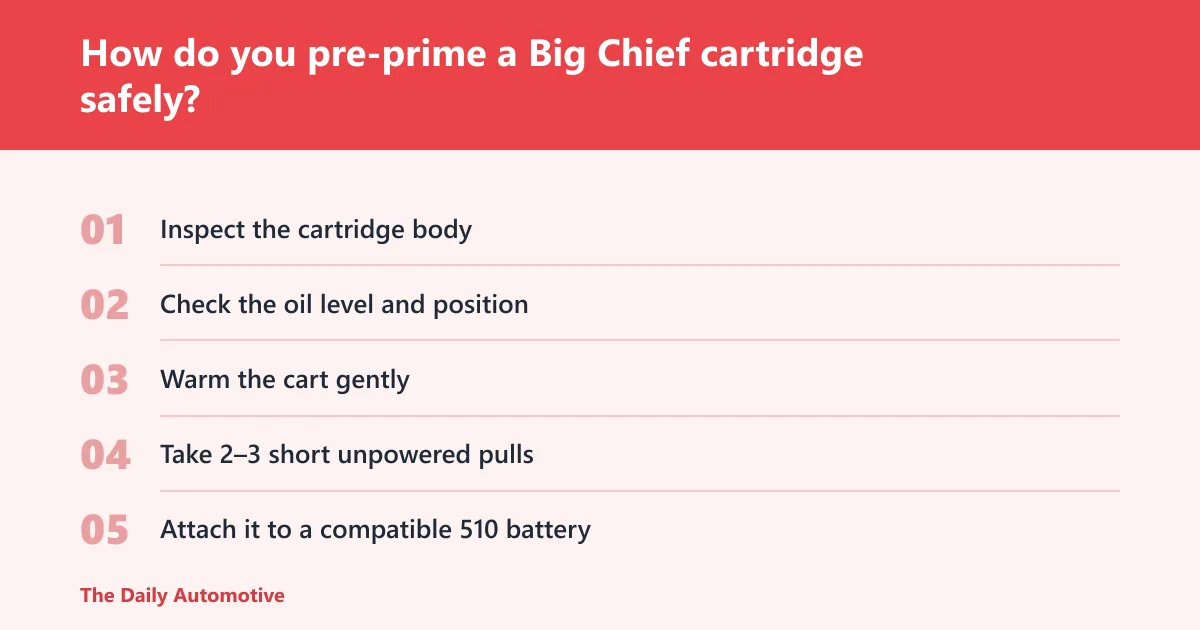
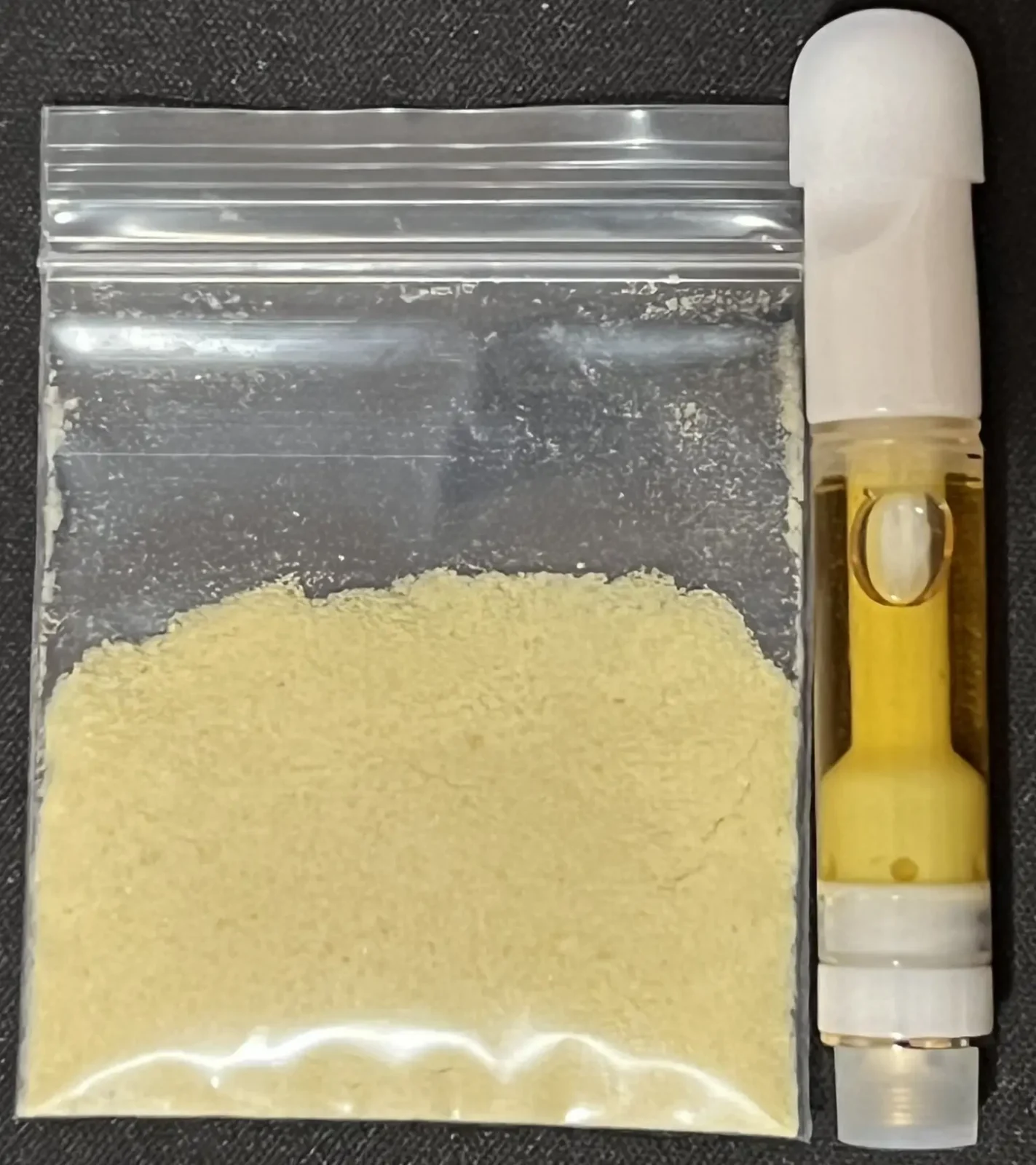
Pre-priming means saturating the wick before the first draw so the heating element does not run dry. On a Big Chief cartridge, that matters because thick oil, cold storage, or a partially filled wick can slow flow and trigger dry hits or clogging right away.
- Inspect the cartridge body. Look closely for cracks, leakage, loose threads, or a crooked center post before you attach the cartridge.
- Check the oil level and position. If the oil is pulled away from the wick ports, keep the cartridge upright and wait for it to move closer before heating.
- Warm the cart gently. Hold it in a pocket or between clean hands for a short time if the oil looks stiff, then stop as soon as it loosens. Do not use direct high heat.
- Take 2–3 short unpowered pulls. Draw through the cartridge without firing so air can move through it and help pull oil toward the wick.
- Attach it to a compatible 510 battery. Start with the lowest practical setting, then use a brief pulse only if the battery has a button.
- Wait 5–10 minutes before the first draw. That rest gives the wick time to finish saturating.
- Test with one short inhale. Stop if airflow is blocked, the taste is harsh, or vapor is missing.
The cartridge uses a common 510-style connection, so battery fit is often similar to other 510-threaded cartridges. What changes is how the oil behaves. Thick oil moves slower. Cold oil moves slower. Both make the first draw less forgiving.
How do you tell if a cartridge is already primed?
A cartridge is usually ready when the wick area looks wetted, the oil has moved near the intake openings, and a short test inhale produces normal airflow without a dry taste. If the cart feels cold, the oil is packed away from the wick, or the first pull tastes flat, it is not ready yet.
Suppose a cartridge has sat in a cool car and the oil has pulled away from the wick ports. A brief warm-up and rest period can help. If a draw still feels blocked after that, stop instead of forcing it.
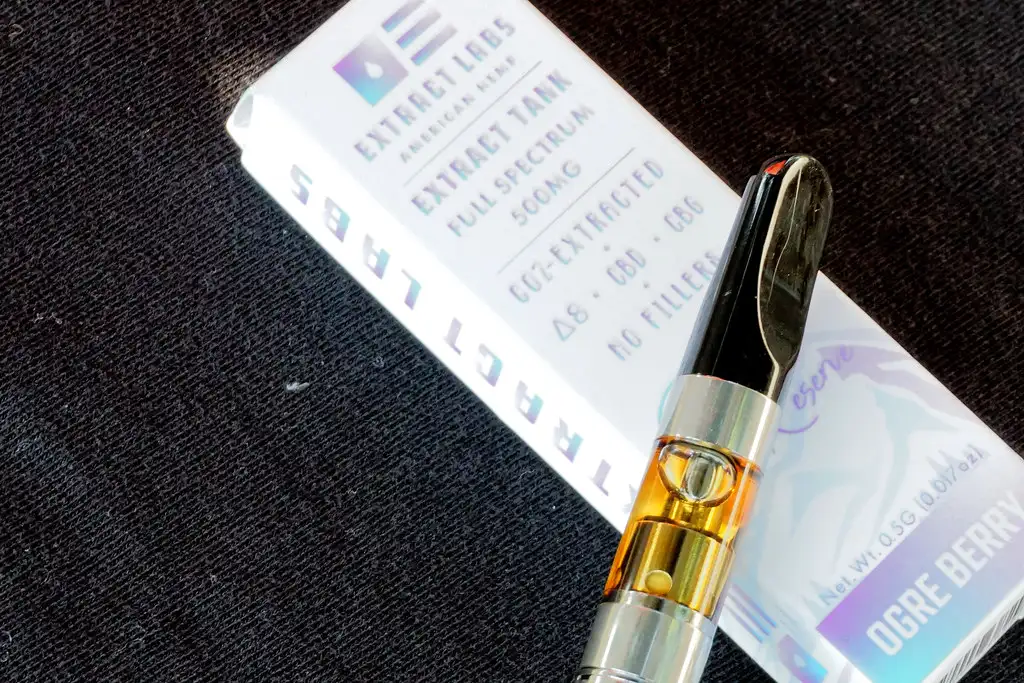
How long should you let a cartridge soak before use?
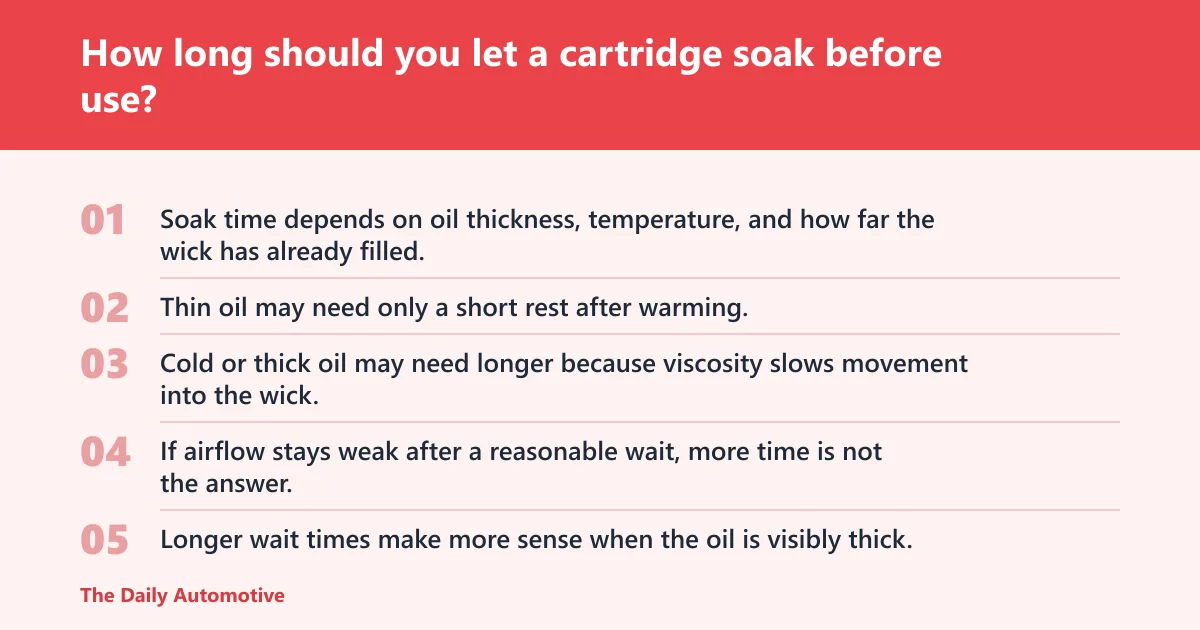
Soak time depends on oil thickness, temperature, and how far the wick has already filled. Thin oil may need only a short rest after warming. Cold or thick oil may need longer because viscosity slows movement into the wick. If airflow stays weak after a reasonable wait, more time is not the answer.
What changes the wait time?
Longer wait times make more sense when the oil is visibly thick, the cartridge was stored cold, or the wick looks dry near the inlet holes. A short warm-up first is safer than repeated firing. Repeated firing can overheat the coil before the wick has caught up.
When waiting is no longer helping
If the oil has already had time to move and the cart still tastes burnt, leaks, or stays blocked, the problem is likely no longer simple priming. At that point, a damaged coil, a persistent clog, or a bad seal becomes more likely than slow saturation.
Can you preheat a cartridge without damaging it?
Yes, but only with short, controlled heat. Use the lowest available setting or the mildest preheat function, then stop. The goal is to loosen thick oil, not to cook it. Long heating cycles, repeated button presses, and chain-firing can stress the coil and darken the oil.
Button-activated versus auto-draw
Button-activated batteries let you control heat in short pulses, which is useful for priming. Auto-draw devices depend on airflow, so a blocked cart may fire poorly or unevenly. In both cases, keep activation brief and check that the first pull is smooth before using more heat.
Signs the heat is too high
A sharp taste, darkened oil near the coil, harsh vapor, or a cart that suddenly feels hotter than expected are warning signs. Stop firing at once. A short pulse is reasonable; a long heat cycle is not.
Why is my Big Chief cartridge clogging or dry-hitting?
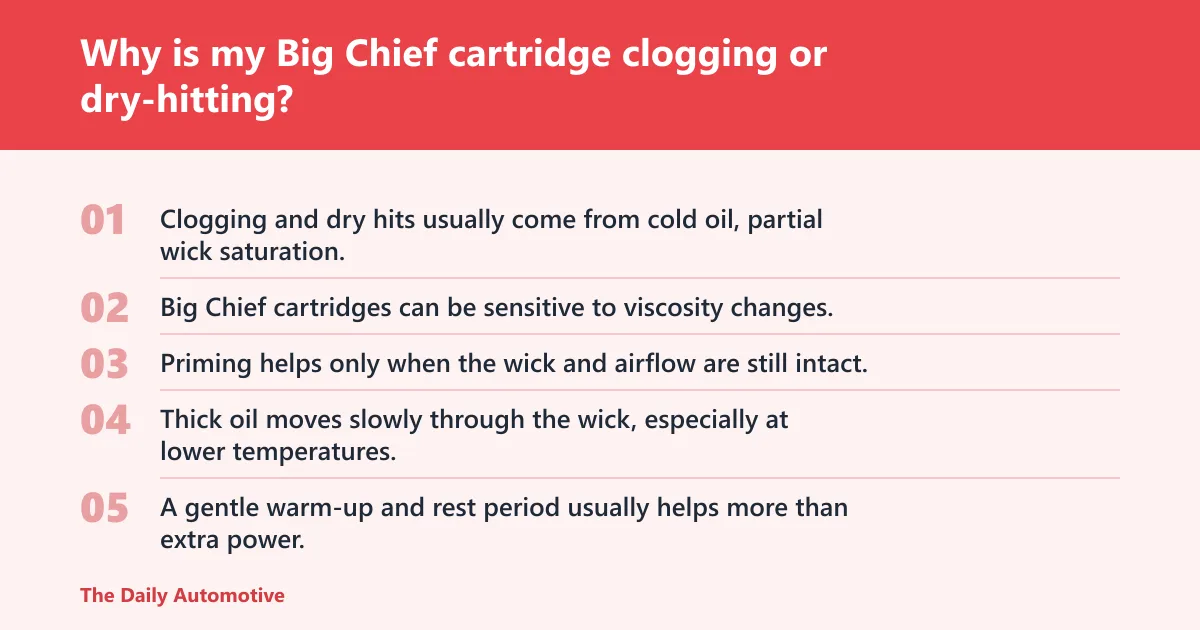
Clogging and dry hits usually come from cold oil, partial wick saturation, airflow blockage, or a coil that is already stressed. Big Chief cartridges can be sensitive to viscosity changes, so a cart that works warm may misbehave after cold storage. Priming helps only when the wick and airflow are still intact.
Cold oil and slow flow
Thick oil moves slowly through the wick, especially at lower temperatures. A gentle warm-up and rest period usually helps more than extra power. Forcing heat through cold oil can make the top of the cart look ready while the wick stays dry underneath.
Partial wick saturation
If the cart was recently filled or only partly used, the wick may be wet in one area and dry in another. That uneven saturation often creates a first-hit dry spot. A short rest can help; repeated firing before the wick is ready can damage the heating element.
Airflow blockage versus coil damage
A blockage usually feels like resistance on the draw, while coil damage often shows up as persistent burnt taste even after warming. Priming cannot repair a broken coil. It also cannot fix a cracked cart, a leak, or a blockage that stays after the oil has had time to settle.
Step-by-step priming decision table
| Symptom | Likely cause | Safe fix | When to stop |
|---|---|---|---|
| Fresh cart, no vapor on first draw | Wick not fully saturated yet | Inspect, warm gently, take 2–3 unpowered pulls, then wait 5–10 minutes | Stop if a test inhale still tastes burnt or airflow stays weak |
| Cold cart, thick oil moves slowly | Temperature-sensitive viscosity | Warm with hands or pocket heat, then let it rest before a low-voltage draw | Stop if heat becomes uncomfortable or the oil darkens fast |
| Thick oil, slow or uneven wicking | Flow rate too low for the wick to keep up | Use the mildest preheat available and give the wick more rest time | Stop if repeated pulses are needed to make it work |
| Clogged airflow, hard pull | Condensation, blockage, or leaking oil in the airway | Check the mouthpiece and threaded connection, then clear visible residue only | Stop if the blockage persists or the cart leaks |
What mistakes should I avoid when priming?
- Forcing repeated pulls. That can pull too hard on a dry wick and make the clog worse.
- Using too much heat. Short pulses are safer than long heating cycles.
- Ignoring a persistent clog. If airflow does not return, priming is not the fix.
- Starting before the wick looks ready. A first draw on a dry wick risks a burnt taste and coil stress.
- Mixing up a fresh cart and a damaged one. A new cartridge can usually be primed; a leaking or broken one should not be used.
A common first-timer mistake is trying to fix a cold cartridge with three long button presses on a high setting. That often cooks the top layer of oil, while the wick below stays under-saturated. A lower setting and a short rest are safer.
Prevention: store the cartridge upright at room temperature when possible, because cold storage and sideways storage both make first-use priming less predictable.
Frequently asked questions
How do you pre-prime a Big Chief cartridge?
Start with a visual check, warm the cartridge gently, take 2–3 short unpowered pulls, then wait 5–10 minutes before using a low-voltage draw. If the first test inhale still feels harsh or blocked, stop and inspect for clogging, a leak, or a weak battery connection.
What should I do if the oil is too thick to wick?
Warm the cartridge gently, let it rest, and use the mildest activation setting available. Thick oil usually needs time more than power. If it still will not move after a sensible wait, do not keep firing it. Persistent force can burn the wick.
How do I avoid burning the coil when priming?
Use short pulses, low voltage, and a full rest before the first draw. Do not chain-fire the cartridge or keep pressing the button to “make it work.” If the vapor turns harsh or the oil darkens near the coil, stop and let it cool.
Products related to this article
Sponsored / affiliate links. As an Amazon Associate I earn from qualifying purchases. I may earn additional commission from eligible campaigns.