Best 5 Clay for Car Paint
For most DIY detailers, the best clay for car paint is the least aggressive tool that clears the contamination: a clay towel or sponge for light fallout, medium clay bar for moderate bonded grit, and only fine-grade clay for delicate or repainted clear coat. Use the wrong format and you can add marring, waste time, or create extra polishing work. This guide compares five clay products by paint risk, contamination level, and ease of use so you can buy the right one.
How to choose the right clay bar
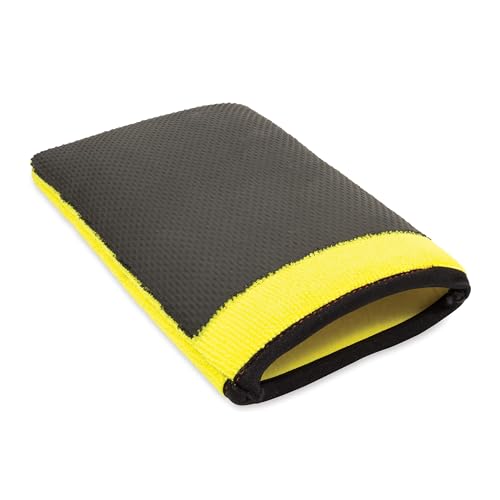
For routine decontamination on most daily drivers, a fine or medium clay bar is the safest starting point, with a clay towel or sponge often making more sense when the paint only has light bonded fallout. Choose the least aggressive format that removes the roughness without forcing follow-up polishing.
If the panel feels like sandpaper after washing, that roughness usually comes from embedded iron particles, brake dust, industrial fallout, or similar bonded contaminants. Clay removes that residue after a proper wash, and lubricant matters because dry or nearly dry claying can mar clear coat fast.
Top pick for most daily drivers
Meguiar’s Smooth Surface Clay Kit is the broadest fit for everyday paint care because it combines clay bars with lubricant and a towel, which makes it a practical first purchase for clear coats that need safe, routine decontamination.
Its drawback is simple: a kit is still only as gentle as the way you use it, and any clay can leave marks if the surface is too hot, too dry, or already heavily contaminated.
Quick comparison
| Product | Badge | Best for | Price | ||
|---|---|---|---|---|---|
 |
Mothers 17240 Speed Clay 2.0Mothers | Our pick | 2.0 · clay · polymer | $22.95
Price as of 3 Nov 2026
|
View |
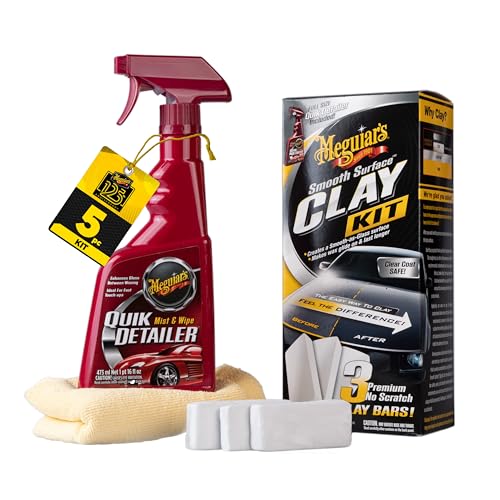 |
Meguiar’s Smooth Surface Clay KitMeguiar’s | Also great | Kit · clay bars · lubricant | $17.19
Price as of 3 Nov 2026
|
View |
 |
3M Perfect-It Cleaner Clay, 38070, 200 g, 1 bar per bottlePerfect-It | Pair with it | 1 bar · cleaner clay | $39.50
Price as of 3 Nov 2026
|
View |
|
Griot’s Garage Fine Surface Prep Mitt for Car DetailingGriot’s Garage | Upgrade pick | Mitt · clay alternative · reusable | $62.98
Price as of 3 Nov 2026
|
View |
This page uses contamination severity and paint softness to guide the choice, not brand claims or flashy packaging. Use the table that follows to match the format to the job before you buy.
Clay paint decision table
The right clay format depends on how bad the contamination is, how soft the clear coat feels, and whether the panel is a daily driver, a neglected finish, or an overspray-heavy repair area. When the surface is heavily contaminated or soft, move down the aggression scale and stop for polishing sooner.
| Contamination level | Paint softness / vehicle condition | Recommended clay format | Cost-per-use estimate | When to stop and polish |
|---|---|---|---|---|
| Light fallout after washing | Soft clear coat, newer daily driver, well-kept finish | Fine-grade clay bar, clay towel, or clay sponge | Bars: about 1 to 3 uses; towel/sponge: often many uses after rinsing | Stop if the surface still feels grabby after a second pass |
| Moderate bonded grime | Average clear coat, commuter car, seasonal decon | Medium-grade clay bar | Bars: about 1 to 3 uses depending on panel size and contamination | Polish if the finish shows haze or micro-marring in direct light |
| Heavy contamination | Neglected paint, rough panels, rail dust, tree sap, tar spots | Medium-grade clay or a more aggressive format only when needed | More product wear on large panels; expect shorter service life | Polish after claying if the paint no longer looks uniform |
| Severe overspray or wet sanding residue | Fresh bodywork, harsh contamination, hard-earned correction prep | Aggressive clay | Highest cost per use because follow-up polishing is likely | Plan to polish after claying; do not treat this as the last step |
For a rough cost check, clay bars are usually the cheapest up front but can be the least efficient on larger jobs. A clay towel or sponge costs more at purchase, yet it often covers more area per pass and can be rinsed and reused, which lowers cost per detail over time.
How we chose
These picks are based on manufacturer specs, listing details, and published buyer feedback, with use-case fit weighted above brand claims. That matters because clay choice is about matching format to contamination level, not chasing the toughest-sounding label.
- We prioritized clear listing details such as grade, format, and included accessories.
- We separated light, moderate, and severe contamination use cases.
- We favored options that fit clear coats, glass, and chrome where the listing supports that use.
- We looked for honest drawbacks, especially where micro-marring or follow-up polishing can be part of the job.
Fine-grade clay bar: best for light contamination
Fine-grade clay is the safest choice for light contamination on clear coat. It is designed for routine maintenance when the paint feels slightly rough after washing, and it carries the lowest marring risk among the bar types covered here.
Use it when the finish is already in good shape and you only need to remove embedded contamination that washing left behind. It is the right call for owners who want surface cleanup without turning a simple detail into a correction job.
The drawback is speed and bite. Fine clay may take more passes on heavier bonded grime, so it is not the best choice for rail dust, stubborn tar, or tree sap that has had time to set.
Safest choice for clear coat
Fine clay is the safest starting point for clear coat because it removes light contamination with less cut than medium or aggressive grades. That lower cut helps reduce micro-marring on softer finishes, repainted panels, and newer vehicles where the surface is already smooth enough to need only a light decon.
Routine washing and maintenance use
A common first-timer mistake is claying a clean-looking daily driver with an aggressive product just because the paint still feels rough. If the vehicle only has mild bonded fallout, fine clay is usually enough, and that keeps polishing off the to-do list.
Medium-grade clay bar: best for heavier bonded grime
Medium-grade clay is the middle ground for cars with heavier bonded contaminants. It handles rail dust, stubborn tree sap, tar spots, and other contamination that fine clay may remove too slowly or not at all.
This grade gives you more cut, which is useful on neglected paint, but that extra bite also means more risk of micro-marring. On soft clear coat, the safer move is to work a small section, stay well lubricated, and inspect the finish before moving on.
If the paint still looks dull or hazy after claying, follow with polish. Clay removes contamination, not defects that are already in the clear coat.
Rail dust and tree sap use case
Medium clay is the more practical pick when the paint has visible roughness from embedded iron particles or when the contamination is no longer just a thin layer of fallout. It is also the better match for cars that live near trains, industrial sites, or heavy road dust.
More cut, more risk of micro-marring
That extra cut helps with bonded grime, but it also raises the chance of light haze on soft paint. If a panel is already thin, repainted, or polished frequently, use the least aggressive approach that still clears the contamination.
Aggressive clay: best for severe contamination
Aggressive clay is reserved for severe overspray, wet sanding residue, and similar heavy contamination. It is the format most likely to remove stubborn debris quickly, and it is also the one most likely to require polishing afterward.
Do not reach for aggressive clay first on a normal daily driver. It is a niche tool for panels that are far beyond routine fallout and where the goal is to get the surface back to a workable state before correction.
Where it is used correctly, it can save time on hard contamination. Where it is used carelessly, it can leave the paint dull enough that polishing becomes mandatory.
Overspray and wet sanding residue
Paint overspray is one of the hardest contaminants listed here. Medium or aggressive clay is often required, and on fresh bodywork or after sanding, the surface should be inspected carefully before any polishing or coating prep.
Why polish is often needed afterward
More aggressive clay can leave faint haze even when used correctly, especially on soft clear coat. If that happens, polishing is the follow-up step that restores gloss before wax, sealant, or coating prep.
Clay towel: best for speed and repeated use
A clay towel uses a microfiber-backed polymer surface to remove contamination faster than a traditional bar. It covers more area per pass, and the reusable design is a strong fit for owners who clean multiple vehicles or want quicker section work.
The tradeoff is feel and control. On soft paint, a towel can be less forgiving than a fine bar if the panel is dry, dirty, or heavily contaminated, so lubrication and inspection matter even more.
The listing details here point to a reusable tool that can be rinsed, which lowers waste. For light to moderate contamination, that speed is its biggest advantage.
Microfiber-backed polymer surface
The key feature of a clay towel is the polymer working face bonded to a towel-style backing. That layout gives you a larger working area than a small hand-molded bar, which is why many detailers use towels for faster coverage on broad panels.
Reusable and rinsable
A towel that can be rinsed after use is easier to keep in service than a bar that can be dropped and contaminated. Still, any reusable surface should be checked for trapped grit before the next panel.
Clay sponge or scrubber: best for larger panels
A clay sponge or scrubber uses a dual-sided or rubber-clay format to cover more surface area per pass. It is a good fit for larger panels when you want faster movement than a bar without stepping all the way up to severe-grade clay.
These tools can be efficient on hoods, roofs, and doors, but they may be less fine on soft paint. If the finish is delicate, keep the pressure light and the lubricant generous.
The main advantage is coverage. The main risk is the same one that applies to all clay tools: dry use or trapped debris can mar clear coat.
Dual-sided or rubber-clay format
The scrubber style adds surface area and can make section work easier on broad, flat panels. That helps on larger vehicles, but it also means the user needs to pay attention to contamination loading on the working face.
Soft-paint caution
If the vehicle has very soft clear coat, start with the gentlest format that will still remove the contamination. A scrubber can be effective, but it is not the first pick for delicate finishes that only need light fallout removal.
Which one should you buy?
For a daily driver with light fallout, start with a fine-grade clay bar or a reusable clay towel. For neglected paint with bonded grit, move to medium clay. For overspray-heavy panels or wet sanding residue, choose aggressive clay and expect polishing afterward if the finish dulls.
If budget matters more than speed, a clay bar is the cheapest entry point. If time matters more than purchase price, a clay towel or clay sponge is the better value for larger jobs because it covers more surface area and is meant to be reused.
- Best for a daily driver: Meguiar’s Smooth Surface Clay Kit for the balanced starter path.
- Best for neglected paint: Mothers 17240 Speed Clay 2.0 when you need a durable surface prep step for more embedded contamination.
- Best for overspray-heavy panels: 3M Perfect-It Cleaner Clay for heavier cleaning work where a single bar is acceptable.
- Best reusable option: Griot’s Garage Fine Surface Prep Mitt for faster coverage on paint, glass, chrome, and plastic.
Say your sedan was washed yesterday, but the hood still feels gritty at the fingertips. That usually points to light to moderate bonded contamination, not a need for aggressive clay. Start with a fine or medium format, keep it lubricated, and stop if the finish starts to haze.
Suppose a repainted fender has visible overspray near the wheel arch. That is a different job. Medium or aggressive clay may be the correct choice, but the panel should be checked carefully and polished if the surface dulls after decontamination.
Can you use clay on paint, glass, and chrome?
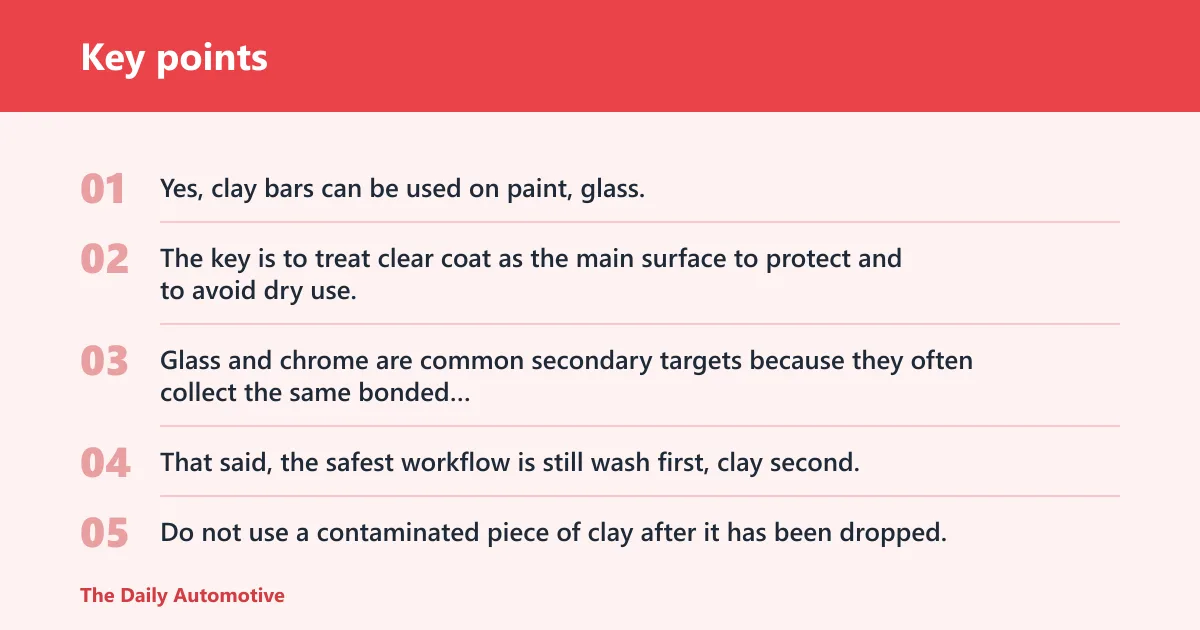
Yes, clay bars can be used on paint, glass, and chrome when the surface is cleaned first and kept well lubricated. The key is to treat clear coat as the main surface to protect and to avoid dry use, since dragging clay on a dry panel is where marring starts.
Glass and chrome are common secondary targets because they often collect the same bonded contaminants as paint. That said, the safest workflow is still wash first, clay second, and inspect each panel for residue or trapped grit before moving on.
Do not use a contaminated piece of clay after it has been dropped. If it picks up grit, that grit can scratch clear coat, glass, or chrome on the next pass.
Clear coat first
Clear coat is the primary automotive surface to protect. If the clay grade is too aggressive for the finish, or if the panel is worked dry, the clear coat can be marred and may need polishing afterward.
Glass and chrome use
Most clay formats can clean glass and chrome as long as the surface is lubricated and the tool stays clean. Use a gentler format when the finish is delicate, and check the manufacturer’s listing for any model-specific limits on painted or plated surfaces.
How do you clay a car properly?
Proper claying starts with a wash, then lubrication, then light passes over small sections until the surface feels smooth. The goal is to remove bonded contamination without dragging the tool across a dry panel or forcing extra polishing work later.
The process is simple, but each step matters. A weak substitute like water or shampoo can help in a pinch, yet it is a weaker backup than a proper clay lubricant and it can dry too fast on warm panels.
Basic claying steps
- Wash and rinse the vehicle thoroughly.
- Work one small panel at a time.
- Spray a high-lubricity clay lubricant on the panel.
- Glide the clay lightly until the surface feels smooth.
- Wipe the panel dry and inspect for haze or missed spots.
- Re-lube the area if the clay starts to drag.
If the clay grabs, stop and add more lubricant. If the panel dries out, re-spray before continuing. That is the difference between decontamination and marring.
What lubricant should you use with a clay bar?
A high-lubricity spray is the right choice because it helps the clay slide instead of dragging. Water or shampoo is a weaker backup, but it is more likely to dry quickly and give you less protection against scratching, especially in sun or wind.
What kind of clay bar is safest for clear coat?
Fine-grade clay is the safest choice for clear coat because it is intended for light contamination and carries the lowest marring risk. Medium clay is the next step up when the surface needs more bite, while aggressive clay should be saved for severe contamination only.
How often should you clay a car?
There is no fixed interval that fits every vehicle. Clay when the paint feels rough after washing, when bonded contaminants are visible, or when you are preparing the surface for wax, sealant, or coating prep.
For many daily drivers, that means occasional decontamination rather than constant claying. If the finish is already smooth and the vehicle is not collecting fallout, claying may not be needed yet.
The key is condition, not the calendar. Overuse can create more polishing work than the contamination itself.
What removes embedded contaminants from car paint?
Clay removes embedded contaminants from paint after washing, especially iron particles, brake dust, industrial fallout, and other bonded debris that makes the surface feel rough. Washing alone often leaves that residue behind because it is attached to the clear coat, not sitting on top of it.
If the contamination is heavy, clay can be part of a longer correction path. It does not fix scratches, swirls, or etched defects, and severe contamination may need polishing after claying to restore clarity.
Which clay kit is best for overspray and tar?
For overspray and tar, a medium or aggressive clay kit is the right starting point, with aggressive reserved for the worst cases. Fine clay is usually too gentle for thick paint overspray, and a stronger format may save time on the worst panels.
Mothers 17240 Speed Clay 2.0 is the best fit here because the listing says it quickly removes embedded contaminants and works on paint, chrome, and glass. Its drawback is that heavier contamination may still demand polishing later if the finish shows haze.
Among the five listed products, it is the most flexible choice for broader contamination work, especially when the surface is beyond routine maintenance but not yet in full correction territory.
What is good paint for clay?
Good paint for clay is paint that has been washed, is cool to the touch, and only needs contamination removal rather than correction. A sound clear coat with light fallout is the easiest match, while soft, repainted, or already hazy finishes deserve the gentlest format available.
On that kind of surface, a fine clay bar, clay towel, or clay sponge can remove embedded grit without creating extra work. If the finish already looks dull, claying alone will not solve that.
What kind of paint for polymer clay
Polymer clay is not automotive paint, so this question usually points to craft use rather than vehicle decontamination. For a car, the concern is the clear coat, not a paint type meant for modeling or crafting materials.
If the goal is paint cleanup on a vehicle, stick to automotive clear coat and the clay format matched to the contamination level. If the goal is craft work, check the material instructions for the specific polymer product instead of automotive detailing guidance.
Frequently asked questions
What is the best clay bar for car paint?
The best clay bar for car paint is the least aggressive one that removes the contamination. Fine clay is safest for light fallout, medium clay fits heavier bonded grime, and aggressive clay is for severe overspray or wet sanding residue where polishing may follow.
What’s the difference between fine and medium clay?
Fine clay is for light contamination and lower marring risk. Medium clay removes heavier bonded grime such as rail dust, stubborn tree sap, and tar spots, but it has more bite and a higher chance of micro-marring on soft clear coat.
Can you use a clay towel instead of a clay bar?
Yes. A clay towel can replace a bar for many jobs, especially when speed matters. It covers more area per pass and is reusable, but on soft paint it can be less forgiving if the panel is dirty or the lubrication is weak.
Is a clay bar safe on paint, glass, and chrome?
Yes, if the surface is washed first and the clay stays lubricated. That said, the clear coat is the surface that matters most, and a dropped or dirty piece can mar paint, glass, or chrome if it picks up grit.
Products related to this article
Sponsored / affiliate links. As an Amazon Associate I earn from qualifying purchases. I may earn additional commission from eligible campaigns.