How To Put A Car In Neutral Without A Key: Step-By-Step
Putting a car in neutral without a key usually involves accessing a manual release lever or mechanism. This is often found near the gear shifter inside the car, or sometimes through an access panel under the vehicle. The exact location and method depend heavily on your car’s make and model.
Understanding How Cars Work Without Keys
Cars have complex systems. But some basic things still work. Your car’s transmission is a key part.
It connects the engine to the wheels. It lets you drive forward, backward, or stop. Neutral is a special gear.
In neutral, the engine is disconnected from the wheels. This means the wheels can spin freely. Even without the engine running, you can push the car.
Normally, the ignition key unlocks the steering wheel and allows the car to start. It also lets you shift gears easily. Without the key, the steering wheel might be locked.
And shifting gears can be tricky.
Many modern cars have electronic shifters. These use buttons or a small lever. They need power to work.
Older cars have a mechanical shifter. This moves with a physical link. For both types, there’s usually a way to override the electronic lock.
This override often needs the key to access. But sometimes, you can get to it without the key. We’ll explore those methods.
It’s important to know your car’s specific design. Not all cars are the same. Some have easier access than others.

My Car Was Stuck in Park: A True Story
I remember one sweltering summer afternoon. I was helping a friend move. We had his old sedan parked on a slight incline.
Suddenly, his car wouldn’t start. The battery was dead. We needed to move it to the driveway.
It was blocking another car. Panic started to set in. We couldn’t get it to budge.
And the keys were inside the car. Locked inside. My friend looked at me, eyes wide.
“What do we do?” he asked. I’d never had to do this before. My mind raced.
I thought about pushing it, but it was too heavy. Then I remembered reading something online once. About shifting out of park without power.
It felt like a long shot. But we had to try. The sun beat down.
Sweat dripped. We needed a solution, fast.
Accessing the Shift Lock Override
Most automatic transmission cars have a safety feature. It’s called the shift lock. This stops you from shifting out of park by accident.
Especially when the car is off. To use this feature, you usually need the key. You’d insert the key into a small slot near the shifter.
Then you press the brake pedal. And you can move the shifter. But what if you don’t have the key?
Many cars have a manual override for this. You might need a small tool to press a button or lever. Or you might need to remove a small plastic cover.
This reveals the override mechanism. It’s designed for these exact situations. Like a dead battery.
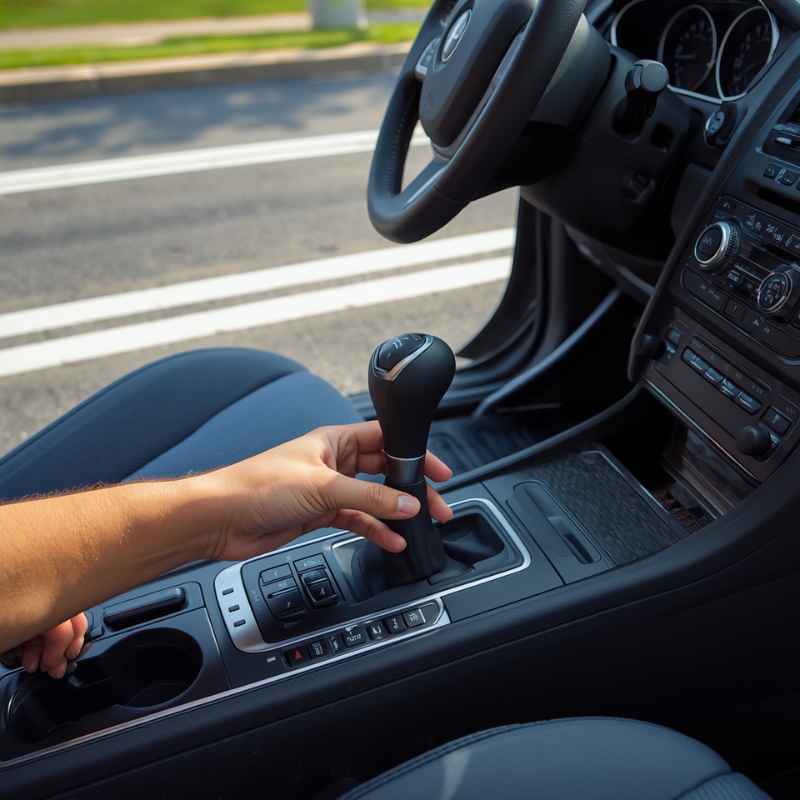
On many cars, this override is right on the center console. Look around the gear shifter. You might see a small slit.
Or a tiny button. Sometimes it’s hidden under a pop-off cover. You might need a flathead screwdriver or a trim tool to pry it open.
Be gentle when you do this. You don’t want to break the plastic. Once you find the override, you’ll usually need to press it.
While you’re pressing it, you also need to press the brake pedal. Then you can move the shifter to neutral. It might take a little wiggling.
But it should release.
Common Locations for Shift Lock Override
Center Console: Most often found around the gear shifter. Look for a small slot or button.
Under a Cover: Some cars hide the override under a small plastic piece. You may need to gently pry this off.
Near the Footwell: Less common, but some models might have it near the brake or gas pedal area.
Access Panel: In rare cases, you might need to access it from underneath the car.
Manual Transmission vs. Automatic Transmission
The process is different for manual and automatic cars. Automatic transmissions have those electronic locks. They also have the shift lock override we just talked about.
Manual transmissions are simpler in this regard. Most manual cars can be put into neutral easily. You just press the clutch pedal.
And move the shifter into the neutral position. Neutral is usually the spot where the shifter moves freely side to side. There are no gears engaged.
This is true even without the key in the ignition. The steering wheel lock is a separate issue. That usually still engages.
For a manual car, getting it into neutral is the easy part. The main challenge is steering. If the steering wheel is locked, you can’t steer.
You need to unlock it. Usually, this happens when you turn the steering wheel slightly. While you try to turn the ignition key.
Without the key, this is harder. Sometimes you can jiggle the steering wheel. While trying to push the car.
It might unlock enough to let you push it in a straight line. Or you might need to find a way to disengage the steering lock. This can be complex and might require professional help.
Steps for Manual Transmission Vehicles
If your car has a manual transmission, putting it in neutral is straightforward. First, ensure the engine is off. You won’t be starting it.
Next, locate the gear shifter. You’ll need to press the clutch pedal down. This disengages the engine from the transmission.
Then, move the gear shifter. You want to move it to the center position. It should feel loose.
It can move freely left and right. This is neutral. You might hear a slight click.
Or feel a small motion. That means you’re in neutral.
Once in neutral, you can push the car. But remember the steering wheel. If it’s locked, you’ll only be able to push it in a straight line.
You might need to jiggle the wheel. As you push. To try and loosen the lock.
If the car is on a flat surface, this is easier. If it’s on a slope, you need to be extra careful. You might need helpers to guide it.
Or to control its movement. For safety, always check your car’s manual. It will show you exactly where neutral is.
And any specific tips for your model.
Manual Transmission: Quick Steps
- Press Clutch: Push the clutch pedal all the way down.
- Find Neutral: Move the gear shifter to the middle position. It should feel loose.
- Push Carefully: Push the car gently. Be mindful of the steering wheel lock.
Steps for Automatic Transmission Vehicles
For automatic transmissions, we need to find that shift lock override. First, you need to get access to it. This usually means getting inside the car.
Pop the hood is not usually needed for this. Make sure the car is parked safely. On a level surface is best.
Press the brake pedal firmly. This is crucial for safety. Now, look around your gear shifter.
You might see a small slot. Or a button. Some cars have a small plastic cap.
You might need a key or a flat tool to remove it. Gently pry it off. Underneath, you should see a lever or button.
With the brake pedal still pressed, push or pull this lever. Or press the button. While doing this, try to move the gear shifter.
It might be stiff at first. You might need to move it back and forth a little. To get it to slide into neutral.
Once it’s in neutral, the engine is disconnected. You can now push the car. Remember the steering wheel lock.
If it’s engaged, you’ll only be able to push in a straight line. It’s a good idea to have someone help you push. And someone else to steer, if possible.
Automatic Transmission: Key Steps
- Press Brake: Hold the brake pedal down firmly.
- Locate Override: Find the shift lock release. It’s often near the shifter.
- Engage Release: Use a tool if needed to press or pull the release.
- Shift to Neutral: Move the gear shifter to the neutral position.
What About Electronic Parking Brakes?
Many newer cars use electronic parking brakes. These are often automatic. They engage when you park the car.
And disengage when you shift into gear. Or when you press the brake and accelerator. But what if the car has no power?
Like a dead battery. Or you don’t have the key. The electronic parking brake might stay engaged.
This can make it very difficult to move the car. Even in neutral. You might need to release it manually.
This is often a more involved process.
Some cars have a manual release for the electronic parking brake. It might be in the trunk. Or under the dashboard.
You might need to remove a panel to access it. This procedure is highly specific to the car model. Your owner’s manual is the best resource.
It will show you exactly where to find it. And how to release it. If you can’t find it, or if you’re unsure, it’s best to call a professional.
Forcing it can damage the brake system. And that’s a much more expensive fix.
Electronic Parking Brake Release
- Check Manual: Consult your owner’s manual for specific instructions.
- Look for Access: Manual releases are often in the trunk or under the dash.
- Professional Help: If unsure, call a mechanic or roadside assistance.
Steering Wheel Lock Issues
One of the biggest challenges, besides shifting, is the steering wheel lock. Most cars have this. It’s a security feature.
It stops someone from stealing your car. When the key is out of the ignition, the steering wheel locks. To unlock it, you usually turn the steering wheel slightly.
While turning the key. Without the key, this is difficult. You can try jiggling the steering wheel.
As you push the car. Sometimes this is enough. To give you a little steering.
It won’t be precise steering. But it might help you guide the car.
If the steering wheel is firmly locked, pushing the car becomes very hard. Especially if you need to turn it. You’ll likely only be able to push it in a straight line.
If you need to move it around a corner, it’s almost impossible without help. Or without unlocking the steering. Some people have tried to force the steering lock.
This can damage the steering column. It’s not recommended. For significant maneuvering, like towing, you’ll need a tow truck.
They can lift the car. Or use dollies. To move it safely.
Steering Wheel Lock Tips
Gentle Jiggle: Try moving the steering wheel back and forth as you push.
Straight Line Only: Be aware you might only be able to push the car straight.
Professional Towing: For turns or complex moves, consider a tow truck.
When to Call for Professional Help
There are times when trying to move a car without a key is too risky. Or too difficult. If your car has an electronic parking brake that’s stuck on, don’t force it.
That can cause damage. If the steering wheel is locked tight and you can’t budge it, pushing becomes dangerous. Especially on a hill.
Or in traffic. If you’re not comfortable with the process. Or if you can’t find the override for your specific car model, it’s wise to get help.
Roadside assistance services are great for this. They have the tools and knowledge. They can often get the car into neutral for you.
Or they can tow it. To a mechanic.
Remember, safety is the top priority. Trying to push a heavy vehicle without proper control can lead to injury. Or damage to the car.
Or other property. It’s better to spend a little money on professional help. Than to risk a much larger expense later.
Or worse, an accident. Always check your owner’s manual. It’s the best guide for your car.
If you don’t have it, many are available online. Just search for your car’s make and model. Along with “owner’s manual PDF.”
Safety Precautions and What to Avoid
When you’re trying to put your car in neutral without a key, safety is key. Always press the brake pedal firmly. This stops the car from rolling.
Make sure you are on a level surface if possible. If you’re on a slope, be extra careful. Have helpers if you need them.
Do not try to force anything. Especially plastic parts or levers. You could break them.
This might make it impossible to shift later. Even with the key. Avoid trying to start the engine.
It won’t work without the key. And it could cause damage.
Be aware of your surroundings. Is there traffic nearby? Are you blocking anything?
Make sure you have a clear path. And a safe place to move the car to. If you are unsure about any step, stop.
It’s better to be safe than sorry. Don’t try to be a hero. If the task feels too daunting, or if you lack the right tools, call for backup.
A tow truck or a mobile mechanic can solve this problem quickly and safely. They have experience with these situations. They know how to handle different car models.
Real-World Scenarios Where This Happens
There are many reasons you might need to move a car without a key. One common situation is a dead battery. The car won’t start.
You can’t shift out of park. Or maybe the ignition switch itself is broken. The key turns, but nothing happens.
Or the key is lost. It’s a vital part of everyday life for many. Your car might be parked in a tight spot.
Like a garage or a narrow driveway. You need to move it to wash it. Or to get another car out.
Or perhaps you’re selling the car. And the buyer wants to see it in neutral. The battery is dead.
Another scenario is a breakdown. Your car stops working. You need to get it off the road.
But it’s in park. You can’t put it in neutral. Or maybe you’re towing a car.
And you forgot to put it in neutral. The tow truck driver might ask you to do it. Or they might have a way to do it themselves.
But knowing how can save time and stress. Emergencies happen. Having this knowledge can be very helpful.
It empowers you to handle unexpected situations.
Checking Your Owner’s Manual
Your car’s owner’s manual is your best friend. It has all the specific details for your vehicle. It will show you exactly where the shift lock override is.
It will explain how to use it. It will also cover the electronic parking brake release, if your car has one. This is crucial information.
Because every car model is a little different. What works for a Honda might not work for a Ford. Or a Toyota.
Or a BMW. So, always refer to your manual first.
If you don’t have the physical copy of your manual, don’t worry. Most manufacturers have PDFs of their manuals available online. You can usually find them on the manufacturer’s official website.
Just search for your car’s make, model, and year. Then look for a “support” or “owners” section. You can download the manual to your phone or computer.
This way, you’ll have all the information you need. Right at your fingertips. Even when you’re out and about.
Owner’s Manual: Your Go-To Guide
Specific Instructions: Find the exact steps for your car.
Location of Features: Learn where override buttons and levers are.
Safety Warnings: Understand any specific risks for your model.
Online Access: Most manuals can be found as downloadable PDFs.
What This Means for You
Knowing how to put your car in neutral without a key is a useful skill. It’s not something you’ll do every day. But when you need it, you’ll be very glad you know how.
It can save you time and money. Instead of calling for a tow. Or waiting for help.
You might be able to solve the problem yourself. It’s about being prepared. And understanding the basics of your vehicle.
It gives you a sense of control. When unexpected things happen.
Remember that the process can vary. Some cars are very straightforward. Others are more complex.
Especially newer cars with lots of electronics. The steering lock is often the trickiest part. If you can’t get it to unlock, pushing becomes much harder.
But getting the car into neutral is the first big step. And that’s usually manageable. Just take your time.
Be patient. And prioritize safety above all else.
Quick Tips for Shifting Without a Key
Here are some final tips to keep in mind. These can help you through the process.
- Be Gentle: Avoid forcing any levers or parts.
- Use the Right Tool: A flathead screwdriver or trim tool might be needed.
- Press the Brake: Always keep your foot on the brake pedal.
- Consult Your Manual: It’s the most reliable source of information.
- Get Help: If you’re struggling, don’t hesitate to call for assistance.
Frequently Asked Questions
Can I put my car in neutral without the key if the battery is dead?
Yes, absolutely. Most cars have a manual shift lock override. This allows you to shift into neutral even without battery power.
This is designed for situations like a dead battery or a broken ignition.
How do I release the steering wheel lock without a key?
This can be challenging. Try gently jiggling the steering wheel as you push the car. It might loosen enough for some steering.
However, a fully locked steering wheel will severely limit your ability to maneuver the car. For significant turns, professional towing is often needed — our full guide to moving a car without a key covers wheel dollies, tow dollies, and flatbeds so you can pick the right option.
What is the shift lock override on my car?
The shift lock override is a safety mechanism. It prevents accidental shifting out of park. It’s a button or lever, often found near the gear shifter.
You usually need to press it while holding the brake pedal to release the shifter.
Is it safe to push a car in neutral?
Yes, it is generally safe to push a car in neutral. The engine is disconnected from the wheels. However, you must be cautious.
Ensure you have control, especially on inclines or if the steering wheel is locked. Always have helpers if needed.
My car has an electronic parking brake. Can I still move it if the battery is dead?
This is more complex. Electronic parking brakes may stay engaged. You’ll need to find the manual release for it.
This is often in the trunk or under the dashboard. Consult your owner’s manual for specific instructions, or call a professional.
How do I find the shift lock override if I don’t have my owner’s manual?
Search online for your car’s make, model, and year, plus “shift lock override location.” Many forums and YouTube videos show specific procedures. Look around the gear shifter for a small slot or a removable cover.
Conclusion
Navigating the process of shifting your car into neutral without a key can seem daunting. But with the right knowledge, it’s achievable. Understanding your car’s specific features, like the shift lock override and electronic parking brake, is key.
Always prioritize safety. And remember that professional help is always an option. Being prepared can turn a stressful moment into a manageable task.
You’ve got this!
Products related to this article
Sponsored / affiliate links. As an Amazon Associate I earn from qualifying purchases. I may earn additional commission from eligible campaigns.