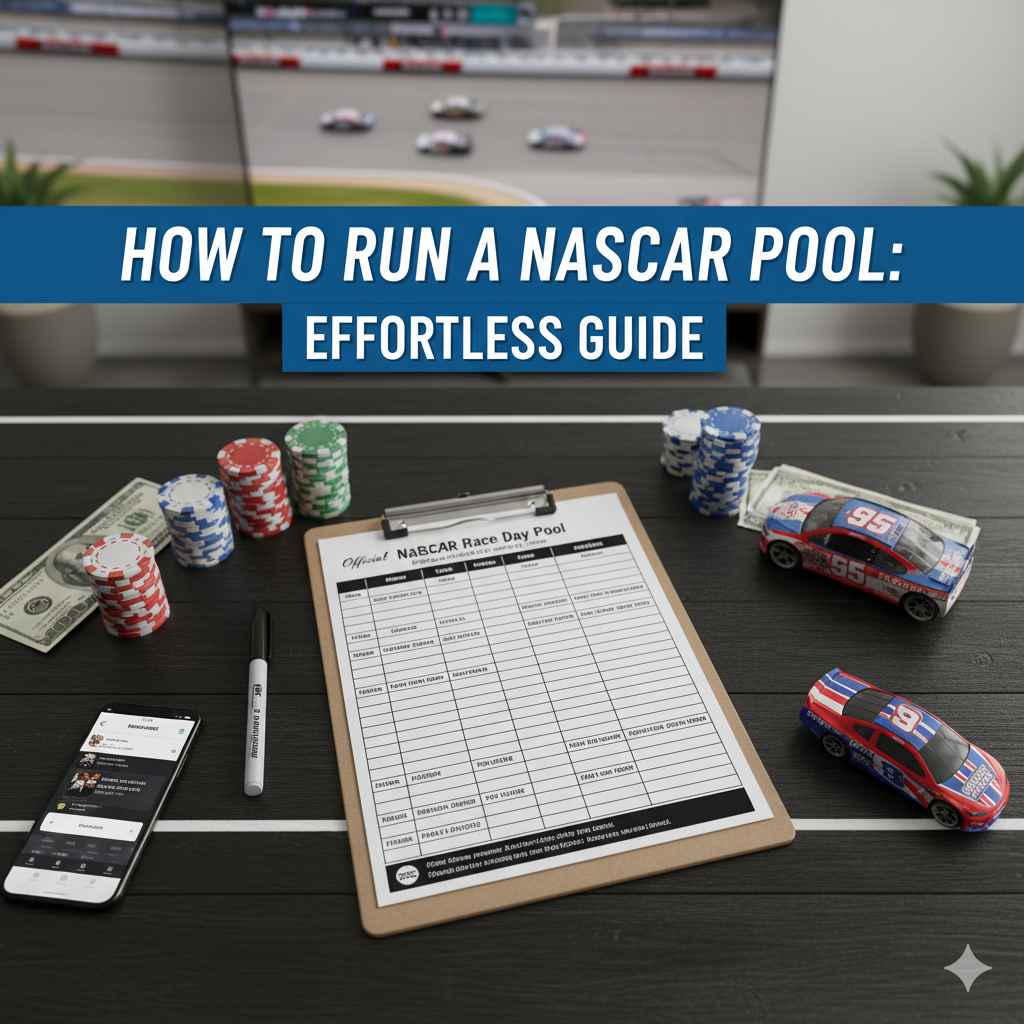
How To Run A Nascar Pool: Effortless Guide
Running a NASCAR pool is a fun and easy way to add excitement to race weekends. This guide breaks down exactly how to set up and manage your own pool, making it simple for anyone to join in on the racing fun. Follow these steps for a seamless and enjoyable experience.
Getting into a NASCAR pool can feel a bit confusing at first, right? You see friends or colleagues chatting about their picks, and you want to join the excitement, but the thought of organizing it all might seem overwhelming. Don’t worry! Running your own NASCAR pool doesn’t have to be complicated. Think of it like setting up a friendly challenge among friends, but with the added thrill of NASCAR racing. We’ll walk through each simple step together, so you can host a pool that’s fun for everyone and easy for you to manage. Let’s get those engines revving for some friendly competition!
Why Run a NASCAR Pool? It’s More Than Just a Game!
NASCAR pools are a fantastic way to boost engagement with the racing season, whether you’re a seasoned fan or just getting started. They turn passive viewing into active participation. Here’s why they’re so popular:
- Increased Excitement: Every race becomes more thrilling when you have a vested interest in specific drivers. You’ll find yourself cheering louder and watching closer!
- Social Connection: Pools create a shared experience, fostering camaraderie and friendly competition among friends, family, or coworkers. It’s a great conversation starter.
- Learning Opportunity: For newcomers, a pool is an excellent way to learn about different drivers, teams, and the nuances of NASCAR racing without feeling overwhelmed.
- Easy to Manage: With the right approach, running a pool requires minimal effort but yields maximum fun.
- Affordable Fun: Most pools involve small entry fees, making them an inexpensive way to add some spice to your race weekends.
Choosing Your NASCAR Pool Format: Finding the Right Fit
The beauty of a NASCAR pool is its flexibility. You can tailor it to your group’s preferences. Here are a few popular formats to consider:
1. The Simple Pick ‘Em Pool
This is the easiest and most common format. Each participant picks one or more drivers to finish at the top for a specific race or across the season. Points are awarded based on how well their chosen drivers perform.
How it Works:
- Race-Specific Picks: Participants choose drivers for each individual race.
- Season-Long Picks: Participants select a set list of drivers at the beginning of the season, and those picks remain for the entire year.
- Scoring: Points are awarded based on finishing position. (e.g., 1st place = X points, 2nd place = Y points, etc.). Common point systems can be found on NASCAR stats websites like NASCAR.com.
2. The Survivor Pool (Elimination Style)
This format adds a layer of strategic decision-making. Each week, participants choose one driver they believe will finish the race (not necessarily win). If that driver finishes the race, they survive another week. If they don’t finish (due to a crash or mechanical failure), the participant is out of the pool.
How it Works:
- One Pick Per Week: You can only pick each driver once throughout the season.
- No Repeats: Once a driver is picked, they can’t be chosen again until the next season.
- Goal: Be the last person standing.
3. The Fantasy-Style Pool
This format is more involved and mimics traditional fantasy sports. Participants draft drivers or select a team of drivers at the beginning of the season. Points are awarded based on a variety of statistical categories throughout the season (wins, top-5s, poles, laps led, etc.).
How it Works:
- Draft or Selection: Teams are formed before or at the start of the season.
- Weekly Scoring: Points are tallied based on driver performance metrics. Many online fantasy NASCAR platforms can help manage this scoring.
- Trades/Waiver Wire: Depending on the league rules, participants might be able to add or drop drivers during the season.
For beginners, the Simple Pick ‘Em Pool is the most approachable and easiest to manage. Let’s focus on that for our step-by-step guide.
Effortless Guide: How to Run a Simple Pick ‘Em NASCAR Pool
Setting up a straightforward NASCAR pool is easier than you think. This guide will take you through every step, ensuring you can host a fun and competitive pool without any fuss.
Step 1: Define Your Pool’s Basics
Before you invite anyone, you need to decide on a few key rules. This sets the foundation for your pool and avoids confusion later.
Key Decisions:
- Pool Type: Will it be race-specific picks, or season-long? (We recommend race-specific for ease).
- Entry Fee: How much will each participant pay to join? This determines the prize pool. Small amounts like $5-$20 per race or per season are common.
- Scoring System: How will points be awarded? A simple system is best for beginners.
- Number of Picks: How many drivers can each person pick per race? (e.g., one driver, top 3 drivers).
- Pick Deadline: When must picks be submitted? Usually, it’s right before the race starts.
- Prize Structure: How will the winnings be distributed? (e.g., winner-take-all, top 3 get prizes, weekly prizes).
Step 2: Establish the Scoring System
A clear scoring system is crucial. For a beginner-friendly pool, keep it simple. Here’s a popular and easy-to-understand scoring method:
Simple Points System Example:
This system rewards drivers for finishing well. You can adjust these numbers based on your group’s preference.
| Finishing Position | Points Awarded |
|---|---|
| 1st Place | 25 Points |
| 2nd Place | 20 Points |
| 3rd Place | 17 Points |
| 4th Place | 15 Points |
| 5th Place | 13 Points |
| 6th-10th Place | (10 down to 6) Points |
| 11th-20th Place | (5 down to 1) Points |
| 21st Place and below | 0 Points |
Bonus Points Tip: You could add bonus points for specific achievements, like a driver winning from a pole position or a driver winning their third consecutive race. However, for your first pool, stick to the basics to keep it manageable.
Step 3: Gather Your Participants
Now it’s time to get people involved! Reach out to friends, family, or colleagues who might enjoy a bit of racing fun.
How to Invite:
- Email or Messaging App: Create a group email or a dedicated chat (like WhatsApp or Slack) for your pool.
- Clear Communication: When you invite people, clearly state the pool’s basic rules (type, entry fee, pick deadline, scoring basics).
- Driver List: Provide a current list of NASCAR Cup Series drivers. You can easily find this on the official NASCAR Drivers page.
Step 4: Create a System for Submitting Picks
You need an easy way for everyone to submit their picks and for you to collect them. Here are some simple methods:
- Group Chat/Email: Participants reply to the group message or email with their picks. You’ll manually track them.
- Spreadsheet (Google Sheets, Excel): Create a shared spreadsheet where participants can enter their picks directly. This is often the easiest for tracking.
- Dedicated Pool Apps/Websites: For more advanced pools, there are various websites or apps designed for fantasy sports and pools. However, for a beginner group, manual tracking or a simple spreadsheet is perfectly fine.
Example Spreadsheet Setup (Google Sheets):
Create columns for:
- Participant Name
- Race Name/Number
- Driver Pick 1
- Driver Pick 2 (if applicable)
- Driver Pick 3 (if applicable)
- Total Points for Race
- Season-to-Date Total
Step 5: Track Results and Standings
This is where a little manual effort comes in, but it’s the core of keeping your pool fun and fair.
After Each Race:
- Get Race Results: Visit NASCAR.com or a reputable sports news site for the official finishing order of the race.
- Tally Points: Go through each participant’s pick and award points based on your established scoring system.
- Update Standings: Record the points for the current race and add them to each participant’s season total.
- Share Results: Post the updated standings in your group chat or email so everyone can see where they stand. This transparency builds excitement and trust.
You can also use online tools to help with tracking. For example, many free fantasy sports tracking websites allow you to input your league’s rules and participants, and they’ll handle the scoring and standings updates automatically. This can save you a lot of time!
Step 6: Award Prizes
At the end of your pool’s duration (either end of season or after a set number of races), it’s time to celebrate the winners!
Prize Distribution:
- Winner-Take-All: The participant with the highest total score wins the entire pot. Simple and direct.
- Multiple Winners: Award prizes for the top 2 or 3 finishers. For example, 60% of the pot to 1st place, 30% to 2nd, and 10% to 3rd.
- Weekly Prizes: You could also offer a small prize each week for the person with the highest score in that particular race.
Important: Be sure to collect the entry fees upfront and have the prize money ready to go. Distributing it promptly is part of good pool management.
Tools and Resources to Make Running Your Pool Easier
You don’t need fancy software to run a great NASCAR pool, but a few tools can certainly simplify the process:
- Spreadsheets (Google Sheets, Microsoft Excel): As mentioned, these are incredibly versatile for tracking picks, scores, and standings. They are free or readily available.
- NASCAR Official Website (NASCAR.com): Your go-to for official results, driver information, schedules, and rule updates.
- Sports News Websites (ESPN, CBS Sports): These sites also provide reliable race results and driver standings.
- Online Pool Management Tools: If your pool grows or you want to automate more, consider platforms like RunYourPool.com or OfficeFootballPool.com. While often geared towards football, many support NASCAR. Check their features and pricing.
Tips for a Successful & Fun NASCAR Pool
Beyond the basic steps, a few extra touches can elevate your pool from good to great:
- Keep it Consistent: Stick to your rules once they’re set. If you need to make a rare change, communicate it clearly and well in advance to all participants.
- Encourage Interaction: Use your group chat to discuss picks, share race insights, or crack jokes. This keeps everyone engaged.
- Visual Aids: Share useful graphics, like a visual of the current standings or a chart of driver performance.
- Keep it Fun! Remember the primary goal is to have a good time and enhance the enjoyment of NASCAR racing. Don’t let the competition get too intense.
Common Pitfalls and How to Avoid Them
Even with the best intentions, some issues can pop up. Being aware can help you navigate them smoothly.
- Late Picks: Some participants might forget to submit their picks on time. Enforce your deadline strictly to be fair to everyone else who submitted on time. Clearly state that late picks are not accepted.
- Disputes Over Rules: If a situation arises that isn’t explicitly covered by your rules, make a judgment call and then update your rules for future races or seasons to prevent it from happening again. Be transparent about your decision.
- Unfair Scoring: Double-check your calculations after each race. A simple error can cause frustration. Using a spreadsheet or online tool can minimize this risk.
- Low Participation/Interest: If attendance starts to drop, consider what might be causing it. Is the entry fee too high? Is the scoring system too complex? Is there enough active communication? Gathering feedback can help.
By anticipating these issues and having clear rules (and the flexibility to adapt wisely), you can ensure your pool runs smoothly year after year. For official guidelines on racing and driver statistics that can inform your scoring, the NASCAR Rules and Regulations page is a valuable resource, though usually not needed for casual pool scoring.
FAQ: Your Nascar Pool Questions Answered
Q1: What’s the easiest way to start a NASCAR pool for beginners?
The simplest method is a “Pick ‘Em” pool where each person selects one driver per race. You collect these picks before the race starts and award points based on how those drivers finish. Use a group chat or a simple spreadsheet to track everything.
Q2: How many drivers should I let each person pick?
For a beginner-friendly pool, picking just one driver per race is easiest. If your group is more invested, you could allow them to pick 2 or 3 drivers or a full “fantasy” team. Start simple and see what your group prefers.
Q3: What is a good entry fee for a NASCAR pool?
Entry fees are flexible. Many casual pools charge between $5 and $20 per race or per season per person. The key is to set an amount that feels affordable for participants while creating a meaningful prize pot.
Q4: How should I calculate points?
A straightforward scoring system is best. Award points based on finishing position, with more points for higher finishes (e.g., 25 for 1st, 20 for 2nd, 15 for 3rd, and so on). Keep it consistent for every race.
Q5: When should participants submit their picks?
Picks should be due just before the race officially begins. This usually means around the time the green flag drops. Communicate this deadline clearly to everyone.
Q6: What if a driver changes teams mid-season?
This is rare but can happen. For most casual pools, simply use their current driver. If your pool is season-long and uses specific driver rosters, you might need to clarify in your rules how to handle such changes – you could allow a one-time roster adjustment for that participant.
Q7: Do I need special software to run a NASCAR pool?
No, not at all! For a beginner pool, manual tracking using a simple spreadsheet (like Google Sheets or Excel) is perfectly sufficient and easy to manage.
Conclusion: Your Track to NASCAR Pool Success
You’ve got this! Running a NASCAR pool is a fantastic way to amp up the excitement of race day and connect with fellow fans. From choosing a simple format like the Pick ‘Em to setting clear rules, collecting picks, and tracking scores, each step is designed to be straightforward and manageable. Remember, the goal is fun and friendly competition. Don’t get bogged down in complex systems; keep it light, communicative, and consistent.
By following this guide, you’re well-equipped to launch a successful NASCAR pool that your friends, family, or colleagues will look forward to all season long. Gather your participants, set your rules, and get ready for some thrilling race weekends. Happy racing!